
Sticky Leaves on Bonsai From Scale Insects: Causes, Signs, and Treatment

Quick Answer
Sticky leaves on bonsai from scale insects usually mean soft scale is feeding on the tree and producing sugary honeydew. Confirm the pest by checking leaves, stems, branch joints, and bark for fixed bumps, then follow an integrated treatment approach such as the UC IPM scale management guidance.
Signs to check first
- Sticky foliage: Clear or shiny honeydew coats leaves, branches, the pot, or the bench below.
- Fixed bumps: Brown, tan, gray, or waxy scales remain attached to stems and leaves.
- Black coating: Sooty mold may grow on honeydew after an infestation develops.
- Ant activity: Ants may repeatedly visit a bonsai because they feed on honeydew.
- Weak growth: Heavy feeding can contribute to yellow leaves, poor shoots, and premature leaf drop.
What to do now
- Separate the bonsai from nearby plants, identify the scale, remove reachable insects, and use only a treatment labeled as suitable for the plant.
Sticky bonsai leaves can look like a watering or sap problem at first. When scale insects are involved, however, that sticky film is often honeydew produced by sap-feeding soft scale.
The good news is that early infestations are much easier to manage. I focus on confirming the pest before changing watering, fertilizer, light, or several other things at once.
In This Guide
- Why Are My Bonsai Leaves Sticky From Scale Insects?
- How Can You Confirm Scale Is Causing Sticky Bonsai Leaves?
- Soft Scale vs. Armored Scale: Which One Makes Leaves Sticky?
- How Do You Get Rid of Scale on a Sticky-Leaved Bonsai?
- How Do You Clean Honeydew and Sooty Mold From Bonsai?
- How Do You Stop Scale Insects From Coming Back?
- Frequently Asked Questions
Why Are My Bonsai Leaves Sticky From Scale Insects?
Your bonsai leaves become sticky when honeydew-producing scale insects feed on plant sap. Soft scales are the main scale group associated with this sugary residue.
Definition: Honeydew is a clear, sugar-rich waste liquid produced by certain sap-feeding insects, including soft scale, aphids, mealybugs, and whiteflies.
Soft scale feeds on the plant’s vascular tissue. Excess sugary fluid passes through the insect and settles on foliage or surfaces below.
What does scale honeydew look and feel like?
Fresh honeydew can look clear and glossy. Run a clean finger lightly over an affected leaf and it may feel tacky rather than simply wet.
- Fresh residue: Clear, glossy, and sticky.
- Older residue: Dust and debris may become trapped on the surface.
- Advanced problem: Dark sooty mold may begin growing on the honeydew.
- Nearby surfaces: Shelves, windowsills, pots, and lower leaves may also become sticky.
The University of Minnesota Extension notes that soft scales produce honeydew while armored scales do not. Their scale insect identification guidance is useful when the insect itself is difficult to recognize.
Does sticky foliage always mean scale?
No. Aphids, mealybugs, whiteflies, and several other sap-feeding insects can also leave honeydew.
That’s why I don’t diagnose scale from stickiness alone. I look for attached scale bodies plus at least one supporting sign.
- Small fixed bumps on stems or leaves
- Honeydew beneath infested areas
- Black sooty mold
- Repeated ant activity
- Yellowing or weakened foliage
Think of honeydew as an alarm rather than a final diagnosis. It tells you where to start looking.
How Can You Confirm Scale Is Causing Sticky Bonsai Leaves?
Inspect the entire bonsai closely, especially sheltered areas. Scale insects often resemble bark, scars, dried sap, or tiny shells instead of recognizable bugs.
Where should you look for scale?
Start where leaves and branches meet. Protected areas are easy for a small colony to occupy unnoticed.
- Leaf undersides
- Main leaf veins
- Young twigs
- Branch junctions
- Bark crevices
- Buds and new growth
- Areas beneath dense foliage
A hand lens can help with tiny crawlers and young scale. These immature insects can move before settling into a feeding location.
What does scale look like on bonsai?
Scale commonly appears as oval, round, elongated, or dome-shaped bumps. Colors can include brown, tan, cream, gray, white, or darker shades.
Size varies by species and development stage. Several common scales measure only a few millimeters, making magnification useful.
Check the insect, not just the leaf damage
Yellow leaves alone aren’t enough evidence. Root stress, poor drainage, excessive watering, drought, fertilizer problems, and other pests can create similar symptoms.
- Scale: Fixed or shell-like bumps are visible.
- Aphids: Soft-bodied insects often cluster around tender shoots.
- Mealybugs: White waxy or cotton-like material is common.
- Spider mites: Fine stippling and webbing are stronger clues than sticky honeydew.
- Care stress: No insects may be present despite yellowing or leaf drop.
That distinction matters. Treating the wrong problem can add unnecessary stress to an already weakened bonsai.
Soft Scale vs. Armored Scale: Which One Makes Leaves Sticky?
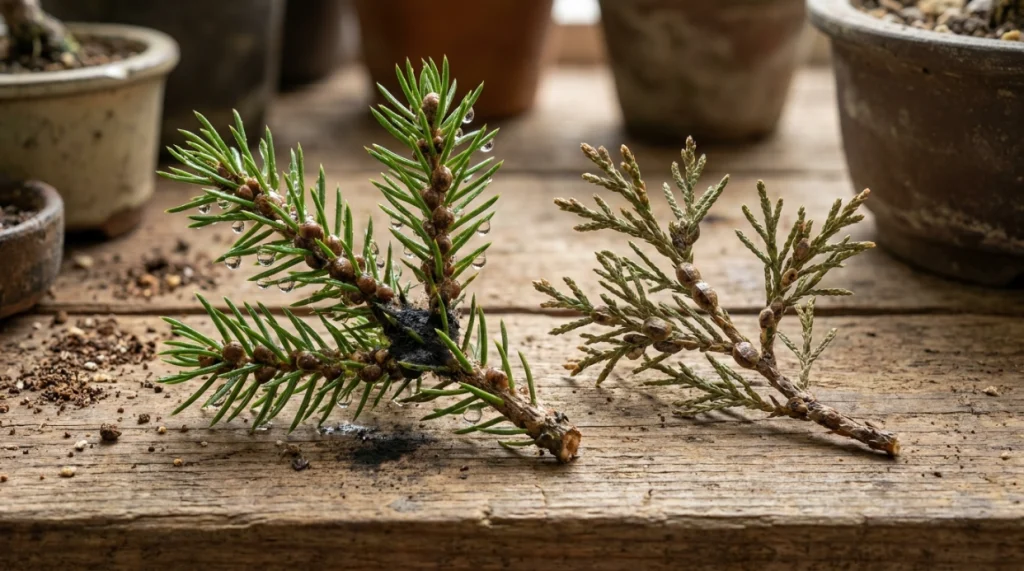
Soft scale is the scale group most strongly associated with sticky bonsai leaves. Armored scale generally does not produce honeydew.
The University of Maryland Extension explains the biological differences in its scale insect overview. Identifying the group helps you interpret the symptoms correctly.
| Feature | Soft Scale | Armored Scale |
|---|---|---|
| Honeydew | Commonly produced | Generally not produced |
| Sticky leaves | Strong clue | Usually absent |
| Typical shape | Rounded, dome-like, or convex | Flatter, oval, circular, or elongated |
| Protective covering | Covering remains associated with the insect | Harder shield-like covering |
| Sooty mold | Can develop on honeydew | Not normally caused by the scale itself |
This difference gives you a useful shortcut. Sticky leaves plus fixed scale-like bumps make soft scale a strong suspect.
Still inspect carefully before treating. More than one pest can occasionally occur on the same tree.
How Do You Get Rid of Scale on a Sticky-Leaved Bonsai?
Start with isolation and physical removal before escalating treatment. The goal is to reduce the population without putting the tree through unnecessary stress.
1. Isolate the bonsai
Move the affected tree away from other bonsai and houseplants. Crawlers can spread before they settle.
Inspect neighboring plants too. A nearby colony may be easy to miss if you’re focused only on the sticky tree.
2. Remove reachable scale manually
Small infestations can often be reduced by removing visible insects carefully. Use a soft brush, cotton swab, or other gentle tool that won’t damage the bark.
- Support delicate twigs while working.
- Check both sides of each leaf.
- Inspect bark crevices after cleaning obvious colonies.
- Dispose of removed pests away from the collection.
Don’t scrape aggressively. Bonsai bark and young shoots can be damaged easily.
3. Consider removing heavily infested growth
A badly infested twig may contain more scale than practical manual cleaning can remove. Selective pruning can reduce the pest load in some cases.
Pro tip: Before cutting living branches from an important bonsai, consider asking an experienced grower or local bonsai club for guidance. An irreversible cut should serve both tree health and the future design.
4. Use horticultural oil or insecticidal soap when appropriate
Horticultural oils can suppress many scales by coating susceptible stages. Insecticidal soaps may also help against exposed immature insects.
Product labels matter more than generic dosage advice. Bonsai species, leaf condition, temperature, sunlight, and product formulation can affect plant tolerance.
- Confirm the product is labeled for the plant or intended use.
- Never exceed the label concentration.
- Avoid treating a severely moisture-stressed tree.
- Test sensitive foliage when the label recommends it.
- Keep treated plants out of harsh direct sun when required.
- Repeat only according to the product instructions.
5. Target crawler stages
Young crawlers lack the heavy protection of mature scale. That makes this mobile stage an important treatment window.
One application may not reach every insect because eggs and life stages can overlap. Continue inspecting the tree after treatment rather than assuming the colony is gone.
6. Avoid treating every symptom at once
Don’t suddenly repot, heavily fertilize, change the light dramatically, and apply several pesticides together. Too many changes make it harder to see what the tree needs.
My troubleshooting rule is simple: identify one strong cause, correct it carefully, then watch the response. That approach is especially useful with small bonsai carrying limited foliage.
Section Takeaway: Remove as much scale as practical, then target remaining pests with a plant-appropriate treatment. Keep monitoring because newly emerged crawlers can appear after the first cleanup.
How Do You Clean Honeydew and Sooty Mold From Bonsai?
Control the insects first. Cleaning sticky leaves without stopping the scale only removes the symptom temporarily.
Removing fresh honeydew
Once treatment is underway, gently cleaning accessible foliage can improve appearance and make new honeydew easier to spot. Plain lukewarm water is a sensible starting point.
- Use a soft damp cloth on sturdy broad leaves.
- Support the leaf with your other hand.
- Avoid rubbing tender new growth.
- Rinse delicate foliage gently where appropriate.
- Keep excess dirty runoff away from the potting medium when practical.
Don’t polish leaves with oils or household shine products. Bonsai foliage doesn’t need a cosmetic coating.
What about black sooty mold?
Sooty mold grows on honeydew rather than feeding directly from the bonsai’s living tissue. It can remain visible even after the insects stop producing fresh honeydew.
Heavy coatings can reduce the light reaching the leaf surface. Gentle cleaning may help, but controlling the honeydew source remains the priority.
Watch the tree for fresh sticky areas after cleaning. New honeydew is evidence that sap-feeding pests are probably still active.
How Do You Stop Scale Insects From Coming Back?
Regular inspection is more useful than trying to make a bonsai completely pest-proof. Scale is much easier to manage while colonies remain small.
Inspect new plants before adding them to your collection
Check newly purchased bonsai, nursery plants, companion plants, and cuttings carefully. Look at stems and leaf undersides before placing them beside established trees.
- Inspect branch joints.
- Check undersides of leaves.
- Look for sticky residue.
- Watch for ants.
- Examine unusual bark bumps.
Keep the bonsai growing appropriately for its species
Good care doesn’t guarantee a pest-free tree. It does help prevent avoidable stress while you diagnose and manage problems.
Suitable watering, drainage, light, airflow, and feeding should match the species and season. The Bonsai Empire pest and disease guide also emphasizes identifying the problem while maintaining appropriate basic bonsai care.
Watch ants as an early warning sign
Ants are attracted to sugary honeydew. Repeated ant traffic up the trunk or across the pot can therefore point you toward hidden sap-feeding insects.
Look underneath the foliage instead of treating the ants as the main problem. Finding the honeydew source gives you more useful information.
Inspect more often during active growth
New leaves and shoots provide many feeding sites. Dense canopies can also hide early colonies.
As of 2026, integrated pest management remains the approach I prefer for bonsai pest problems. Identify first, use the least disruptive effective control, and reassess before escalating treatment.
Frequently Asked Questions
Are sticky bonsai leaves definitely caused by scale insects?
No. Soft scale can cause sticky leaves by producing honeydew, but aphids, mealybugs, whiteflies, and other sap-feeding insects may produce similar residue. Confirm scale by looking for attached bumps on leaves, stems, twigs, or bark before choosing a treatment.
Does armored scale make bonsai leaves sticky?
Armored scale generally does not produce honeydew, so sticky foliage is not a typical armored-scale symptom. If you see both scale-like bumps and abundant honeydew, investigate soft scale or another honeydew-producing pest before making a diagnosis.
Can scale insects kill a bonsai tree?
A severe or persistent infestation can weaken a bonsai through repeated feeding. Possible effects include yellow foliage, poor growth, premature leaf drop, twig decline, and reduced vigor, especially when the tree is already stressed by another care problem.
Why are there ants on my sticky bonsai?
Ants often visit plants to feed on sugary honeydew produced by soft scale, aphids, or similar insects. Repeated ant activity is therefore a useful inspection clue. Follow their path and check leaves, stems, branch joints, and protected areas for sap-feeding pests.
Will washing the sticky leaves get rid of scale?
No. Washing can remove honeydew and improve visibility, but it doesn’t eliminate scale insects hidden on stems, leaves, or bark. Control the pest first, then clean remaining residue gently and watch for new stickiness that would indicate continued feeding.
How often should I check a bonsai after treating scale?
Check it frequently during the weeks after treatment because crawlers may emerge after the first cleanup. Inspect leaves, twigs, branch joints, and previously infested areas. Follow the treatment product’s label rather than applying repeated sprays on an arbitrary schedule.
Should I repot a bonsai because it has scale insects?
Not automatically. Scale primarily lives and feeds on above-ground plant tissue, so repotting may add stress without solving the infestation. Repot only when the roots or substrate have a separate problem, or when the tree’s normal repotting schedule already calls for it.
Sticky leaves are a clue you shouldn’t ignore. When fixed scale insects appear alongside honeydew, start by isolating the bonsai, confirming soft scale, reducing the colony, and monitoring new growth carefully.
Catching the problem early protects both the affected tree and the rest of your collection. Make close inspection part of your normal bonsai routine, especially whenever leaves suddenly feel shiny or tacky.