
Mealybugs on Bonsai Roots: Causes and Treatment

Quick Answer
Mealybugs on bonsai roots are sap-feeding insects, often called ground or root mealybugs, that live inside the root ball and leave white, powdery or cotton-like wax around roots and soil. Treatment starts with isolation and positive identification, followed by sanitation, careful repotting when appropriate, and a pesticide specifically labeled for ground or root mealybugs if physical control is not enough.
Signs to check first
- White root wax: Look for powdery or cotton-like deposits attached to fine roots or the outside of the root ball.
- Tiny moving insects: Root mealybugs are small, pale insects that may become visible when soil is disturbed.
- Weak growth: An affected bonsai may become pale, stunted, wilted, or unusually slow to grow.
- Pot-edge colonies: Infestations often concentrate where roots touch the container wall.
- Recurring decline: Root pests should be considered when normal watering, light, and nutrition corrections do not restore vigor.
What to do now
- Isolate the bonsai, confirm the insects are actually present, and avoid aggressive root work until you know the tree can tolerate it.
Finding white material around bonsai roots can be alarming, but it does not automatically mean the tree is doomed. The first job is separating a true root mealybug infestation from harmless mineral deposits, fungal growth, or particles in the soil mix.
I use a simple rule with root problems: confirm the pest before disturbing the root system. This guide walks through identification, causes, treatment, and prevention without putting an already stressed bonsai through unnecessary work.
In This Guide
What Are Mealybugs on Bonsai Roots?
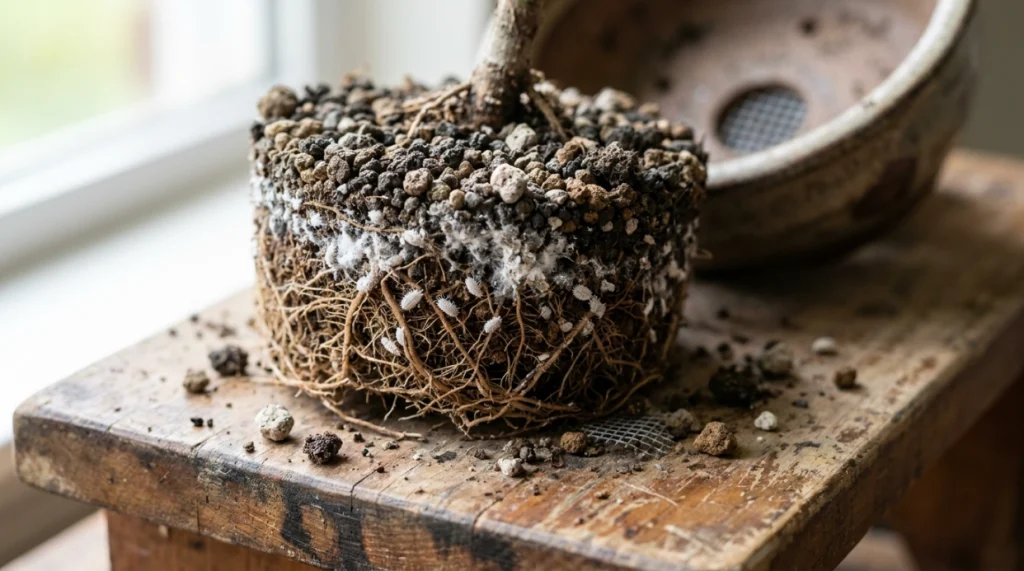
Root mealybugs are small sap-feeding insects that live around plant roots rather than mainly on leaves and branches. Many belong to the group commonly called Rhizoecus or ground mealybugs.
Definition: A root mealybug is a soil-dwelling, sap-feeding insect that colonizes roots and produces pale, waxy material around its body and feeding sites.
According to the Royal Horticultural Society’s mealybug identification guidance, some mealybug species live specifically on roots. Their waxy covering makes colonies look like bits of white powder, cotton, or mold.
Ground mealybugs are tiny. UC Integrated Pest Management describes adults reaching roughly 1/16 to 3/16 inch long, or about 1.6 to 4.8 mm.
- Color: Usually whitish because of their wax coating.
- Shape: Elongated to oval, with visible body segmentation under magnification.
- Location: Fine roots, soil-root interfaces, drainage holes, and the outer edge of the root ball.
- Damage: Reduced vigor, pale foliage, slow growth, wilting, and premature leaf loss in heavier infestations.
The insects feed by removing plant sap. A small population may produce few obvious symptoms, while a larger colony can weaken an already stressed bonsai.
Root mealybugs are easy to miss because most of the infestation is hidden. Sometimes the first clue appears only when the tree is repotted or partially lifted from its container.
What Causes Root Mealybugs in Bonsai?
Root mealybugs are usually introduced to a bonsai collection rather than created by poor watering or bad soil. An infested plant, contaminated pot, growing medium, tool, or nearby container can carry the insects or their mobile young.
First-stage juveniles are often called crawlers. They can move through growing areas and onto containers, tools, hands, clothing, or other material that has contacted an infested plant.
- New bonsai: A recently purchased tree can carry an unseen root infestation.
- Infested nursery stock: Pre-bonsai and companion plants can introduce pests into a collection.
- Reused soil: Old growing medium from an infested container can move insects to another tree.
- Dirty pots or tools: Crawlers can survive on materials that contacted an infested root ball.
- Close plant spacing: Nearby pots make movement between plants easier.
- Water movement: Runoff from infested growing areas can help disperse crawlers.
Warm, protected growing conditions can also allow pest populations to persist. This is one reason tropical and indoor bonsai deserve routine inspections throughout the year.
Overwatering does not cause root mealybugs. However, poor root health from excess moisture can make a bonsai less capable of tolerating additional feeding damage.
How Can You Tell Root Mealybugs From Other White Material?
Confirm the presence of actual insects before treating the tree. White material in bonsai soil can come from fertilizer salts, fungal growth, mineral deposits, or pale components such as pumice and perlite.
The most convincing sign is white wax combined with small insects attached to or moving among the roots. A 10× hand lens makes identification much easier.
| What you find | Typical appearance | Best confirmation clue |
|---|---|---|
| Root mealybugs | White powdery or cotton-like wax around roots | Small segmented insects are visible beneath or beside the wax |
| Mineral or fertilizer salts | White crust on soil, pot rims, or drainage areas | Crystalline or chalky residue with no insects |
| Fungal mycelium | Fine threads or fuzzy growth through organic material | Thread-like structure rather than distinct moving bodies |
| Pumice or perlite dust | White or pale particles within the substrate | Hard mineral particles that do not smear like wax |
Do not diagnose root mealybugs from yellow leaves alone. Watering mistakes, root rot, fertilizer problems, temperature stress, and insufficient light can create similar above-ground symptoms.
Start with the least disruptive inspection. Check drainage holes, the soil edge, exposed surface roots, and the gap between the root ball and pot before removing large amounts of soil.
The general Bonsai Empire pest guide also emphasizes identifying a bonsai pest correctly before choosing a treatment.
How Do You Treat Root Mealybugs Safely?
Treatment should reduce the pest population without causing more damage than the insects themselves. With bonsai, that matters because unnecessary root disturbance can quickly stress a tree growing in a small container.
1. Isolate the affected bonsai
Move the tree away from healthy bonsai and houseplants immediately. Keep its drainage water, tools, and loose soil away from the rest of the collection.
- Do not let pots touch.
- Use separate tools where practical.
- Collect loose substrate rather than sweeping it toward other plants.
- Wash your hands after handling the affected root ball.
2. Confirm the infestation
Look for insects before making a treatment decision. If the tree is strong and can be lifted safely, inspect the outer root ball because root mealybugs often collect between roots and the pot wall.
A weak tree should not be aggressively bare-rooted just to satisfy curiosity. Examine accessible roots first.
3. Replace contaminated substrate when repotting is appropriate
For a confirmed infestation, replacing old growing medium can remove insects, wax, eggs, and contaminated debris. Use fresh bonsai soil and keep the discarded material away from healthy plants.
Wash and sanitize the container before reuse. Clean any chopsticks, root hooks, shears, work surfaces, and trays that contacted the old soil.
Pro tip: Root pruning and complete bare-rooting are irreversible. If the tree is weak, valuable, recently repotted, or outside its normal repotting window, get advice from an experienced grower or local bonsai club before making major root cuts.
4. Use a labeled treatment when needed
Root infestations are harder to reach than mealybugs on leaves. If physical removal and sanitation are insufficient, choose a pesticide whose label specifically allows use on the plant and application site involved.
Some products are formulated as soil drenches or systemic treatments. Registration differs by country, so the product label is the authority for dosage, application method, repeat interval, and eligible plants.
5. Keep monitoring after treatment
One clean inspection does not prove the infestation is gone. Check the pot edge, drainage holes, root zone, and nearby plants regularly for new wax or insects.
- Keep the bonsai isolated while signs remain.
- Inspect neighboring plants for hidden infestations.
- Repeat pesticide applications only as the label directs.
- Continue normal species-appropriate light and watering.
- Avoid heavy fertilizing while the tree is stressed.
Section Takeaway: Confirm the pest first, isolate the tree, remove contaminated material when safe, and use only treatments appropriate for the root zone. Protecting the bonsai’s existing root health is as important as killing the insects.
Which Root Mealybug Treatments Work Best?
No single method fits every bonsai. The best choice depends on infestation severity, tree health, season, species tolerance, and which pesticides are legally available where you live.
| Method | Useful for | Main limitation |
|---|---|---|
| Isolation and sanitation | Every confirmed infestation | Stops spread but may not eliminate insects already deep in the root ball |
| Fresh substrate and careful repotting | Removing contaminated soil when the bonsai can tolerate repotting | Root disturbance can seriously stress weak or out-of-season trees |
| Labeled soil drench or systemic | Established root infestations when an appropriate product is registered | Product suitability, plant restrictions, and local laws vary |
| Soap or horticultural oil | Exposed above-ground mealybugs when the label permits | Poor access to insects hidden throughout a root ball |
| Controlled heat treatment | Specialized nursery situations with documented plant tolerance | Temperature mistakes can injure valuable bonsai roots |
I would not pour rubbing alcohol, household detergent, bleach, vinegar, or an improvised chemical mixture through a bonsai root ball. A substance that kills an insect can also damage fine feeder roots.
Likewise, prolonged flooding is not a dependable bonsai treatment. Saturating the root system for an extended period can create oxygen stress without guaranteeing every pest survives less successfully than the tree.
UC IPM notes that controlled hot-water treatment can eliminate root mealybugs from certain nursery plants under carefully tested conditions. That does not make an improvised hot-water bath a safe general treatment for bonsai.
How Do You Stop Root Mealybugs From Returning?
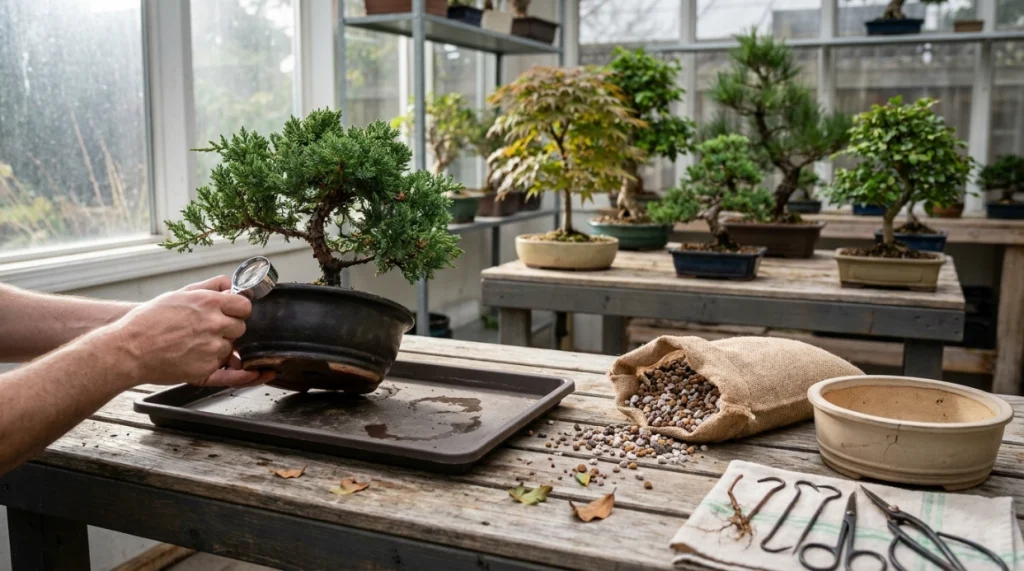
Prevention is easier than trying to clean an established infestation from a compact bonsai root ball. Most prevention comes down to quarantine, sanitation, and regular inspection.
- Quarantine new plants: Keep new bonsai and companion plants separate while you inspect them for pests.
- Check the root zone: Look through drainage holes and around the root-ball edge when practical.
- Use clean substrate: Never reuse soil from a pot with a confirmed pest problem.
- Clean containers: Remove old soil and sanitize previously infested pots before reuse.
- Clean tools: Do not move contaminated soil between trees with root hooks, chopsticks, trays, or benches.
- Manage runoff: Prevent water from an infested tree from draining through a clean growing area.
- Inspect regularly: Catching a small colony is easier than treating an established population.
As of 2026, integrated pest management still favors identification, sanitation, monitoring, and the least disruptive effective control rather than automatically reaching for a broad-spectrum pesticide.
For hands-on help with a valuable tree, the American Bonsai Society maintains resources for connecting growers with the wider bonsai community and local clubs.
Healthy growing conditions matter too. Give the species correct light, drainage, watering, and seasonal care so it has the reserves to recover from minor root damage.
Frequently Asked Questions
Can root mealybugs kill a bonsai?
A severe infestation can weaken a bonsai by feeding on its roots, leading to poor growth, yellowing, wilting, and decline. Whether the tree dies depends on infestation severity, species, existing root health, and other stresses such as overwatering or recent repotting.
Will repotting alone get rid of root mealybugs?
Repotting can remove contaminated substrate and many insects, but it does not guarantee that every mealybug or egg is gone. Clean the pot and tools, use fresh substrate, isolate the tree, and continue inspecting the root zone after repotting.
Can neem oil treat mealybugs on bonsai roots?
Neem products can suppress some exposed mealybugs, but a normal foliar application does not reach insects deep inside a root ball. Do not pour neem or another pesticide into bonsai soil unless its label specifically permits that application for the plant and pest involved.
Should I bare-root my bonsai to look for mealybugs?
Not automatically. Check drainage holes, exposed roots, the soil edge, and accessible sections of the root ball first. Complete bare-rooting can stress some species, especially weak trees or bonsai handled outside their normal repotting season.
Can root mealybugs spread to my other bonsai?
Yes. Mobile young can spread through contaminated pots, growing media, tools, hands, clothing, nearby surfaces, and moving water. Isolate a confirmed infestation and inspect the plants that were growing closest to it.
How long should a treated bonsai stay in quarantine?
Keep it separate until treatment is finished and repeated inspections show no fresh insects or wax. Rather than relying on one fixed number of days, monitor through the treatment interval specified on any pesticide label and continue checking afterward.
Final takeaway: White material on bonsai roots deserves investigation, not panic. Confirm root mealybugs, isolate the tree, protect healthy roots, remove contaminated material when appropriate, and keep monitoring until the infestation is genuinely gone.