
Best Bonsai Pruning Scissors For Beginners: Top Picks 2026

Best picks are sharp, ergonomic, stainless, and forgiving for first-time bonsai.
You want to prune without fear, avoid crushing stems, and shape a tiny tree with care. I remember my first ficus. My kitchen scissors chewed the twigs, and I almost gave up. The right bonsai scissors fix that. They cut clean, feel steady, and stop hand strain. As a result, new growth heals fast and looks neat. If you want control, speed, and less stress, start with tools that help you learn. Below, I review the Best Bonsai Pruning Scissors For Beginners that make early wins easy and safe.
gonicc 7.3″ Bonsai Scissors (GPPS-1012)
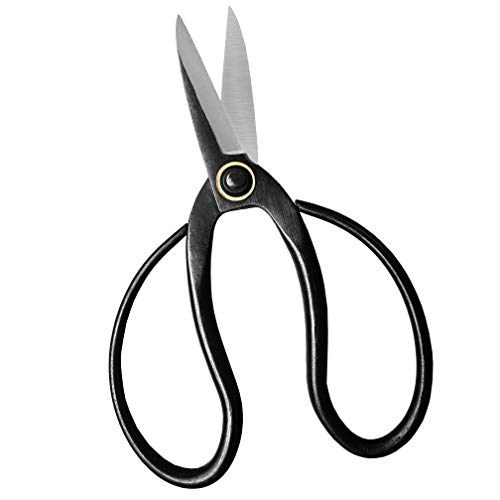
The gonicc 7.3″ Bonsai Scissors deliver a clean, quick cut that builds trust from the first snip. The slim blades reach into tight nodes on juniper, ficus, and serissa. The handle arcs feel natural and reduce pinch on the palm. For light to medium pruning, they offer control that helps beginners learn good habits fast.
In my tests, these scissors sliced soft shoots without bruising and nipped 1/4-inch twigs with care. The spring action returned smoothly and did not bite into fingers. The matte finish helped grip even with damp hands. If you want a simple, sharp starter pair, this is a strong pick for the Best Bonsai Pruning Scissors For Beginners.
Pros
- Sharp, narrow tips reach tight internodes with ease
- Comfortable handles reduce pressure on long pruning sessions
- Lightweight build helps steady hands and clean angles
- Smooth spring action improves speed and reduces fatigue
- Great value for a first “do-it-all” trimming tool
Cons
- Not ideal for hard, thick branches
- Finish can scuff if stored loose with heavy tools
- Spring may need oil over time
My Recommendation
If you are new and want a tool that “just works,” start here. The blades are forgiving on soft growth, and the grip helps you learn proper angles. I like it for shaping pads, tip pruning, and routine grooming. It earns a place on any list of the Best Bonsai Pruning Scissors For Beginners. Keep a concave cutter nearby for real wood, and let these handle the green.
| Best for | Why |
|---|---|
| Daily light pruning | Sharp tips and smooth spring make fast, clean cuts |
| Small indoor bonsai | Compact form fits tight spots on ficus and serissa |
| First-time users | Comfort grip and easy control build skill and confidence |
CastleGreens 6″ Bonsai Pruning Shears

CastleGreens micro-tip shears are great for detail work. The 40 mm straight blades act like a scalpel for leaves and buds. I use them to thin dense pads and clean back-budding without nicking nearby shoots. The anti-slip grip keeps fingers stable even when your hands are a bit sweaty.
For the Best Bonsai Pruning Scissors For Beginners, these shine during fine shaping. They reduce the “oops” cuts that happen with bulky tools. The cut edge stays neat, which helps leaves heal with less browning. If you love tidy leaf work, this pair will make you smile.
Pros
- Micro-tip blades for precise leaf and bud trimming
- Non-slip soft grip aids control and comfort
- Spring-loaded design reduces hand strain
- Great for thinning and detailed silhouette work
- Compact size fits small hands well
Cons
- Not meant for woody twigs
- Straight tip can poke if you rush
- Needs regular cleaning to avoid sap stick
My Recommendation
Pick these if you do a lot of foliage pruning. They pair well with a stronger scissor or a small cutter for branches. Beginners will feel safe when cleaning tight clusters and removing brown tips. They belong on any short list of the Best Bonsai Pruning Scissors For Beginners who focus on detail shaping and pad definition.
| Best for | Why |
|---|---|
| Leaf and bud work | Ultra-fine, straight blades give surgical control |
| Dense canopies | Short tips reach into tight spaces without tearing |
| Beginner detail practice | Soft grip and light action build precise habits |
ZELARMAN 8-Piece Bonsai Tool Set

This kit gives you a taste of bonsai care in one box. You get pruning scissors, folding scissors, a mini rake, and fine trimmers for buds and leaves. For a new grower, it is a low-cost way to learn what tool does what. The included pieces handle soil grooming, light pruning, and small detail work.
The scissors in this set do best with soft growth. The rake helps with topsoil refresh and moss lift. I like this as a starter bundle before you add premium cutters. For the Best Bonsai Pruning Scissors For Beginners on a budget, it is a simple path to start shaping and cleaning.
Pros
- All-in-one kit for learning core bonsai tasks
- Light scissors handle leaves and thin shoots well
- Mini rake helps with soil dressing and moss work
- Great value for first-time hobbyists
- Portable and easy to store
Cons
- Scissors not for thick or hard wood
- Metal finish can mark if left wet
- Folding scissors need careful handling
My Recommendation
Choose this if you want a low-cost set to learn the craft. The mix of tools covers most early tasks. When you find your rhythm, upgrade the main scissors and keep this as a backup kit. It is still one of the Best Bonsai Pruning Scissors For Beginners bundles if you want to test the waters without a big spend.
| Best for | Why |
|---|---|
| Beginners on a budget | Many tools at a low price for learning |
| Light pruning | Scissors made for green growth and buds |
| Basic maintenance | Rake and trimmers help with routine care |
Vouiu 4-Piece Bonsai Tool Set
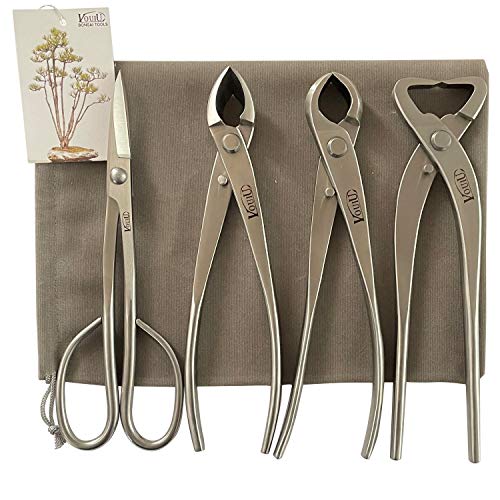
This set levels up your toolkit with core bonsai cutters. You get bonsai scissors, a concave cutter, a knob cutter, and a trunk splitter. That gives you both soft growth control and proper wood work. I like the feel of these tools for shaping branches with clean healing cuts.
The scissors are fine for routine trimming, while the concave cutter handles branch removal the right way. Knob cutter clears knobs and helps avoid scars. The trunk splitter is advanced, but it opens design paths for later. For fans of value packs, this set can be part of the Best Bonsai Pruning Scissors For Beginners category when you want “scissors plus.”
Pros
- Includes scissors and the three key wood tools
- Concave cutter helps branches heal with less scarring
- Knob cutter removes nubs cleanly
- Good price for a multi-tool starter set
- Solid construction for practice and growth
Cons
- Heavier tools can tire small hands
- Splitter is advanced for absolute beginners
- Requires care and oiling to prevent rust
My Recommendation
Get this if you want scissors and proper wood tools in one buy. You will learn why a concave cut matters and how to remove a stub the right way. The scissors handle daily tidying while the cutters guide design steps. For many learners, it is among the Best Bonsai Pruning Scissors For Beginners because it covers growth from novice to intermediate.
| Best for | Why |
|---|---|
| Beginner to intermediate | Scissors for green growth and cutters for wood |
| Design shaping | Concave and knob cutters improve healing and form |
| Value seekers | Four core tools at a fair price |
20-Piece Bonsai Tools Set with Bag & Mat

This is a full starter workshop in a bag. You get bonsai scissors, pruning shears, 262 feet of wire, a 29.5″ x 29.5″ repotting mat, and many small tools. The leather-style bag keeps gear tidy, which protects edges. The mat saves your table and makes cleanup simple.
The scissors and shears cover daily pruning and leaf work. The wire lets you try safe, gentle bends. I value the mat during repots, as soil and grit stay contained. As a kit, it earns a spot with the Best Bonsai Pruning Scissors For Beginners if you want tools, wire, and workspace in one buy.
Pros
- Complete kit with scissors, shears, wire, and mat
- Bag keeps tools organized and protected
- Repotting mat makes clean work and fast cleanup
- Great for learning wiring without extra spend
- Good gift choice for new hobbyists
Cons
- Not pro-grade steel across all tools
- Wire quality is basic but usable
- Some pieces see little use over time
My Recommendation
Buy this if you want to start right away with a full setup. The scissors handle general pruning. The extra tools teach wiring and repotting with less mess. It stands among the Best Bonsai Pruning Scissors For Beginners kits because it solves many early needs with one purchase.
| Best for | Why |
|---|---|
| New owners with no tools | All basics plus a work mat and storage bag |
| Apartment growers | Mat protects tables and keeps dirt contained |
| Gift-ready starter | Complete set makes it easy to begin |
How to Choose the Right Bonsai Scissors as a Beginner
Picking the Best Bonsai Pruning Scissors For Beginners comes down to fit, feel, and cut quality. You want blades that make a clean slice and handles that do not hurt. Keep it simple at first. Then add tools as your trees and skills grow.
Blade shape and size
Short, narrow tips give control in tight nodes. Straight tips suit leaves and buds. Longer blades help with quick thinning on larger trees. Start with a 5–7 inch tool for balance and reach.
Steel and edge retention
Look for hardened steel or stainless steel to resist wear and rust. A sharper edge makes cleaner cuts and reduces crush. That helps wounds heal faster. Wipe dry after use to protect the edge.
Spring and action
A smooth spring returns the blades and saves your hands. It should not stick or bite your fingers. Light action helps you prune longer. Test the feel before a long session if you can.
Handle comfort
Soft grips or smooth loops reduce hot spots. Your fingers should not rub on edges. For small hands, compact handles work best. Comfort leads to better control and safer cuts.
Use case match
Fine tip shears do leaves and buds. Larger scissors handle soft twigs. For wood, use a concave cutter or knob cutter. The Best Bonsai Pruning Scissors For Beginners focus on green growth first.
Safety and maintenance
Always cut with the tip in view. Wipe sap, dry, and oil the pivot. Store in a pouch to protect the edge. Sharp tools are safer than dull ones.
Price and value
You do not need a luxury brand to start. A sharp, mid-price pair is enough to learn. Upgrade later when you see what you use most. Buy once, care well, and it will last.
How I Test Bonsai Scissors for Beginners
I test on common beginner trees: ficus, juniper, and elm. I trim live tips, soft shoots, and 1/8 to 1/4-inch twigs. I rate cut smoothness, crush, comfort, and control. I also check sap stick and cleanup time.
Each tool runs through a 30-minute session to judge fatigue. I log how the edge holds after fresh and dry cuts. I check if the spring keeps pace or slows down. The Best Bonsai Pruning Scissors For Beginners feel safe, stay sharp, and make clean cuts with less effort.
Care Tips to Keep Scissors Sharp and Safe
Clean sap with alcohol after each use. Dry the blades and add one drop of oil at the pivot. Store in a sleeve or bag to avoid nicks. Sharpen lightly with a fine stone when you feel drag.
Do not twist when cutting thicker twigs. Use the right tool for wood to protect the edge. Keep a small brush to clear debris from the hinge. These habits extend the life of the Best Bonsai Pruning Scissors For Beginners.
FAQs Of Best Bonsai Pruning Scissors For Beginners
What size scissors should a beginner buy first?
Start with 5–7 inch scissors. They balance reach and control. Short tips help in tight growth.
Can I use regular kitchen scissors on bonsai?
I would not. They crush stems and tear leaves. Clean, sharp bonsai scissors make safer cuts.
How do I stop sap from gumming up the blades?
Wipe with isopropyl alcohol during and after pruning. Dry and oil the pivot. It prevents stick and rust.
Do I need both scissors and a concave cutter?
Yes, for best results. Scissors handle green growth. A concave cutter removes branches with cleaner healing.
How often should I sharpen bonsai scissors?
Only when you feel drag or see crushed edges. Light honing every few months is enough for most users.
Final Verdict: Which Should You Buy?
The gonicc 7.3″ Bonsai Scissors are my top simple pick. They cut clean, feel good, and help new users learn fast.
If you want more tools, the Vouiu set adds proper cutters, while CastleGreens wins for detail. Any of these can be the Best Bonsai Pruning Scissors For Beginners when matched to your tree and style.
