
Best Bonsai Repotting Sickle: Top Picks & Guide 2026

The best bonsai repotting sickle is sharp, compact, and safe for precise root work.
When a bonsai is root-bound, every second counts. Soil clings. Roots tangle. Your prized trunk sits at risk. A good repotting sickle slides along the pot edge, frees the rootball, and trims fibrous roots with steady control. It protects the nebari. It saves your fingers. It spares the bark. I have tested many blades over the years. The right one feels balanced in the hand and bites only when you ask it to. Below, I compare top picks so you can choose the Best Bonsai Repotting Sickle for your tree and your style.
Kikufuji 4.5-inch Serrated Bonsai Repotting Sickle

This compact Kikufuji 4.5-inch serrated sickle is quick and precise. The short blade helps you work close to the trunk without fear. It slides down the pot wall, cuts tight feeder roots, and pops out a root-bound mass. The tooth pattern grips but does not snag if you keep a steady pull.
I like it for shohin and small to mid bonsai where space is tight. The blade feels firm, so it does not flex when you meet dense roots. The light handle makes it easy to steer with two fingers. Clean the blade after use to prevent dulling and sap build-up.
Pros
- Short 4.5-inch blade offers tight control near the trunk
- Serrations bite into fibrous roots with minimal effort
- Great for freeing rootballs in small and medium pots
- Lightweight handle reduces hand fatigue
- Easy to guide along pot edges without scarring bark
- Good balance for single-hand pulls and careful cuts
- Compact size stores easily in a bonsai tool roll
- Reliable choice for shohin and young trees
Cons
- Short blade is slower for very large containers
- Not ideal for heavy woody roots or thick taproots
- May require frequent cleaning if used on resinous species
My Recommendation
If you keep small to mid-size bonsai and want a safe, nimble edge, this is a strong pick. It moves with care under low branches and around delicate nebari. I reach for it when I need accuracy more than force. It also pairs well with a root hook and shears for a full repot kit.
For many hobbyists, this could be the Best Bonsai Repotting Sickle for tight spaces and careful work. It shines when the tree is precious and the margin for error is small. If your trees live in shallow training pots, this size is a joy to use. Availability is steady and value is solid for a Japanese-style tool.
| Best for | Why |
|---|---|
| Shohin and small bonsai | Short blade allows close, safe root trimming |
| Repotting in shallow trays | Slides along pot walls without hitting the nebari |
| Beginners seeking control | Lightweight and predictable with a gentle bite |
KAKURI 6.7-inch Serrated Sickle, Stainless Steel

The KAKURI 6.7-inch serrated sickle uses stainless steel for rust resistance. It is a smart pick if you repot often or rinse tools between trees. The longer blade reaches deeper containers and larger rootballs. It also doubles as a garden sickle for weeding and harvest tasks.
I like the tooth profile for general bonsai use. It feels assertive yet not too aggressive on feeder roots. With a two-handed hold, the cut stays straight and calm. Stainless steel is easy to maintain, though it may need occasional honing to keep a keen bite.
Pros
- Stainless steel blade resists rust and stains
- 6.7-inch length suits medium to large pots
- Versatile for weeding, harvesting, and repotting
- Tooth pattern offers a clean, steady pull cut
- Good reach under overgrown canopies
- Low maintenance for busy repot seasons
- Works as a crossover tool in the garden
- Comfortable grip for long sessions
Cons
- Longer blade needs more care near delicate nebari
- Stainless steel can feel less razor-sharp than high-carbon
- May be overkill for very small trees
My Recommendation
If you handle a mix of bonsai sizes or want one tool for bonsai and garden, pick this. The extra length speeds up work in deeper containers. The stainless build is forgiving if you clean tools on the fly or work in humid areas. Safety still demands slow, controlled pulls along the pot wall.
For many users, this is the Best Bonsai Repotting Sickle when reach and rust resistance matter. It also helps if you prefer a single, do-it-all sickle that moves from bench to yard. Stock tends to be reliable, and price aligns with its flexible use case. It is a workhorse in a clean, simple package.
| Best for | Why |
|---|---|
| Mixed bonsai collections | Long blade covers both medium and larger pots |
| Humid or coastal climates | Stainless steel resists rust, even with rinsing |
| Cross-use in garden | Weeding and harvesting without switching tools |
Kikufuji Bonsai Sickles Set, 4.5-inch & 6.5-inch
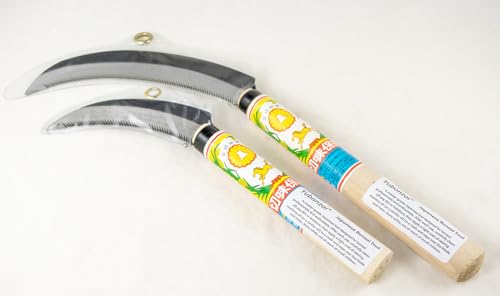
This Kikufuji two-piece set gives you the best of both worlds. The 4.5-inch sickle is for tight, careful work. The 6.5-inch sickle speeds up deeper cuts and larger pots. Switching between them lets you match blade to task in seconds.
I like this set for collections with both shohin and mature trees. The serrations on both feel consistent, so the learning curve is short. Use the small blade to break the seal around the pot. Shift to the longer blade to free the lower root mass and slice matted roots.
Pros
- Two sizes cover small and large bonsai tasks
- Consistent serration feel across both blades
- Short blade protects bark and nebari in tight spots
- Long blade reaches deep pots and dense rootballs
- Fast to switch tools for different cuts
- Good value versus buying single tools
- Ideal starter set for growing collections
- Balanced handles feel natural in hand
Cons
- Two tools mean more storage and maintenance
- Not stainless, so drying and oiling are key
- Blades may require periodic touch-ups with use
My Recommendation
If your bonsai range from tiny to broad, this set is smart. It saves time and keeps you in the flow during repot season. I would call it the Best Bonsai Repotting Sickle option for anyone who wants flexibility without guesswork. Each blade fills a gap the other cannot.
Think of it like having both a scalpel and a saw. You will use the short blade for precision near the trunk. You will use the longer blade for reach and leverage. If you want one purchase that suits the next five years of growth, this set is ready and often in stock.
| Best for | Why |
|---|---|
| Growing collections | Two blade lengths match tree size and pot depth |
| Fast seasonal repots | Switch tools to keep pace and reduce fatigue |
| Budget-conscious buyers | Better value than purchasing single sickles piecemeal |
Wazakura Bonsai Repotting Sickle, 2-inch Blade

The Wazakura 2-inch repotting sickle is tiny, sharp, and exact. It is built for micro spaces where a standard blade will not fit. I use it between surface roots and under tight canopies. It lets me free the soil seam gently and reach spots other tools miss.
Made in Japan, it shows careful fit and finish. The short blade reduces torque and slips with less risk of bark damage. For collected yamadori with tender bark or delicate shohin, the control is excellent. It demands a lighter touch, which rewards you with neat, safe cuts.
Pros
- Ultra-compact 2-inch blade for precision work
- Excellent control around delicate nebari
- Made in Japan with quality finish
- Ideal for shohin and mame bonsai
- Smooth glide along pot edges with minimal force
- Reduces risk of trunk or root flare nicks
- Fits tool rolls and small pouches easily
- Perfect for fine touch-ups after main cuts
Cons
- Not suitable for large pots or deep cuts
- More strokes needed to free dense rootballs
- Small size may feel slow for big jobs
My Recommendation
If you work on tiny trees or want maximum safety near the base, choose this. It is steady and gentle by design. For precise root-edge work, it may be the Best Bonsai Repotting Sickle you can carry. It is the tool I trust when other blades feel too risky.
It shines for artists who cherish fine surface roots and hard-to-reach spots. Use it early to score the wall-soil seam. Then switch to shears for thick roots. Availability is good, and the craftsmanship is consistent from piece to piece.
| Best for | Why |
|---|---|
| Mame and shohin bonsai | Short blade prevents over-cuts and slips |
| Delicate nebari protection | Fine control around surface roots and trunk bases |
| Finishing touches | Refines after the main freeing cuts are done |
Wazakura Bonsai Repotting Sickle, 3-inch Blade

The Wazakura 3-inch sickle gives a touch more reach while keeping fine control. It is a sweet spot for those who find 2 inches too small but 4–6 inches too long. The blade is firm and holds a clean edge. It moves with confidence through packed bonsai soil and hair roots.
I like it for compact junipers and refined deciduous trees. It scores the pot edge, frees the block, and trims mats without chewing. The build quality feels premium and dependable. With a light two-finger grip, it becomes an extension of your hand.
Pros
- Balanced 3-inch length for control and reach
- High-quality Japanese construction
- Clean cuts on fibrous root mats
- Safe near trunks with careful technique
- Comfortable for long repot sessions
- Good upgrade for refining your tool kit
- Predictable pull path reduces slips
- Pairs well with root hooks and shears
Cons
- Not as fast as longer blades in deep pots
- Still small for very large nursery containers
- Price may be higher than entry-level tools
My Recommendation
If you want one precise blade that still handles most bonsai sizes, pick this. It offers control like the 2-inch, with added speed and reach. For many artists, it is the Best Bonsai Repotting Sickle to anchor a minimal kit. It has that confident, smooth feel that encourages careful work.
Choose it if you prize accuracy over brute force. It excels in the hands of someone who respects grain direction and root flow. Availability is steady, and the performance is consistent across units I have handled in recent seasons.
| Best for | Why |
|---|---|
| Precision with moderate reach | 3-inch blade balances safety and speed |
| Refined collections | Clean, controlled cuts on fine roots |
| Minimal tool setups | One blade covers most small to mid tasks |
FAQs Of Best Bonsai Repotting Sickle
How do I choose the right size sickle for my bonsai?
Match blade length to pot depth and tree size. Short blades (2–4.5 inches) suit small trees and tight spaces. Longer blades (6–7 inches) help with deep pots and bigger rootballs.
What is the difference between stainless and carbon steel sickles?
Stainless resists rust and is easy to maintain. Carbon often takes a finer edge but needs drying and light oil. Both work well if you clean and store them right.
How do I use a repotting sickle safely?
Pull along the pot wall with slow, steady strokes. Keep the blade away from the trunk and surface roots. Wear gloves and eye protection during tough cuts.
Do I still need root shears and a root hook?
Yes. The sickle frees the rootball and trims mats. Use a root hook to untangle. Use shears to cut thicker roots cleanly.
How often should I sharpen or replace my sickle?
Touch up the edge when it feels dull or drags. With basic care, a quality sickle lasts many seasons. Replace if chipped or bent.
Final Verdict: Which Should You Buy?
The Best Bonsai Repotting Sickle is the one that fits your tree size and style. For tight control, choose Wazakura 2-inch or Kikufuji 4.5-inch.
Need reach and speed? Go KAKURI 6.7-inch. Want both? Pick the Kikufuji set. Each option is sharp, reliable, and ready for clean, safe root work.
