
10 Best Bonsai Trees for First-Time Growers in 2026

A bonsai tree looks like a big commitment sitting in a nursery display, but the truth is more forgiving than most people expect. Some are living plants that arrive already trained and potted, ready to sit on a windowsill the day they show up. Others are seed kits that ask you to start from scratch and wait weeks just to see a sprout. Both routes count as real bonsai growing, and picking the right one depends on how much patience you’re bringing to the table.
The word “bonsai” describes a technique, not a species. Almost any woody plant can be trained into a bonsai shape through pruning and wiring, though some species take to container life and small-scale growing more easily than others. Ficus and juniper are the two names you’ll see again and again in beginner circles, and for good reason: ficus tolerates indoor light and inconsistent watering better than most tropicals, while juniper is a tough outdoor plant once it’s established. The single biggest reason first bonsai trees die isn’t neglect, it’s the wrong light and water routine for that specific species, so matching the plant to your living situation matters more than picking the prettiest pot.
Before buying, think about where the tree will actually live. Indoor ficus varieties want bright, indirect light and steady moisture. Outdoor junipers need real sun, seasonal temperature swings, and a spot on a patio or balcony rather than a bedroom desk. Seed kits ask for none of that commitment upfront but demand a different kind of patience: weeks of germination with no guarantee every seed sprouts. Weight, pot material, and included tools are smaller details, but they tell you how ready-to-display a tree is versus how much setup work is still ahead.
Best for instant indoor décor: Brussel’s Bonsai Golden Gate Ficus
Best for outdoor patio growing: Brussel’s Bonsai Medium Juniper
Best for hands-on learners: Planters’ Choice Bonsai Starter Kit
Best for families growing together: AVERGO Deluxe 5-Tree Kit
Best for a whimsical gift: Dwarf Juniper with Ceramic Fisherman
Best for a single statement seedling: Avergo Jacaranda Bonsai Kit
Best for building bonsai knowledge: The Little Book of Bonsai
Best for a modern-looking outdoor starter: Brussel’s Bonsai Juniper in Zen Pot
Best for a well-organized seed project: PureBonsai 5-Species Starter Kit
Best for a bigger outdoor centerpiece: Brussel’s Bonsai Dawn Redwood
Brussel’s Bonsai Golden Gate Ficus
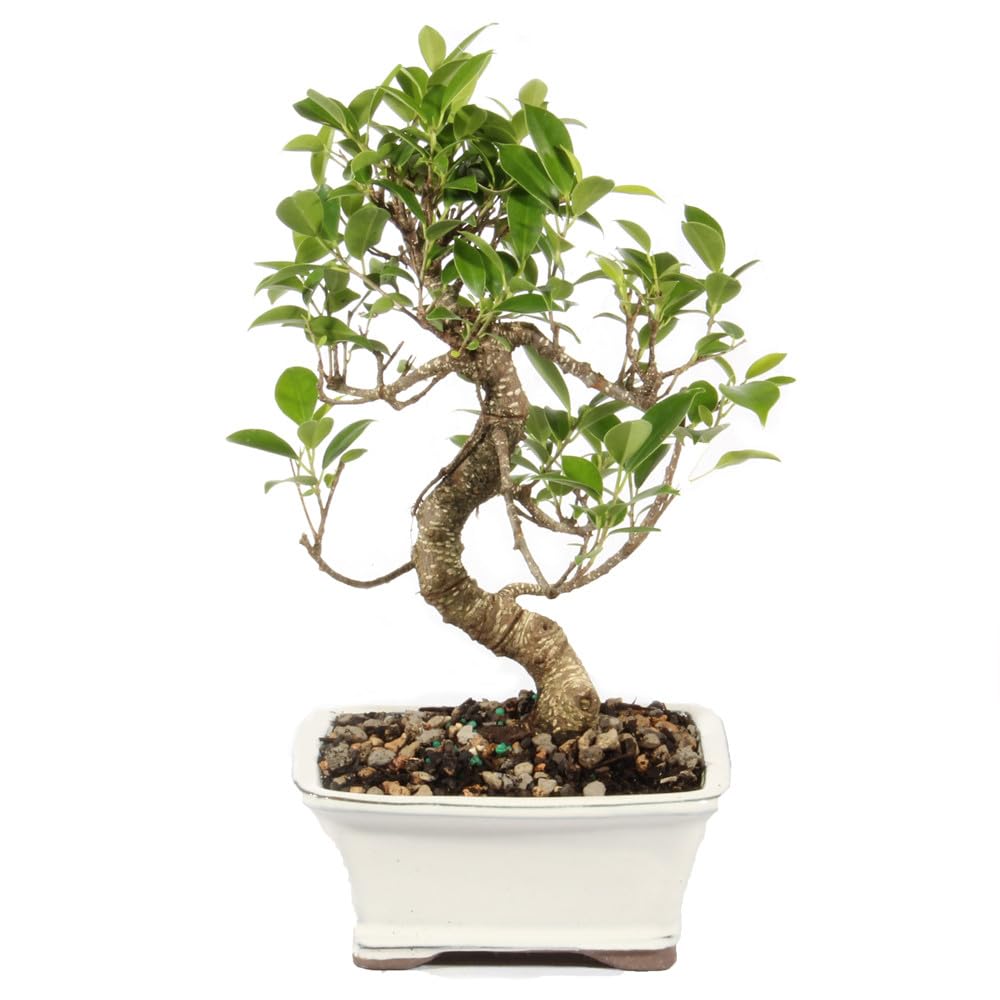 Buy this one if you want a real bonsai tree living indoors without babysitting a fussy tropical.
Pros
- Ficus microcarpa tolerates indoor light and irregular watering better than most bonsai species
- Arrives already potted and shaped, so there’s no waiting for growth
- Compact size fits a desk, shelf, or windowsill
Cons
- Shipping in cold weather requires careful timing
- Watering needs take some trial and error at first
- Not available for shipment to Alaska or Hawaii
This four-year-old Golden Gate Ficus is the closest thing to a foolproof first bonsai. Its spiraling trunk and glossy leaves already look like a finished bonsai the day it arrives, which takes the guesswork out of styling. Indoor light and consistent watering are the two things to get right; skip a deep soak for too long and it lets you know with dropped leaves. Reviewers describe healthy, well-packaged arrivals more often than not, though a few mention the watering rhythm takes some adjusting. For a beginner who wants greenery now rather than a growing project, this is the pick.
Brussel’s Bonsai Medium Juniper
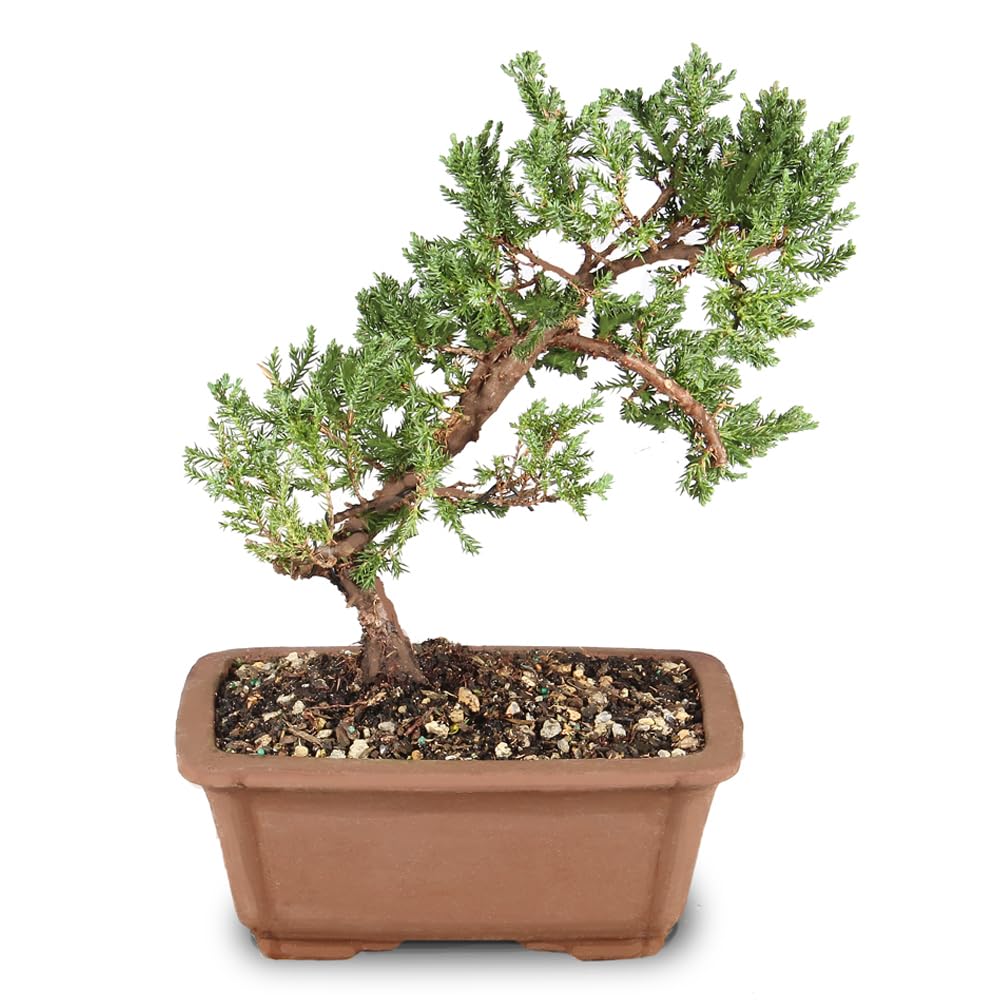 Choose this juniper if you have a patio, porch, or balcony and want a hardy outdoor bonsai that forgives beginner mistakes.
Pros
- Green Mound Juniper handles moderate watering and partial shade
- Ceramic pot and rectangular styling look polished out of the box
- Suited to USDA zones 4 through 8, so it survives real outdoor seasons
Cons
- Cannot live indoors long-term; the tag says as much
- Needs a dormancy period outdoors through winter
- Container size and glaze color vary between shipments
Junipers are the classic outdoor bonsai, and this Green Mound variety is a sturdy way to start. It wants real sun and seasonal dormancy, meaning it goes through a rest period in cooler months rather than staying green year-round indoors. That’s a dealbreaker for anyone hoping to keep it on a kitchen counter, but a bonus for gardeners with outdoor space who want something low-maintenance. One reviewer’s note that “it will die” if brought indoors is worth taking seriously; this is an outdoor plant through and through.
Planters’ Choice Bonsai Starter Kit
 Pick this kit if growing a bonsai from seed sounds more rewarding than buying one already grown.
Pros
- Four species (Rocky Mountain Pine, Royal Poinciana, Blue Jacaranda, Norway Spruce) in one box
- Includes burlap pots, soil disc, markers, shears, and an instruction booklet
- Budget-friendly way to try bonsai without committing to a live tree purchase
Cons
- Germination rates vary by species and grower experience
- Results take months, not days
- Some seeds may not sprout at all, per several reviewer reports
This is a seed kit, not a live tree, and that distinction matters. Success depends on patience and following the soaking and planting steps closely; several growers report strong results, while others saw only partial germination. Treat it as a long-term hobby project rather than instant décor. For curious beginners or gift recipients who enjoy a slow-build process, it’s a low-cost way to learn what bonsai training actually involves from the seedling stage onward.
AVERGO Deluxe 5-Tree Kit
 Grab this kit for a well-organized, gift-ready seed-growing experience with extra seeds built in as a safety net.
Pros
- Five species including Crape Myrtle, Flame Tree, and Blue Jacaranda
- Bonus seed packets improve odds if some don’t germinate
- Wooden planter box and tools feel higher-end than typical kits
Cons
- Germination is inconsistent; some buyers saw only one of five sprout
- Requires ongoing attention to avoid pests in the soil
- Still a multi-week wait before any visible bonsai shape forms
The wooden planter box and included tools make this feel like a proper gift rather than a bargain-bin kit. Extra seed packets acknowledge the honest reality of growing bonsai from seed: not every seed germinates, and even careful growers see mixed results. One reviewer’s sprouts appeared within eight days, which is encouraging, though patience is still required before pruning and shaping become relevant. It’s a strong pick for someone who wants the full growing experience as a hobby, not a fast plant.
Dwarf Juniper with Ceramic Fisherman
 This one suits a gift buyer who wants a charming, six-year-old live juniper with a decorative figurine included.
Pros
- Six years of training gives it a mature, established look
- Glazed ceramic pot and ceramic fisherman add gift appeal
- Direct sunlight and steady moisture keep it fairly easy to maintain
Cons
- Requires cooler dormancy outdoors, not a purely indoor plant
- Some buyers felt marketing overstated how “indoor-friendly” it is
- Pot color and moss placement vary between units
The included ceramic fisherman figure gives this juniper a storybook quality that plain bonsai pots don’t have, and it photographs well as a gift. Underneath the decoration, it’s still a juniper that wants sunlight, fresh air, and a dormant period when temperatures drop below 50°F. Buyers who treated it as an outdoor plant with occasional indoor visits report the best results. Going in expecting a low-maintenance houseplant is where disappointment creeps in.
Avergo Jacaranda Bonsai Kit
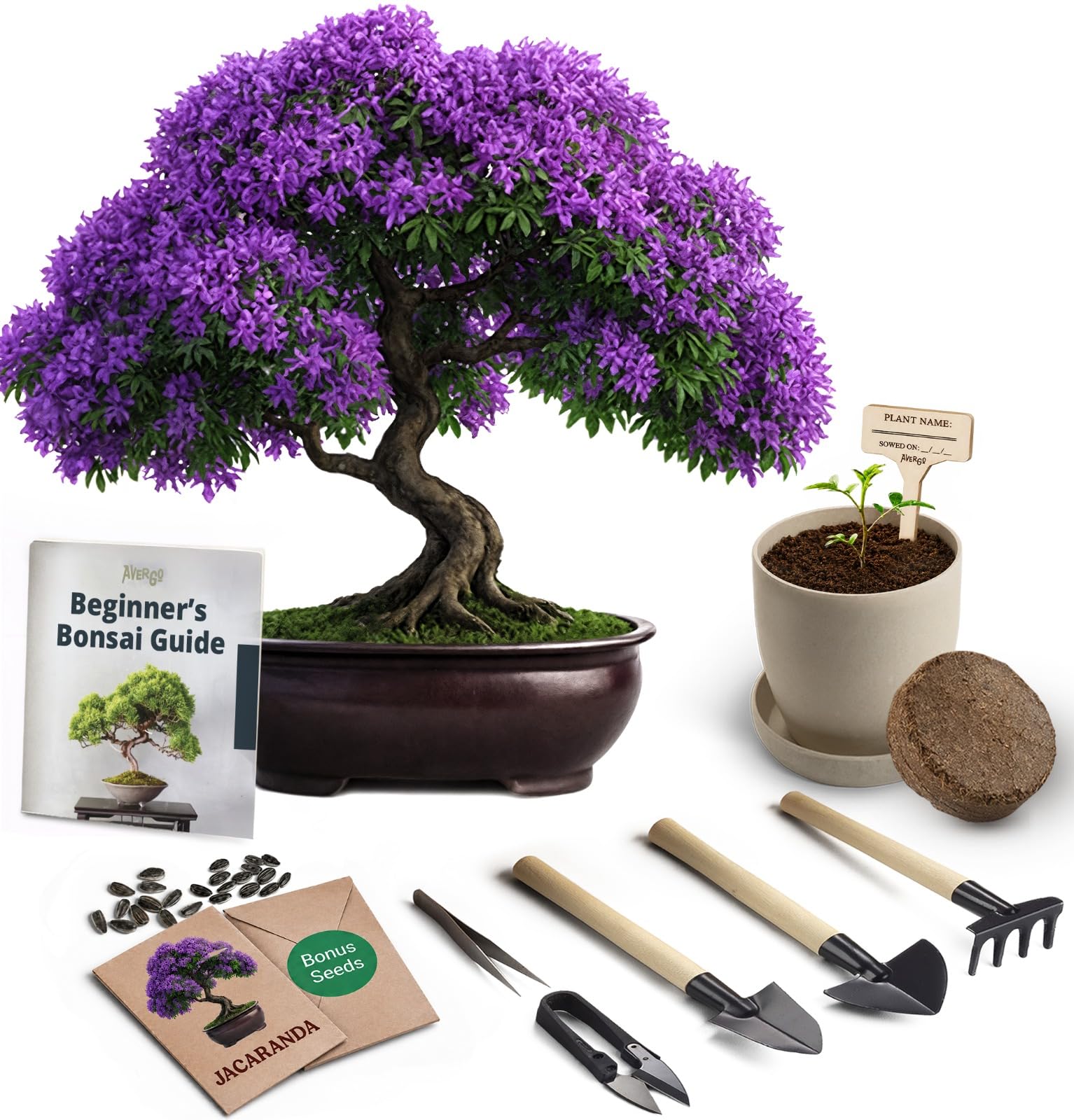 Consider this kit for a single-species seed project centered on jacaranda’s purple blooms, with tools and extra seeds included.
Pros
- Focused on one striking species rather than splitting attention across several
- Comes with a ceramic pot, drainage tray, and pruning tools
- Extra seed packets included to offset germination misses
Cons
- A few reports of the ceramic pot arriving cracked or breaking after delivery
- Germination still takes weeks with no guaranteed outcome
- Not a live tree, so there’s no bonsai shape at time of purchase
Jacaranda’s purple flowers make this a distinctive choice among seed kits, and the tool set feels complete for a first attempt. The pot has been a sore spot for a handful of buyers, with a couple reporting cracks or breakage during shipping or shortly after. Most reviews describe healthy sprouting and an enjoyable process when the pot arrives intact. Worth choosing for the species appeal, with an eye toward careful unpacking.
The Little Book of Bonsai
 Add this book to your cart alongside any tree or kit purchase to actually understand what you’re doing.
Pros
- Condenses pruning, watering, and styling basics into a compact, illustrated format
- Well-suited to total beginners without being overly simplistic
- Doubles as an attractive coffee-table book
Cons
- Light on deep technical detail for advanced practitioners
- A few readers wanted more step-by-step “how-to” content and less style reference
- Small enough that it covers breadth over depth
No live tree or seed kit comes with enough guidance to handle pruning, wiring, or repotting confidently, and this book fills that gap. It’s short, image-heavy, and organized so a beginner can find an answer quickly instead of hunting through dense horticultural text. A few readers wanted more hands-on instruction and less stylistic overview, which is fair criticism for anyone past the absolute basics. Paired with a first tree, it shortens the learning curve considerably.
Brussel’s Bonsai Juniper in Zen Pot
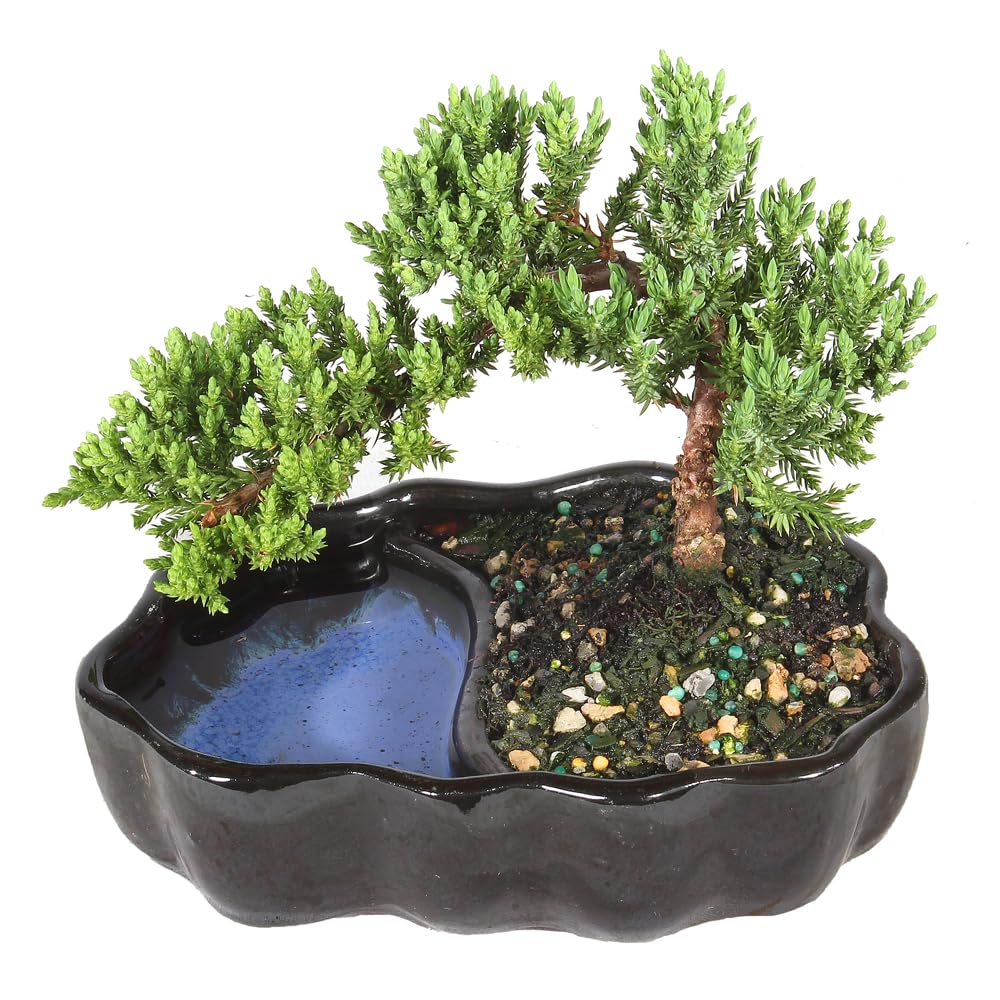 Go with this juniper if you like the look of a minimalist Zen pot alongside a smaller, younger outdoor tree.
Pros
- Zen-style pot gives it a cleaner, more modern look than typical bonsai containers
- Three-year-old tree at 6-8 inches suits compact outdoor spaces
- Competitively priced next to comparable outdoor junipers
Cons
- Roots have arrived wire-bound in some shipments, requiring repotting care
- A few buyers report the tree declining after a month
- Outdoor-only, same dormancy requirements as other junipers
The Zen pot sets this apart visually from the standard rectangular juniper planters, and the smaller three-year-old tree suits a tighter patio corner. Packaging draws consistent praise, with buyers noting careful wrapping and clear care instructions. One recurring issue: roots bound tightly with aluminum wire, which needs gentle unwinding at repotting time rather than yanking free. Healthy outcomes are common, but a small number of trees decline within weeks, so keep an eye on watering consistency early on.
PureBonsai 5-Species Starter Kit
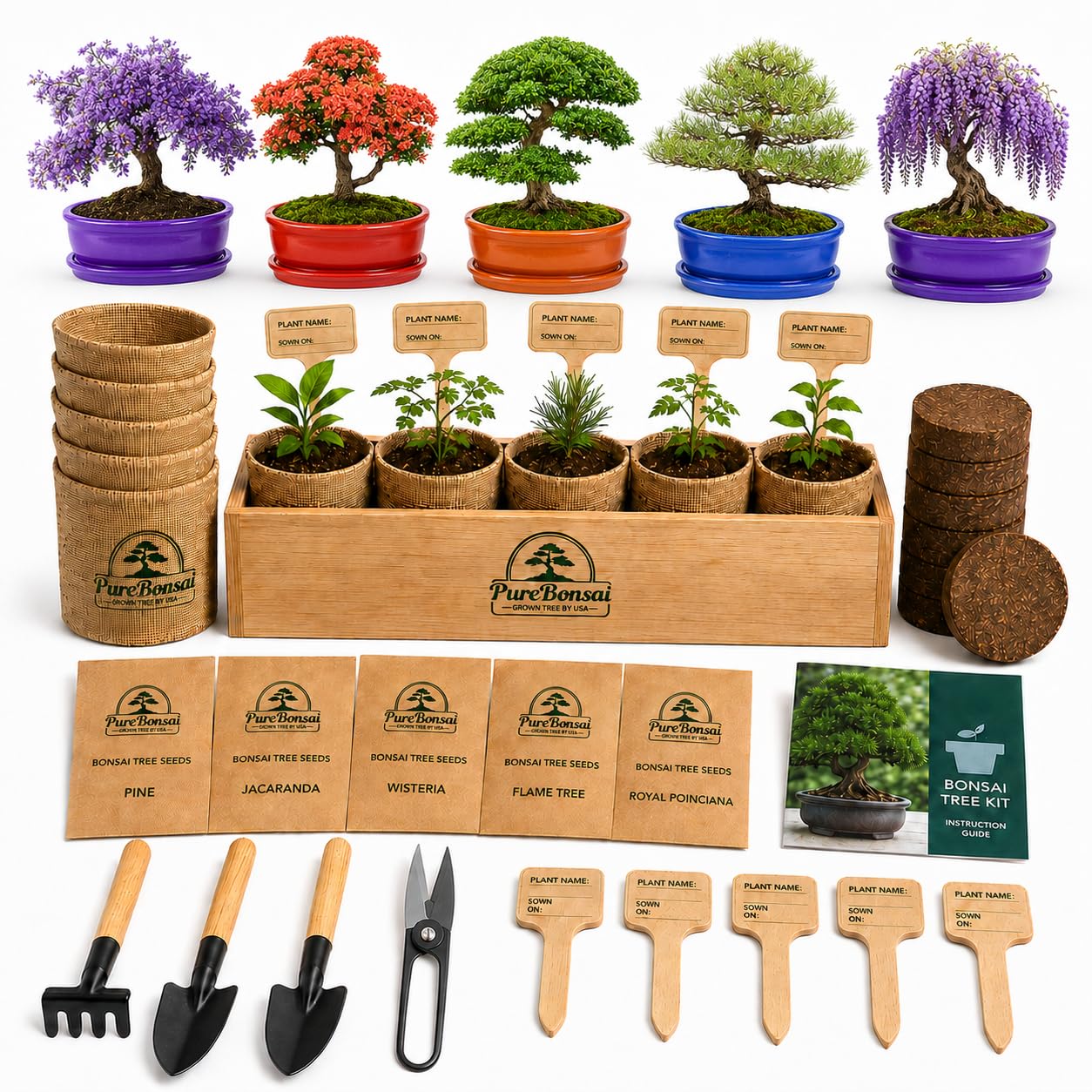 Try this kit if you want a tidy, well-organized seed-growing box with clear instructions for a first attempt.
Pros
- Five species including Blue Jacaranda, Wisteria, and Norway Spruce
- Instructions are described as easy to follow even for total beginners
- Complete with pots, soil discs, markers, and pruning tools
Cons
- Newer product with a small review base compared to competitors
- Germination outcomes depend heavily on light and consistent care
- Multi-week wait before any tree shape is visible
Early feedback on this kit points to good organization and clear directions, which matters more than people expect when juggling five different seed types at once. Kids and first-time growers seem to do well following the included booklet. The smaller number of reviews means less of a track record than some competitors, but the reports available describe successful germination and a satisfying process. A reasonable pick for a first seed-based project.
Brussel’s Bonsai Dawn Redwood
 Choose this redwood if you want a taller, more dramatic live bonsai for an outdoor space with full sun.
Pros
- Feathery deciduous foliage looks different from typical evergreen bonsai
- Larger 14-20 inch size gives real vertical presence
- Ceramic pot included, ready to display
Cons
- Full sun requirement means it needs an unshaded outdoor spot
- A few buyers report leaf drop and decline despite good care
- Heavier and larger, so it needs a permanent outdoor location
Dawn Redwood is a deciduous conifer, meaning it drops its needles seasonally rather than staying evergreen, which surprises some first-time buyers. At 14 to 20 inches, it’s larger than most starter bonsai and makes a real statement on a sunny patio. Reviews describe healthy, well-packed arrivals overall, though a small number mention gradual leaf loss even with consistent care. Full sun is non-negotiable here, so a shaded balcony isn’t the right home for it.
Buying Guide
Live Tree or Seed Kit
Live bonsai trees give you an immediate, already-shaped plant, ideal for beginners who want results without a growing phase. Seed kits ask for months of patience through germination and early seedling care before any bonsai styling is possible. Choose based on whether you want a finished plant or a hands-on project.
Indoor vs. Outdoor Species
Ficus varieties tolerate indoor light and heating/cooling swings reasonably well, making them the standard indoor beginner species. Juniper, pine, and redwood are outdoor plants that need real seasonal changes, including a winter dormancy period, and decline indoors over time.
| Factor | Indoor Species (Ficus) | Outdoor Species (Juniper, Redwood) |
|---|---|---|
| Light needs | Bright, indirect light | Full sun to partial shade |
| Dormancy | Minimal to none | Required seasonal rest |
| Best location | Windowsill, desk, shelf | Patio, balcony, garden |
| Beginner difficulty | Lower | Moderate |
Pot and Container Style
A bonsai pot affects both looks and root health. Shallow, well-draining ceramic pots support the compact root systems bonsai training requires, while decorative elements like glazing or figurines add personality without changing care needs.
Age and Size
Older trees (five years and up) usually have more developed trunks and branch structure, giving a more convincing bonsai look right away. Younger trees cost less and offer more room to shape the plant yourself as it grows.
Watering and Light Commitment
Overwatering kills more beginner bonsai than underwatering. Check soil moisture before watering rather than following a fixed schedule, and match light exposure to the species: bright indirect light for ficus, full sun for outdoor conifers.
Kits: Tools and Included Accessories
Look for kits that include pruning shears, biodegradable pots, soil discs, and plant markers at minimum. Extra seed packets are a meaningful bonus since germination rates vary by species and aren’t guaranteed.
Editor’s Choice
The Golden Gate Ficus earns the top recommendation for most first-time growers. It arrives already shaped, tolerates indoor conditions better than nearly any other bonsai species, and lets a beginner focus on learning watering and light habits instead of wrestling with two challenges at once.
For anyone drawn to the process of growing rather than owning, the AVERGO Deluxe 5-Tree Kit stands out among the seed options. The included tools and bonus seed packets soften the disappointment of inconsistent germination, and five species in one box gives a real shot at success with at least one variety.
Pair either purchase with The Little Book of Bonsai. Live trees and seed kits both benefit from understanding pruning timing, watering signals, and basic styling, and this book delivers that knowledge in a format a beginner will actually finish.
Conclusion
Starting with bonsai doesn’t require expertise, just an honest match between the plant and your patience level. A live ficus rewards someone who wants greenery now and is willing to learn watering by feel. A juniper suits an outdoor space and a gardener comfortable with seasonal dormancy. Seed kits suit anyone who enjoys the process more than the immediate result, accepting that not every seed will sprout.
Whichever route fits your space and schedule, pick one plant or kit to start rather than several at once. Learning the watering rhythm and light needs of a single bonsai builds confidence faster than spreading attention across multiple new plants in the first few months.
FAQS
Are bonsai trees hard to keep alive as a beginner? Live bonsai trees like ficus are manageable for beginners once watering and light needs are understood. Outdoor species like juniper require more attention to seasonal dormancy and sun exposure.
Can I keep an outdoor bonsai like juniper indoors? No. Junipers and other outdoor bonsai species decline and eventually die if kept indoors long-term, since they need real seasonal temperature changes and direct sunlight.
How long does it take to grow a bonsai from seed? Germination alone can take several weeks, and a seedling needs months to years of growth before it resembles a styled bonsai. Seed kits suit patient growers rather than those wanting quick results.
Do bonsai trees need special soil? Most bonsai use fast-draining soil such as clay-based or coconut coir mixes rather than standard potting soil, since bonsai pots hold less volume and need to avoid waterlogging.
What’s the most common mistake first-time bonsai owners make? Overwatering ranks as the top issue, followed by placing an outdoor species like juniper in a spot with insufficient sunlight. Checking soil moisture before each watering helps avoid root problems.