
10 Best Bonsai Trees for Small Spaces in 2026

A bonsai tree brings a slice of living landscape into places where a full-size houseplant won’t fit. For anyone working with a studio apartment shelf, a cubicle desk, or a small balcony, the appeal is obvious: a mature-looking tree that stays small by design, shaped through pruning and root restriction rather than genetics alone. The best bonsai for a small space is one whose light needs match the spot you actually have, not the spot you wish you had.
Bonsai falls into two broad camps that matter enormously for small-space buyers. Tropical and subtropical species like ficus, jade, and ginseng ficus tolerate typical indoor light and humidity, making them the realistic choice for desks and windowsills. Temperate species like juniper and maple are outdoor trees that need seasonal cold and direct sun; they decline indoors no matter how carefully you water them.
We’ve also included seed-grown starter kits and one artificial option in this roundup, because they get marketed alongside live trees but serve very different purposes. A kit takes years to resemble a bonsai, and a faux tree never will. Knowing which category you’re buying from before checkout prevents disappointment.
Best for a beginner desk plant: Brussel’s Bonsai Golden Gate Ficus
Best for a dramatic root display: Arcadia Ginseng Ficus Bonsai
Best for a small outdoor patio: Brussel’s Bonsai Green Mound Juniper
Best for a decorative gift: Dwarf Juniper with Ceramic Fisherman
Best for low-water households: Brussel’s Bonsai Dwarf Jade
Best for growing bonsai from scratch: AVERGO Bonsai Tree Kit Deluxe
Best for a larger tabletop statement: Brussel’s Bonsai Trident Maple
Best for zero-maintenance decor: Yoerm Artificial Bonsai Tree
Best for a family growing project: Inbloom 8 Pack Bonsai Tree Kit
Brussel’s Bonsai Golden Gate Ficus
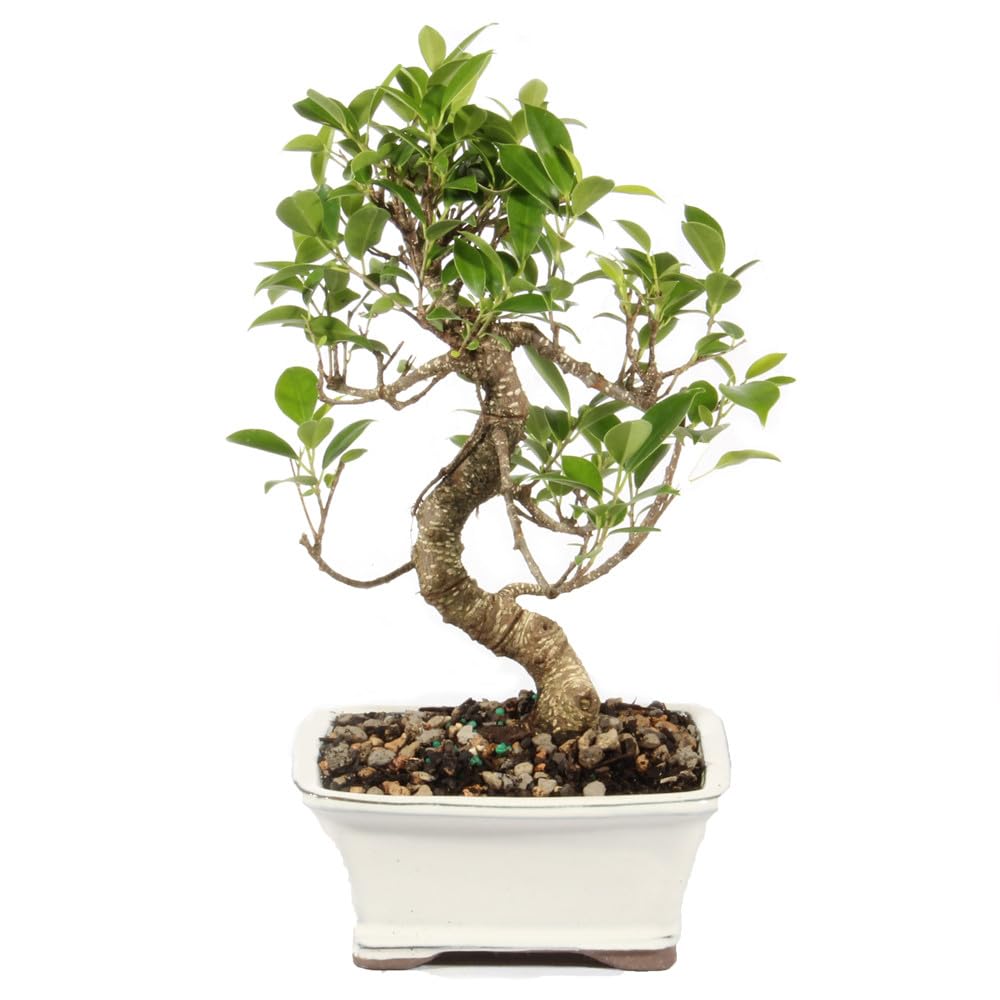
Buy this one if you want a real, established bonsai that tolerates apartment light and beginner mistakes better than most.
Pros
- Genuine 4-year-old ficus with a naturally spiraling trunk
- Adapts to typical indoor light and watering schedules
- Arrives potted and ready to display
Cons
- Watering routine takes some trial and error early on
- Leaf drop during acclimation is common
- Not shippable to Alaska or Hawaii
The Golden Gate Ficus earns its reputation as a starter-friendly bonsai because it forgives inconsistent watering better than junipers or maples do. Its compact footprint suits a windowsill or desk corner without dominating the space. Several buyers noted the tree looked stressed for the first week or two after shipping, which is normal ficus behavior as it adjusts to a new environment. Give it bright, indirect light and resist the urge to overwater, and this tree settles into a long-term houseplant.
Arcadia Ginseng Ficus Bonsai

Buy this one for its sculptural exposed-root trunk, a look that reads as more advanced bonsai styling without demanding advanced care.
Pros
- Thick, twisted above-soil roots give it real visual presence
- Tolerates lower light better than most ficus varieties
- Compact 12 to 14 inch size fits small shelves easily
Cons
- Cannot ship to California
- Some buyers reported leaf drop despite following care instructions
- Full shade tolerance can tempt owners into placing it too far from light
This ginseng ficus stands out from typical bonsai offerings because its swollen, twisting root structure looks intentional and mature right out of the box, rather than something you have to wait years to develop. It handles the average living room reasonably well, though “full shade tolerant” doesn’t mean no light at all. A spot a few feet from an east or west window keeps it healthiest.
Brussel’s Bonsai Green Mound Juniper
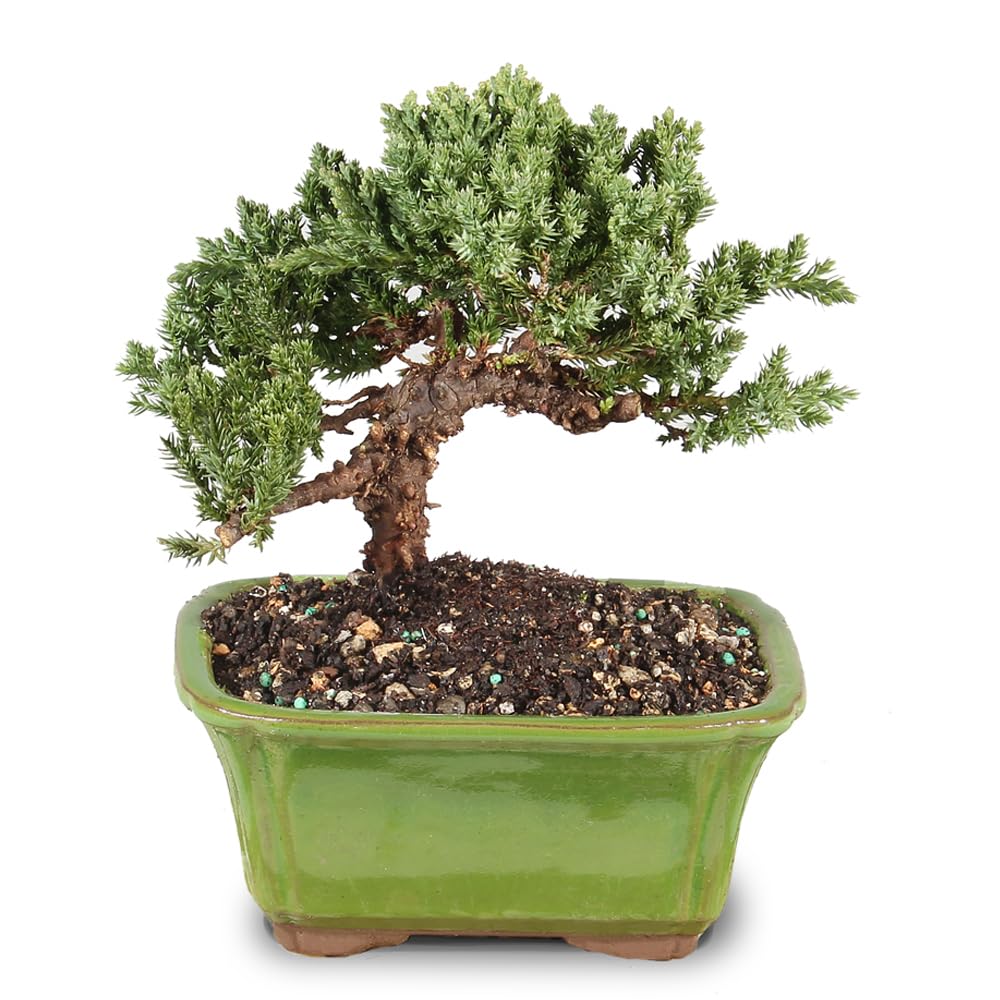
Buy this one only if you have an outdoor patio, balcony, or porch spot with real sun exposure, since junipers decline quickly indoors.
Pros
- Dense, textured foliage typical of classic bonsai displays
- Compact 4 to 6 inch size at three years old suits small patios
- Hardy variety once established outdoors
Cons
- Requires full sun and outdoor seasonal cycles to thrive
- A few buyers reported needle shedding or tree death
- Shipped bare-root sensitivity to temperature during transit
Juniper is the tree most people picture when they think “bonsai,” and this Green Mound variety delivers that classic look in miniature. It needs to live outside, with real sun and real seasons, so it’s a poor match for anyone hoping to keep it on an indoor desk. Reviews were mixed on longevity, with some trees thriving and others declining despite careful watering, which tracks with juniper’s reputation as a plant that fails when moved indoors or overwatered.
Dwarf Juniper with Ceramic Fisherman

Buy this one as a gift-forward option, where the decorative ceramic figurine and mature 6-year trunk add charm beyond a standard nursery pot.
Pros
- Older 6-year specimen with more developed trunk character
- Whimsical fisherman figurine and artificial moss add display appeal
- Comes with basic care instructions included
Cons
- Needs outdoor dormancy in cold months, complicating indoor-only plans
- Pot and figurine color/style can vary from listing photos
- Not beginner-friendly despite the decorative presentation
This one dresses up a dwarf juniper with a small ceramic fisherman figure and faux moss, making it look more like a finished diorama than a typical nursery plant. It photographs beautifully, but the tree itself is still a juniper underneath, meaning it wants a cold dormant period and consistent outdoor sun. Treat the figurine as the gift-ready bonus and the tree care requirements as unchanged from any other juniper.
Brussel’s Bonsai Dwarf Jade
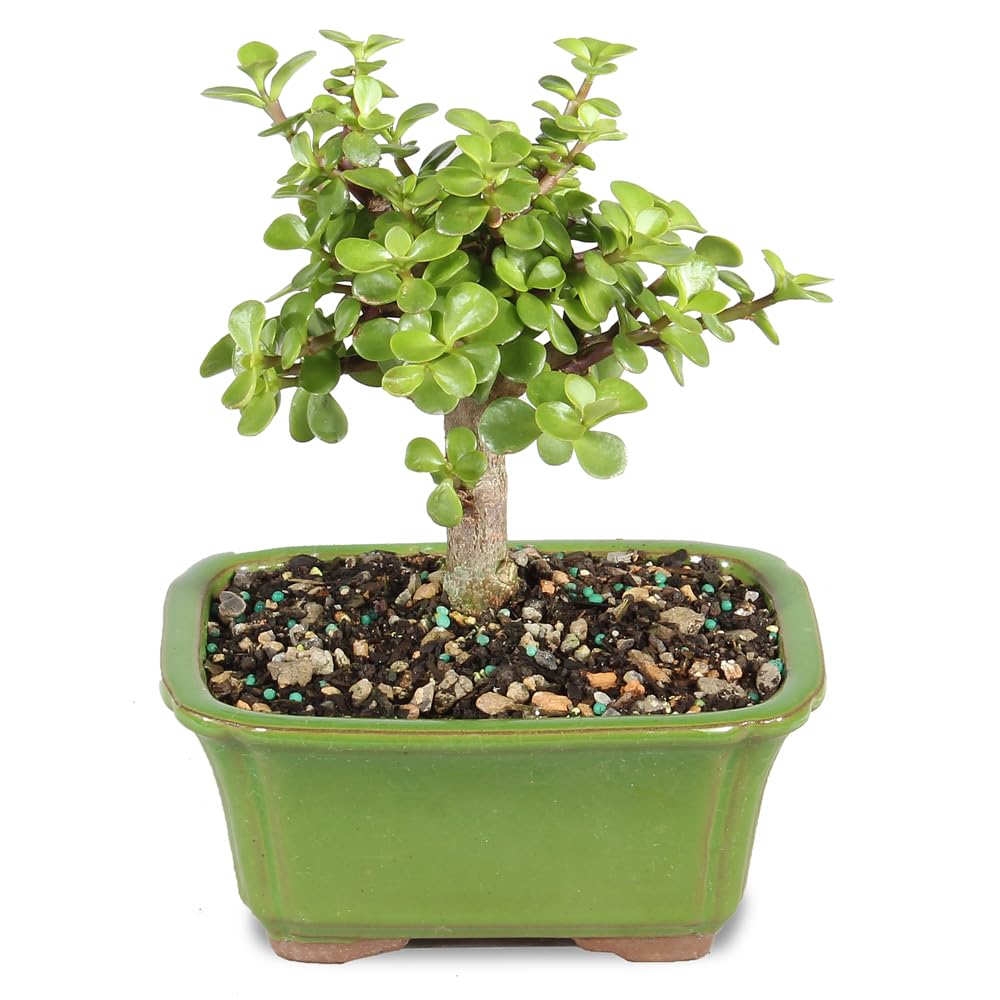
Buy this one if a lower watering commitment matters more than anything else, since jade is a succulent and stores its own water.
Pros
- Thick, glossy leaves and woody trunk read as classic bonsai style
- Minimal watering needs make it forgiving for busy schedules
- Ceramic pot included, ready to display
Cons
- Overwatering remains the most common cause of failure
- A few buyers received trees with broken stems in transit
- Pot color shown in photos may not match what arrives
Dwarf jade is arguably the easiest tree on this list to keep alive, since it’s a succulent that stores water in its thick trunk and leaves. That makes it a strong match for anyone who tends to forget watering schedules. Unpack it carefully, since the brittle stems can snap in shipping, and let the soil dry out fully between waterings rather than watering on a fixed schedule.
AVERGO Bonsai Tree Kit Deluxe

Buy this one as a growing project, not as a shortcut to an actual bonsai tree, since these seeds take years to develop bonsai character.
Pros
- Includes soil, five seed varieties, tools, and a wooden planter box
- Extra seed packets improve odds against uneven germination
- Enjoyable hands-on activity for families or gift recipients
Cons
- Germination rates vary significantly by seed type
- Seedlings need years of growth before any bonsai styling is possible
- Not a fit for anyone wanting a display-ready tree now
This kit makes sense as a hobby starter, not as furniture for your shelf next month. Buyers reported uneven germination across the five seed types, with some sprouting in days and others failing entirely, which is typical for bonsai species grown from seed. If you or a gift recipient enjoys the process as much as the outcome, it’s a satisfying slow-build project. If you want greenery on display now, choose an established tree instead.
Brussel’s Bonsai Trident Maple
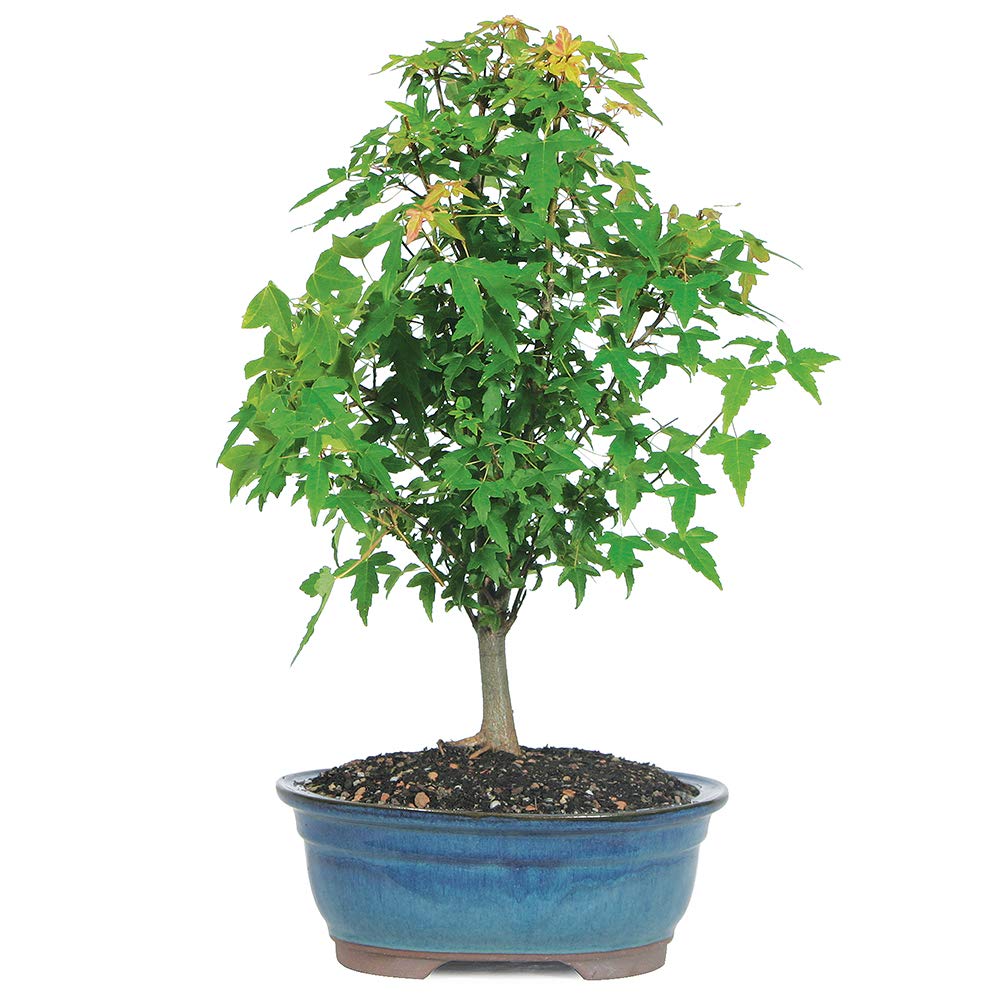
Buy this one for a larger, more established outdoor centerpiece, sized for a patio table rather than a tight desk corner.
Pros
- Mature 5-year-old tree with structured branching
- Vibrant seasonal foliage color typical of trident maples
- Well-suited to styling and shaping over time
Cons
- Needs outdoor conditions and seasonal dormancy, not an indoor tree
- Larger 8 to 12 inch size needs more patio space than other picks
- A few buyers reported fungal issues or dead arrivals
Trident maple brings the seasonal color and branch structure that draws people to outdoor bonsai in the first place. At 8 to 12 inches, it’s the largest live tree in this roundup, better suited to a patio table than a cramped windowsill. Most reviews describe healthy, vigorous arrivals, though a small number reported fungal spotting or dieback, a risk that comes with any live tree shipment.
Yoerm Artificial Bonsai Tree

Buy this one for decor only, since it requires no light or water and never needs the plant care this whole category is built around.
Pros
- Zero watering, sunlight, or maintenance required
- Bendable branches allow reshaping after unboxing
- Compact 9.5 inch size suits shelves and desks
Cons
- Looks noticeably artificial up close, per multiple reviews
- Lightweight construction can feel cheap for the price
- Offers none of the living, growing appeal of an actual bonsai
This faux bonsai fills a specific need: decor for a space with no natural light, or for anyone who wants the look without any care commitment. It won’t fool anyone standing close, and a few buyers described the plastic foliage as flimsy. Judge it as an ornament, not a plant substitute, and it does what it promises.
Inbloom 8 Pack Bonsai Tree Kit
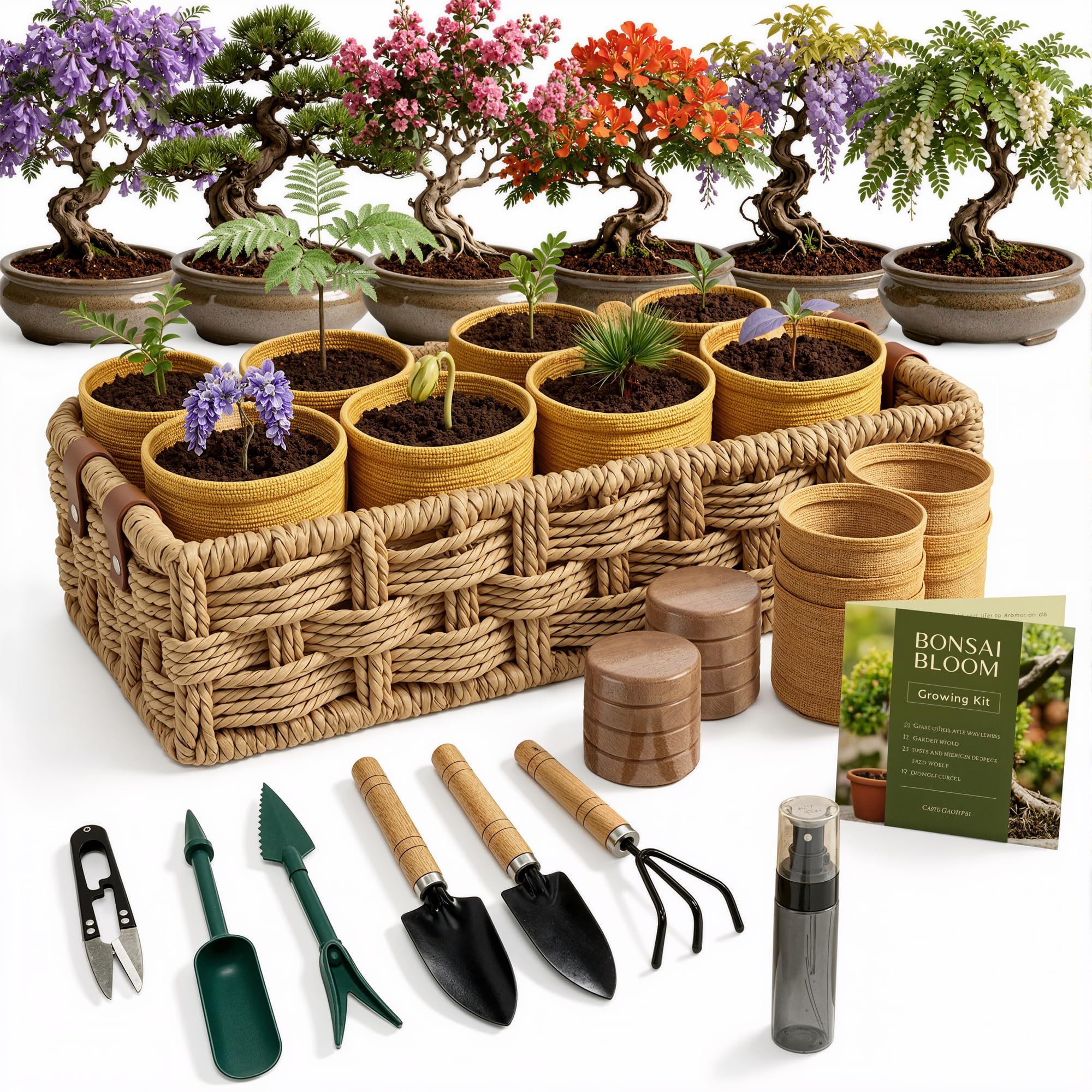
Buy this one for a well-organized, gift-ready seed starter set with a broader variety and nicer presentation than most kits.
Pros
- Eight seed varieties plus jute pots, soil discs, and tools included
- Woven basket presentation makes it gift-appropriate
- Clear step-by-step instruction booklet for beginners
Cons
- Germination remains inconsistent across seed types
- Years of growth needed before any bonsai shaping is possible
- Smaller kit size means less soil and fewer backup materials than larger kits
This kit distinguishes itself with presentation, a woven basket and 40-piece set that feels more considered than a basic seed packet bundle. The instruction booklet walks through the full timeline honestly, from two-month seedlings to mature bonsai years later, which sets realistic expectations. It’s a strong pick for someone who wants the growing process as the gift itself, not an instant tree.
Buying Guide
Match the Tree to Indoor or Outdoor Light
Tropical species like ficus, jade, and ginseng ficus adapt to bright indoor light and make sense for desks and apartments. Junipers and maples are outdoor trees that need direct sun and seasonal temperature changes; keeping them indoors year-round leads to slow decline. Check the species before you check the size.
Consider Mature Size and Pot Footprint
Small-space bonsai typically range from 4 to 12 inches tall including the pot. A few inches makes a real difference on a narrow windowsill or crowded desk.
| Footprint | Typical Height | Best Placement |
|---|---|---|
| Compact | 4 to 6 inches | Desk, narrow shelf |
| Medium | 6 to 9 inches | Coffee table, wide windowsill |
| Larger | 8 to 12+ inches | Patio table, floor stand |
Water and Humidity Needs
Succulent-type bonsai like jade need infrequent watering and dry soil between drinks. Ficus and ginseng ficus want consistent moisture without waterlogging. Outdoor junipers and maples need regular watering plus exposure to natural rainfall and humidity swings.
Live Tree vs. Seed Kit vs. Artificial
Decide what you’re actually buying before checkout.
- Live established bonsai: Years old already, styled, ready to display and maintain.
- Seed starter kit: A growing project, with a real tree years away from bonsai form.
- Artificial bonsai: Décor only, no plant care, no living presence.
Shipping and Regional Restrictions
Several live bonsai varieties can’t ship to Alaska, Hawaii, or California, and shipping timing around extreme cold or heat affects tree health on arrival. Check listing restrictions and expected transit temperatures before ordering a live tree.
Editor’s Choice
The Brussel’s Bonsai Golden Gate Ficus stands out as the strongest all-around pick for small spaces. It’s a genuine live bonsai, sized to fit a desk or shelf, and forgiving enough for someone who has never kept one alive before. Its indoor light tolerance solves the biggest problem apartment and office buyers run into with bonsai: most classic species need outdoor sun this tree simply doesn’t require.
For anyone drawn to sculptural root structure over classic trunk styling, the Arcadia Ginseng Ficus is a close runner-up, offering a more advanced look with comparably easy indoor care.
Conclusion
Small-space bonsai shopping comes down to matching species to your actual light and outdoor access, not just picking the prettiest photo. Tropical trees like ficus and jade handle apartment life; junipers and maples need real outdoor sun and seasonal cold. Seed kits and artificial trees serve entirely different purposes and shouldn’t be judged against an established live tree.
Start with an honest look at where the tree will live, check the pot footprint against your shelf or desk space, and choose the species built for that environment. A well-matched bonsai, even a modest one, outlasts a mismatched showpiece by years.
FAQS
Can bonsai trees survive indoors with normal home lighting? Tropical varieties like ficus, jade, and ginseng ficus adapt well to bright indoor light near a window. Outdoor species like juniper and maple decline indoors regardless of light intensity, since they need seasonal temperature changes to stay healthy.
How often should I water an indoor bonsai? Check soil moisture daily rather than following a fixed schedule. Jade needs the soil to dry out between waterings, while ficus prefers consistently moist (not soggy) soil.
Are bonsai seed kits a realistic way to get a bonsai tree quickly? No. Seeds take years to grow into a tree with any bonsai character, and germination rates vary by species. Kits work as a long-term hobby project, not a fast route to a display-ready tree.
Do bonsai trees need special pots? Bonsai pots are shallow by design, which restricts root growth and helps keep the tree small. Most live bonsai in this roundup ship already potted appropriately.
Is an artificial bonsai a good substitute for a live one? It works for décor in low-light spaces or for anyone who doesn’t want ongoing plant care. It doesn’t offer the growth, shaping, or living presence that make real bonsai appealing to enthusiasts.