
The best indoor bonsai grow lights give bright 5000–6500K, full-spectrum, dimmable PPFD.
If your bonsai sits on a desk or a dim sill, a good grow light can mean the difference between weak, leggy growth and compact, glossy foliage. I’ve tested and compared a range of desk and halo lights that suit small trees. In this guide, I’ll show you what actually works for bonsai indoors, how to set them up, and how to avoid common mistakes. I’ll also rate the Best Indoor Grow Lights For Bonsai based on spectrum, intensity, coverage, ease of use, and value in 2026.
GooingTop 6000K Clip-on Grow Light
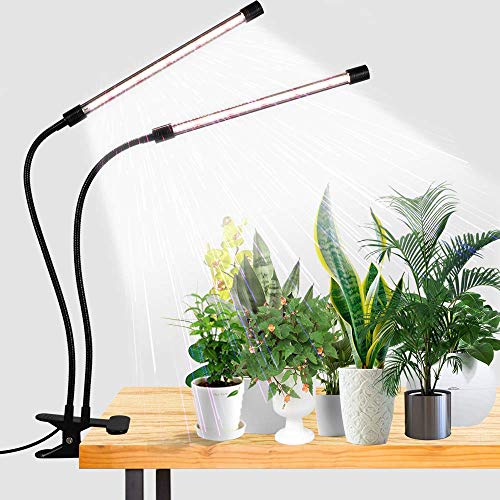
This clip-on daylight lamp hits the sweet spot for small indoor bonsai. It runs at a crisp 6000K, which mimics bright window light and keeps growth compact. Five brightness levels make it easy to dial in intensity for species like Ficus, Schefflera, or Jade. The white plus red LEDs help with photosynthesis while keeping the look natural on a desk.
The auto timer is simple and handy. You can set 4, 8, or 12 hours and it remembers the setting each day. The gooseneck flexes well, so you can angle the light to reduce harsh shadows under the canopy. The clip saves space and fits shelves, thin tables, and plant stands.
Pros:
- Natural 6000K color for true-to-life foliage inspection
- Five dimming levels for seedling, recovery, or growth phases
- Auto 4/8/12-hour timer with memory, no extra smart plug needed
- Space-saving clip and flexible gooseneck aim light exactly where needed
- Low heat, safe at close distances with proper airflow
Cons:
- Limited coverage area for larger canopies or multiple trees
- Clip can slip on thick or rounded edges
- Not strong enough for high-light species like bougainvillea
My Recommendation
The GooingTop is ideal if you keep one small bonsai on a desk or shelf. It’s also great as a side light to fill shadows from a window. If you need compact growth and a clean look, this is one of the Best Indoor Grow Lights For Bonsai that won’t crowd your space. The built-in timer keeps things simple, and the color temp is spot on for daily work and wiring.
| Best for | Why |
|---|---|
| Single small bonsai (Ficus, Jade) | Focused beam, five dim levels, daylight 6000K |
| Desk or shelf setups | Clip-on mount saves room and aims light well |
| Hands-off schedules | Built-in timer automates daily light cycles |
GYTF Halo 6000K Adjustable Grow Light

The GYTF halo design shines in a full circle, which limits harsh shadow lines. That’s great for bonsai with denser canopies or layered pads. The 6000K white spectrum makes foliage look true and helps you see fine detail when wiring or pruning. The height-adjustable pole helps you keep light close as your tree grows or as you change pots.
I like the longer timer options here: 4, 8, 12, and even 18 hours. This is handy if you overwinter tropicals and want extended day length. It’s dimmable, so you can start low after repotting and ramp up. It’s a neat, tidy unit that suits a living room or home office.
Pros:
- Halo ring spreads light evenly to reduce hard shadows
- Adjustable height suits changing canopies and pot sizes
- 6000K daylight aids compact growth and natural color
- Four timer lengths up to 18 hours for winter day extension
- Clean look and small footprint for decor-friendly setups
Cons:
- Base can tip if extended too high on soft surfaces
- Not powerful enough for high-light, sun-loving species
- Covers one plant; group displays need multiple units
My Recommendation
If you want an even spread over a small to medium bonsai, this halo is a smart pick. It excels with tropicals like Ficus, Fukien tea, and Schefflera, and it looks refined in a home. As one of the Best Indoor Grow Lights For Bonsai, it balances even light, easy timing, and a small footprint. Choose it for calm, steady growth with minimal fuss.
| Best for | Why |
|---|---|
| Medium canopy trees | Ring light reduces shadows across pads |
| Winter day-length boost | Up to 18-hour timer keeps growth steady |
| Home office display | Sleek look, quiet operation, minimal heat |
Aokrean 48-LED Halo Grow Light (3‑Pack)

This 3-pack gives you flexible coverage for a small bonsai group. Each halo has 48 LEDs and three spectrum modes. You get a cooler white, a warmer mix, and a full-spectrum blend. I find this handy when I’m hardening a cutting or boosting color on a tropical.
Each unit has a 3/9/12-hour timer and 10 brightness levels. The short 3-hour setting is useful for midday boosts when your window light fades. Height adjustment keeps the ring the right distance from the canopy. Value is strong here if you want even light on multiple trees.
Pros:
- Three lights cover several bonsai or shelves
- Three spectrum modes suit growth, recovery, and display
- 10 brightness levels for precise intensity control
- Compact bases fit on narrow stands or trays
- Great value for multi-tree owners or starters
Cons:
- Single halo power per unit is modest for high-light species
- More cords to manage across three lights
- Timer lacks a long 16–18 hour option
My Recommendation
Pick this if you tend several small trees or like a tidy, even glow across a shelf. The mix of spectrum modes and brightness steps makes this one of the Best Indoor Grow Lights For Bonsai collections for beginners to advanced hobbyists. It also makes a sharp display for shows or guest rooms. Use two rings near one larger canopy for extra intensity.
| Best for | Why |
|---|---|
| Multiple bonsai setups | Three halos cover several trees with even light |
| Propagation and recovery | Spectrum choices and fine dimming help reduce stress |
| Budget-friendly growth | Strong value without bulky panels |
FECiDA Desk Full‑Spectrum Grow Light, 2000 lm

This lamp pushes more output than small halos. It lists 2000 lumens with a full-spectrum array that includes UV and IR. That broader range can help color and flowering response when used with care. The rigid frame and height range (around 16 to 24 inches) suit medium bonsai.
There is a simple on/off switch, so I suggest a smart plug or mechanical timer. The wider head throws a broader beam than a ring. This can cover a small forest planting or a pair of trees side-by-side. It is a solid step up when a halo is not quite enough.
Pros:
- Higher output suits medium or light-hungry tropicals
- Wide, full-spectrum array with UV/IR for advanced users
- Stable desk base and adjustable height for spacing
- Broad beam covers a larger footprint than rings
- Good build for daily use and training work
Cons:
- No built-in timer; requires an external timer or smart plug
- UV/IR needs careful distance to avoid leaf stress
- Higher brightness can dry soil faster
My Recommendation
Choose this when your bonsai outgrows a small ring light. It fits owners who want one stronger lamp over a prized tree or a duo. As one of the Best Indoor Grow Lights For Bonsai, it gives room to grow with better spread and punch. Add a smart plug for a set-and-forget schedule.
| Best for | Why |
|---|---|
| Medium bonsai or forest trays | Broader beam and higher brightness |
| Blooming tropicals (with care) | Wide spectrum includes UV/IR for color response |
| Daily training and styling | Natural look and sturdy base for work sessions |
Aokrean 48‑LED Grow Light (2‑Pack)

This two-pack is a tidy solution for a pair of trees or a small bench. The 48-LED halo format provides even light and a clean look. Three spectrum modes and 10 brightness steps help you fine-tune growth. The included timer has 3/9/12-hour options for day length control.
Height adjustment is smooth, and the bases are compact. For many owners, this is an easy way to light a main tree and a secondary tree. It’s also a nice partner for a bright window on cloudy weeks. Simple controls make it easy to use daily.
Pros:
- Two lights cover two bonsai or one larger canopy
- Three spectra and 10 brightness levels for fine control
- Compact footprint is ideal for shelves and desks
- Timer offers small, medium, and longer light blocks
- Great value for small collections
Cons:
- Not strong enough alone for true high-light outdoor species
- Separate timers mean manual sync across two units
- Limited reach if placed too far from the canopy
My Recommendation
If you own two small bonsai, this two-pack delivers. It gives even light at close range and keeps a neat display. For many home growers, it sits among the Best Indoor Grow Lights For Bonsai due to simple setup and reliable dimming. Use it as a main light in winter and as a booster in spring and fall.
| Best for | Why |
|---|---|
| Two-tree displays | Matched halos keep growth even on both trees |
| Bright-window boost | Great as a midday or cloudy-day supplement |
| Beginners | Easy controls and gentle output reduce mistakes |
How to Choose the Best Indoor Grow Lights For Bonsai
Indoor bonsai thrive on bright, steady light. Most tropical bonsai grow best under 5000–6500K white light. This range looks like daylight and keeps internodes short. It also lets you see true leaf color when you prune or wire.
Light intensity matters more than raw watt or lumen numbers. What your tree “sees” is PPFD, which is the photosynthetic light that hits the leaves. For most indoor bonsai, aim for about 100–250 µmol/m²/s at the top of the canopy for 12–16 hours per day. Low-light tolerant species do well near the lower end. Medium-light species like Fukien tea do better near the high end.
Panels push more intensity. Ring lights spread light evenly but at lower peak PPFD. Many desk halos can deliver useful PPFD if placed 6–10 inches from the leaves. For more demanding trees or larger canopies, go closer or add a second light. Watch for heat at close range and raise the light if leaves warm to the touch.
Color spectrum can shift growth style. White LEDs with a bit of red support strong photosynthesis. Blue content helps keep growth tight and compact. Some lights add UV or IR. These can aid color and bloom cues but need care. Keep UV/IR farther away and increase time slowly to avoid burn.
Choose a mount that fits your space. Clip-on lights save space on crowded desks. Ring lights with a base look neat for display areas. Fixed desk lamps with a larger head can cover more than one small bonsai. Make sure the neck or pole adjusts so you can hold the light close without blocking your view.
Timer features save time and improve consistency. Bonsai respond well to a stable day/night rhythm. Built-in timers are easy. If your light lacks one, use a smart plug or a simple mechanical timer. Many growers run 12–14 hours in winter and 10–12 hours in summer for tropical species indoors. Adjust only a little each season to avoid stress.
Energy use adds up over long photoperiods. A small halo may draw a fraction of the power of larger panels. If you plan to run lights for 16 hours per day, choose efficient LEDs. For most indoor bonsai, compact desk lights deliver enough PPFD while staying modest in power draw.
Make sure you match the light to your species. Ficus, Jade (Crassula), Schefflera, Fukien tea, and Chinese elm can adapt to indoor light well. They are good matches for the Best Indoor Grow Lights For Bonsai in this guide. Conifers, olives, and bougainvillea crave stronger sun. Keep conifers outdoors if you can. If you must hold them indoors for a short time, give the highest intensity, lots of airflow, and a short stay.
Check the build quality. Stable bases, firm clips, and smooth dimming controls matter when you adjust daily. Look for cool operation and good ventilation. LEDs last a long time, but heat shortens life. Always keep vents clear and avoid covering the light with decor or cloth.
As of 2026, desk and halo lights have improved. They offer better dimming, wider spectrum choices, and simple timers. For most indoor bonsai keepers, these small lights are enough if you set distance and time right. Bigger panels are not always needed in a home setting.
Setup Tips for the Best Indoor Grow Lights For Bonsai
Start with distance. Place the light 6–10 inches from the top leaves for small halos. For brighter lamp heads, start at 10–14 inches. Watch the leaves for a week. If growth is pale and long, lower or brighten the light. If tips brown or leaves curl, raise it or dim.
Rotate your bonsai weekly. That keeps growth balanced and pads even. A halo helps, but rotation still matters for branch structure. If your display faces a window on one side, rotate a bit more often.
Use reflectors wisely. A white wall or a matte poster board behind your bonsai bounces light back. This can increase effective intensity without more watts. Avoid shiny foil that can cause hot spots. Simple is better here.
Mind the microclimate. Lights dry soil faster. Use a chopstick to check soil depth and water before full dryness for tropicals. Good airflow is key. A tiny USB fan on low will stabilize temperature and help prevent fungus gnats.
Set a steady schedule. Try 12–14 hours for tropical species in winter. Shift by 1 hour per month toward summer, then back again, if you like seasonal feel. Avoid big swings. Plants love routine, just like people do.
Feed lightly under lights. With steady growth, use a gentle, balanced fertilizer at reduced strength. Stop or reduce feeding during stress events like repotting. Resume once new growth shows.
Troubleshooting Light Issues in Indoor Bonsai
Leggy shoots and large internodes show low light. Increase brightness, move the light closer, or extend the photoperiod. Pale leaves or leaf drop can also point to weak light or root issues. Fix light first, then check watering.
Scorched tips and curled leaves signal too much light or heat. Raise the lamp or lower the brightness. Ensure a small fan is moving air. Keep leaves from touching the LED head.
Yellowing in older leaves with green veins may signal nutrient needs. But check light and water first. Overwatering is common under new lights. As light goes up, transpiration goes up, but so does top growth. Keep the balance simple: light, water, feed, rest.
Uneven pad fill can come from shadows under dense branches. Add a side light like the GooingTop clip lamp to fill a dark side. Or move the main light slightly off-center and rotate the tree twice a week.
FAQs Of Best Indoor Grow Lights For Bonsai
How many hours per day should I run bonsai grow lights?
Most indoor tropical bonsai do well with 12–14 hours per day. In winter, 14–16 hours can help. Give 8–10 hours of darkness for rest.
What color temperature is best for bonsai growth?
Use 5000–6500K white light. It looks like daylight and promotes compact growth. Avoid very warm-only light for main growth.
How close should the light be to my bonsai?
For small halos, start 6–10 inches above the canopy. For brighter desk lamps, try 10–14 inches. Adjust based on leaf response.
Can I keep conifer bonsai indoors under grow lights?
It’s not ideal. Conifers prefer outdoor sun. If needed short-term, use strong light, good airflow, and limit indoor time.
Do I need UV and IR for indoor bonsai?
No, not required. Full-spectrum white is enough. UV/IR can help color or bloom but must be used with care.
Final Verdict: Which Should You Buy?
The GYTF Halo is the most decor-friendly pick with even light and long timer options. The GooingTop clip lamp is the best budget light for one small tree.
For more output, the FECiDA desk light covers a wider canopy. The Aokrean 3-pack is great for groups. All are strong choices among the Best Indoor Grow Lights For Bonsai when matched to your tree and space.