
The best live bonsai for terrariums are humidity-tolerant, compact, and slow-growing.
You want a tiny tree that stays neat and lush in a small glass world. You also want simple care, steady growth, and strong roots that do not outgrow the space. I’ve tested and arranged bonsai and moss in open and semi-closed glass displays for years. In this guide, I’ll show you what works, what fails fast, and how to avoid common rookie mistakes. If you’ve struggled with leaf drop, mold, or size issues, this review of the Best Live Bonsai Trees For Terrariums will help you build a thriving mini-forest that looks Zen and stays easy to maintain.
Live Dwarf Juniper Bonsai (6-Year, Fisherman Pot)

This 6-year-old Dwarf Juniper arrives styled with a classic fisherman figurine, which gives instant charm. The tree has tight, scale-like foliage and a rugged trunk line that looks great in shallow displays. It’s a bonsai that makes people stop and smile, even if they know nothing about bonsai. The included ceramic scene also saves you setup time if you want a ready-to-display focal point.
Junipers thrive with bright light and strong airflow. They prefer outdoor conditions or an open window indoors. For terrariums, I only recommend this tree for open-top or very well-vented setups. A sealed glass dome can trap humidity, which encourages fungal issues and weak growth in junipers.
Pros:
- Timeless look with a fisherman figurine included
- Compact size works in shallow, open-top terrariums
- Durable wood and strong branching for styling
- Great for bright patios, windows, or sunrooms
- Low water needs once established
Cons:
- Not suited for closed terrariums due to humidity
- Needs bright light and airflow to stay healthy
- Can brown if overwatered or kept in stagnant air
My Recommendation
If you want a rugged, classic bonsai look in an open glass design, this is a strong pick. I use junipers in open-top terrariums or shallow bowls with stones, bonsai soil, and a drainage layer. Keep it near a bright window, or add a grow light. For the Best Live Bonsai Trees For Terrariums, consider juniper only when you can keep the air moving and the top open.
| Best for | Why |
|---|---|
| Open-top terrariums | Junipers need airflow and dislike trapped moisture. |
| Sunny window displays | Bright light keeps foliage dense and rich green. |
| Traditional bonsai styling | Sturdy structure holds shape with light pruning. |
Costa Farms Mini Bonsai, 12–15 Inches, Assorted

This Miniature Bonsai from Costa Farms arrives in an attractive pot and stands about 12–15 inches tall. It’s an assorted variety, which can include species like Ficus, Schefflera, and sometimes Juniper. The brand ships healthy plants that bounce back from transit fast. The size works for large terrariums, countertop Zen corners, or entryway accents.
For terrariums, the species matters. Ficus and Schefflera tend to handle indoor humidity better than junipers. If you receive a humidity-friendly species, you can set it in an open or semi-closed terrarium with good airflow. If it’s a juniper, keep the top open and the air moving to avoid fungal problems.
Pros:
- Arrives well-presented and easy to place
- Good size for large, open terrariums or glass cases
- Assorted species offer flexible styling options
- Often tolerant of indoor light with a grow light boost
- Beginner-friendly care for common indoor species
Cons:
- Assorted species means care needs can vary
- May be tall for small terrarium vessels
- Juniper variants are not suited for closed setups
My Recommendation
I like this choice for beginners who want an easy start and a nice pot. If you plan a true terrarium, aim for Ficus or Schefflera types and prune for shape. Keep the top open for airflow. This can be one of the Best Live Bonsai Trees For Terrariums if you receive the right species and pair it with a large, vented container.
| Best for | Why |
|---|---|
| New bonsai owners | It ships ready-to-display with a stable care profile. |
| Large open terrariums | Height works when you have space and airflow. |
| Indoor offices | Assorted indoor species handle HVAC better. |
Brussel’s Green Mound Juniper Bonsai (3-Year)

The Green Mound Juniper is a classic starter bonsai. At 3 years old and about 4–6 inches tall, it fits small displays well. It tends to form a dense, cloud-like pad, which looks great in minimal designs. The included container is simple and keeps focus on the tree.
As with all junipers, airflow is key. For terrariums, this bonsai belongs in open-top designs only. Place it where it gets bright light. Water when the top of the soil feels slightly dry, and avoid soggy conditions that encourage root rot.
Pros:
- Compact size suits small open-top terrariums
- Dense foliage pads create a Zen feel
- Low maintenance when you avoid overwatering
- Holds shape well with light trimming
- Great value for bonsai learners
Cons:
- Not suited for closed terrariums
- Needs bright light or a grow light to thrive
- Can struggle in low-ventilation rooms
My Recommendation
I suggest this tree for small, open glass bowls or shallow trays with stone mulch. It’s a strong introduction to styling and wiring basics. Keep air moving and avoid heavy misting. Among the Best Live Bonsai Trees For Terrariums, this is ideal if you love junipers and plan an open, airy build.
| Best for | Why |
|---|---|
| Small open-top displays | Short height and tight growth fit shallow bowls. |
| Bright windows or patios | Junipers look best with plenty of light. |
| Bonsai practice | Good candidate for basic pruning and shaping. |
Fresh Live Leucobryum Moss Sheet (8×8 Inches)

Leucobryum (pin cushion) moss is the secret sauce for lush terrariums. This 8×8 inch whole sheet lays down fast and creates instant green. It softens hard edges and hides soil, tubing, and drainage layers. It also helps manage humidity by slowing evaporation near the soil surface.
Moss pairs perfectly with small bonsai in open or semi-closed terrariums. It needs gentle misting and indirect light. I avoid constant saturation, which can invite mold. Use a thin layer of horticultural charcoal below the substrate to reduce odors and keep the micro-ecosystem stable.
Pros:
- Instant ground cover for a finished look
- Retains moisture without heavy watering
- Great for hiding soil and hardware
- Soft texture complements bonsai trunks
- Revives fast after a light mist
Cons:
- Needs gentle, regular misting to stay vivid
- Can mold if airflow is too low
- Color may fade in very low light
My Recommendation
Moss is not a tree, but it is a must-have companion for bonsai in glass. It gives scale and depth to your scene. In my builds of the Best Live Bonsai Trees For Terrariums, I always include a moss sheet to tie the design together and stabilize moisture. It is a small upgrade with a big visual payoff.
| Best for | Why |
|---|---|
| Finishing touches | Instant green carpet hides soil and seams. |
| Moisture management | Helps hold humidity near the root zone. |
| Natural look | Soft texture creates a woodland feel. |
Brussel’s 14-Year Fukien Tea Bonsai (Indoor)
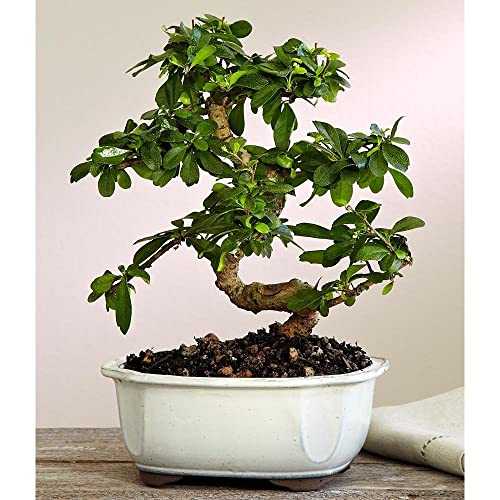
Fukien Tea (Carmona retusa) is a true indoor bonsai favorite. This 14-year specimen arrives with a strong trunk, refined branching, and a ceramic pot. It often shows tiny white flowers and, at times, small berries. It gives you an instant “old tree” feeling, even in a modern living room.
Fukien Tea loves stable warmth, bright filtered light, and steady humidity. It can be paired with a large open terrarium or a glass case with vents. I avoid sealed domes. Provide a quality bonsai soil mix with grit for drainage, water when the top layer starts to dry, and give it a mild grow light if windows are weak.
Pros:
- Indoor-friendly species with refined age
- Potential flowers add charm and interest
- Handles higher humidity in open terrariums
- Mature trunk offers instant character
- Pairs well with moss and stone accents
Cons:
- More sensitive to cold drafts and temp swings
- Dislikes soggy soil or stale air
- Can drop leaves after big environment changes
My Recommendation
If you want an indoor star that thrives near a glass display, pick Fukien Tea. It fits open or vented terrariums best, and it loves stable, bright conditions. Keep care steady and avoid overwatering. For the Best Live Bonsai Trees For Terrariums that bring flowers and rich character, this is a top-tier choice.
| Best for | Why |
|---|---|
| Indoor, stable environments | Prefers consistent warmth and humidity. |
| Large open terrariums | Needs airflow and space to show off. |
| Display-ready maturity | Older trunk and branching look refined. |
How I Judge Bonsai For Terrariums (What Actually Works)
I keep bonsai in glass to create small worlds that feel calm and alive. Over time, I learned some rules that help every build. These rules cut maintenance and keep the plants happy for the long run.
Here is my quick checklist for the Best Live Bonsai Trees For Terrariums. I use it when I pick species and plan a layout. I also use it when I check the health of an older setup.
- Airflow first: I prefer open-top or vented lids for trees.
- Humidity balance: Aim for moist, not foggy, conditions.
- Right species: Indoor trees tolerate glass better than outdoor species.
- Size control: Slow growers fit and stay neat with light pruning.
- Soil and drainage: Use bonsai soil, a drainage layer, and some charcoal.
- Light plan: South or east windows plus a 12–14 hour grow light if needed.
- Water rhythm: Water when the top soil starts to dry, not on a rigid schedule.
- Pest watch: Check for scale, mites, and fungus gnats; treat fast if spotted.
One more tip. Use moss and mini hardscape to match the scale of the tree. A small trunk with huge rocks looks off. I use thin slate, small river stones, and Leucobryum moss to keep the scene believable. It makes the Best Live Bonsai Trees For Terrariums feel like tiny, real landscapes.
Design Ideas: Make Your Terrarium Look Intentional
I love a design that tells a story. Your bonsai is a character in a scene. The moss is the ground. The rocks and wood are the terrain. Use them to build mood and depth.
Try these ideas with the Best Live Bonsai Trees For Terrariums and see which style you enjoy most. You can mix and match, or keep it simple. Simple often looks very clean in small glass spaces.
- Mini mountain ridge: Stack thin slate, add moss in crevices, and set the bonsai on a ledge.
- Japanese garden nod: White gravel “river,” a tiny bridge, and a pruned crown.
- Forest floor: Driftwood root, patchy moss, and a low bonsai for a woodland feel.
- Zen minimal: One stone, one bonsai, and clean soil lines for strong focus.
Keep the rear area slightly taller than the front. This gives depth and a sense of scale. Putting taller features behind the bonsai makes the tree look larger than it is. It’s a simple trick that works in every build I make.
Care Tips That Keep Terrarium Bonsai Happy
Caring for bonsai in glass is about balance. Moisture, air, and light work together. If one is off, the tree tells you fast. Watch the leaves and the soil. Learn the cues, and you will avoid most issues.
These are my core tips for the Best Live Bonsai Trees For Terrariums. They are simple and work across species. Adjust to your room and your vessel size.
- Light: Bright, indirect light is ideal. Add a grow light for 12–14 hours if windows are weak.
- Water: Check soil with a finger. Water when the top half-inch feels dry. Avoid waterlogged soil.
- Air: Use vented lids or keep the top open. A small USB fan nearby can help in stuffy rooms.
- Soil: Use bonsai soil with pumice, lava, or akadama for quick drainage.
- Layering: Place pebbles and a thin charcoal layer under the soil to limit smells and rot.
- Pruning: Trim little and often. Keep the silhouette neat so the tree fits the vessel.
- Cleaning: Wipe glass weekly. Clear algae with a soft cloth. Keep the view crisp.
- Pests: Inspect weekly. Treat early with insecticidal soap if needed.
I avoid sealed domes for trees. Sealed glass is great for ferns, moss, and some tropicals. Bonsai do better with air exchange. Open-top keeps the balance steady and makes long-term care easy.
Common Mistakes (And Easy Fixes)
Even skilled growers run into issues in glass. Small spaces amplify little mistakes. The fixes are usually simple. Here are the ones I see most and how I handle them.
- Too much water: Leaves go soft or brown. Fix by adding airflow and watering less.
- Too little light: Growth gets leggy. Add a grow light and rotate the vessel weekly.
- Stale air: Mold on moss or soil. Vent the lid or use a small fan for a few hours a day.
- Wrong species: Outdoor bonsai in closed glass. Move to open-top or swap for indoor types.
- Overcrowded design: The tree looks cramped. Remove a large stone or prune lightly to open space.
These small changes often bring the setup back fast. I make one change at a time and wait a week to read the response. The Best Live Bonsai Trees For Terrariums reward patience and small, steady adjustments.
FAQs Of Best Live Bonsai Trees For Terrariums
Which bonsai species are best for terrariums?
Indoor-friendly species like Ficus, Schefflera, and Fukien Tea adapt well. Junipers prefer open-top setups with strong airflow.
Can I use a closed terrarium for a bonsai?
I don’t recommend it. Trees need airflow. Use open or vented lids to avoid mold and root issues.
How much light does a terrarium bonsai need?
Bright, indirect light is best. Add a 12–14 hour LED grow light if windows are weak.
How often should I water a bonsai in a terrarium?
Water when the top half-inch of soil feels dry. Avoid soggy soil. Adjust by season and room humidity.
What else should I add besides the tree?
Moss, small stones, and a drainage layer with charcoal. These keep the scene neat and the system stable.
Final Verdict: Which Should You Buy?
For indoor setups, the Brussel’s 14-Year Fukien Tea is my top pick. It suits open, vented glass and gives a refined look fast. For small open designs, the Green Mound Juniper offers a classic Zen feel with simple care.
Use Leucobryum moss to finish the scene and stabilize moisture. With airflow and light dialed in, you’ll enjoy the Best Live Bonsai Trees For Terrariums for years.