
Bonsai Leaves Turning Yellow And Brown: Causes And Fixes

Yellow and brown bonsai leaves signal stress from watering, light, nutrients, or pests.
You love your tiny tree, but you spot faded tips, yellow patches, or crispy brown edges. Panic hits. I’ve been there. The good news is that most leaf color problems have simple fixes. With the right species, a healthy start, and a few care tweaks, your bonsai can bounce back fast. In this guide, I break down why Bonsai Leaves Turning Yellow And Brown happens, how to read the signs, and which ready-to-grow trees offer the best odds for success. I also point you to four proven bonsai options that ship well, tolerate beginner mistakes, and make daily care easy.
Brussel’s Chinese Elm Bonsai (Medium, Outdoor)

The Chinese Elm is a classic outdoor bonsai that forgives common mistakes. This 7-year-old, medium specimen (about 8–10 inches tall) arrives with a decorative ceramic pot, which saves you a trip to the garden store. It has small, serrated leaves that ramify well and make clean, compact pads with simple trimming. If you have faced Bonsai Leaves Turning Yellow And Brown before, a Chinese Elm can help you reset and regain confidence.
This species loves bright sun and steady airflow. It handles strong pruning and back-buds on old wood, which is ideal for shape control. When placed outdoors in spring through fall, it grows dense and healthy, and the bark gains rich texture with age. In mild winters, it can stay outside with protection; in cold zones, overwinter in a cold frame or unheated garage to keep the tree dormant and safe.
Pros
- Very forgiving of watering errors once established outdoors.
- Back-buds well, making styling and recovery simple.
- Arrives in a decorative ceramic pot; looks great on day one.
- Small leaves give a refined, mature look with little effort.
- Handles full sun and regular pruning with strong response.
- Excellent for beginners who fear Bonsai Leaves Turning Yellow And Brown.
- Durable trunk and bark add texture and age over time.
- Responds well to routine training and wiring.
Cons
- Needs outdoor light; indoor conditions cause weak growth.
- May drop some leaves during seasonal shifts or moves.
- Requires winter protection in very cold climates.
My Recommendation
I recommend the Chinese Elm if you want a tough outdoor bonsai that looks refined without fussy care. It is ideal for patios, balconies, and small gardens. If you’ve struggled with Bonsai Leaves Turning Yellow And Brown from indoor light problems, moving outside to bright conditions with this elm can be a real fix. Water when the topsoil starts to dry, and feed lightly through the growing season for dense pads.
This tree suits learners who want to practice pruning and wiring. It also fits anyone who likes the “classic bonsai” look. Place it where it gets several hours of sun, and your leaf color will stay rich and green. I suggest using a well-drained soil mix and a simple “finger test” for moisture to avoid overwatering. If tips pale, add more light or feed a balanced fertilizer at low dose.
| Best for | Why |
| Outdoor beginners | Forgiving species with clear signals before stress sets in. |
| Refined styling | Small leaves and easy back-budding make neat pads. |
| Fixing yellow/brown leaves | Thrives in sun and airflow, which reduces leaf issues fast. |
Brussel’s Ginseng Ficus Indoor Bonsai (Medium)
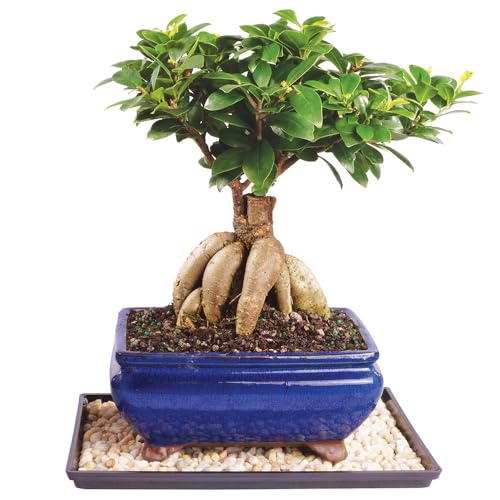
This Ginseng Ficus is a versatile indoor bonsai that tolerates typical home light better than most species. It includes a ceramic pot and a humidity tray, which helps buffer dry indoor air. The thick “ginseng” root base gives a bold, sculptural look that draws attention. If your past bonsai dropped leaves after moving inside, this pick offers a more forgiving path.
For leaf health, give bright, indirect light near a window or under a grow light. Keep the humidity tray filled with water (not touching the pot base) to raise local moisture. Water when the top 1 inch of soil is dry; avoid soggy roots to prevent Bonsai Leaves Turning Yellow And Brown. Ficus also adapts to light pruning and occasional wiring, so shaping is both easy and fun.
Pros
- Thrives indoors with bright, indirect light.
- Includes humidity tray to fight dry air leaf stress.
- Bold trunk base adds instant visual impact.
- Handles occasional watering slips better than many species.
- Leaf drop after shipping is common but recovery is fast.
- Great for offices or apartments with steady room temps.
- Tolerates pruning; grows dense foliage with basic care.
- Helps beginners avoid Bonsai Leaves Turning Yellow And Brown from low humidity.
Cons
- Cold drafts can shock leaves and cause drop.
- Needs more light than a dim corner can provide.
- Overwatering leads to yellow leaves and root stress.
My Recommendation
Choose the Ginseng Ficus if you must grow indoors and want a tree that fits real life. It suits new owners who fear Bonsai Leaves Turning Yellow And Brown from low light or dry air. Use a small fan or keep a window cracked for gentle airflow, and run a full-spectrum LED for 10–12 hours if your room is dim. Trim often to keep the foliage compact, and wipe leaves to remove dust so they breathe well.
I also suggest a moisture meter or chopstick test to avoid guesswork. Keep temps stable between 65–80°F. Ficus appreciates consistency; set a routine for watering and feeding, then stick to it. Done right, this tree stays lush and green and shrugs off occasional stress with quick recovery.
| Best for | Why |
| Indoor growers | Adapts to home light and steady temps with ease. |
| Dry apartments | Humidity tray helps prevent crispy, brown leaf edges. |
| Beginners | Forgiving tree that rebounds from mild mistakes fast. |
Golden Gate Ficus Grove (Medium, Indoor)
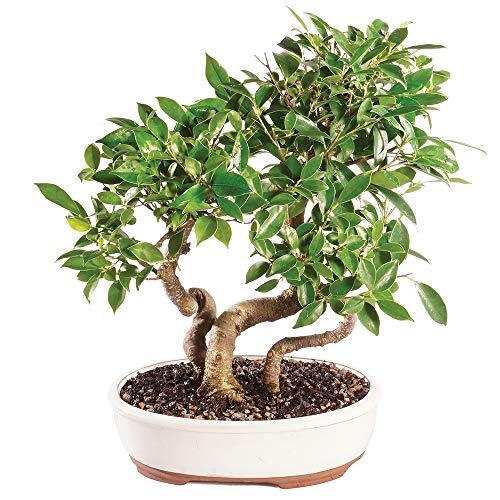
The Golden Gate Ficus Grove gives you a small forest-in-a-pot look in a compact footprint. This 7-year-old, medium arrangement stands about 10–14 inches tall and arrives in a decorative container. It offers the indoor toughness of ficus, with a multi-trunk display that feels mature. If you want impact without complex styling, this grove makes it easy.
Place it where it gets bright, indirect light for most of the day. Keep humidity steady to avoid Bonsai Leaves Turning Yellow And Brown from dry air or heater vents. Water when the topsoil is starting to dry, not when it still feels wet. Light pruning keeps the canopy dense; rotate the pot monthly so each side gets even light for balanced growth.
Pros
- Indoor-friendly species with consistent, glossy foliage.
- Multi-trunk grove adds depth and instant “forest” style.
- Responds well to trimming; easy to keep compact.
- Great size for desks, shelves, or window nooks.
- More forgiving than many indoor bonsai options.
- Stable root mass helps with shipping and setup.
- Can reduce Bonsai Leaves Turning Yellow And Brown by holding steady humidity.
- Arrives in a decorative pot, ready to display.
Cons
- Needs bright light; weak light leads to leaf yellowing.
- May shed leaves after moving or shipping; recovery is normal.
- Overwatering can cause root rot in dense indoor soils.
My Recommendation
Pick the Golden Gate Ficus Grove if you want an indoor bonsai that looks like a tiny woodland. It is perfect for living rooms, home offices, or entryways with good light. If you have fought Bonsai Leaves Turning Yellow And Brown before, this grove does well when you pair it with a simple grow light and a shallow humidity tray. That combo fights dry air and low-light leaf stress with very little work.
I suggest a gentle, weekly wipe of the leaves to clear dust and boost photosynthesis. Feed a balanced, low-dose fertilizer during the growing season and pause in winter if growth slows. Keep the root zone airy by avoiding waterlogged soil. With this steady routine, the canopy stays lush, and the grove keeps its forest charm all year.
| Best for | Why |
| Statement decor | Forest look with little styling needed. |
| Indoor bonsai fans | Tough ficus that thrives with bright, indirect light. |
| Leaf health | Stable humidity and light reduce yellow or brown leaves. |
Trident Maple Bonsai (Medium, Outdoor)

The Trident Maple is a favorite outdoor bonsai thanks to its vigor, fine branching, and brilliant fall color. This 5-year-old, medium plant (8–12 inches tall) arrives in a decorative container and takes to pruning very well. It tolerates strong sunlight and grows tight nodes, which help you craft refined pads. If you love seasonal change, this tree brings spring greens, summer fullness, and autumn reds and golds.
As a deciduous species, seasonal yellowing and leaf drop in fall are normal, not a red flag. What you want to avoid is mid-season Bonsai Leaves Turning Yellow And Brown from root issues or drought. Use a fast-draining mix, water deeply when the top layer dries, and feed during the growing season. Protect roots from deep freezes and strong winter winds to keep the tree healthy year to year.
Pros
- Strong, vigorous growth supports fine ramification.
- Stunning fall color adds seasonal drama.
- Handles full sun with proper watering.
- Responds to pruning and wiring, even at a young age.
- Great for learning structure and pad development.
- Normal fall yellowing helps teach seasonal care timing.
- Decorative pot included for easy setup.
- Less prone to indoor stress since it lives outdoors.
Cons
- Not an indoor tree; needs outdoor light and winter dormancy.
- Young leaves can burn if soil dries in midday heat.
- Requires winter protection in the coldest zones.
My Recommendation
Choose the Trident Maple if you want a true outdoor bonsai that teaches you real seasonal care. It’s a top pick if you feared Bonsai Leaves Turning Yellow And Brown in the past and want a tree that “tells” you what is normal. Fall yellow and brown leaves here mean dormancy, not trouble. During the growing season, keep the soil airy, water on cue, and give full sun for tight internodes and rich color.
This maple fits learners who plan to grow outside and enjoy a hands-on routine. It is also right for people who love color in autumn. Use a shelter or cold frame in harsh winters. If the leaves dull mid-season, check watering depth, soil drainage, and fertilizer strength. Fix those basics, and this tree rewards you with fast, healthy growth.
| Best for | Why |
| Outdoor learning | Shows clear, seasonal leaf changes that guide care. |
| Fall color lovers | Bold reds and golds in autumn. |
| Structure training | Vigorous growth supports fine branching and pad work. |
FAQs Of Bonsai Leaves Turning Yellow And Brown
Why are my bonsai leaves turning yellow and brown?
Common causes include overwatering, underwatering, weak light, dry air, fertilizer burn, or pests. Outdoor trees can also yellow in fall due to dormancy. Fix the basics first: light, water, airflow, and drainage.
How do I know if I am overwatering or underwatering?
Overwatering shows yellow leaves that feel soft, and wet soil that smells sour. Underwatering shows crisp, brown edges and dry, dusty soil. Use a finger or chopstick test to check moisture at root depth.
Can low humidity cause yellow or brown leaves?
Yes. Dry air causes brown tips and leaf drop, especially indoors. Use a humidity tray, group plants, or run a small humidifier to keep levels around 40–60%.
Do bonsai need special soil to prevent leaf issues?
They need fast-draining soil that holds air. A mix with akadama, pumice, and lava works well. Good drainage helps stop root rot, which often causes yellow leaves.
Is seasonal yellowing normal for outdoor bonsai?
For deciduous trees like maples and elms, fall yellowing and browning are normal. Leaves drop for winter dormancy. Mid-season yellowing points to stress, so check light, water, and pests.
Final Verdict: Which Should You Buy?
If you grow indoors, pick the Ginseng Ficus or the Golden Gate Ficus Grove. Both handle home light well and help prevent Bonsai Leaves Turning Yellow And Brown with steady humidity and simple care.
If you grow outdoors, the Chinese Elm is forgiving and classic, while the Trident Maple brings vivid fall color. Start with the tree that fits your space and light, and leaf health will follow.
