Extra Large Plastic Bonsai Pots Review: Top Durable Picks

Extra large plastic bonsai pots give strong roots, fast growth, and clean drainage.
You sized up your tree, but the old pot is tight, heavy, and messy. You need room for roots, steady moisture, and easy moves indoors or out. In this Extra Large Plastic Bonsai Pots Review, I compare affordable, tough, and well-drained options that handle training, repotting, and display. I focus on tray quality, hole design, plastic strength, and real-world fit for maples, junipers, ficus, and more. If you want less breakage than ceramic, simpler cleaning, and better airflow for healthier roots, this guide makes your choice simple.
KINJOEK 3 PCS 14 Inch Plastic Bonsai Pots

I like the KINJOEK 3-pack because it covers a full training cycle for multiple trees without breaking the bank. Each 14-inch rectangular pot includes a matching tray, which helps catch runoff during heavy watering. The plastic feels thicker than flimsy nursery tubs, so it keeps its shape when you lift a wet mix. The drainage holes are spaced to reduce pooling and keep roots oxygenated, which supports healthy growth. In this Extra Large Plastic Bonsai Pots Review, this set stands out for value, especially if you are repotting several pre-bonsai at once.
For indoor growers, the trays help manage drips on shelves or desks. For outdoors, the pots handle sun and light frost without cracking under normal use. I still advise protecting them from extreme cold snaps and intense midday sun, as most plastics can fatigue over time. With akadama or a similar fast-draining mix, these pots encourage fine feeder roots, which bonsai experts value for balance and vigor. This set suits juniper, ficus, elm, and dwarf maple training. Based on bonsai care best practices in 2025, wide, shallow, well-drained containers help control growth while building ramified roots—exactly what these deliver.
Pros
- Great value 3-pack for multi-tree projects
- Sturdy plastic resists bending under wet soil
- Matching trays reduce mess indoors
- Good drainage pattern for root oxygen
- Neutral color works for display and training
- Lightweight for easy repositioning
Cons
- Not as rigid as thick resin or ceramic
- Tray depth is modest; monitor overwatering
- May fade slightly with long sun exposure
My Recommendation
This is best for beginners and budget-focused growers who want consistent performance across several trees. It fits balcony, patio, or shelf use. In this Extra Large Plastic Bonsai Pots Review, I see KINJOEK as a reliable training workhorse.
| Best for | Why |
|---|---|
| New bonsai owners | Easy setup with trays and forgiving plastic |
| Multi-plant training | Three pots let you repot several trees at once |
| Indoor shelves | Trays catch drips and keep areas cleaner |
TAICHEUT 2 PCS 14 Inches Bonsai Training Pots

The TAICHEUT 2-pack gives you two 14-inch rectangular training pots with trays, ideal for pairing trees at the same stage. The plastic walls feel slightly reinforced at the rim, which helps when wiring, lifting, or rotating the pot during pruning. I like the balanced drainage hole layout that reduces soggy corners. In this Extra Large Plastic Bonsai Pots Review, this set scores for steady build quality and a clean, uniform look that suits indoor windowsills or outdoor benches.
These pots are roomy for root training yet shallow enough to support bonsai proportions. Trays help protect furniture, though I suggest adding mesh over holes and a thin akadama/pumice/lava mix for best aeration. Bonsai references in 2025 stress strong drainage to prevent root rot and support fine root growth, especially for junipers and pines. These pots make that simple. If you want a tidy two-tree setup, TAICHEUT is a smart, tidy, and durable choice.
Pros
- Reinforced rim supports handling and wiring
- Even drainage to curb waterlogging
- Includes trays for drip control
- Good size for training midsize trees
- Clean rectangular lines for display
- Lightweight for quick repositioning
Cons
- Two-pack may be limiting for larger collections
- Plastic can scuff if dragged on rough surfaces
- Trays are basic, not extra deep
My Recommendation
If you keep two trees at similar stages, this is a perfect match. It’s best for balcony growers and tidy indoor setups that need drip control. In this Extra Large Plastic Bonsai Pots Review, TAICHEUT stands out for neat looks and stable drainage.
| Best for | Why |
|---|---|
| Pair training | Two matching pots keep your routine consistent |
| Rim-heavy handling | Reinforced rim helps during wiring and turning |
| Clean indoor display | Trays and shape look tidy and modern |
Heavy Duty Outdoor 18in Bonsai Pot w/ Tray

If you want more space, this 18-inch heavy-duty outdoor pot delivers. It includes a tray and several drain holes to shed water fast. The plastic is tougher than many training tubs, helpful for sun, wind, and shifting weather. In this Extra Large Plastic Bonsai Pots Review, it’s my pick for outdoor benches where durability matters. Larger volume supports species that like stronger root runs, such as trident maple or Chinese elm during training years.
I find the tray useful when moving the pot, but for heavy rain, lift the pot slightly so water does not pool under it. Current bonsai care guidance recommends fast drainage and oxygen to prevent root rot and pests, and a wide, shallow footprint improves stability in wind. This pot fits those needs. It’s not a fine display pot, but as a rugged trainer, it’s excellent. Pair it with a gritty mix and mesh over holes for best results.
Pros
- 18-inch size gives roots room to develop
- Heavy-duty plastic tolerates outdoor conditions
- Multiple drain holes for quick water shedding
- Tray helps with handling and mess
- Stable footprint for windy spots
- Good for vigorous training phases
Cons
- Bulkier than 14-inch options
- Less decorative for indoor display
- Tray may retain water if not managed
My Recommendation
Choose this for outdoor training, larger pre-bonsai, and faster growth plans. In this Extra Large Plastic Bonsai Pots Review, it’s best for strength and space when you need dependable outdoor performance.
| Best for | Why |
|---|---|
| Outdoor benches | Heavy-duty build resists sun and wind |
| Vigorous species | 18-inch size supports stronger root runs |
| Training stage | Fast drainage and space help quick development |
CZ Grain Giant 18 Inch Oval Bonsai Pot

The CZ Grain Giant is an 18-inch oval pot with a drip tray, designed for showy training or semi-display. The oval profile gives more styling room for forest or twin-trunk layouts. In this Extra Large Plastic Bonsai Pots Review, I rate it as a nice mix of size and presentation. The tray helps inside and out, and the pot’s footprint supports stable positioning after wiring. Drain holes are generous, which suits akadama-based mixes very well.
I like this for medium to large bonsai that need space without going too deep. The oval shape frames trees nicely for photos or shows during development. While not ceramic, it keeps weight low, which protects shelves and makes moving easier. Standard bonsai advice in 2025 favors well-aerated substrates and shallow containers to guide growth. This pot checks those boxes. Add mesh, anchor wire if needed, and you get a practical yet presentable container.
Pros
- 18-inch oval shape adds styling flexibility
- Comes with a drip tray for cleaner setups
- Large drain holes suit gritty mixes
- Lighter than ceramic for easy repositioning
- Works for semi-display during training
- Stable base for wired trees
Cons
- Plastic won’t match ceramic look up close
- May scuff if dragged on rough benches
- Tray needs monitoring after heavy rains
My Recommendation
Pick this if you want a bigger, more graceful look while training. In my Extra Large Plastic Bonsai Pots Review, the CZ Grain is best for semi-display and oval layouts that need both space and style.
| Best for | Why |
|---|---|
| Semi-display | Oval shape frames trees attractively |
| Forest/twin-trunk | Extra width supports creative layouts |
| Indoor/outdoor moves | Lightweight for safer handling |
JEUIHAU 8 Pack 14/12 Inch Bonsai Pots
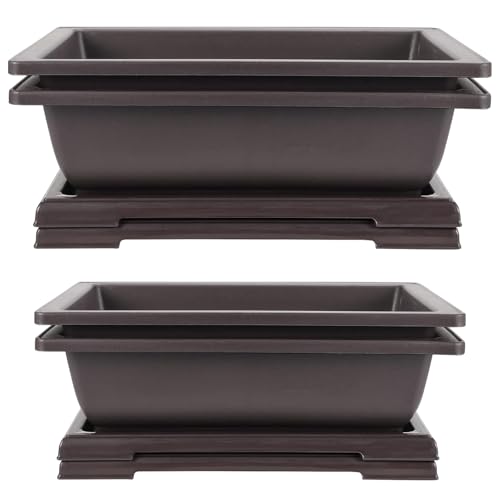
This JEUIHAU bulk pack includes 8 rectangular pots in 14-inch and 12-inch sizes, each with trays. If you propagate cuttings, grow pre-bonsai, or manage a small nursery at home, the quantity is a big win. In this Extra Large Plastic Bonsai Pots Review, this is the best value for scaling up. The brown color blends nicely with soil and mulch, and the drainage layout helps prevent waterlogging across different mixes and species.
I recommend this for seasonal repotting days. Use the 12-inch pots for younger trees and the 14-inch for those that need a step up. Current guidance favors frequent root checks and timely repotting to maintain fine roots and balance. Having a lot of uniform containers makes that routine easier and faster. These pots are light, easy to clean, and simple to stack when not in use. Add mesh, tie-down wires as needed, and you are set for efficient training.
Pros
- Great value in an 8-pack for collections
- Comes with trays for all pots
- Two sizes fit different tree stages
- Uniform shape speeds up repotting
- Lightweight and stackable
- Drainage supports healthy root growth
Cons
- Plastic is thinner than premium single pots
- Not ideal for fancy display
- Trays are basic and shallow
My Recommendation
Choose JEUIHAU if you manage many trees or start lots of cuttings. In my Extra Large Plastic Bonsai Pots Review, it’s best for bulk training, fast repotting, and consistent care at scale.
| Best for | Why |
|---|---|
| Large collections | Eight pots streamline repot days |
| Propagation | Two sizes match young and maturing trees |
| Budget setups | High quantity lowers per-pot cost |
FAQs Of Extra Large Plastic Bonsai Pots Review
Are plastic bonsai pots good for training?
Yes. They are light, durable, and drain well. They help roots develop fine feeders needed for healthy bonsai.
Do I need a tray under my bonsai pot?
Indoors, a tray controls drips. Outdoors, use trays for moving and cleanliness, but avoid standing water after rain.
What size is best for a growing pre-bonsai?
For mid-size trees, 14 inches is a sweet spot. For larger or vigorous species, 18 inches offers more root room.
Will plastic pots harm roots in sun or cold?
Quality plastics handle normal weather. In extreme heat or freeze, provide shade or protection to prevent stress.
How do I improve drainage further?
Use mesh over holes and a gritty mix like akadama, pumice, and lava. Water thoroughly, then let excess drain.
Final Verdict: Which Should You Buy?
For most, KINJOEK wins for value and balance. For outdoor strength and space, pick the Heavy Duty 18in. For semi-display, the CZ Grain oval shines. If you need pairs, TAICHEUT is tidy and sturdy. For collections, JEUIHAU is unbeatable. This Extra Large Plastic Bonsai Pots Review shows each choice fits a clear need and budget.
