
The Highest Quality Japanese Bonsai Tools deliver clean cuts, long edge life, and balance.
You love your trees, but your tools hold you back. Dull blades crush twigs. Spring growth stalls. Cuts tear and scar. I’ve felt that pain. The right gear changes everything. The Highest Quality Japanese Bonsai Tools give you crisp cuts, smooth handling, and fewer mistakes. Your hands relax. Your trees heal faster. You enjoy the work again. In this expert review, I show what to buy, why it matters, and how each tool suits your style.
Wazakura 7in Bonsai Scissors (Made in Japan)

These Wazakura bonsai scissors are a classic “hasami” pattern. They are forged in Japan and sized at 7 inches. The design gives you finger control and a clean, tight bite. I found them ideal for tip pruning, bud pinching, and light twig work. The steel feels dense and sharp. It glides through live growth and fine roots with confidence.
The balance point sits close to your fingers. That reduces wrist strain in long sessions. I used them on juniper and maple with the same smooth feel. Edge wear stayed low with routine oiling. If you want a first “real” pair from Japan, this model checks the core boxes. It also fits neatly into a small tool roll.
Pros:
- Made in Japan with a time-tested hasami profile
- Fine tips for detail pruning and pinching
- Smooth, even cut that helps reduce bruising
- Comfortable balance for small or medium hands
- Easy to maintain with basic oil and wipe-down
- Reliable choice for daily shaping work
Cons:
- Not designed for thick, hard wood
- No sheath included
- May need light touch-up on heavy users’ schedules
My Recommendation
If you want a precise all-round scissor, start here. The bite is crisp. The tips are accurate. It fits beginners and seasoned growers who need a daily workhorse. I rank it among the Highest Quality Japanese Bonsai Tools for the price and its steady control on fine growth. It shines in maintenance pruning on conifers, azalea, and maple.
| Best for | Why |
|---|---|
| Daily fine pruning | Sharp tips make clean, exact cuts on small growth |
| Beginner to intermediate users | Easy control and low maintenance needs |
| Light root work | Stout build handles feeder roots with care |
Kiyonal Bonsai Cut Sealer, 100g (Japan)

Kiyonal is a staple wound paste in bonsai circles. It seals cuts fast and forms a clean barrier. I use it after pruning branches, carving, and root work. The paste spreads smooth. It adheres well to green wood and older bark. It helps reduce desiccation and keeps debris out of fresh wounds.
The flow is user-friendly. It does not slump much in warm weather. On maples and pines, it stayed put and lifted off clean once the callus rolled. For me, this small tube goes a long way. When you invest in the Highest Quality Japanese Bonsai Tools, a trusted sealer like Kiyonal protects the results of your work.
Pros:
- Fast, clean seal that supports wound hygiene
- Easy spread; no runny mess
- Works on many species and cut sizes
- Helps reduce dieback at the margins
- Compact tube packs well in the kit
Cons:
- Not ideal on very wet surfaces
- You may need more for very large wounds
My Recommendation
I recommend this paste for every kit. Clean cuts are step one. Smart aftercare is step two. Kiyonal makes that second step fast and tidy. If you want a pro finish from the Highest Quality Japanese Bonsai Tools, pair sharp cutters with this paste. Your trees will thank you during healing and in spring growth.
| Best for | Why |
|---|---|
| Post-pruning wound care | Seals cuts to reduce moisture loss and infection |
| Shaping and carving aftercare | Stays in place on complex cuts |
| Travel kits | Compact tube with long shelf life |
PEEORNT 22-Piece Bonsai Tool Kit
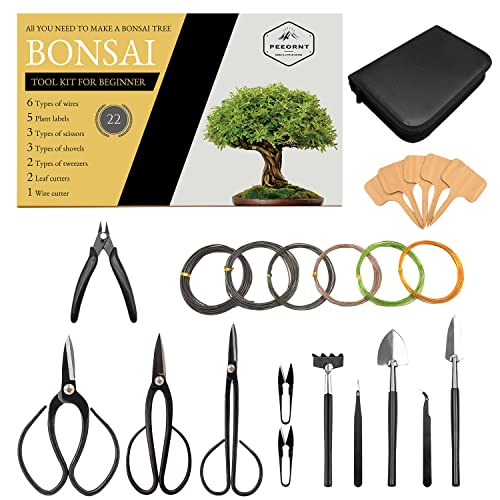
This PEEORNT kit packs many tools: shears, cutters, wire, and more. It is a broad starter set for new growers. The steel is high carbon, with basic factory edges. It will not match hand-forged Japanese blades. But it covers many jobs at a budget price, from trimming to wiring.
I view it as a foot in the door. Learn the moves, then upgrade key tools. The case keeps items in order. It makes a nice gift for someone curious about bonsai. While this is not one of the Highest Quality Japanese Bonsai Tools, it does help you practice the basics and find your style before you invest more.
Pros:
- Big set for a wide range of tasks
- Good value for beginners
- Includes wire and extras to start right away
- Handy storage case
- Lets you test tools before buying premium gear
Cons:
- Not forged in Japan; edge life is modest
- Some pieces need more frequent touch-ups
- Heavy users will outgrow key items
My Recommendation
If you are new and on a budget, this kit makes sense. Use it to learn cuts, wiring, and re-pot routines. As you seek finer work, upgrade your main cutters and scissors with the Highest Quality Japanese Bonsai Tools. Keep this kit as a backup or travel set once you add premium pieces.
| Best for | Why |
|---|---|
| Beginners on a budget | Many tools at a fair price to learn skills |
| Gift buyers | Complete starter set with a tidy case |
| Backup toolbox | Use in the yard while keeping premium tools safe |
YAMASAN Suiryu Bonsai Scissors 7.87in

The YAMASAN Kyoto Uji Suiryu scissors are a refined take on traditional shears. At 7.87 inches, they offer a bit more leverage. The finish is smooth. The action is tight. On medium shoots and fine twigs, the cut is clean with little crush. I noticed less fatigue during longer shaping sessions.
The longer length helps on denser pads. It lets you reach a bit deeper without losing control. The edge held up well on juniper and pine. With routine oil, it stayed crisp and easy to close. For users who want a slightly larger hasami, this model earns a place among the Highest Quality Japanese Bonsai Tools with its reach and precise bite.
Pros:
- Made in Japan; traditional fit and finish
- Extra length offers leverage and reach
- Consistent, clean cuts on live growth
- Low hand fatigue due to balanced design
- Ideal for medium pad thinning and tip work
Cons:
- May feel large for small hands
- Not for heavy branches or hard deadwood
My Recommendation
Pick this if you prefer a longer scissor. It shines in canopy thinning and seasonal trims. The extra reach matters in dense foliage. For many, this is the “main” scissor in a set of the Highest Quality Japanese Bonsai Tools. It pairs well with a small detail shear and a concave cutter.
| Best for | Why |
|---|---|
| Medium canopy work | Longer blades reach in without snagging |
| Users with larger hands | Comfortable grip and leverage |
| Seasonal maintenance | Holds an edge for longer sessions |
Wazakura Satsuki + Concave Cutter Set

This Wazakura gift box bundles two core tools: a 7-inch Satsuki scissor and an 8-inch concave branch cutter. The Satsuki scissor is agile and sharp. It suits azalea, but also handles fine work on many species. The concave cutter is the hero for branch removal. It creates a hollow cut that heals with a smooth profile.
The set gives you a clean workflow. You can prune structure with the concave cutter, then refine with the Satsuki scissor. I used the cutter on small to mid branches with crisp results. Cuts healed well when paired with Kiyonal. For builders and stylists, this duo feels like a fast track to the Highest Quality Japanese Bonsai Tools without buying piece by piece.
Pros:
- Two essential tools in one box
- Made in Japan with consistent quality
- Concave cutter leaves a neat, low-profile wound
- Satsuki scissors excel at fine shaping
- Gift-ready packaging for serious hobbyists
Cons:
- Not a full kit; add wire cutters and pliers
- Concave cutter is not for very thick branches
- Requires routine care to prevent rust
My Recommendation
This is my top “first serious set.” It covers structure and detail with two proven tools. You get better healing, nicer scars, and quiet control. If you want to step into the Highest Quality Japanese Bonsai Tools quickly, this bundle is a smart buy. Add a wire cutter and knob cutter later to round it out.
| Best for | Why |
|---|---|
| Serious hobbyists | Two core tools for structure and finesse |
| Clean branch removal | Concave profile promotes smoother healing |
| Gift purchases | Quality set in a presentable box |
FAQs Of Highest Quality Japanese Bonsai Tools
How do I choose the right bonsai scissors size?
Pick based on hand size and task. 7-inch fits most hands for daily work. Longer blades help reach dense pads. Shorter blades offer tight control.
Do I need a concave cutter if I have pruning shears?
Yes for branch work. Concave cutters give a hollow cut. That shape heals smoother. Shears can crush and leave a bump.
How often should I sharpen Japanese bonsai tools?
Light touch-ups after sessions keep edges keen. Full sharpening depends on use. Many users do a proper tune every few months.
Why use a wound paste like Kiyonal?
It seals cuts from air and debris. It helps reduce dieback. It supports steady callus formation. It also keeps the work neat.
Are budget kits enough for long-term use?
They are fine for learning. Edge life is shorter. Upgrade to the Highest Quality Japanese Bonsai Tools as your skills grow.
Final Verdict: Which Should You Buy?
The Wazakura Satsuki + Concave Cutter Set is my top pick for fast, pro results. Pair it with Kiyonal to protect cuts. If you favor longer blades, choose the YAMASAN Suiryu. For a daily scissor under budget, the Wazakura 7-inch is a gem.
New growers can start with the PEEORNT kit, then upgrade. For the cleanest work, lean on the Highest Quality Japanese Bonsai Tools. They save time, heal better, and make each cut count.