
How to Get Rid of Mealybugs on Bonsai

Quick Answer
To get rid of mealybugs on bonsai, isolate the tree, physically remove visible insects, and inspect every protected crevice. For small infestations, careful removal and spot treatment can work; persistent infestations may need insecticidal soap or horticultural oil labeled for the plant, following UC IPM mealybug guidance.
What to do first
- Isolate the bonsai: Move it away from healthy bonsai and houseplants immediately.
- Confirm the pest: Look for white waxy insects, cotton-like egg masses, honeydew, and distorted growth.
- Remove visible bugs: Wipe, pick, or rinse away exposed mealybugs without damaging tender foliage.
- Treat hidden insects: Use an appropriate spot treatment, soap, or horticultural oil when necessary.
- Inspect repeatedly: One treatment rarely reaches every insect and protected egg mass.
Before treating
- Test unfamiliar sprays on a small area first, and never assume every bonsai species tolerates the same treatment.
Finding white cottony patches on a bonsai is frustrating, but mealybugs are manageable when you catch them early. The biggest mistake is treating once, seeing a clean tree, and assuming the problem has disappeared.
This guide covers identification, treatment, root mealybugs, repeat infestations, and prevention. I’ll also explain which approaches make sense for a small bonsai where delicate foliage and a confined root system require extra care.
In This Guide
What Do Mealybugs Look Like on a Bonsai?
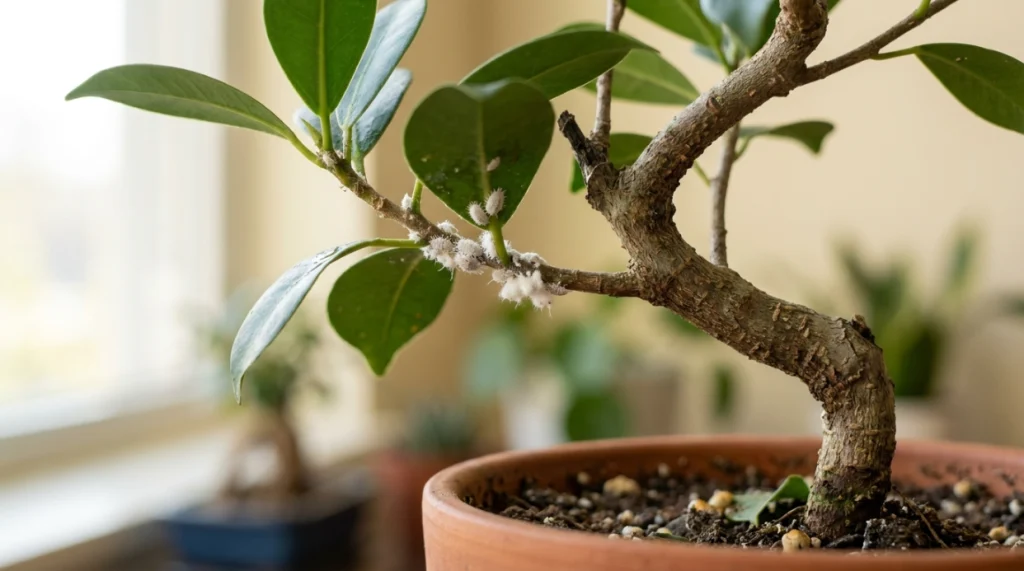
Mealybugs are small sap-feeding insects covered by a whitish waxy coating. On bonsai, they often resemble tiny pieces of cotton tucked into leaf joints, branch forks, buds, and other protected areas.
Definition: Mealybugs are piercing-sucking insects that feed on plant sap and cover themselves with protective wax. Their feeding can weaken growth, while the sugary honeydew they excrete can make leaves sticky and support black sooty mold.
Depending on age and species, common plant-feeding mealybugs may be around 1/8 to 1/4 inch long. The wax makes their true body shape harder to see.
The Iowa State University Extension mealybug guide describes their cotton-like egg masses and wax-covered bodies. Those features are more useful for identification than leaf color alone.
Check these hiding places
- Leaf undersides: Especially around veins and leaf bases.
- New shoots: Tender growth often provides sheltered feeding sites.
- Branch crotches: White wax can collect where branches meet.
- Buds and flowers: Dense growth creates protected pockets.
- Rough bark: Crevices can hide insects from a quick inspection.
- Pot rim and soil line: Check these areas when insects seem to disappear after treatment.
Signs besides the white insects
Sticky foliage is an important clue because mealybugs produce honeydew. Ant activity around a bonsai can also lead you toward a hidden population of sap-feeding insects.
- Yellowing or weakening foliage
- Distorted tender growth
- Sticky leaves or branches
- Black sooty mold growing on honeydew
- Premature leaf drop during a heavy infestation
- White cotton-like egg masses
Do not confuse mealybugs with every white mark you find. Mineral residue, fungal growth, scale insects, and even beneficial insects can look misleading at first glance.
A 10× hand lens is useful when identification is uncertain. The Bonsai Empire pest and disease guide also shows several common pests that bonsai growers may encounter.
What Should You Do First After Finding Mealybugs?
Separate the affected tree before you start treatment. Mealybugs can spread among bonsai and other suitable plants, so containment matters almost as much as killing visible insects.
1. Isolate the bonsai
Move the tree to a separate growing area while maintaining the light and temperature its species needs. Do not put a tropical bonsai into an unsuitable cold or dark location just to achieve isolation.
2. Inspect neighboring plants
Check every plant that recently touched or sat close to the affected bonsai. Pay special attention to protected leaf joints and new shoots.
3. Remove the insects you can see
Small populations can often be reduced by hand removal or a controlled stream of water. Protect loose bonsai soil from being washed from the shallow pot.
A cotton swab can reach insects wedged into narrow branch joints. Work carefully around tender buds and thin bark.
4. Clean the immediate growing area
- Remove fallen leaves and debris.
- Wipe the bench, tray, or windowsill.
- Clean tools after working on the affected tree.
- Wash your hands before handling healthy plants.
My rule is to treat the whole infestation area, not merely the first cottony patch I noticed. Hidden insects are the reason a bonsai can look clean for several days and then appear infested again.
What Is the Best Treatment for Mealybugs on Bonsai?
There is no single treatment that is best for every bonsai. Light infestations often respond to physical removal, while persistent populations may require repeated contact treatments.
As of 2026, extension guidance still emphasizes starting with targeted, lower-impact methods when practical. Mealybugs are difficult because their protective wax and hiding behavior reduce the effectiveness of poorly applied contact treatments.
| Method | Best use | Main advantage | Main caution |
|---|---|---|---|
| Hand removal | Small, visible infestations | No whole-tree pesticide exposure | Easy to miss hidden insects and eggs |
| Water rinse | Exposed insects on sturdy foliage | Quickly lowers pest numbers | Can disturb soil or delicate foliage |
| Alcohol spot treatment | Individual mealybugs on suitable plants | Precise treatment | Can burn sensitive foliage |
| Insecticidal soap | Persistent exposed populations | Useful contact treatment | Requires good coverage and label compliance |
| Horticultural oil | Persistent infestations where labeled | Can suppress exposed pests | Some plants are sensitive to oils |
Can you use rubbing alcohol on mealybugs?
For small infestations, UC IPM notes that 70% or less concentrated isopropyl alcohol can be dabbed directly onto individual mealybugs with a cotton swab. Test a small part of the plant first and watch for injury before treating more foliage.
Give the test area one to two days when practical. Bonsai species vary, and delicate new leaves deserve extra caution.
What about insecticidal soap and horticultural oil?
These contact treatments can suppress mealybugs when the product is labeled for the plant and pest. Thorough coverage matters because insects protected inside branch joints can escape treatment.
The University of New Hampshire Extension also notes that mealybug wax and hiding behavior make repeated treatment necessary in many infestations.
Should you use stronger insecticides?
A stronger product is not automatically a better bonsai treatment. Broad-spectrum insecticides can affect beneficial organisms, and plant sensitivity varies.
If a pesticide becomes necessary, choose one labeled for both the intended plant use and the target pest. Follow the directions rather than improvising a stronger concentration.
The EPA pesticide-label guidance explains why label directions matter for safe and effective use. Pay attention to application restrictions, protective equipment, storage, and plant-use directions.
Section Takeaway: Start with isolation and physical removal, then escalate only when necessary. Successful mealybug control depends more on thoroughness and repeated inspection than on using the harshest product available.
How Do You Deal With Root Mealybugs?
Some mealybug species can infest roots instead of remaining on foliage. Root infestations are harder to confirm because most of the activity stays inside the pot.
Possible root-mealybug signs
- White waxy material near drainage holes
- Cotton-like deposits around the soil line
- Unexplained loss of vigor despite reasonable care
- Repeated aboveground infestations after careful treatment
- Visible white insects or wax around roots when the root ball is legitimately inspected
Do not unpot a stressed bonsai solely because it looks weak. Underwatering, overwatering, root rot, poor drainage, inadequate light, and other pests can produce similar symptoms.
If root mealybugs are confirmed, the treatment plan may need to address both the root zone and the aboveground plant. The correct approach depends on species, season, severity, and products legally labeled where you live.
Repotting may eventually be appropriate when infested substrate needs replacing, but timing matters. Unnecessary root disturbance can turn a manageable pest problem into a serious recovery problem.
Pro tip: Root pruning and emergency repotting are irreversible. If a valuable or weak bonsai has suspected root mealybugs, consult an experienced grower, local bonsai club, or horticulture professional before removing major roots.
Why Do Mealybugs Keep Coming Back?
Recurring mealybugs usually mean part of the population escaped treatment. Adults, immature stages, and protected egg masses can occupy different hiding places.
You treated only what you could see
The obvious white clusters are rarely the entire infestation. Search inside branch forks, under leaves, behind buds, along the pot rim, and near the soil surface.
The first treatment missed protected insects
Mealybugs hide exceptionally well, while their waxy coating interferes with contact treatments. A spray that barely touches the outer foliage may leave the protected population largely unchanged.
Another plant is reinfesting the bonsai
Inspect nearby houseplants and bonsai rather than treating one tree in isolation. A seemingly healthy neighboring plant can harbor a small population.
You stopped inspecting too soon
Do not return the tree to the main collection because one inspection finds nothing. Keep checking the youngest growth and the deepest canopy crevices after visible numbers fall.
- Record where insects were found.
- Check the same locations again.
- Watch newly extending shoots closely.
- Look for fresh honeydew.
- Inspect neighboring plants at the same time.
I prefer to judge progress by a declining pest count and healthy new growth rather than a single clean-looking day. That makes it harder for a hidden population to catch you by surprise.
How Can You Prevent Another Mealybug Infestation?
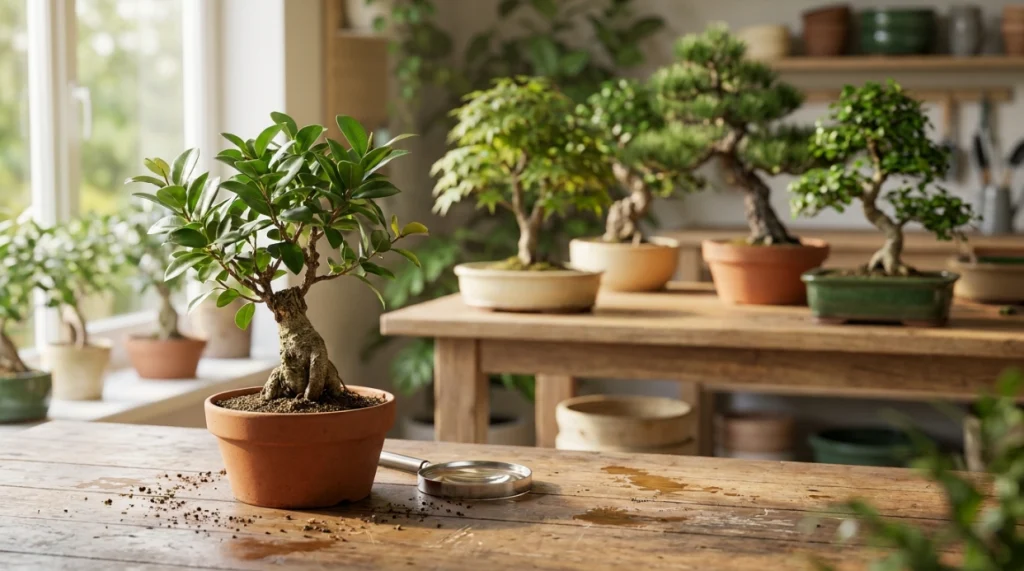
Prevention comes down to inspection, quarantine, and healthy growing conditions. You cannot guarantee that a bonsai will never get pests, but you can make infestations easier to catch.
Inspect new plants before they join the collection
New bonsai and houseplants are common opportunities for pests to enter a growing area. Examine leaf joints, branch crotches, bark, soil surfaces, and pot rims before placing plants together.
Keep new or suspect plants separate
A quarantine area gives hidden pests time to reveal themselves. Continue providing the light, temperature, airflow, and watering required by the species.
Check your bonsai regularly
- Look beneath leaves.
- Inspect tender new growth.
- Check branch junctions.
- Watch for sticky honeydew.
- Investigate ants around the tree.
- Check the soil line and drainage holes when something seems unusual.
Avoid pushing excessive soft growth
Do not respond to pest damage by immediately applying heavy fertilizer. Excessive tender growth does not solve the infestation and may place more demands on a stressed tree.
Keep watering, light, fertilizing, and seasonal care appropriate for the species. A bonsai recovering from pests needs stability more than a sudden overhaul of every care routine.
Frequently Asked Questions About Mealybugs on Bonsai
Can mealybugs kill a bonsai tree?
A severe or prolonged infestation can weaken a bonsai by continually removing sap and damaging tender growth. Small infestations are much easier to control, so isolate and treat the tree as soon as you confirm the pest.
Will water alone get rid of mealybugs?
Water can knock exposed mealybugs from sturdy foliage and reduce the population. It usually will not reach every protected insect or egg mass, so continue inspecting the bonsai and use another appropriate control method if pests return.
Can I use 70% rubbing alcohol on bonsai mealybugs?
UC IPM allows 70% or less concentrated isopropyl alcohol as a direct spot treatment for small mealybug infestations on houseplants. Test a small area first because alcohol can damage sensitive foliage, and avoid assuming every bonsai species reacts identically.
Does neem oil kill mealybugs?
Neem-based insecticides may suppress mealybugs when the product is labeled for the intended plant and pest. Like other contact treatments, coverage matters, and repeated monitoring is necessary because protected insects may survive the first application.
Should I repot a bonsai with mealybugs?
Not for an ordinary foliage infestation. Repotting adds root stress and should be considered only when there is a legitimate root-zone problem, confirmed root pests, or another horticultural reason for disturbing the root ball.
Why are there ants on my mealybug-infested bonsai?
Mealybugs produce sugary honeydew, which can attract ants. Ant activity does not prove that mealybugs are present, but it is a good reason to inspect the leaves, stems, and protected branch joints for sap-feeding pests.
How do I know when the mealybugs are gone?
Look for repeated inspections with no live insects, new cottony deposits, fresh honeydew, or newly damaged growth. Keep the bonsai isolated while you monitor it rather than returning it to healthy plants immediately after one successful treatment.
The key to getting rid of mealybugs on bonsai is persistence. Isolate early, remove what you can see, treat appropriately, and keep searching the places where insects can hide.
A careful approach protects both the infested bonsai and the rest of your collection. Once the tree is growing cleanly again, keep regular pest inspection as part of your normal bonsai-care routine.