
The right Japanese Bonsai Tools And Accessories elevate precision, control, and plant health.
If you have ever tried to pinch, prune, and wire with household tools, you already know the struggle. Dull shears bruise live wood. Cheap wire snaps under tension. Soil spills across the table during repotting. The difference with true Japanese Bonsai Tools And Accessories is immediate: cleaner cuts, tighter wiring, and better tree recovery. I’ve shaped Satsuki azaleas, junipers, and maples for years, and the right kit saves time and reduces plant stress. Below, I share expert insights and hands-on impressions to help you choose tools that match your trees, your skill level, and your budget.
vouiu 6-Piece Bonsai Tool Set
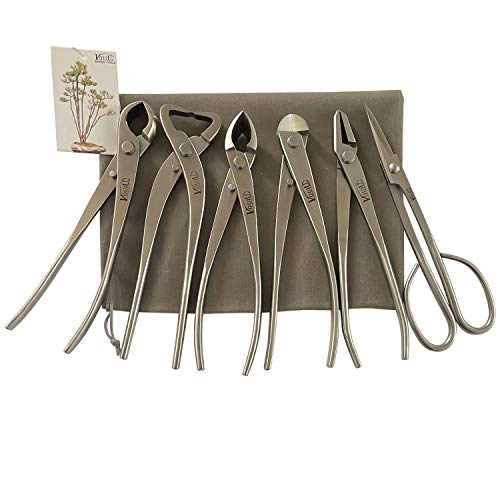
This vouiu 6-piece set covers the essential heavy-duty bonsai tasks. You get a knob cutter, trunk splitter, concave cutter, wire cutter, jin pliers, and bonsai scissors. Together, they handle branch removal, deadwood creation, precise indent cuts, and wiring. I found the balance and leverage adequate for mid-sized branches, with jaws that aligned cleanly out of the box.
The concave cutter leaves a hollowed wound to encourage smooth callusing, while the knob cutter reduces bulges without tearing. The trunk splitter opens controlled fissures for directional bending, which helps with dramatic movement. Jin pliers grip wire and deadwood well, reducing slip when finishing shari and jin. If you want a single purchase to start sculpting, this is a practical core set of Japanese Bonsai Tools And Accessories.
Pros:
- Complete core kit for shaping, cutting, and wiring
- Concave cutter produces clean, healing-friendly wounds
- Knob cutter reduces swelling at cut sites
- Trunk splitter enables strong bends and movement
- Jin pliers provide secure grip for deadwood and wire
- Wire cutter cleanly snips aluminum and copper wire
Cons:
- Heavier tools may fatigue smaller hands during long sessions
- Not as finely finished as premium hand-forged brands
- Requires regular cleaning and oiling to prevent rust
My Recommendation
The vouiu 6-piece kit suits beginners and intermediate users who want one purchase that covers 90% of common bonsai work. If you are building your first bench of Japanese Bonsai Tools And Accessories, this set gives you the essential shapes at a fair value. It’s especially good if you plan to carve deadwood, create jins, or manage thicker branches on junipers and pines. Keep edges oiled and wipe after use to maintain performance.
| Best for | Why |
|---|---|
| New bonsai hobbyists | All key cutters and pliers in one purchase |
| Juniper and pine styling | Trunk splitter and jin pliers support deadwood work |
| Budget-minded buyers | Solid coverage without premium pricing |
KAKURI 3-1/8-Inch Bonsai Saw, Made in Japan

This compact KAKURI keyhole saw is made in Japan and designed for tight cuts. The 3-1/8-inch blade (80 mm) slips into crotches and dense branch clusters where pruners cannot reach. Japanese teeth geometry feels smooth on the pull stroke, leaving a neat kerf that heals better. I used it to remove awkward inward branches without bruising the surrounding bark.
In refined styling, a clean saw cut can prevent dieback and improve the line. This saw helps you avoid ragged breaks when a branch is too thick for scissors. The small profile also works in narrow canopy spaces often found in shohin and mame sizes. It is a precise option to round out your Japanese Bonsai Tools And Accessories without bulking your tool roll.
Pros:
- Made in Japan with a compact, maneuverable blade
- Pull-stroke teeth deliver clean, controlled cuts
- Perfect for tight crotches and dense canopies
- Reduces tear-out compared to loppers or pruners
- Lightweight and easy to carry in field work
Cons:
- Not for large trunk sections or heavy lumbering
- Blade requires careful storage to protect teeth
- No sheath included in most packages
My Recommendation
If your trees have tight ramification or you work on shohin, this saw is a smart add-on. It’s best for delicate removals where a clean, narrow kerf matters. As part of your Japanese Bonsai Tools And Accessories, the KAKURI saw brings reach and finesse that shears cannot match. Use it for selective cuts during refinement or structural editing on smaller stock.
| Best for | Why |
|---|---|
| Shohin and mame bonsai | Fits in tight spaces without damaging nearby growth |
| Refinement cuts | Clean saw kerf encourages neat healing |
| Travel or workshop kits | Small, light, and easy to pack |
20-Piece Bonsai Tree Kit with Wire and Mat

This 20-piece bonsai toolkit bundles wire, scissors, a repotting mat, and small tools for general care. The 262 feet of training wire covers a full season for most hobbyists. The 29.5 x 29.5-inch foldable mat keeps soil and akadama contained during repots. The set also includes tweezers, rake, scoop, and pruning shears for day-to-day tasks.
If you are starting out, the spread of accessories is helpful for practice and learning. The mat alone saves cleanup time, and the multiple wire gauges make your first styling attempts easier. These are great stepping stones while you decide which premium Japanese Bonsai Tools And Accessories to invest in later. It also makes a simple, thoughtful gift for anyone new to indoor gardening.
Pros:
- All-in-one kit for repotting, pruning, and wiring
- Large, foldable mat controls soil mess
- Includes long rolls of wiring for training
- Useful small tools (rake, scoop, tweezers)
- Good starter gift for beginners
Cons:
- Scissors and shears are entry-level, not pro grade
- Wire may be softer than premium aluminum or copper
- Mat snaps wear over time with heavy use
My Recommendation
Choose this 20-piece kit if you want quick coverage of essentials and a clean workspace. It suits apartment growers and first-time bonsai owners who value organization. As part of your Japanese Bonsai Tools And Accessories, the mat and wire alone justify the price for a new hobbyist. Upgrade individual tools later as you refine your technique and tree collection.
| Best for | Why |
|---|---|
| Beginners | Comprehensive set reduces separate purchases |
| Indoor gardeners | Repotting mat keeps desks and floors clean |
| Gift buyers | Useful bundle for anyone starting bonsai |
6-Piece Bonsai Pruning Scissor Set

This six-scissor pack gives you shape-specific blades for different pruning jobs. Expect variations like long-nose, short-nose, curved, and micro-tip profiles. Each style targets a specific task: removing soft shoots, thinning leaves, or snipping tight nodes. For maintenance days, it’s convenient to switch tool shapes instead of forcing one pair to do everything.
In bonsai, blade form matters as much as sharpness. Curved tips reach around pads, while fine points isolate a single bud. With a dedicated set, you reduce accidental nicks and get cleaner styling lines. If you are assembling Japanese Bonsai Tools And Accessories for light work and refinement, this set fills the pruning gap economically.
Pros:
- Multiple scissor shapes for precise tasks
- Useful for thinning, pinching, and light pruning
- Micro-tip blades help isolate tight nodes
- Budget-friendly way to cover scissor types
- Lightweight and easy to control
Cons:
- Not designed for thick, woody cuts
- Steel may need frequent touch-ups to stay sharp
- No single premium pair included
My Recommendation
Pick this scissor set if you focus on foliage management and fine detail. It suits indoor ficus, jade, azalea tips, and refined pads on juniper. Add a concave cutter for thicker wood to round out your Japanese Bonsai Tools And Accessories. Keep a strop or stone nearby to maintain edges between sessions.
| Best for | Why |
|---|---|
| Detail work | Fine and curved tips reach tight growth |
| Indoor species | Ideal for soft shoots and leaf thinning |
| Budget toolkits | Affordable coverage of scissor profiles |
Wazakura Satsuki Bonsai Scissors 7-Inch

These 7-inch Wazakura Satsuki scissors are hand-forged in Japan from S58C carbon steel. They have the classic wide handles and strong blades for precise pruning. The cut feels crisp and predictable, which helps prevent crushing tender azalea shoots. In my hands, the balance reduces wrist strain during longer refinement sessions.
Premium steel holds an edge well, but it needs regular wiping and light oil to avoid rust. The blades are stout enough for moderate wood while still nimble in foliage pads. Many enthusiasts treat a Wazakura pair as their daily driver for years with proper care. For Japanese Bonsai Tools And Accessories that marry tradition and performance, this is a standout scissor.
Pros:
- Hand-forged in Japan for quality and balance
- S58C carbon steel takes and holds a fine edge
- Excellent control for Satsuki azalea and refined cuts
- Comfortable handles reduce fatigue
- Durable with proper care and maintenance
Cons:
- Requires routine oiling to prevent rust
- Higher price than entry-level scissors
- Not for thick, woody branches
My Recommendation
Choose Wazakura if you want a long-term, dependable scissor for precise pruning. It excels on azalea, maple, and juniper pads where accuracy matters most. As part of your Japanese Bonsai Tools And Accessories, it can be your main pair for daily work. Pair it with a concave cutter or knob cutter for heavier branches.
| Best for | Why |
|---|---|
| Precision pruning | Crisp, clean cuts with minimal tissue crush |
| Intermediate to advanced users | Premium steel rewards good care and skill |
| Daily use | Comfortable, balanced, and reliable |
FAQs Of Japanese Bonsai Tools And Accessories
What are the must-have bonsai tools for beginners?
Start with bonsai scissors, a concave cutter, wire cutters, and training wire. Add tweezers, a rake, and a small saw as you progress. These cover pruning, shaping, and basic repotting.
Which is better: aluminum or copper bonsai wire?
Aluminum is easier for beginners and suits most species. Copper holds tighter bends and is preferred for pines and junipers. Choose the softest wire that holds the shape you need.
How do I maintain carbon steel bonsai tools?
Wipe blades after use, dry them fully, and apply a light oil. Sharpen with a fine stone as needed. Store in a dry case with silica gel during humid months.
Do I need a repotting mat?
A mat keeps soil and akadama contained and speeds cleanup. It’s ideal for indoor growers. Foldable mats also protect table surfaces from scratches and water.
How often should I sharpen bonsai scissors?
Touch up edges lightly every few sessions. Sharpen more deeply if cuts start to crush or tear. Frequent light maintenance preserves blade life.
Final Verdict: Which Should You Buy?
For a complete starter toolkit, pick the vouiu 6-Piece Bonsai Tool Set. Add the 20-Piece Bonsai Tree Kit if you need wire and a repotting mat. For premium scissors, Wazakura leads in control and edge retention.
If you often cut in tight spaces, the KAKURI saw is a smart add-on. These Japanese Bonsai Tools And Accessories cover beginners to advanced users with clear value steps.