
No Title

A trusted, slow-release bonsai food that delivers steady results.
You trim, you wire, you water just right—yet your bonsai still looks tired. Most growers hit a wall when feeding. Too strong, and leaves scorch. Too weak, and growth stalls. Biogold aims to fix that with clean, slow-release pellets that feed on schedule, not in spikes. In this Biogold Original Organic Japanese Bonsai Fertilizer Review, I break down real-world performance, sizing, and value, so you can pick the right option for your trees and your routine.
Biogold Original Organic Fertilizer, 900 g

Biogold Original in the 900 g size hits a sweet spot for most home growers. It is organic, slow-release, and tidy on the soil surface. I like it for balanced, even growth on maples, junipers, and ficus. It feeds for weeks with little smell and less risk of salt burn than many synthetic blends.
Each pellet breaks down at a steady pace as microbes work, which means your trees don’t lurch from feast to famine. I’ve found this steadiness helps produce tighter internodes on deciduous varieties and keeps needles on conifers compact. It’s easy to dose by pellet count, so beginners avoid guesswork. For indoor bonsai, use baskets to keep pellets in place and reduce fungus gnat interest.
Pros
- Steady, slow-release nutrition
- Low odor for indoor use
- Easy dosing by pellet count
- Less burn risk than salts
- Trusted by many bonsai artists
Cons
- Higher price than basic fertilizers
- Pellets can grow white fuzz in humidity
- Baskets add small extra cost
My Recommendation
This 900 g bag suits most hobbyists who feed 4–8 small to medium trees. It is practical if you want cleaner shelves and reliable growth through spring and summer. If you’re reading a Biogold Original Organic Japanese Bonsai Fertilizer Review to decide on a first buy, start here. It offers the best balance of quantity, control, and simplicity.
| Best for | Why |
|---|---|
| Small to mid-size bonsai collections | Enough pellets for a full growing season |
| Indoor growers | Low odor and neat pellets in baskets |
| Beginners learning to dose | Count pellets instead of mixing liquids |
Biogold Original Bonsai Fertilizer, 2.4 kg
The 2.4 kg Biogold Original is made for active growers. If you repot, wire, and refine several trees across seasons, the larger bag stretches your budget per gram. The pellets are uniform and break down slowly, which keeps the soil food web engaged. I notice healthier roots and more consistent bud push when feeding on a 4–6 week rotation.
This size reduces mid-season reorders and gives you freedom to feed more generously during peak growth. It works well across species, from pines to azaleas. The slow-release nature helps avoid the surge-and-crash cycle that can lengthen internodes. Indoors, baskets keep the surface tidy and help deter pets from investigating pellets.
Pros
- Cost-effective bulk size
- Great for mixed species collections
- Steady performance in warm months
- Cleaner than many organic cakes
- Trusted slow-release profile
Cons
- Higher upfront cost
- Storage space needed
- May be excessive for one or two trees
My Recommendation
Choose 2.4 kg if you manage 10–20 trees or run a small workshop set-up. It makes sense if you feed through long summers where pellets break down faster. In context of this Biogold Original Organic Japanese Bonsai Fertilizer Review, it’s the best value for serious hobbyists who want consistent stock on hand.
| Best for | Why |
|---|---|
| Medium to large collections | Lower cost per gram over the season |
| Warm climates | Enough product for quicker breakdown cycles |
| Workshop or club sharing | Bulk size supports group use |
Biogold Original Bonsai Fertilizer, 5 kg
This 5 kg bulk pack is for collectors and professionals. If your benches hold dozens of trees and you feed on schedule, the economy is obvious. The pellets retain their shape, leach little, and won’t stain pots like some homemade organics. They are easy to move during watering without turning to mush.
I like this size when doing full-court feeding on pre-bonsai or nursery stock to build trunks. You can apply a dense grid and change pellets in four weeks during peak heat. For refined trees, reduce pellet count and extend intervals. The same clean, low-odor profile still applies, but plan storage in a cool, dry space.
Pros
- Lowest cost per gram
- Ideal for large benches
- Uniform pellets, low mess
- Supports aggressive feeding plans
- Reliable across species
Cons
- Big upfront spend
- Needs airtight storage
- Overkill for casual growers
My Recommendation
Get the 5 kg if you feed many trees or sell stock and want consistent results at scale. It is also smart for clubs to split. As I note throughout this Biogold Original Organic Japanese Bonsai Fertilizer Review, bulk sizing drives real savings when you feed on a calendar.
| Best for | Why |
|---|---|
| Large collections or nurseries | Best price efficiency |
| Fast growth projects | Enough pellets for dense placement |
| Club bulk buys | Easy to share and store |
Biogold Original Bonsai Fertilizer, 240 g

The 240 g pack is a tidy test size. If you own one or two trees and want to try Biogold without a big spend, this bag covers a full season for small pots. Pellets spread easily and sit well in baskets or top nets. You still get Biogold’s even, slow feeding and low-salt safety profile.
I suggest this size for indoor bonsai or deskside ficus. It keeps things neat and controlled, and you learn your tree’s response without leftovers. If you need more by mid-season, upgrading to 900 g next purchase is seamless. Store any remainder sealed to protect from humidity.
Pros
- Great intro size
- Low waste for one or two trees
- Easy to store
- Same quality as larger packs
- Budget-friendly trial
Cons
- Higher price per gram
- May run out mid-season
- Not ideal for bigger collections
My Recommendation
Pick 240 g if you’re new to organics or only tend a couple of bonsai. It’s also smart for gifting. As part of the Biogold Original Organic Japanese Bonsai Fertilizer Review, I see this as the low-risk door into solid organic feeding.
| Best for | Why |
|---|---|
| First-time Biogold users | Small, low-commitment pack |
| Single indoor bonsai | Clean and easy to manage |
| Gift option | Practical size for any grower |
Natural Organic Bonsai Fertilizer, 900 g
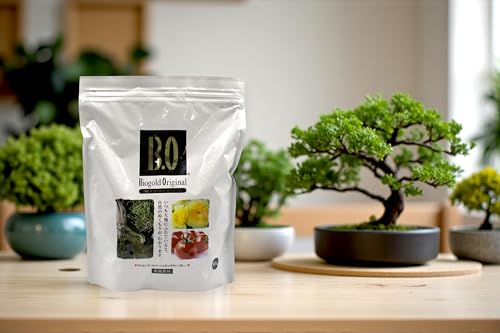
This 900 g listing offers the same slow-release organic pellets many bonsai keepers favor. It’s a great middle-ground size for seasonal feeding. I find the pellets hold shape, resist turning to sludge, and encourage steady root activity. That consistency shows up in tighter nodes and calmer, more predictable growth patterns.
Use baskets to avoid runoff and keep pellets from shifting during watering. Replace every 4–6 weeks in warm weather, and pull back in winter dormancy. For tropical indoor trees, extend intervals based on growth rate and light. The goal is smooth, even nutrition with less fluctuation.
Pros
- Balanced, slow-release profile
- Good size for hobbyists
- Less leaching than powders
- Neat pellets for display benches
- Works for indoor and outdoor
Cons
- Pricey versus generic organics
- Can attract gnats if overwatered
- Requires steady schedule
My Recommendation
If you prefer clean, reliable feeding without mixing liquids, this 900 g bag earns its keep. It strikes a solid balance between quantity and control. In my Biogold Original Organic Japanese Bonsai Fertilizer Review notes, this size is the safe pick for balanced growth and simple dosing.
| Best for | Why |
|---|---|
| Seasonal feeding plans | Enough for spring to fall |
| Refined bonsai | Even nutrition for compact growth |
| Indoor tropicals | Low odor and tidy pellets |
240 g Biogold + 10 Fertilizer Baskets

This bundle solves two common pain points: pellet control and gnat pressure. The 240 g Biogold pack comes with 10 fertilizer baskets that snap over pellets. Baskets keep pellets where you place them and make removal easy when it’s time to refresh. They also limit surface mold and discourage curious pets.
I recommend baskets for indoor bonsai, apartment growers, or anyone who values tidy presentations. Place two to five pellets per basket depending on pot size, then space them in a grid. Water flows through, and microbes still do the work. Swapping in fresh pellets is quick and clean.
Pros
- Includes 10 useful baskets
- Keeps pellets tidy and contained
- Reduces gnat interest
- Great for indoor setups
- Simple refresh routine
Cons
- Small fertilizer quantity
- Basket footprint can crowd tiny pots
- Higher price than pellets alone
My Recommendation
Choose this if you want a neat, beginner-friendly start with organics. It is also helpful in damp rooms where pellets can fuzz up. Within this Biogold Original Organic Japanese Bonsai Fertilizer Review, I consider the basket bundle the smart pick for indoor growers who value clean lines and easy cleanup.
| Best for | Why |
|---|---|
| Indoor bonsai setups | Controls pellets and reduces mess |
| Beginners | All-in-one start with baskets |
| Pet households | Baskets discourage investigation |
Biogold Classic Motohi Fertilizer, 15 oz

Biogold Classic Motohi is a traditional “base” fertilizer many growers lean on when pushing growth or establishing pre-bonsai. It is designed to aid root vigor and steady canopy extension. I like Motohi for early-season feeding after recovery from repotting, where gentle, consistent nutrition helps roots rebuild and shoots set.
Use it as a top dressing or mix lightly into the top layer in training pots. It pairs well with standard Biogold pellets if you stagger placement to avoid overfeeding. Watch your trees and adjust spacing by response. Classic Motohi supports the engine room—roots—so canopies stay even and healthy.
Pros
- Focuses on root vitality
- Good for pre-bonsai development
- Pairs with standard Biogold
- Gentle for recovery phases
- Traditional, proven approach
Cons
- Not ideal for fine refinement alone
- Requires observation and spacing
- Smaller 15 oz size
My Recommendation
Choose Classic Motohi if you are building trunks or reestablishing roots after repotting. It shines when growth needs a nudge without harsh spikes. For readers of this Biogold Original Organic Japanese Bonsai Fertilizer Review, Motohi is the “engine builder” that pairs with standard pellets for a rounded program.
| Best for | Why |
|---|---|
| Pre-bonsai training | Supports steady structural growth |
| Post-repot recovery | Gentle, root-focused feeding |
| Outdoor development phase | Builds strength without spikes |
900 g Biogold + 10 Fertilizer Baskets

This bundle gives you the ideal middle size plus 10 baskets. For most growers, 900 g lasts a season, and the baskets keep pellets neat and protected from heavy watering. I find this combo ideal for indoor displays, show benches, or shared living rooms.
Use two to four baskets for small pots and scale up for larger containers. The baskets make refresh cycles simpler and reduce mess when you groom surfaces. Slow-release feeding aligns with tight grow schedules and moderate watering. It’s a nice ready-to-go package for those who want Biogold’s benefits with cleaner workflows.
Pros
- Balanced 900 g size
- Includes 10 baskets
- Clean, efficient refresh cycles
- Great for indoor and patio bonsai
- Simple dosing by basket
Cons
- Bundle price premium
- Basket tops can crowd small accents
- Limited to 10 baskets
My Recommendation
Pick this if you want an all-in-one solution for neat, predictable feeding. It is perfect for mixed indoor-outdoor rotations, especially where you value clean surfaces. In my Biogold Original Organic Japanese Bonsai Fertilizer Review, this is the “do-it-right” starter for anyone who hates mess and loves routine.
| Best for | Why |
|---|---|
| Home displays | Neat presentation with baskets |
| Seasonal feeding plans | Right volume for spring–fall |
| Busy schedules | Simple refresh; fewer steps |
Biogold Classic Motohi Fertilizer, 1.3 kg

The 1.3 kg Classic Motohi is the development-phase workhorse. If you are building taper, setting branches, or recovering after heavy pruning, Motohi supports the root system that drives growth. It’s gentle, steady, and less likely to push lanky shoots than high-salt formulas.
I like using Motohi in training pots and colanders where airflow and pruning are frequent. It helps push roots through the mix and stabilize water uptake. Layer it under or use as top dressing and refresh with the season. Pair with standard Biogold pellets later as you move into refinement.
Pros
- Great for training and recovery
- Focus on root-driven health
- Steady, low-salt feeding
- Efficient 1.3 kg size
- Pairs with standard pellets
Cons
- Less targeted for fine ramification
- Requires thoughtful pairing in refinement
- Bulk for single-tree owners
My Recommendation
Reach for 1.3 kg Motohi if your trees are in build mode. It’s a smart bridge between repotting recovery and later refinement. For readers of this Biogold Original Organic Japanese Bonsai Fertilizer Review, consider it the backbone for growth projects across a full season.
| Best for | Why |
|---|---|
| Development phase | Root strength for structure building |
| Post-prune recovery | Gentle support without spikes |
| Outdoor training pots | Handles frequent watering and airflow |
Organic Bonsai Liquid Fertilizer, 8 oz

This organic 8 oz liquid pairs well with Biogold pellets. I use liquids to “fill the gap” between pellet refreshes, especially in rapid summer growth. It’s gentle, easy to dilute, and handy for foliar feeding on certain species. A light weekly dose keeps nutrition steady without replacing your solid feed plan.
Liquids also help when a tree is off-cycle, like after heavy pruning or leaf-cutting. You can fine-tune by species and response. Always start weak and watch your tips and leaves. Liquids are not a complete replacement for Biogold’s slow release, but they round out a precise program.
Pros
- Quick, adjustable dosing
- Good between pellet changes
- Useful for foliar sessions
- Gentle for sensitive species
- Simple for small apartments
Cons
- Not slow-release
- Easy to overdo if mixed strong
- Smaller bottle size
My Recommendation
Add this liquid if you want fine control and extra support in peak growth. It complements pellets for those who check trees daily and like to tweak feeding. In the bigger picture of this Biogold Original Organic Japanese Bonsai Fertilizer Review, a light liquid routine helps close small nutrition gaps.
| Best for | Why |
|---|---|
| Between pellet refreshes | Fills short-term nutrition gaps |
| Foliar feeding fans | Gentle, adjustable sprays |
| Apartment growers | Quick mix, no pellet storage |
FAQs Of Biogold Original Organic Japanese Bonsai Fertilizer Review
How often should I replace Biogold pellets?
Replace every 4–6 weeks during active growth. In cooler months, extend intervals or remove pellets on dormant species.
Do Biogold pellets attract pests or smell indoors?
They have a mild odor. Use baskets and avoid overwatering to reduce fungus gnats and surface mold.
Can I use Biogold on all bonsai species?
Yes. It works for conifers, deciduous, and tropicals. Adjust pellet count to tree size and growth rate.
Is Biogold better than chemical fertilizers?
It’s gentler and slow-release, which many bonsai prefer. Chemicals can be fine, but require careful dilution to avoid burn.
Should I combine Biogold with liquid fertilizers?
Yes, lightly. Liquids can fill gaps between pellet refreshes. Start weak and monitor response.
Final Verdict: Which Should You Buy?
The 900 g Biogold Original is the best starting point for most growers. If you want clean feeding plus control, pick the 900 g + basket bundle. Bulk buyers should go 2.4 kg or 5 kg for value.
For development, Classic Motohi pairs well with standard pellets. This Biogold Original Organic Japanese Bonsai Fertilizer Review shows a clear path: start with 900 g, add baskets for indoor, and scale up as your bench grows.
