
Repotting Bonsai Money Tree Indoors: Easy 2026 Guide

Repot every 2–3 years in spring using airy, fast-draining soil and a snug pot.
You love that braided trunk and glossy leaves, but the roots are tight, the soil stays wet, and the plant looks tired. Repotting a bonsai money tree indoors can fix droop, yellowing, and slow growth—if you do it right. In this expert buyer’s guide, I share what to use, when to repot, and how to avoid common mistakes. I also review standout products that make soil prep and aftercare easy, so your Pachira aquatica bounces back fast and keeps bringing calm, green style to your home.
Perfect Plants Money Tree Soil, 4qt

This mix is built around coco coir for water control with fast drainage. It is light, clean, and easy to work with when Repotting Bonsai Money Tree Indoors. I like how it holds moisture but does not smother roots. It helps prevent the soggy, compact feel that kills airflow.
For indoor trees, the blend reduces fungus gnat risk by drying on time. It suits money trees in decorative pots since it resists compaction. You can use it straight from the bag or add extra grit. For most homes with average light and humidity, it strikes a smart balance.
Pros
- Balanced water retention and drainage for money trees
- Coco coir resists compaction and supports root oxygen
- Easy to handle and clean for indoor repotting
- Good base mix for beginners and busy owners
- Reduces risk of overwatering stress
- Works in plastic or ceramic pots with drainage holes
Cons
- Advanced bonsai users may want more mineral grit
- Bag size may be small for large braided specimens
- Not as ultra-fast draining as pure bonsai aggregate
My Recommendation
This is a smart pick if you want a simple, indoor-ready medium. It is ideal when Repotting Bonsai Money Tree Indoors in low to medium light. New plant parents will enjoy the safety of coco coir. If your home runs dry, this blend helps buffer water between drinks.
| Best for | Why |
|---|---|
| Everyday indoor money tree care | Moisture control without swampy soil |
| New plant owners | Forgiving mix that avoids compaction |
| Decorative ceramic pots | Light texture suits enclosed planters with holes |
Costa Farms Money Tree, 8–10 in Starter

This compact starter plant is great for learning repotting with low risk. The 2.5-inch pot size keeps the root ball small and easy to handle. It is perfect for a desk, shelf, or window ledge. If you want to practice Repotting Bonsai Money Tree Indoors, start here.
Growth is steady in bright, indirect light. The size helps you avoid overwatering since less soil holds less water. You can train the trunk over time. Add a gritty mix, and you have a neat bonsai-style project for any room.
Pros
- Beginner-friendly size for first repot
- Easy to place in small spaces
- Pet-safe plant choice
- Good value for practice and styling
- Responds well to gentle root pruning
- Ships in a nursery pot that removes fast
Cons
- Not a mature braided trunk yet
- Needs a new pot soon after arrival
- Small root ball can dry faster
My Recommendation
Choose this if you want to learn the art with a small, forgiving plant. It works for students and renters who have less room and light. When Repotting Bonsai Money Tree Indoors, this size helps you build skill with little waste. It is also a sweet gift for a new plant lover.
| Best for | Why |
|---|---|
| First-time repotting | Small root mass is easy to manage |
| Desk or shelf decor | Compact plant fits most spots |
| Budget-friendly start | Low cost to begin bonsai practice |
Costa Farms Money Tree, 12–16 in Braided

This is the classic braided money tree you see in homes and offices. The trunk is formed, and the canopy is ready to shape. It often arrives in a decorative pot, which saves time. For Repotting Bonsai Money Tree Indoors, the size is right for light root work.
The plant is tough and adapts to new soil well. Keep it in bright, filtered light. A fast-draining mix will protect the thicker trunk from rot. It is a solid mid-size choice that looks refined on day one.
Pros
- Braided trunk adds instant style
- Great size for light to moderate root pruning
- Decorative container options reduce setup time
- Pet-safe and non-toxic
- Handles indoor light conditions well
- Strong starter for bonsai-style training
Cons
- Heavier root ball than starter plants
- May need stake support after repot
- Decorative pots can lack drainage (check first)
My Recommendation
Pick this if you want a mature look with room to style. It is ideal for owners who have done one or two repots already. When Repotting Bonsai Money Tree Indoors, this size balances visual impact with easy care. It gives you a polished base to build your design.
| Best for | Why |
|---|---|
| Instant home or office decor | Braided trunk looks finished |
| Intermediate repotters | Allows modest root pruning practice |
| Bonsai training | Stable trunk and canopy |
Costa Farms Money Tree, 10 in Deco Pot
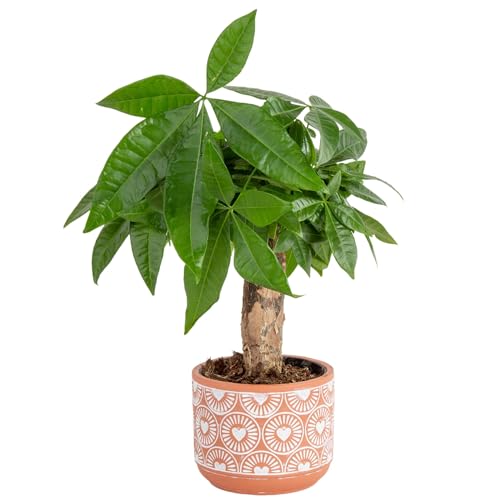
This 10-inch option arrives ready for display. It comes in a clean, modern pot that fits most rooms. It is smaller than the 12–16 inch plants but more developed than a tiny start. For Repotting Bonsai Money Tree Indoors, it is a middle path with less mess.
The compact canopy makes pruning simple. It is good for learning light root work and top shaping at the same time. Use a breathable mix and water only when the top inch dries. That keeps the roots strong and the leaves glossy.
Pros
- Display-ready out of the box
- Manageable root ball for indoor repotting
- Great for light shaping and styling
- Safe for homes with pets
- Fits well on tables and counters
- Adapts to many light levels
Cons
- Decorative pot may need a liner for drainage
- Less dramatic than tall braided trees
- May need up-potting within a year
My Recommendation
Use this if you want clean style with soft learning curves. It is perfect for apartments and home offices. When Repotting Bonsai Money Tree Indoors, this plant keeps stress low and success high. It is a nice step up once you master a small starter.
| Best for | Why |
|---|---|
| Quick decor upgrades | Comes in a modern pot |
| New to root pruning | Smaller mass is easy to control |
| Low-maintenance homes | Handles varied indoor light |
The Bonsai Supply All-Purpose Soil, 2qt
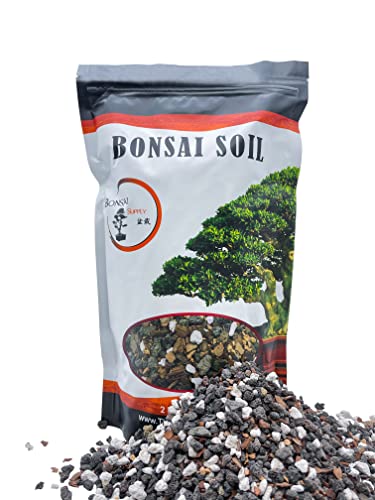
This pro-grade blend uses pumice, lava rock, calcined clay, and pine bark. It is fast draining and airy. It supports fine root growth and cuts rot risk. For Repotting Bonsai Money Tree Indoors, it acts like a tuned engine for oxygen flow.
The texture is ideal if your home runs humid or if you tend to overwater. It gives a crisp feel and dries on a steady rhythm. I suggest it for medium to large braided trees. You can blend 3:1 with coco coir for extra hold if needed.
Pros
- Elite drainage and aeration for bonsai roots
- Stable texture that resists breakdown
- Great for humid homes and heavy hands
- Encourages dense fine roots
- Reduces fungus gnat issues
- Mixes well with coir for custom control
Cons
- Dries faster than peat or coir mixes
- Heavier bag than organic-only blends
- Costs more than basic potting soil
My Recommendation
Choose this if you want bonsai-level performance. It is my top pick for advanced users and humid regions. When Repotting Bonsai Money Tree Indoors, this mix builds root health fast. Add a bit of coir if your space is very dry.
| Best for | Why |
|---|---|
| Overwater-prone owners | Ultra-fast drainage protects roots |
| Humid climates | Resists soggy soil and rot |
| Advanced bonsai care | Promotes fine, fibrous root growth |
The Complete Guide to Repotting Bonsai Money Tree Indoors
Repotting Bonsai Money Tree Indoors sounds simple. But small choices matter. Soil structure, pot size, and timing can decide if your plant thrives or sulks. I will walk you through a clean, low-stress process that works in real homes.
How often should you repot?
Repot every 2–3 years for young plants. Mature braided trees can go 3–4 years. Watch the roots and soil. If water runs through fast, soil looks compact, or roots circle the pot, it is time. Repotting Bonsai Money Tree Indoors on a schedule keeps growth even and leaves bright.
Best time of year
Late spring is best. Aim for longer days, stable light, and room temps above 65°F. In most homes, April to June is the sweet spot. Avoid deep winter or peak heat waves. This timing helps the plant recover faster and grow new roots.
Tools and supplies you need
- Fresh soil: coco coir blend or bonsai aggregate
- Clean shears or bonsai scissors
- Root rake or chopstick
- New pot with drainage holes
- Mesh to cover holes
- Watering can with a gentle rose
- Isopropyl alcohol for tool cleaning
- Optional: Bonsai wire for light stabilization
Choosing the right pot
Money trees like a snug pot. Pick one only 1–2 inches wider than the root ball. Shallow bonsai training pots help control water. Ceramic or terracotta both work. Terracotta dries faster, which is great for heavy waterers. Plastic holds moisture longer, which helps dry homes.
Soil mixes that work
Repotting Bonsai Money Tree Indoors calls for air. Roots need oxygen. Mix ideas:
- Simple: 60% coco coir, 20% perlite, 20% pine bark
- Fast-drain: 40% pumice, 30% lava rock, 20% calcined clay, 10% bark
- Hybrid: 50% bonsai aggregate, 50% coco coir for balance
Avoid heavy peat soils. They hold too much water and break down fast. That leads to compaction and root stress over time.
Step-by-step repotting
- Water the plant the day before. Slightly moist roots are easier to work.
- Lay a mat or newspaper. Indoor repotting is neater with prep.
- Slide out the root ball. Squeeze and tip the pot gently.
- Tease roots with a chopstick. Remove old, broken, or black roots.
- Prune roots by up to 25–30% if needed. Keep white, firm roots.
- Cover pot holes with mesh. Add a base layer of fresh mix.
- Set the plant slightly off-center for a natural bonsai look.
- Backfill with soil. Work it in with the chopstick to remove air pockets.
- Do not pack too hard. Keep structure open for airflow.
- Water until it drains. Stop when the mix is evenly moist, not soaked.
First month aftercare
Place in bright, indirect light. Skip direct sun for 1–2 weeks. Hold fertilizer for 4–6 weeks. Keep humidity near 40–60%. Water when the top inch is dry. Repotting Bonsai Money Tree Indoors can cause mild droop. Steady care brings bounce back.
How much root pruning is safe?
Up to one-third is standard for a healthy tree. Remove dead, black, or mushy roots first. Then trim long circling roots. Keep fine feeder roots whenever you can. These do the real work of water and nutrient uptake.
Common mistakes to avoid
- Using a pot that is too big. Soil stays wet too long.
- Packing soil tight. Roots lose air and rot starts.
- Repotting in winter. Recovery is slow and risky.
- Fertilizing right away. New roots can burn.
- Watering too often after a big root cut. Less roots means less intake.
What about self-watering pots?
I avoid them for bonsai-style money trees. They add water at the base, where air is needed. If you must use one, pick a design with a small, clear reservoir and a control wick. Check that the mix is 50% or more mineral aggregate.
Light and temperature targets
Bright, indirect light is the goal. East windows are great. South or west windows need a thin curtain. Keep temps between 65–80°F. Avoid cold drafts and heat vents. Stable light helps after Repotting Bonsai Money Tree Indoors.
Humidity and airflow
Money trees like average home humidity. A simple tray with pebbles helps in dry homes. Light airflow prevents fungus. But avoid blasts from fans. Think gentle movement, like a soft breeze.
Fertilizer schedule
Wait 4–6 weeks after repotting. Start a balanced, dilute feed every 4 weeks in spring and summer. Skip or reduce in fall and winter. Overfeeding softens growth and can cause leaf drop.
Pest watch
Check for spider mites, mealybugs, and scale. Wipe leaves with a damp cloth. Use insecticidal soap if needed. Healthy roots and clean leaves cut pest risk. Repotting Bonsai Money Tree Indoors with clean tools keeps problems away.
Signs you need to repot now
- Roots circle the base or push up
- Soil pulls from the pot sides
- Water runs through at once
- White salt crust on topsoil
- Leaves yellow from the base, not from age
- Growth stalls despite good light
What if leaves drop after repot?
Some drop is normal. Keep light bright but filtered. Water only when needed. Do not feed. In 2–4 weeks, new growth should show. If not, re-check drainage and pot size.
Can I style the braid during repot?
Yes, but go slow. Never force tight bends on thick trunks. Guide new growth with soft ties. Light wiring is fine on young, green stems. Your goal is gentle shape with no bark damage.
Soil recipe ideas by climate
- Dry homes: 60% coco coir, 20% bark, 20% perlite
- Average homes: 50% coco coir, 25% pumice, 25% bark
- Humid homes: 40% pumice, 30% lava, 20% calcined clay, 10% bark
These blends help you find balance. Repotting Bonsai Money Tree Indoors is about matching water flow to your space and habits.
Watering rules that work
- Check the top inch. If dry, water. If damp, wait.
- Water until it drains from the holes.
- Empty saucers right away.
- Use room-temp water.
- Reduce water if you cut a lot of roots.
Training tips after repotting
Give the plant 3–6 weeks to rest. Then shape the canopy. Trim to two or three leaves per stem to build a dense top. Rotate the pot every two weeks for even growth. Keep your design simple and balanced.
What to do with a sick plant
If roots are black and smell bad, act fast. Remove all rotten parts. Dust cuts with cinnamon or sulfur if you have it. Repot into a very airy mix. Cut big leaves to reduce stress. Place in warm, bright shade and wait. Repotting Bonsai Money Tree Indoors can save a plant if done with care.
How to avoid fungus gnats
Use a fast-draining mix with more mineral grit. Water only when needed. Top-dress with 1/4 inch of horticultural sand or small gravel. Sticky traps catch adults. Clean saucers often. Good airflow helps a lot.
Repotting schedule you can trust
- Spring of Year 1: Repot into a snug pot, airy mix
- Fall: Light top-dress with fresh mix if it sinks
- Spring of Year 2: Check roots; refresh top 1–2 inches
- Spring of Year 3: Full repot if roots circle again
This plan fits most homes. Adjust as your plant tells you. The aim is steady roots and clean structure.
Potting liners and mesh
Always cover holes with mesh. It keeps mix in and pests out. In decorative pots, use a plastic nursery pot with holes inside as a liner. This gives you control. It also makes Repotting Bonsai Money Tree Indoors cleaner next time.
Using a moisture meter
Meters can help while you learn. But do not trust them alone. Check the top inch with your finger. Notice pot weight before and after watering. Learn the plant’s rhythm. Skill grows from simple habits.
Leaf shine and cleaning
Dust blocks light. Wipe leaves with a damp cloth every two weeks. Skip oily leaf shine sprays. Clean leaves look great and breathe better. Good light plus clean leaves equals strong growth after repot.
FAQs Of Repotting Bonsai Money Tree Indoors
How do I know it is time to repot?
Roots circle the pot, water drains fast, and soil is compact. Leaves may yellow or growth slows. That is your cue for Repotting Bonsai Money Tree Indoors.
What soil is best for indoor money trees?
A fast-draining, airy mix. Try coco coir with perlite and bark, or a bonsai aggregate with pumice and lava. Avoid heavy peat.
How much root can I prune safely?
Up to one-third on a healthy plant in spring. Remove dead or black roots first. Keep fine feeder roots when you can.
Should I fertilize right after repotting?
No. Wait 4–6 weeks. New roots are tender. Start with a dilute, balanced feed in spring and summer.
Where should I place the plant after repot?
Bright, indirect light. No harsh sun for 1–2 weeks. Keep temps 65–80°F. Steady light helps recovery.
Final Verdict: Which Should You Buy?
The Bonsai Supply All-Purpose Soil is my top pick for strong roots and safe drainage. Pair it with the 12–16 inch Costa Farms braided tree for a polished, forgiving start.
Repotting Bonsai Money Tree Indoors is simple with the right mix and a snug pot. Choose the blend that matches your home’s humidity and your watering style for easy wins.
