Satsuki Azalea Bonsai Care: Indoor or Outdoor?


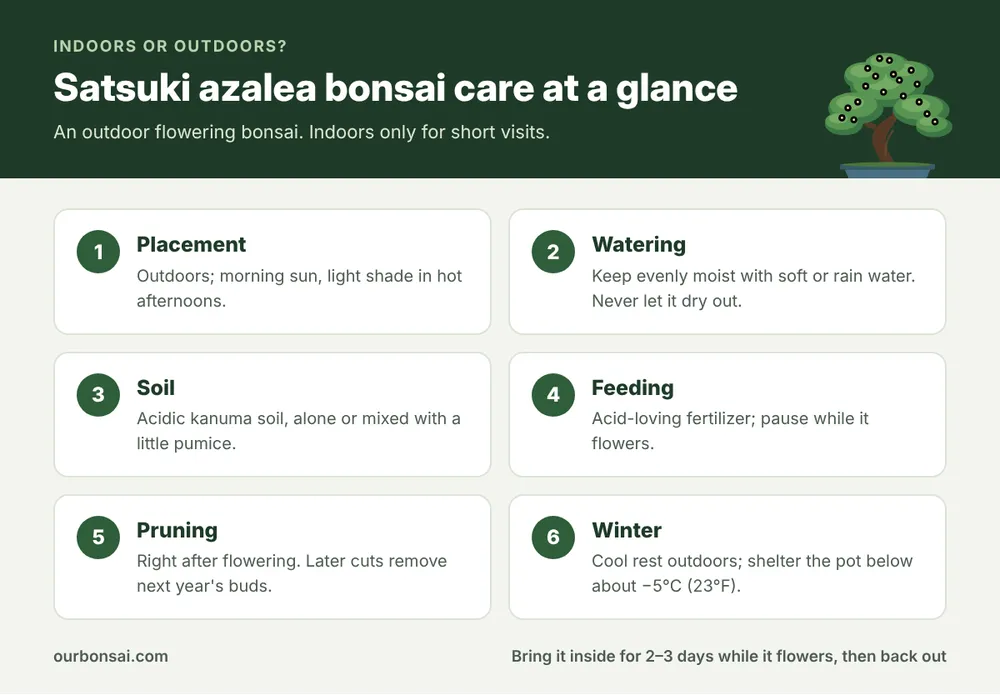
Quick answer: a Satsuki azalea bonsai is an outdoor tree. It can come inside for two or three days while it flowers, but it should live outdoors, with morning sun and light shade on hot afternoons. Keep the soil evenly moist with soft water, grow it in acidic kanuma soil, feed it with an acid-loving fertilizer, and prune right after flowering. In winter it needs a cool rest, with the pot sheltered from hard frost.
In this guide
Satsuki azaleas are cultivars of Rhododendron indicum and related species from Japan. “Satsuki” refers to the fifth month of the old Japanese calendar, when they flower, which is late spring to early summer. A single tree can carry flowers of several colours and patterns, which makes Satsuki one of the most loved flowering bonsai. Many are sold as “indoor” plants, but that is where most of them run into trouble.
Can a Satsuki azalea bonsai be kept indoors?
Not for long. Indoor light is too weak, the air is too dry, and the tree misses the cool winter rest it needs to set flower buds. A Satsuki kept indoors all year usually drops leaves, stops flowering and weakens within a season or two. Bring it inside only for a short display while it is in bloom. For a flowering tree that can live indoors, see our guide to flowering indoor bonsai care.

Placement outdoors
Give it morning sun and light shade in the afternoon, especially in hot climates. Too much hot sun scorches the leaves and fades the flowers; too much shade reduces flowering. Protect the tree from heavy rain while it is in flower, because wet petals rot quickly.
Watering
Azaleas have fine, shallow roots that dry out fast and die quickly if they stay dry. Keep the soil evenly moist and never let it dry out completely. Use rain water or soft water if your tap water is hard (high in lime), because lime raises the soil pH and causes yellow leaves. Water the soil, not the flowers. For hot weather, see watering bonsai in summer.
Soil: kanuma
Kanuma is a soft, acidic volcanic soil from Japan, and it is the standard soil for Satsuki. It holds water well while draining freely, and its pale colour darkens when wet, which helps you see when to water. Many growers use pure kanuma or mix it with a little pumice. Read more in our soil for azalea bonsai guide.

Fertilizer
Use a fertilizer for acid-loving plants. Feed from early spring until flowering, pause while the tree is in bloom, and resume after flowering until late summer. Stop in autumn. See our guide to fertilizer for azalea bonsai.
Pruning: right after flowering
Satsuki form next year’s flower buds in summer, at the tips of the new shoots. So the main pruning must be done right after flowering. Remove all spent flowers and their seed pods, cut back long shoots, and thin crowded areas. Pruning in late summer or autumn removes the buds and gives you no flowers the following year. Azalea wood is brittle, so wire gently and only on young branches. See when to start pruning bonsai.
Repotting
Repot every two to three years, either in early spring before flowering or right after flowering. Satsuki roots form a dense mat; comb them out gently and trim about a third. Use fresh kanuma.
Winter care
Satsuki are semi-evergreen. They keep some leaves but need cool temperatures in winter to rest and set flowers. Leave them outdoors in a sheltered spot, and protect the pot below about −5°C (23°F), for example in an unheated shed or cold frame. A warm room is not a good winter home.
Common problems
- Yellow leaves with green veins: soil not acidic enough, often from hard water.
- No flowers: pruning too late, too much shade, or a winter kept too warm.
- Brown, dry leaves: the soil dried out.
- Pests: watch for spider mites, lace bugs and aphids.
Frequently asked questions
Can I put my indoor azalea outside?
Yes, and you should. Move it out gradually over a week or two in spring, starting in shade, so the leaves can adjust to stronger light.
How often should I water a Satsuki azalea bonsai?
There is no fixed schedule. Check daily and water when the top of the kanuma starts to lighten in colour. In hot weather that may be every day.
When does Satsuki azalea flower?
Usually in late spring to early summer, later than most other azaleas.
Can I use normal potting soil for azalea bonsai?
It is better not to. Most potting soils are not acidic enough and hold too much water. Use kanuma.
Conclusion
A Satsuki azalea bonsai gives one of the finest flower displays in bonsai, but it belongs outdoors. Give it morning sun, soft water, kanuma soil and acid-loving fertilizer, prune right after flowering, and give it a cool winter rest. Bring it inside only to enjoy the flowers for a few days.