Skinny Bamboo Bonsai Care: Lucky Bamboo Tips

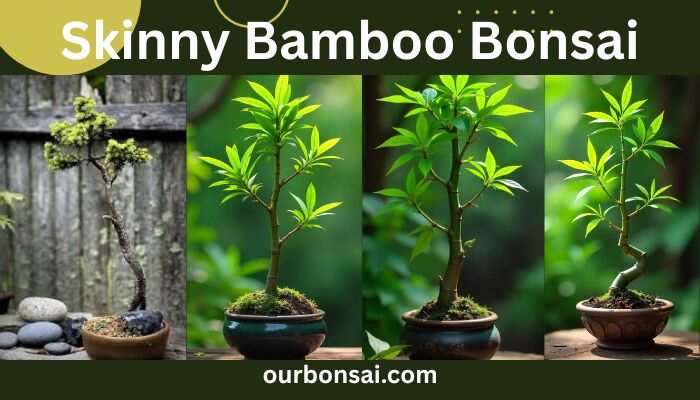
Quick answer: most “skinny bamboo bonsai” sold for desks and gifts are lucky bamboo (Dracaena sanderiana), which is not a true bamboo. Keep it in bright, indirect light, change its water every week (or keep the soil lightly moist), use filtered or rain water if your tap water is hard, and feed only very lightly. True bamboo can be grown bonsai-style, but it is an outdoor plant.
In this guide
Skinny bamboo arrangements are popular because they look neat, need little care and are said to bring good luck. Some sellers use names like “bot tree” or “bamboo bonsai tree” for these arrangements, but they are usually lucky bamboo canes in water, pebbles or soil. This guide explains how to care for them, and how true bamboo bonsai differ.
Lucky bamboo or true bamboo?
- Lucky bamboo (Dracaena): thick green canes with leaves only at the top or on side shoots, often sold in water or tied in shapes. It grows well indoors.
- True bamboo (grasses such as Pleioblastus or Bambusa): hollow, jointed canes with many thin leaves, growing from underground runners. It needs plenty of sun and is best kept outdoors in a pot.
If your plant came in water with stones, it is almost certainly lucky bamboo.

Light
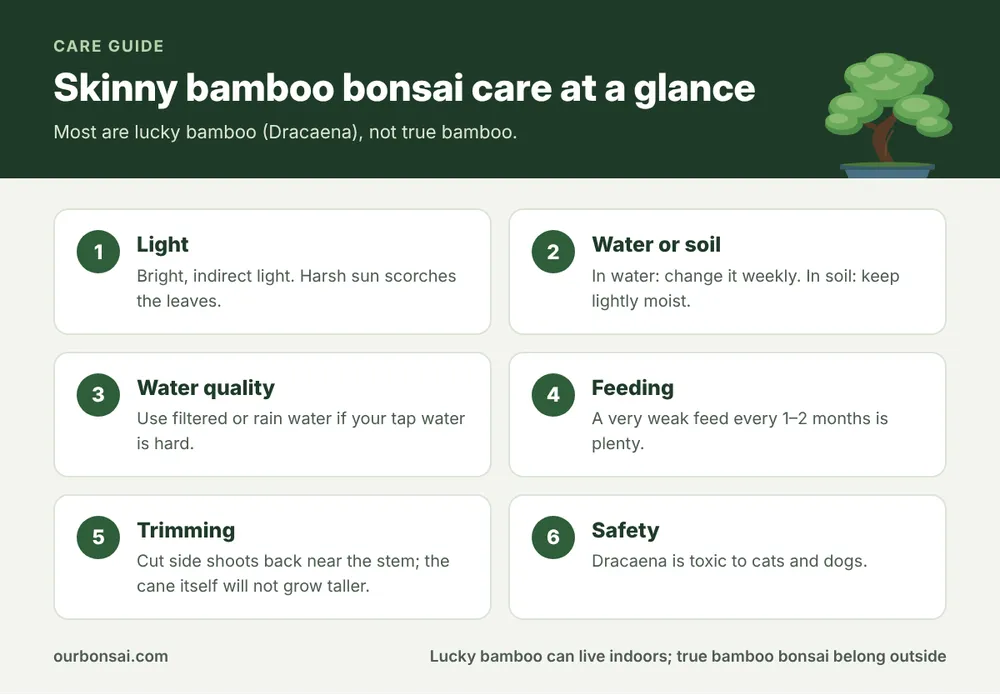
Lucky bamboo likes bright, indirect light, such as a spot a little back from a sunny window. Direct afternoon sun can scorch the leaves and turn them yellow or brown. Too little light makes the leaves pale and the new shoots long and thin. See how much light a bonsai needs for general light advice.
Watering
In water, keep the roots covered and change the water every week to stop algae and smells. Rinse the pebbles and container now and then. In soil, keep it lightly moist but not soggy, and use a pot with drainage holes. Lucky bamboo is sensitive to chlorine, fluoride and salts in tap water, which can cause brown leaf tips; filtered, rain or distilled water helps.
Feeding
Lucky bamboo needs very little fertilizer. Use a product made for lucky bamboo, or a liquid houseplant fertilizer at a fraction of the normal dose, every one to two months. Too much fertilizer turns the leaves yellow.

Trimming and shaping
A lucky bamboo cane will not grow taller once it is cut; new growth comes from side shoots. Trim side shoots back to an inch or two from the cane to keep the plant tidy. You can root the cuttings in water to make new plants. Curly and spiral shapes are made by growers turning the plant slowly toward a light source over months; it is not easy to do at home.
Common problems
- Yellow canes or leaves: often too much fertilizer, too much sun, or old water. A cane that turns yellow from the bottom up is rotting and should be removed.
- Brown leaf tips: usually chemicals in tap water or dry air.
- Mushy roots or a bad smell: change the water, rinse the roots and trim off soft, dark roots.
- Pests: mealybugs and spider mites can attack indoor plants. See mealybugs and spider mites.
Growing true bamboo as bonsai
Small-leaved bamboos can be grown in shallow pots for a bonsai-like look. They need full sun or bright shade outdoors, plenty of water, and regular division because their runners fill the pot quickly. They are not suited to life indoors. For indoor greenery that looks like a tree, a ficus or jade is a better choice; see our most popular indoor bonsai trees.
Frequently asked questions
Is skinny bamboo bonsai a real bonsai?
Not in the traditional sense. Lucky bamboo is not a tree and cannot be shaped with pruning and wiring like a bonsai. It is a decorative indoor plant.
Is lucky bamboo toxic to pets?
Yes. Dracaena species are listed as toxic to cats and dogs by the ASPCA, so keep it out of reach.
How long does lucky bamboo live?
With clean water and good light, it can live for several years. Moving it into soil can help it live longer.
Can I grow lucky bamboo in soil?
Yes. Use a well-draining potting mix and keep it lightly moist.
Conclusion
A skinny bamboo bonsai is easy to keep when you treat it as lucky bamboo: bright indirect light, fresh water every week, soft water if you can, and very little fertilizer. If you want a true miniature tree to shape, try a beginner-friendly species from our list of easy-care bonsai trees, or read how to care for a bonsai indoors.