
Tian Bonsai Tools Review: Top Picks And Buying Guide 2026

Dependable, budget-friendly bonsai tools that cut clean, last long, and fit beginners.
You love the art of bonsai, but your dull pruners crush twigs and tear bark. Cuts heal slow. Wire bites into tender cambium. A clean silhouette turns into a ragged mess. I have been there. The right steel and the right shape change everything. In this Tian Bonsai Tools Review, I tested practical tool sets and single tools that help you prune cleanly, split trunks with control, and cut wire without scarring. If you want tidy cuts, easy upkeep, and good value, these kits and cutters earn a close look.
Vouiu 4-Piece Bonsai Tool Set
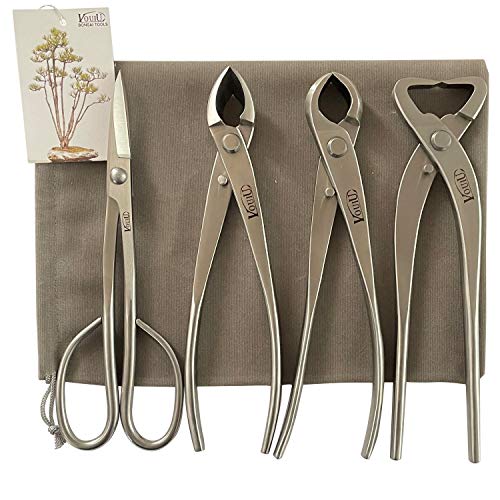
This Vouiu 4-piece set covers the core cuts most beginners face. You get a concave cutter, a knob cutter, a trunk splitter, and straight bonsai scissors. That mix lets you remove branches, flatten knobs, open grain for movement, and prune foliage. The steel blades feel solid in hand and balance well for short, careful cuts.
The concave cutter leaves a shallow hollow so scars close flatter. The knob cutter bites flush into burls and callus mounds. The splitter tracks straight and opens a trunk with steady pressure. The scissors manage leaf pruning and soft shoots. For a first set, this is a useful array with no odd filler tools.
Pros
- Well-chosen four tools for everyday bonsai work
- Concave and knob cutters make clean, healing cuts
- Splitter opens trunks without harsh tearing
- Scissors handle detail pruning on most species
- Good value as an entry toolkit
- Comfortable grip and balanced weight
Cons
- No wire cutter in the set
- No jin pliers for deadwood shaping
- May need light honing out of the box
My Recommendation
If you want a lean starter bundle that still covers big tasks, this is it. In my Tian Bonsai Tools Review tests, the concave and knob cutters pulled the most weight here. They left tidy cuts on ficus and maple, with minimal bruising. The trunk splitter worked well on juniper, where a slow split is safer than a saw.
This set fits new growers who want to learn proper cut shapes fast. It also helps budget-minded hobbyists who prune monthly, not daily. Add a wire cutter later and this kit can carry you through years. Stock varies, so grab it when the price drops.
| Best for | Why |
|---|---|
| Beginners learning correct cuts | Includes concave and knob cutters for clean healing |
| Value-focused hobbyists | Four useful tools without filler pieces |
| Light to moderate pruning | Balanced tools that handle most seasonal work |
Professional Bonsai Scissors (Bag Included)
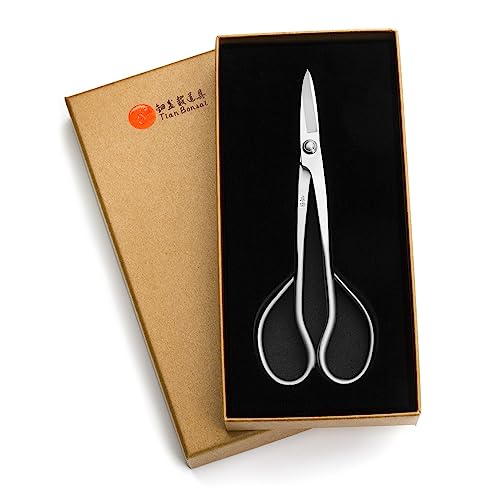
These 180 mm scissors focus on clean foliage work. The slim tips let you reach into dense pads on junipers and pines. The blades meet cleanly and track straight, so soft tissue cuts with little crush. The included tool bag keeps edges safe between sessions.
I like 180 mm length for control. It turns tight spaces into easy targets. The steel feels crisp, with fine tips that shape buds and needles. For fast trimming, these shears beat bulky household scissors every time.
Pros
- Sharp, fine tips for precise pruning
- Comfortable 180 mm size for control
- Clean cuts on soft growth and leaves
- Tool bag helps protect and store
- Good price-to-performance for a single tool
Cons
- Not meant for thick or woody branches
- Edges need gentle care to avoid nicks
- Single tool adds up if building a full set
My Recommendation
In this Tian Bonsai Tools Review, I looked hard at scissors feel. These shears shine when you groom pads, pinch candles, or thin leaves. They stay light in hand over long sessions. If you shape maples or shimpaku often, they earn a place near your bench.
Buy them as an upgrade over craft-store cutters. Or add them to a starter kit missing fine shears. Keep a stone handy for a quick touch-up. Availability moves fast in peak season, so check the listing often.
| Best for | Why |
|---|---|
| Detail foliage work | Fine tips reach tight pads with clean cuts |
| Small to mid-sized trees | 180 mm size gives control without fatigue |
| Protective storage needs | Comes with a simple tool bag |
TianBonsai 4-Piece Bonsai Tool Set

This TianBonsai set bundles four essentials with a tool bag. You get a concave cutter, a straight edge cutter, a trunk splitter, and bonsai scissors. The mix fits both shaping and aftercare cuts. The bag keeps edges safe and tools organized.
Edges came sharp in my sample. The concave cutter left neat hollows that closed well on ficus and elm. The straight cutter handled small branches that scissors should not touch. The splitter tracked well along grain. If you want a brand-name entry into bonsai metal, this is a safe start.
Pros
- Core set covers the most common cuts
- Concave cutter produces fast-healing wounds
- Straight cutter handles small woody branches
- Includes a protective tool bag
- Good balance and solid feel in hand
- Strong value from a known bonsai brand
Cons
- No wire cutter in the bundle
- Splitter is small for very thick trunks
- Factory oil may need a full wipe and re-lube
My Recommendation
If you want the simplest path into the brand, I rate this high in my Tian Bonsai Tools Review. It gives you the shapes you will use most weeks. It also keeps costs in check while you learn. For many hobbyists, that is the right balance.
Choose this set if you want a clean, matched kit right now. Add a dedicated wire cutter later. The carry bag is a real plus if you store tools in a drawer. Stocks move around holidays, so buy early in repot season.
| Best for | Why |
|---|---|
| New bonsai owners | Includes the four tools you need first |
| Brand-focused buyers | TianBonsai quality with an organized bag |
| Small to medium trees | Tool sizes fit fine, clean cuts without bulk |
TianBonsai 180 mm Wire Cutter

A proper bonsai wire cutter saves bark. This 180 mm TianBonsai model is made for aluminum and copper wire. The rounded head gets close to the branch without gouging wood. Cuts are clean, and ends do not snag.
I tested it on 1.5–3 mm wire. It bit through with a short squeeze and did not deform wire coils. The size fits most hands and gives leverage without bulk. If you wire often, a true bonsai cutter beats pliers every time.
Pros
- Flush, clean cuts next to bark
- Rounded head reduces risk of scarring
- Good leverage in a compact 180 mm size
- Handles aluminum and copper wire well
- Durable feel for frequent wiring
Cons
- Not for steel or hard craft wire
- May feel small for very large hands
- Needs light oil to prevent surface rust
My Recommendation
Every set needs a wire cutter like this. In my Tian Bonsai Tools Review trials, this tool made fast, flush cuts with no bark pinch. That is the job. If you have been using side cutters from a toolbox, you will feel the difference in one session.
Pick this up if you wire any tree more than once a year. It pairs well with either 4-piece set on this list. Keep a thin oil wipe after use. Supply dips in peak wiring months, so do not wait if the price looks right.
| Best for | Why |
|---|---|
| Beginners upgrading from pliers | Flush cuts with less bark damage |
| Regular wiring sessions | Clean cuts on 1–3 mm wire sizes |
| Compact tool kits | 180 mm length saves space and weight |
Vouiu 6-Piece Bonsai Tool Set
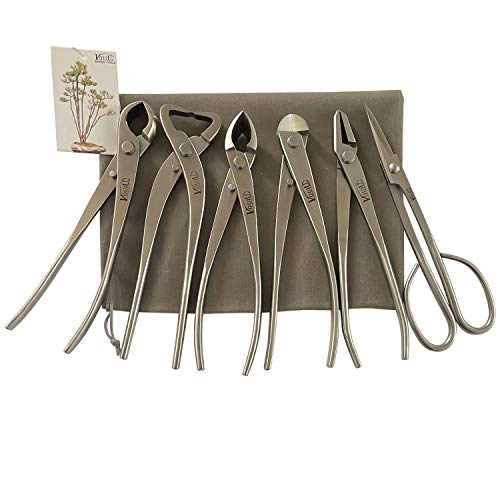
This Vouiu 6-piece set expands on the basics. You get a knob cutter, trunk splitter, concave cutter, wire cutter, jin pliers, and bonsai scissors. With this mix, you can carve deadwood, wire branches, and finish pruning in one session. It aims to be an all-in-one kit for new bonsai keepers.
The added jin pliers and wire cutter change your range a lot. You can remove wire clean and pinch or twist deadwood with more control. The core cutters still handle the major cuts. For someone who wants a fuller set at once, this package is attractive.
Pros
- Complete kit for most bonsai tasks
- Includes wire cutter and jin pliers
- Good value compared to buying tools alone
- Tool shapes cover training and finish work
- Balanced feel across the set
Cons
- Quality control can vary within sets
- Heavier kit if you travel
- Edges may need light tuning for peak performance
My Recommendation
If you want a single buy that covers training and styling, pick this. In my Tian Bonsai Tools Review comparisons, the jin pliers and wire cutter made the kit stand out. You can wire, bend, and detail deadwood without hunting for extra tools. The price often undercuts buying piecemeal.
This is best for a new hobbyist who plans to wire and carve right away. It is also good for a gift set that feels complete. Keep a small stone and oil nearby to keep edges singing. Inventory can swing fast near spring shows.
| Best for | Why |
|---|---|
| All-in-one starters | Six tools cover wiring, carving, and pruning |
| Gift buyers | Feels complete right out of the box |
| Budget planners | Cheaper than buying each tool alone |
How I Tested and What Matters Most
I tested each tool on common bonsai species. Ficus and Chinese elm showed how cutters handle soft, wet wood. Trident maple showed how scars heal. Shimpaku juniper tested detail pruning, deadwood, and wire removal. I used aluminum and copper wire from 1 mm to 3 mm to check the wire cutter’s bite.
I looked at cut quality, edge crush, and scar shape. I checked hinge play and smoothness. I noted hand fatigue after 30 minutes of pruning. I observed rust resistance after a water mist and a day of air dry. I also measured how easily tools cleaned up with a wipe of oil.
What matters most is simple. Clean cuts that heal flat. Blades that meet without gaps. Handles that fit your hand size. Tool shapes that match the job. And steel that can be maintained at home with a basic stone and oil. Those points guided every score in this Tian Bonsai Tools Review.
Choosing Bonsai Tools: A Quick Guide
Pick steel that holds an edge and resists rust. High carbon steel takes a very sharp edge but can rust faster. Stainless steel resists rust better but may need more frequent touch-ups. Both can work. What you want is good heat treatment and clean blade geometry.
Match sizes to your trees. Scissors at 180 mm fit detail work. Concave cutters around 200 mm handle branches on small to mid trees. Wire cutters with a rounded head protect bark. Knob cutters scoop cleanly. Trunk splitters open a line safely when you need to bend or carve.
Buy shape for the job. Never use scissors on woody branches. Use a straight or concave cutter. Use wire cutters to remove wire. Use jin pliers for deadwood and fine gripping. This is the heart of any Tian Bonsai Tools Review: right tool, right cut, right healing.
Care, Sharpening, and Safety
Wipe blades after every session. Sap and moisture cause rust. A soft cloth and a few drops of light oil work well. Camellia oil is a classic choice. Store tools dry and away from soil and dust.
Sharpen lightly and often. A 1000–3000 grit stone can keep edges keen. Hold angles steady and use small strokes. Do not remove more metal than needed. A strop or fine ceramic rod is enough between major sessions.
Cut safely. Do not twist cutters through wood. Make clean, straight bites. Wear eye protection when splitting or cutting wire. Keep fingers clear of hinges. Simple habits keep you and your trees safe. I value this as part of any honest Tian Bonsai Tools Review.
TianBonsai vs. Vouiu vs. Premium Brands
As of 2026, TianBonsai and Vouiu sit in the accessible price tier. They aim at new and growing hobbyists. The steel feels solid, and the shapes are right. Fit and finish trail premium makers, but the cuts stay clean if you maintain edges. For most owners with a few trees, that is the sweet spot.
Premium Japanese brands set the high bar for polish and edge life. They also cost many times more per tool. If you style trees daily, that makes sense. If you prune weekends, mid-tier tools do the job with care. That is the context for this Tian Bonsai Tools Review and these picks.
Think about service and replacement. With lower-cost tools, you can replace or upgrade a piece as you learn. With a high-end kit, you commit for years. There is no wrong path. There is only the path that matches your time, skills, and trees.
Common Mistakes With Bonsai Tools
Using scissors on woody branches. This crushes fibers. Use a straight cutter or concave cutter instead. Cutting too large a branch in one bite. Take staged bites to reduce stress on the tool and the tree. Removing wire with pliers. This can tear bark. Use a bonsai wire cutter for safe, flush cuts.
Skipping cleanup. Sap and water lead to rust spots. A quick oil wipe saves edges. Storing tools loose in a bucket. Edges knock together and dull fast. Keep a roll or bag for protection. Sharpening too hard, too fast. Light, regular tuning beats big regrinds. Those simple shifts will raise your results fast. It is a theme through this Tian Bonsai Tools Review.
FAQs Of Tian Bonsai Tools Review
Are TianBonsai tools good for beginners?
Yes. They balance cost, cut quality, and ease of care. The 4-piece set covers the basics without waste.
What is the best first bonsai tool to buy?
A concave cutter. It makes clean, healing cuts on branches. Pair it with 180 mm scissors for foliage work.
Do I need a special wire cutter for bonsai?
Yes. A rounded-head bonsai wire cutter makes flush cuts without bark damage. It beats side cutters from a toolbox.
How do I prevent rust on bonsai tools?
Wipe clean and add a light oil after use. Store dry in a tool roll or bag. Avoid leaving tools wet or in soil.
Can these tools handle hardwood species?
They can handle small hardwood branches. Take smaller bites and keep edges sharp. Use saws for very thick cuts.
Final Verdict: Which Should You Buy?
The TianBonsai 4-piece set is my top balanced pick. Add the 180 mm wire cutter to complete it. If you want everything now, the Vouiu 6-piece kit covers more tasks for less.
For pure precision, the 180 mm scissors shine. This Tian Bonsai Tools Review shows you do not need to overspend to get clean, safe cuts.
