
How to Treat Mealybugs on Bonsai Naturally

Quick Answer
To treat mealybugs on bonsai naturally, isolate the tree, remove visible insects, rinse exposed colonies with water, and spot-treat stubborn pests with a plant-safe contact treatment. For larger infestations, a labeled insecticidal soap, horticultural oil, or neem product can help when applied directly to the insects; the UC IPM mealybug guidance also stresses repeated monitoring because the waxy pests hide in protected areas.
Natural Mealybug Treatment Steps
- Isolate the bonsai: Move it away from other trees before crawlers spread through your collection.
- Remove visible bugs: Use tweezers or a cotton swab to lift mealybugs from leaves, branch forks, and bark crevices.
- Rinse exposed colonies: A controlled stream of water can knock many mealybugs from sturdy foliage and branches.
- Spot-treat survivors: Dab individual insects with isopropyl alcohol only after testing a small area for plant sensitivity.
- Escalate carefully: Use labeled insecticidal soap, horticultural oil, or neem when physical removal is not enough.
- Keep checking: Inspect new growth, leaf joints, branch crotches, and the soil line until no new pests appear.
Learning how to treat mealybugs on bonsai naturally is mostly about persistence, not one aggressive spray. These wax-covered insects hide well, so I prefer a controlled, low-impact approach that protects the tree while steadily reducing the population.
In This Guide
What Do Mealybugs Look Like on a Bonsai?
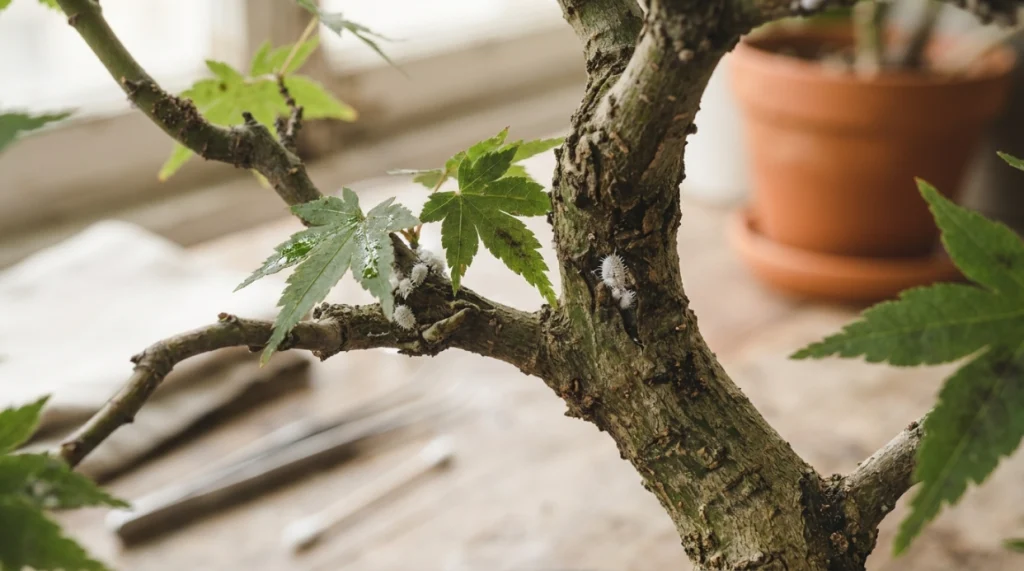
Mealybugs are small, soft-bodied sap feeders covered with a white, waxy coating. On bonsai, they often resemble tiny pieces of cotton tucked against stems, leaves, buds, and branch joints.
Definition: A mealybug is a sap-feeding insect protected by a powdery or cotton-like wax layer. That coating helps explain why simple contact treatments may miss adults unless the liquid reaches the insect directly.
Adult females are commonly around 3/16 inch long. Young mobile stages, called crawlers, are smaller and can spread to nearby plants before developing heavier wax.
I inspect the protected areas first. A quick look across the canopy can miss a colony that is already established.
- Leaf joints: Check where leaves or petioles meet stems.
- Branch crotches: Look inside tight forks and around buds.
- Leaf undersides: Pay attention to veins and folded foliage.
- Bark crevices: Older bonsai provide excellent hiding places.
- Soil line: White wax near the trunk can suggest pests below the surface.
Sticky honeydew is another clue. Heavy feeding may also cause yellow leaves, weak growth, wilting, premature leaf drop, or black sooty mold.
Those symptoms can have other causes, so confirm the insect before treating. The visual examples in Bonsai Empire’s pest and disease overview can help separate insect problems from ordinary care stress.
How Do You Treat Mealybugs on Bonsai Naturally?
The safest approach is an integrated sequence: contain the infestation, physically reduce it, then use the mildest effective contact treatment. As of 2026, that remains the approach I favor before considering stronger systemic pesticides.
- Quarantine the tree immediately. Keep the affected bonsai away from the rest of your collection. Mealybug crawlers can move between nearby plants, pots, benches, and tools.
- Remove what you can see. Pick off exposed insects with tweezers or a cotton swab. Pay special attention to tender shoots and tight branch joints.
- Use water where the tree can tolerate it. A firm but controlled stream can dislodge exposed mealybugs. Protect loose bonsai substrate so you do not wash soil from the pot.
- Spot-treat remaining insects. A cotton swab dipped in isopropyl alcohol can kill individual mealybugs. Keep the alcohol focused on the pest rather than soaking foliage.
- Use a labeled contact product when needed. Insecticidal soap, horticultural oil, or neem-based products can suppress exposed mealybugs when physical removal alone fails.
- Repeat inspection rather than assuming they are gone. Eggs and hidden insects can survive the first treatment. Recheck every protected crevice during routine care.
The University of Maryland Extension recommends isolation and physical removal for infested indoor plants. It also notes that alcohol can damage foliage if applied carelessly.
Can you use rubbing alcohol on bonsai mealybugs?
Yes, but use it as a precise spot treatment. UC IPM advises using 70% or less isopropyl alcohol on small infestations and testing the plant first for phytotoxicity, or chemical injury.
- Test first: Treat a small hidden area and watch it for one to two days.
- Target insects: Touch the swab to the mealybug instead of soaking the whole leaf.
- Protect tender growth: Young foliage can be more sensitive than mature leaves.
- Avoid blanket spraying: A concentrated alcohol mist across the canopy creates unnecessary burn risk.
Species sensitivity matters. Ficus, jade, Chinese elm, juniper, and other bonsai do not all react identically to oils, soaps, alcohol, heat, or direct sun after spraying.
Should you use homemade dish soap?
I would not. Household detergents vary in surfactants, fragrances, degreasers, and other additives that were not designed for plant tissue.
Choose a product specifically labeled as insecticidal soap instead. Follow its dilution, temperature, species, and repeat-application directions exactly.
Section Takeaway: Reduce the population physically first, then use a targeted contact treatment only where needed. Bonsai leaves and roots have little room for careless chemical injury.
Which Natural Mealybug Treatments Work Best?
No single method wins in every situation. The best option depends on infestation size, species sensitivity, and whether the insects are exposed or hidden.
| Treatment | Best Use | Contact Required? | Repeat Approach | Main Caution |
|---|---|---|---|---|
| Water rinse | Light, exposed colonies | Yes | Repeat every few days if pests remain | Avoid eroding bonsai soil |
| Alcohol swab | Small localized infestations | Yes | Inspect weekly and retreat individual pests | Test first; leaf burn is possible |
| Insecticidal soap | Wider exposed populations | Yes | Repeat according to product label | Some plants are soap-sensitive |
| Horticultural or neem oil | Exposed crawlers and young insects | Yes | Follow label timing | Heat and species sensitivity can cause injury |
| Beneficial insects | Greenhouses or suitable outdoor settings | No spray contact | Maintain suitable predator conditions | Often impractical for one indoor bonsai |
Insecticidal soap works only when it reaches susceptible pests. The Colorado State University Extension guide to insecticidal soap also warns against substituting household liquid soap or cleaning products.
Outdoors, natural predators can help. The mealybug destroyer, Cryptolaemus montrouzieri, is a lady beetle that feeds on mealybugs, while lacewings and parasitoid wasps can also suppress populations.
How Often Should You Repeat Treatment?
Expect to inspect and treat more than once. Adult mealybugs have protective wax, while crawlers and insects hidden in crevices may escape the first application.
For water removal, populations can be checked again within several days. Alcohol spot treatments should be followed by regular inspection, with UC IPM suggesting weekly repetition when necessary.
- During watering: Check leaf joints, undersides, new shoots, and the trunk base.
- After treatment: Watch for fresh white wax, moving crawlers, or new honeydew.
- Before returning the tree: Inspect nearby plants and the growing area as well.
- After apparent control: Continue monitoring rather than ending quarantine after one clean inspection.
The broader University of Minnesota Extension guidance for indoor plant pests also emphasizes washing, physical removal, and repeat treatment when pests persist.
A magnifying lens helps here. Tiny crawlers can look like pale dust until you see them moving.
What If the Mealybugs Are in the Bonsai Soil?
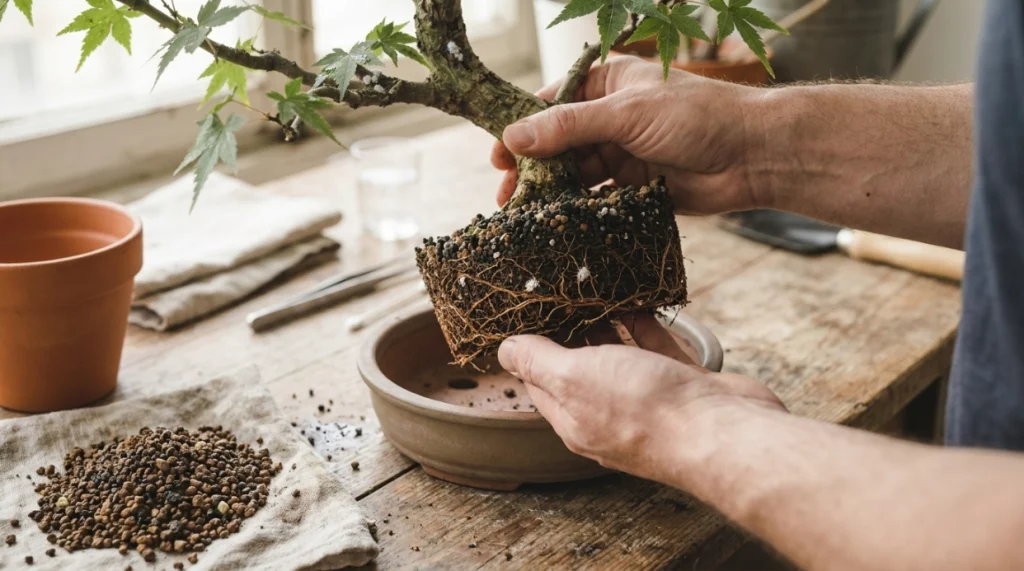
Root or ground mealybugs are harder to manage because ordinary sprays cannot reach insects hidden around the root ball. White wax in the soil, unexplained decline, yellow foliage, and pests visible near drainage holes can justify a closer root inspection.
How can you check for root mealybugs?
First rule out ordinary mineral deposits, fungal growth, fertilizer residue, and harmless soil organisms. If the tree is declining, inspect the drainage holes and accessible edge of the root ball for white wax and slow-moving insects.
- Quarantine first: Root mealybugs can spread through contaminated pots, media, tools, and work surfaces.
- Clean the work area: Do not reuse spilled growing medium around healthy bonsai.
- Replace contaminated substrate carefully: For a confirmed infestation, repotting into clean bonsai soil may help remove infested material.
- Clean the container: Wash the pot thoroughly before reuse.
- Monitor the roots: Watch vigor, watering response, and new growth after treatment.
Do not automatically bare-root a bonsai just because you spot one suspicious white patch. A full soil change at the wrong seasonal stage can stress some species more severely than the pest itself.
Pro tip: Root work is irreversible. If a valuable or sensitive bonsai needs emergency repotting outside its normal repotting season, consult an experienced grower or local bonsai club before disturbing or cutting live roots.
Aboveground alcohol and soap treatments will not solve a population feeding around roots. Persistent root infestations may require professional or label-approved pest management beyond a purely natural approach.
How Do You Keep Mealybugs From Coming Back?
Prevention starts with inspection. New plants are one of the easiest ways to introduce mealybugs into a bonsai collection.
- Quarantine new plants: Keep new bonsai, accent plants, and nursery stock separate while you inspect them.
- Check protected areas: Examine bark cracks, branch unions, leaf bases, roots near drainage holes, and the underside of foliage.
- Clean tools: Remove plant debris and pest residue before using tools on another tree.
- Control ants: Ants feed on honeydew and can interfere with natural mealybug predators outdoors.
- Avoid excess nitrogen: Heavy nitrogen feeding encourages soft growth that mealybugs often favor.
- Keep the tree vigorous: Match watering, light, drainage, and seasonal care to the bonsai species.
I also resist the urge to overwater a stressed tree. Yellowing from mealybug feeding can resemble root trouble, and adding more water without checking the soil can create a second problem.
Natural control works best as a routine rather than an emergency response. A 30-second inspection during watering often catches pests while the colony is still manageable.
Frequently Asked Questions
Can neem oil kill mealybugs on bonsai?
Neem oil can suppress exposed mealybugs, especially younger stages, when a product is labeled for the plant and applied correctly. Test a small area first because oils can injure sensitive foliage, particularly during hot weather or strong sunlight.
Does rubbing alcohol kill mealybugs instantly?
Direct contact with isopropyl alcohol can kill individual mealybugs, which makes a cotton swab useful for small colonies. Keep the treatment targeted, use 70% or less, and test the bonsai first because some leaves and tender shoots can burn.
Can I spray dish soap on my bonsai for mealybugs?
Commercial insecticidal soap is a safer choice than homemade dish-soap mixtures. Household detergents contain varying additives and concentrations, so they can injure foliage. Use a pesticide product labeled as insecticidal soap and follow its directions.
Will water alone get rid of mealybugs?
A strong stream of water can remove many exposed mealybugs and is useful for a light infestation. It usually will not reach every insect or egg hidden in bark, leaf joints, or roots, so follow-up inspection is essential.
Why do mealybugs keep coming back after treatment?
Mealybugs hide in protected crevices, and contact treatments have little or no residual effect. Crawlers or concealed insects can therefore appear after the visible adults are gone. Repeat inspections and targeted treatment are usually needed for complete control.
Should I throw away a bonsai with mealybugs?
Most light or moderate aboveground infestations are worth treating, especially on a valued bonsai. Severe root infestations or repeated outbreaks can be much harder to eliminate, so isolate the tree and weigh its condition against the risk to the rest of your collection.
Final takeaway: Start with quarantine, physical removal, and careful monitoring. Add alcohol spot treatment, insecticidal soap, or labeled oils only as needed, and keep checking the bonsai until you are confident the full mealybug population is gone.