
Why Does My Bonsai Have White Fuzzy Bugs?

Quick Answer
White fuzzy bugs on a bonsai are most often mealybugs, although woolly aphids and some scale insects can look similar. Mealybugs are small sap-feeding insects protected by white, cotton-like wax, so confirm that an insect is hiding beneath the fuzz before treating it. The UC IPM mealybug guide is a useful identification reference.
Signs that point to mealybugs
- Cottony white wax: Look for fluffy clusters around leaves, buds, and branch joints.
- Oval insects: Gently separate the wax and look for a soft, segmented body underneath.
- Sticky foliage: Mealybugs produce sugary honeydew that can coat leaves and branches.
- Black coating: Sooty mold may grow on accumulated honeydew.
- Hidden colonies: Check leaf axils, bark cracks, branch forks, and the soil line.
What to do first
- Isolate the bonsai, inspect it under good light, remove visible insects, and monitor it repeatedly before escalating treatment.
Seeing white fuzz on a bonsai can be unsettling because several pests wear almost the same disguise. I never treat the color white as a diagnosis by itself.
The location, body shape, movement, and presence of sticky honeydew tell me much more. Here’s how to identify the culprit and deal with it without putting unnecessary stress on your tree.
In This Guide
What Are the White Fuzzy Bugs on My Bonsai?
White fuzzy bugs on a bonsai are commonly mealybugs, which feed on plant sap and cover themselves with protective white wax. That wax can resemble cotton fibers, powder, or tiny fluffy blobs.
Definition: A mealybug is a soft-bodied, sap-feeding insect that produces a waxy coating around its body. Many species also produce honeydew, a clear and sticky sugary waste.
Mealybugs often settle where the tree gives them shelter. Dense bonsai branching creates plenty of these protected spaces.
- Leaf axils: The tight junction where a leaf meets a stem.
- Branch forks: Protected crotches where two branches divide.
- Young shoots: Soft growth that is easy for sap-feeding insects to penetrate.
- Bark crevices: Small gaps that protect insects from water and contact sprays.
- Soil line: Some colonies hide around the trunk base or below the surface.
White fuzz alone does not prove that mealybugs are present. Woolly aphids, cottony scale, mineral residue, fungal growth, and even old insect egg material can create similar patches.
The Bonsai Empire pest and disease guide also lists mealybugs, aphids, scale insects, spider mites, and other insects among common bonsai problems. Identification should always come before treatment.
How Can I Tell Mealybugs From Other White Bonsai Pests?
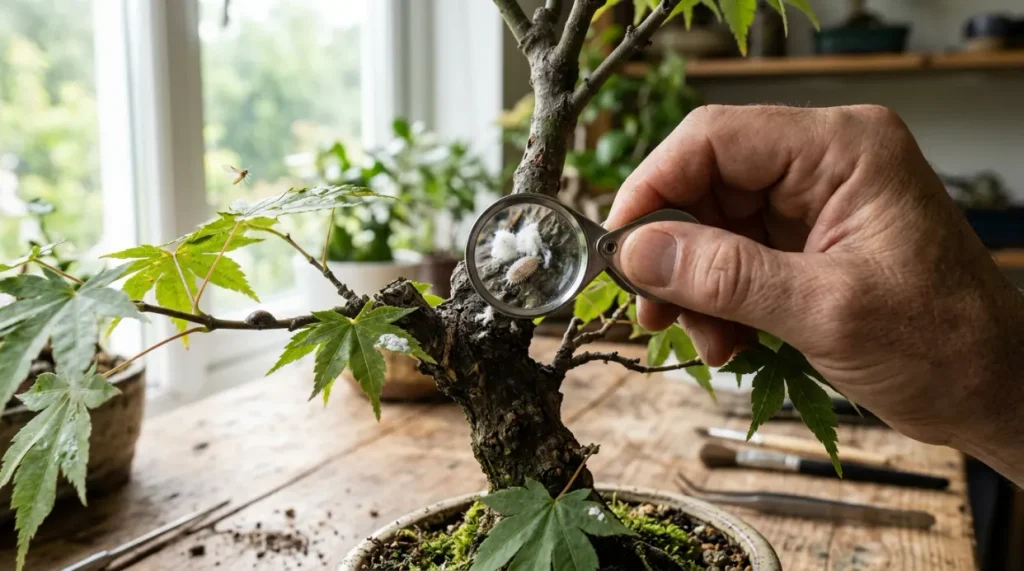
Look beneath the white material instead of judging the pest from its coating. A soft, oval, segmented insect strongly suggests a mealybug, while other pests have different body shapes and behaviors.
I like using a 10× hand lens under bright light. It is often enough to separate a living insect from harmless residue.
| Possible Cause | Typical Appearance | Movement | Honeydew? | Best Clue |
|---|---|---|---|---|
| Mealybugs | Soft oval insects under powdery or cottony wax | Slow crawling | Usually | Segmented body beneath loose wax |
| Woolly aphids | Small insects hidden beneath fluffy wax | Mobile | Often | More pear-shaped insect body |
| Scale insects | Firm, waxy, shell-like, or dome-shaped bumps | Settled stages stay fixed | Soft scale can | Firm attachment to plant tissue |
| Whiteflies | Tiny pale, winged adults | Adults fly | Yes | Adults rise when foliage is disturbed |
| Mineral residue | White crust, dust, or spots | None | No | No insect body underneath |
Look for sticky leaves
Honeydew is one of the strongest supporting clues. Mealybugs, aphids, whiteflies, and soft scale can all leave foliage unexpectedly sticky.
Black sooty mold may later grow on that sugary residue. The mold is a secondary clue, not the insect itself.
Check whether the white fuzz moves
Touch the edge of a suspected colony gently with a wooden toothpick or cotton swab. You may see a mealybug crawl once the wax is disturbed.
Penn State Extension describes mealybugs as white, cottony pests that may occur on stems, leaves, and roots. Their feeding can also contribute to weak growth and premature leaf drop.
Why Does My Bonsai Get Mealybugs?
Mealybugs do not appear because you necessarily did something wrong. They usually arrive on another plant, contaminated material, or an unnoticed infestation that was already present.
A stressed tree can suffer more damage once pests establish themselves. Stress and pest introduction are different problems.
New plants can introduce pests
One overlooked insect can become the start of a colony. I keep newly acquired plants separate while I inspect their leaves, bark, branch joints, and soil surface.
This matters when bonsai and houseplants sit close together. Crawlers can move, and people can accidentally transfer pests while handling plants.
Dense growth gives insects shelter
Compact bonsai canopies contain many hidden junctions. Those spaces make physical removal and spray coverage harder.
Good airflow also helps you see the tree clearly during routine inspections. The goal is not to expose every bonsai to strong wind.
Too much soft growth can encourage feeding
Heavy nitrogen feeding can create abundant tender growth. UC IPM notes that excessive nitrogen combined with regular irrigation can favor the kind of new growth mealybugs use for feeding and egg laying.
Follow a fertilizer schedule suited to your species and growing season instead. More fertilizer does not automatically produce a healthier bonsai.
As of 2026, the basic advice remains refreshingly simple: keep the tree healthy, inspect it often, and identify pests before choosing a pesticide. The American Bonsai Society also provides educational resources and connections to local bonsai clubs for growers who need hands-on help.
How Do I Get Rid of White Fuzzy Bugs on Bonsai?
Start with isolation and physical removal rather than immediately reaching for the strongest spray. Small infestations are often easier to manage when you methodically remove visible insects and keep checking for survivors.
- Isolate the tree. Move it away from other bonsai and houseplants.
- Confirm the pest. Look for a soft insect beneath the white wax.
- Inspect hidden areas. Check leaf axils, branch forks, buds, bark cracks, trunk base, and drainage holes.
- Remove exposed insects. Wipe or rinse away colonies without damaging delicate shoots.
- Use a labeled treatment if needed. Insecticidal soap or horticultural oil may suppress exposed mealybugs.
- Repeat inspections. Hidden insects and newly emerged young can survive the first treatment.
Can I use rubbing alcohol on mealybugs?
UC IPM says small houseplant infestations can sometimes be spot-treated with 70% or less isopropyl alcohol. Apply it directly to individual pests rather than soaking the entire tree.
Always test a tiny area first and watch for leaf damage. Bonsai species differ in their sensitivity to treatments.
Do insecticidal soap and horticultural oil work?
They can reduce exposed populations when the product is labeled for your type of plant. Coverage matters because these are mainly contact treatments.
Mealybugs are difficult because their wax and hiding places protect them. Young insects with less wax are often easier to reach than mature individuals.
Should I repot a bonsai with mealybugs?
Do not repot automatically just because you see insects on the foliage. Repotting is additional stress and should follow the normal needs and seasonal timing of the species.
If white wax or living insects are clearly present around the roots, however, you may be dealing with root mealybugs. That situation deserves a more careful root-level management plan.
Pro tip: Root work is irreversible. If an old, weak, valuable, or unfamiliar bonsai has suspected root mealybugs, ask an experienced grower or local bonsai club for species-specific advice before disturbing the root ball.
Section Takeaway: Start with identification, isolation, and removal. Use treatments only when needed, test them carefully, and keep monitoring after the tree appears clean.
Why Do White Fuzzy Bugs Keep Coming Back?
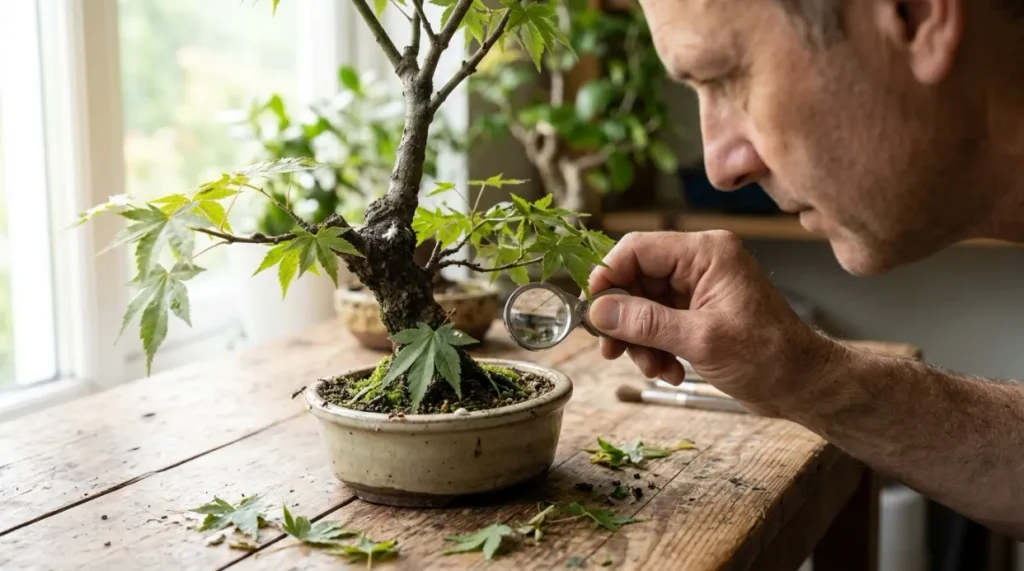
Mealybugs often return because the first treatment misses hidden insects, protected egg material, or root colonies. A clean-looking canopy does not always mean the population has disappeared.
Their wax also makes complete contact coverage difficult. This is why repeated inspection matters more than one aggressive treatment.
Search the places you missed
- Under leaves and leaf bases
- Inside branch crotches
- Around buds and new shoots
- Under loose bark where appropriate
- Along the trunk base
- Around pot rims and drainage holes
- On nearby plants
Ant activity is worth investigating too. Ants are attracted to honeydew and may interfere with natural enemies that would otherwise feed on mealybugs outdoors.
Monitor instead of declaring victory
Keep the affected bonsai separated until repeated inspections show no new insects. Check both the plant and nearby growing area.
I also clean fallen leaves and obvious plant debris around an infested tree. Simple sanitation makes hidden pest activity easier to spot.
The U.S. National Arboretum describes bonsai as living woody plants that require continual care and training. Pest inspection belongs in that ongoing care routine rather than being treated as a one-time emergency.
Frequently Asked Questions
Are white fuzzy bugs on bonsai always mealybugs?
No. Mealybugs are a common cause, but woolly aphids, cottony scale, whiteflies, mineral residue, and fungal material can look similar. Expose the material gently and confirm an actual insect body before choosing a treatment.
Can mealybugs kill a bonsai?
A few insects usually will not kill a healthy bonsai immediately. A heavy or persistent infestation can weaken shoots, contribute to yellowing and leaf loss, and place additional stress on a tree with limited root and foliage reserves.
Why are my bonsai leaves sticky as well as fuzzy?
Sticky leaves often indicate honeydew from sap-feeding pests. Mealybugs, aphids, whiteflies, and soft scale can all produce honeydew, so the sticky residue supports a pest diagnosis but does not identify the exact insect.
Can mealybugs live in bonsai soil?
Yes. Some mealybugs live around roots and may produce white wax inside the root ball, near fine roots, or along the pot edge. Suspect root pests when above-ground treatments repeatedly fail and root-area evidence is visible.
Should I spray my entire bonsai with rubbing alcohol?
No. Alcohol can injure sensitive foliage, so it is safer to use it as a controlled spot treatment after testing a small area. UC IPM recommends monitoring for phytotoxicity, which means chemical injury to plant tissue.
How often should I check a bonsai after finding mealybugs?
Inspect it repeatedly during the following weeks rather than relying on a single treatment. Pay special attention to protected joints and new growth, because surviving or newly emerged insects can make an infestation appear to return suddenly.
Do I need to throw away an infested bonsai?
Not usually. Many mealybug infestations can be managed with isolation, repeated physical removal, good plant care, and appropriate labeled treatments, although severely weakened trees or persistent root infestations may require expert help.
What Should I Do When I Find White Fuzz?
Treat white fuzz as a clue, not a final diagnosis. Check for a living insect, then compare its shape, movement, location, and honeydew before deciding what to do.
If it is a mealybug infestation, isolate the bonsai and remove visible insects first. Follow with a plant-safe treatment only when necessary, and keep inspecting until no new pests appear.
That patient approach protects the tree from both the insects and unnecessary treatment. In bonsai care, accurate observation is often the most useful tool you own.