Can Bonsai Diseases Spread Between Trees?
If you’ve invested time, money, and care into a bonsai collection, watching one tree struggle with disease can feel like a punch to the gut. A very natural next thought is worry: can this problem move to my other trees? The short answer is yes. Bonsai diseases—especially fungal infections and certain pests—can spread between trees, and often quite easily. However, the longer answer involves understanding how this happens and, more importantly, what you can do to protect your collection.
Quick Answer
Yes, bonsai diseases can spread between trees. Fungal pathogens like powdery mildew and anthracnose, along with pests such as scale insects and spider mites, can easily transfer from tree to tree. They spread through air currents, water splashes, contaminated tools, and infected soil. Prompt isolation of sick trees and strict tool hygiene are essential to prevent an outbreak from affecting your entire collection.
How Bonsai Diseases Spread
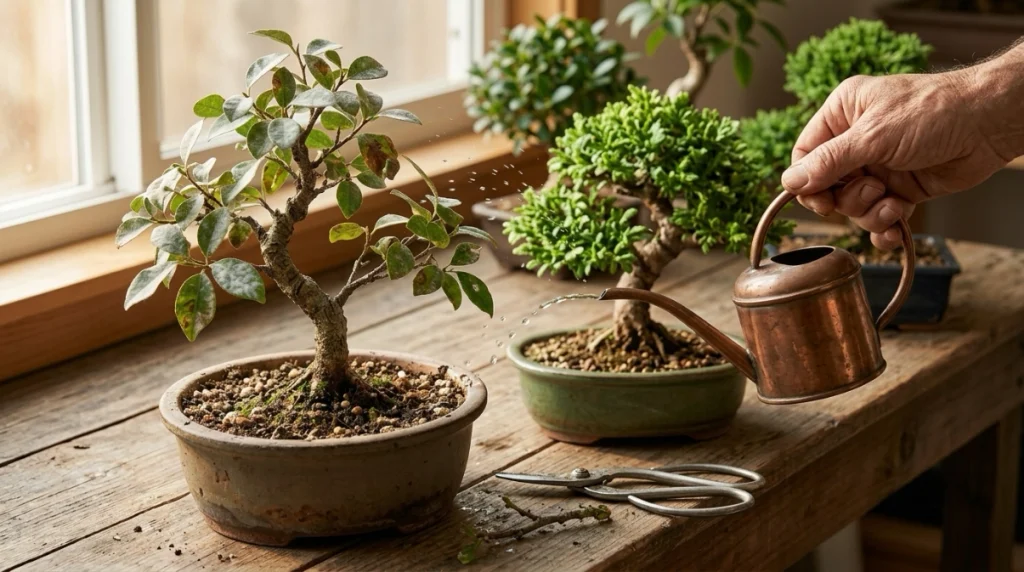
To protect your bonsai, it helps to think like a pathogen. Diseases don’t have legs, but they have many other ways to travel. Whether it’s a microscopic fungus or a tiny insect, the spread usually happens through a few common vectors.
Airborne and Waterborne Transmission
Many of the most common fungal diseases are masters of air travel.
- Powdery Mildew: This fungal disease is a classic example. It produces millions of tiny spores that can be carried by air currents or splashes of water. If you have an infected tree, a breeze through an open window or a watering splash can easily transfer the fungus to a neighboring tree.
- Rust Diseases: Some rusts need two entirely different plant species to complete their life cycle. The fungal spores can travel on the wind from one tree to another, so if you have a susceptible species nearby, the risk is high.
- Bacterial and Fungal Spores: Leaf blight and anthracnose are often caused by fungi that thrive in warm, humid conditions. Spores from these pathogens can also spread through rain splash or overhead watering.
The Risk of Contaminated Tools
This is perhaps the most preventable—and most common—mode of transmission.
- The Chain of Infection: When you prune a diseased branch, you are covering your shears in the pathogen. If you then use those same dirty shears to prune another healthy tree, you are directly injecting the disease into the tree’s open wound. This is akin to using a dirty needle in a hospital.
- Best Practice: Bonsai enthusiasts, especially those with multiple trees, must treat tool hygiene as a non-negotiable practice. Always sterilize your tools between uses on different trees. A quick wipe with a paper towel soaked in 70% isopropyl alcohol is effective and easy.
Spread Through Soil and Roots
The soil medium itself can also be a pathway for disease.
- Shared Soil: While less common, some fungal pathogens can survive in soil or organic matter. If you reuse soil from a dead or diseased tree without sterilizing it, you risk infecting your next tree.
- Root-to-Root Contact: In nature, some tree diseases can spread through root grafts or contact. While less likely in the isolated pots of a typical bonsai collection, it is a consideration if trees are crowded together on a bench, as water draining from one pot can carry pathogens to the pot below.
Common Diseases and Pests to Watch For
Understanding your enemy is the first step to winning the battle. Here are some of the most common invaders that pose a risk to your collection.
Quarantine and Prevention: Your First Line of Defense
Prevention is not just better than cure; in many cases, it’s the only effective strategy. Once a disease takes hold, it can be very difficult to reverse, especially for a hobbyist.
Isolation and Quarantine
This is the single most important thing you can do to protect your collection.
- Quarantine New Trees: When you bring a new bonsai home, keep it separate from your other trees for at least 3-4 weeks. Think of it as a probation period. This gives you time to spot any emerging problems before they can spread.
- Isolate Sick Trees: The moment you notice signs of a disease or pest, move that tree away from the rest. Place it on a separate windowsill, bench, or room if possible.
Proper Spacing and Hygiene
Disease thrives in crowded, stagnant conditions.
- Airflow: Ensure your trees have adequate space between them for air to circulate freely. This helps dry the foliage and soil surface, reducing the environment that fungi love.
- Watering: Try to water the soil, not the leaves. Many fungi and bacteria need a moist leaf surface to take hold. Watering in the morning allows the sun to dry the leaves during the day.
- Sanitation: Always, always sterilize your bonsai tools between uses on different trees. Also, remove fallen leaves and debris from the soil surface, as these can harbor fungal spores and pests.
Common Mistakes Bonsai Owners Should Avoid
It’s easy to make mistakes when you see a beloved tree in distress. Here’s what to watch out for:
- Waiting to Quarantine: Not isolating a sick tree immediately because it seems minor. A “minor” issue with one tree is a potential outbreak for the rest.
- Neglecting Tool Hygiene: The “I’ll just make one more cut” mentality. This is a primary vector for disease spread.
- Composting Diseased Material: Throwing infected leaves or branches in your regular compost. Many fungal spores survive the composting process, only to be reintroduced to your garden when you use the compost. Always dispose of infected material in a sealed bag with your trash.
- Overwatering: Damp, waterlogged soil is a breeding ground for root rot fungi, which can then weaken a tree and make it susceptible to other infections.
- Ignoring the “Entry Wound”: Pruning creates a wound. Failing to treat larger cuts with a proper wound sealant (like cut paste) can provide an easy entry point for pathogens.
- Crowding Your Trees: Storing trees too closely together reduces airflow, creating a microclimate that is perfect for diseases like powdery mildew to thrive.
Expert Tip
Expert Tip: When treating a diseased bonsai, assume your entire collection is at risk. Prioritize the health of the many over the potential to save the one. If a valuable tree is heavily infected with a highly contagious fungal disease, it is often wise to discard it quickly rather than risk your entire collection for a possible cure.
When to Ask an Experienced Bonsai Grower or Arborist
There is a point where self-help needs to transition to professional help. Recognizing this limit is a sign of a mature and responsible bonsai owner.
- Unknown Pathogen: If you don’t recognize the symptoms and can’t identify the problem, a professional can provide a diagnosis before it’s too late. A local bonsai society or nursery is often the best first port of call.
- Heavy Infestation: If a tree is severely overrun with scale insects, or a fungus is so widespread that it’s causing rapid defoliation, expert intervention may be needed.
- Structural Pruning on a Sick Tree: If a diseased tree needs major structural work (e.g., removing a large branch or doing major root pruning), the stress could kill it. An arborist or expert can advise on whether the tree is strong enough to survive the procedure.
- Systemic Treatments: If you need to use strong systemic fungicides or pesticides, a professional can give you safe and effective advice, especially regarding timing and dosage. The EPA provides guidelines on the safe use of pesticides, and it is important to follow all label directions carefully.
- Valuable or Irreplaceable Trees: If your tree is a valuable, old, or sentimental specimen, don’t gamble with its health. The cost of expert advice is far less than the value of losing the tree.
FAQs
Can I use the same soil for multiple bonsai trees?
You should avoid reusing soil from a diseased tree. If you must reuse soil from a healthy tree, it’s best to sterilize it first by baking it or treating it with steam to kill any potential pathogens. However, using fresh soil is always the safest and most recommended practice.
Can a disease spread from an indoor bonsai to an outdoor bonsai?
Yes, diseases can be transported between indoor and outdoor trees. Bringing a diseased outdoor tree inside can spread spores to an indoor collection, and vice versa. Winds, insects, and contaminated hands and tools are all carriers.
Should I cut off infected branches?
Yes, pruning infected foliage and branches is often the first and most critical step in treatment. It physically removes the pathogen from the tree. Ensure you sterilize your shears with isopropyl alcohol after each cut to avoid re-infecting the tree or spreading the disease further.
What is a quarantine period for new bonsai?
A quarantine period of 3 to 4 weeks is recommended. This should be long enough for most common pest and disease symptoms to appear, giving you a chance to identify and treat any problems before they can spread to your established collection.
Can a plant recover from a disease?
Yes, if the disease is caught early and treated appropriately. Many trees can fully recover from mild to moderate infestations of pests like aphids or spider mites, and early cases of fungal infections can be managed with good care and appropriate fungicides. However, a tree in a weakened state is more vulnerable and recovery is less certain.
Is it okay to keep a diseased bonsai near other plants if I use a pesticide?
While a pesticide or fungicide may kill the active infection, it doesn’t prevent the physical spread of spores or pests. It’s always best to physically separate the tree until you are absolutely certain the problem is resolved. The treatment is a cure, but quarantine is the prevention.
What is the best way to sanitize bonsai shears?
The best and most common method is to wipe the blades with a cloth dampened with 70% isopropyl alcohol. You can also use a flame or a 10% bleach solution (though bleach can be corrosive to tools if not rinsed and dried properly).
Conclusion
The question “Can bonsai diseases spread between trees?” has a simple answer: yes, absolutely. The good news is that the fate of your collection is largely in your hands. The threats of airborne spores, waterborne fungi, and contaminated tools are real, but they are also manageable. By implementing simple, consistent habits—like quarantining new trees, sterilizing your tools, ensuring good airflow, and keeping a close eye on the health of each tree—you can create a safe and resilient environment for your bonsai to thrive. Remember, vigilance is your greatest tool. The moment you see something unusual, don’t hesitate. Isolate, identify, and treat. Your bonsai collection depends on it.
Visit OurBonsai.com for more practical bonsai care guides, soil mixes, and starter kits to keep your trees healthy and strong.
