How to Identify Bacterial Infection on Bonsai

Quick Answer
A bacterial infection on bonsai may cause water-soaked leaf spots, irregular brown or black lesions, yellow halos, sudden shoot dieback, sunken cankers, wet-looking tissue, or bacterial ooze. However, fungal disease, root problems, pests, and watering stress can look similar, so symptoms alone rarely prove bacteria are responsible. A systematic plant disease diagnosis is the safest approach.
Common Warning Signs
- Water-soaked spots: Lesions may look greasy, translucent, or unusually wet around their edges.
- Irregular lesions: Brown or black spots may follow leaf veins instead of forming neat circles.
- Yellow halos: Some bacterial leaf spots develop a yellow margin around damaged tissue.
- Shoot dieback: Tender twigs can darken, wilt, and die back from their tips.
- Cankers or ooze: Woody areas may become sunken, cracked, discolored, or occasionally produce sticky fluid.
What to Do First
- Separate the affected bonsai, keep the foliage dry, photograph symptoms, and avoid pruning until you have inspected the entire tree.
A suspicious black spot doesn’t automatically mean your bonsai has a bacterial disease. Watering problems, fungi, insects, fertilizer injury, and sun damage can create remarkably similar symptoms.
When I’m troubleshooting a tree, I look for a pattern instead of one damaged leaf. This guide shows exactly what to check and when professional diagnosis makes sense.
In This Guide
- What Does a Bacterial Infection Look Like on a Bonsai?
- How Can You Tell Bacterial Disease From Fungus or Stress?
- How Should You Inspect a Bonsai for Bacterial Disease?
- What Should You Do if You Suspect a Bacterial Infection?
- How Can You Prevent Bacterial Problems on Bonsai?
- Frequently Asked Questions
- Final Takeaway
What Does a Bacterial Infection Look Like on a Bonsai?
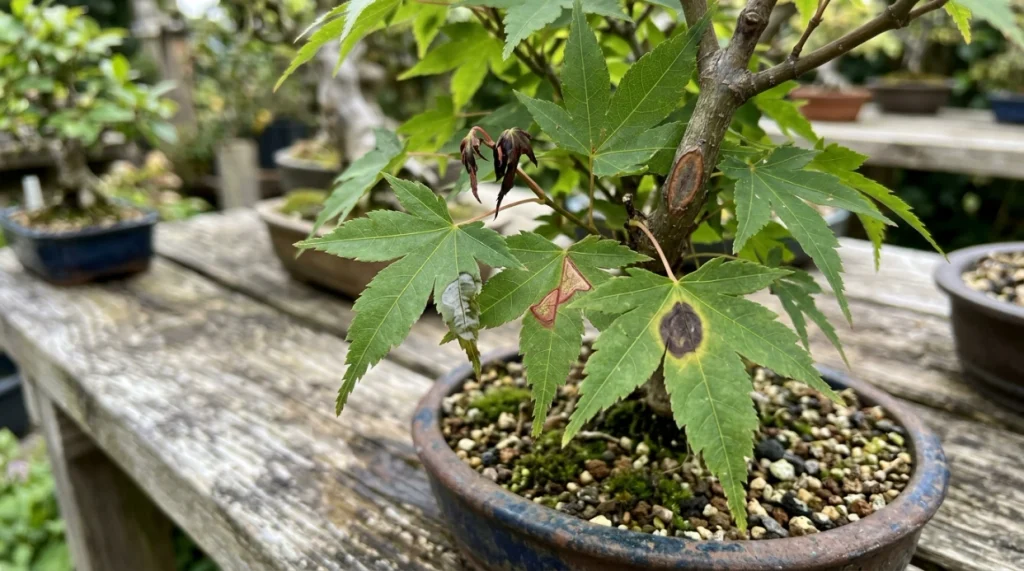
Bacterial plant disease happens when disease-causing bacteria enter susceptible tissue, multiply, and damage cells. On bonsai, the visible result can range from tiny leaf lesions to dying shoots or damaged woody tissue.
Definition: A bacterial infection is a plant disease caused by pathogenic bacteria rather than fungi, insects, viruses, or environmental stress. Common forms include bacterial leaf spots, blights, cankers, wilts, galls, and soft rots.
According to UC Integrated Pest Management guidance on bacterial diseases, infected ornamental plants may develop leaf spots, blights, rots, cankers, and occasional bacterial exudate.
Look closely at the leaves
Early bacterial leaf spots often look darker and wetter than the surrounding leaf. Holding a thin leaf toward bright light can make water-soaked tissue easier to see.
- Water-soaked margins: The edge may look translucent, greasy, or soaked.
- Angular shapes: Lesions sometimes stop at veins, giving spots straight or irregular edges.
- Brown or black centers: Older infected tissue often dies and darkens.
- Yellow margins: A chlorotic, or yellow, halo can develop around some lesions.
- Expanding blight: Multiple spots may merge until a larger part of the leaf dies.
Inspect shoots, branches, and trunk tissue
Bacterial disease isn’t limited to leaves. Affected shoots may suddenly wilt, blacken, or stop growing while nearby growth still looks normal.
Woody infections can produce a canker, meaning a localized patch of dead or damaged bark. Cankers may appear sunken, cracked, darkened, or slightly swollen around their margins.
- Fresh shoots dying from the tip backward
- Darkened bark around wounds or pruning sites
- Localized sunken areas on twigs
- Wet-looking or soft stem tissue
- Sticky or cream-colored exudate in certain bacterial diseases
Don’t use ooze as your only test. Many bacterial diseases never produce visible bacterial ooze, while damaged woody plants can release ordinary sap.
How Can You Tell Bacterial Disease From Fungus or Stress?
You usually can’t confirm bacterial infection from appearance alone. You can, however, use the symptom pattern to decide whether bacteria deserve closer investigation.
This distinction matters because applying a fungicide to a non-fungal problem wastes time. It may also allow the real problem to progress.
| Clue | Possible Bacterial Disease | Possible Fungal Disease | Possible Care/Pest Problem |
|---|---|---|---|
| Leaf spot texture | Often water-soaked or greasy when fresh | Often drier or papery | Scorch may look dry and crisp |
| Spot shape | May be angular or vein-limited | Can be round with rings or visible fungal structures | Often follows exposure or feeding pattern |
| Surface growth | Usually no visible organism | May show spores, fuzz, mildew, or fruiting bodies | May show insects, webbing, scale, or residue |
| Weather link | Often worsens with wet foliage and splashing water | Many fungi also favor humidity | Heat, drought, frost, or watering changes may trigger symptoms |
Bonsai Empire’s pest and disease guidance also stresses correct diagnosis because leaf loss, yellowing, and poor growth can come from ordinary care problems.
For example, a ficus dropping yellow leaves after sitting in saturated soil may have damaged roots rather than bacterial blight. A juniper browning after severe root stress presents another completely different diagnostic problem.
The pattern matters most. Bacterial lesions spreading after repeated wetting deserve more suspicion than evenly browned foliage after drought or intense sun.
How Should You Inspect a Bonsai for Bacterial Disease?
Start with the whole tree before touching damaged tissue. This keeps you from becoming fixated on one ugly leaf while missing a watering, root, or pest problem.
- Separate the bonsai. Move it away from other trees while you investigate.
- Photograph the symptoms. Take clear photos of the canopy, individual leaves, stems, soil surface, and pot.
- Check both leaf surfaces. Look for wet-looking lesions, halos, insects, webbing, scale, or fungal growth.
- Inspect new shoots. Note whether tender growth is wilted, blackened, or dying from its tip.
- Examine branches and trunk. Look for cankers, wounds, discoloration, cracks, or unusual fluid.
- Review recent conditions. Think about heavy rain, overhead watering, pruning, repotting, frost, heat, or a recent move.
- Check the root environment. Make sure the substrate drains freely and hasn’t remained continuously saturated.
As of 2026, visual diagnosis still has clear limits. University diagnostic guidance notes that bacterial diseases often lack an obvious visible pathogen, so laboratory testing may be necessary when symptoms overlap.
I find symptom progression especially useful. Mark or photograph several affected leaves, then compare them over the next few days instead of repeatedly cutting into the tree.
If lesions continue expanding under normal care, or several branches begin dying, contact a university extension plant clinic, horticulturist, or experienced bonsai grower. A representative fresh sample is more useful than completely dead tissue.
What Should You Do if You Suspect a Bacterial Infection?
Your first goal is containment, not aggressive treatment. Keep the affected tree isolated and avoid spreading moisture or plant sap to neighboring bonsai.
- Stop overhead watering: Water the substrate instead of repeatedly wetting foliage.
- Improve airflow: Give the canopy space while maintaining the light conditions appropriate for the species.
- Remove fallen debris: Don’t leave suspect leaves decomposing around the pot.
- Avoid handling wet foliage: Water and physical contact can move some bacterial pathogens.
- Pause unnecessary styling: Extra wounds can create entry points and add stress.
If infected shoots clearly require removal, work during dry conditions. Cut back into visibly healthy tissue where appropriate for the species and disease involved.
Pro tip: Cutting live branches is irreversible. If the infection involves major branches, trunk tissue, or valuable deadwood design, consult an experienced grower or local bonsai club before making aggressive cuts.
Sanitize your tools when working with diseased material. Iowa State University Extension’s pruning-tool guidance recommends removing debris first and describes 70% alcohol as a practical option for many home-gardening situations.
Some specific bacterial diseases need different sanitation procedures. Always follow disease-specific extension guidance when you have a confirmed diagnosis.
Don’t assume a general fungicide will cure bacterial disease. Copper-containing products are labeled for certain bacterial problems on certain plants, but effectiveness varies and sensitive foliage can be injured.
Penn State’s guidance on Pseudomonas syringae notes that copper resistance can occur in some bacterial populations. That is another reason to identify the problem before reaching for a spray.
How Can You Prevent Bacterial Problems on Bonsai?
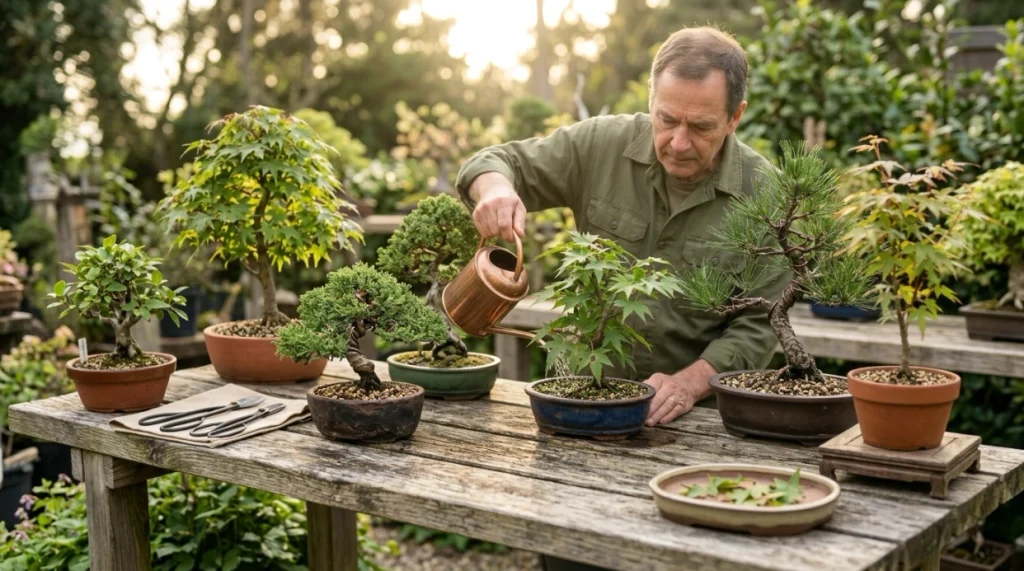
Good prevention reduces both disease pressure and diagnostic confusion. A healthy tree with appropriate light, watering, drainage, and seasonal care is easier to assess when something changes.
- Water intentionally: Water thoroughly when needed, but don’t keep the root zone permanently saturated.
- Limit unnecessary leaf wetness: Avoid routinely splashing foliage when bacterial disease is a concern.
- Maintain airflow: Don’t crowd dozens of canopies tightly together.
- Clean tools: Remove soil and plant residue before sanitizing blades.
- Inspect new trees: Keep new purchases separate long enough to notice developing pest or disease symptoms.
- Remove diseased debris: Don’t let affected leaves accumulate around pots and benches.
- Avoid needless wounds: Time pruning and wiring carefully and protect the tree from preventable mechanical damage.
Also watch your wire closely. A wire cutting deeply into expanding bark creates an injury, although that doesn’t mean the wound will automatically become infected.
During warm, wet periods, I increase inspection frequency instead of spraying preventively without a diagnosis. A quick look underneath leaves and around recent cuts can reveal changes while the affected area is still small.
Most important, learn what normal seasonal behavior looks like for each species. Deciduous leaf drop, old-needle shedding, dormancy, and transplant stress can otherwise be mistaken for disease.
Frequently Asked Questions
Can a bacterial infection kill a bonsai?
Yes, some bacterial diseases can cause severe dieback or death, especially when they enter vascular or woody tissue. The outcome depends on the pathogen, tree species, infection location, environmental conditions, and how early the problem is identified.
Are black spots on bonsai leaves always bacterial?
No. Black or brown spots can result from bacteria, fungi, insects, chemical injury, sun scorch, water stress, or damaged roots. Water-soaked margins and irregular lesions can raise suspicion, but they don’t confirm a bacterial diagnosis.
Can overwatering look like a bacterial infection?
Yes. Chronically wet substrate can damage roots, causing yellow leaves, weak growth, wilting, or leaf drop. Those symptoms can overlap with disease, so always inspect drainage and soil moisture before assuming a pathogen is responsible.
Should I remove every spotted leaf?
Not automatically. A heavily affected leaf may be worth removing, but stripping large amounts of foliage can further weaken a stressed bonsai. First identify the pattern, isolate the tree, and remove only clearly diseased material when appropriate.
Does bacterial ooze confirm an infection?
Visible ooze can support a bacterial diagnosis in certain diseases, but many bacterial infections produce no obvious ooze. Plant sap and other disorders can also be misleading, so ooze should be considered one clue rather than absolute proof.
Can bacterial bonsai diseases spread through pruning tools?
Yes, some bacterial pathogens can move on contaminated cutting tools. Clean plant debris from blades and sanitize tools when pruning suspect tissue, especially before using the same tool on another bonsai.
When should I use a plant diagnostic laboratory?
Consider professional diagnosis when symptoms spread despite corrected care, valuable branches are threatened, several trees show similar damage, or bacterial and fungal diseases cannot be distinguished visually. Fresh symptomatic tissue usually provides a better diagnostic sample than completely dead material.
Final Takeaway
The best way to identify bacterial infection on bonsai is to combine symptoms with context. Water-soaked spots, irregular lesions, cankers, shoot dieback, and occasional ooze are useful clues, but none should be treated as proof by itself.
Start by isolating the tree, checking its roots and care conditions, studying the damage pattern, and keeping tools clean. When the diagnosis remains uncertain, professional testing is safer than treating blindly.
That patient approach protects more than one tree. It also helps you become much better at recognizing what your bonsai is telling you before a small problem becomes a serious one.
