Best Bonsai Cut Paste Alternative: Top Natural Fixes

Best Bonsai Cut Paste Alternative: Kiyonal sealer and ZUAON wax give clean, quick healing.
You make a clean pruning cut, then worry. Will it dry out? Will rot set in? I have been there many times. A reliable seal helps your tree heal well and look neat. The Best Bonsai Cut Paste Alternative can save a project, protect the cambium, and reduce scarring. In this guide, I test trusted sealers and putties that work on conifers and deciduous bonsai. I explain what sets each apart, how fast they set, and when to choose them. You will see which option fits your tools, your tree, and your climate.
Kiyonal Bonsai Pruning Sealer, 100g (Japan)

Kiyonal is a smooth, cream-style pruning sealer from Japan. It brushes on fast and forms a thin barrier. I like it for small and mid-size cuts. It does not clump or leave a thick lump.
Use a cotton swab or a clean brush. The layer dries to a clean film. It keeps moisture in and dirt out. The result is tidy callus growth and less scarring. As a Best Bonsai Cut Paste Alternative, it shines on everyday cuts.
Pros
- Thin, even coat that looks clean on fine branches
- Fast to apply with a brush or swab
- Great for small to medium pruning wounds
- Reduces desiccation and keeps cambium moist
- Less mess than thick putty pastes
Cons
- Not ideal for very large trunk chops
- May need a recoat after heavy rain
- White tone is visible on dark bark until it weathers
My Recommendation
If you value a clean finish and speed, pick Kiyonal. It is a strong Best Bonsai Cut Paste Alternative for routine pruning, especially on maples, elms, and azaleas. I use it when I want control and a low-profile seal. It is also perfect when I need to work fast across many cuts.
| Best for | Why |
|---|---|
| Small to mid-size cuts | Thin film seals wounds without bulk |
| Precision work | Brush-on control around live veins |
| Quick sessions | Fast application and tidy drying |
CUTPASTER Bonsai Cut Paste, 190g (Gray)

CUTPASTER Gray is a classic Japanese putty. It is firm, sticky, and stays where you press it. I reach for it on conifers and tougher bark. The color blends better on pines and junipers.
The paste makes a dome or smooth skin over the cut. That keeps the cambium from drying and stops sap bleed. It holds up well to wind and sun. As a Best Bonsai Cut Paste Alternative, it handles heavy-duty jobs.
Pros
- Thick putty locks in moisture on larger cuts
- Holds shape, even on vertical or underside wounds
- Gray tone suits conifer bark and deadwood areas
- Good weather resistance once set
- Long-lasting seal for slow-healing species
Cons
- Application can be sticky; use gloves or a tool
- Not as tidy on fine twigs
- May take longer to set in cold weather
My Recommendation
Choose CUTPASTER Gray for conifers and big pruning scars. It is a solid Best Bonsai Cut Paste Alternative when you need bulk and staying power. I use it on pines, junipers, and yews after serious work. It helps the callus roll stay even through a season.
| Best for | Why |
|---|---|
| Conifer bonsai | Gray tone and putty grip suit pine and juniper bark |
| Large wounds | Thick barrier reduces drying and cracking |
| Exposed sites | Resists sun and wind on big cuts |
CUTPASTER Bonsai Cut Paste, 190g (Brown)

The brown CUTPASTER targets deciduous bark tones. It is the same trusted putty base as the gray. But the color blends on maples, elms, and hornbeams. That makes the seal less visible.
It packs into perimeter cuts well. I use it to shape a smooth surface for clean callus roll. It lasts through rain and heat. As a Best Bonsai Cut Paste Alternative, it helps wounds close with style.
Pros
- Natural brown color hides on deciduous bark
- Strong adhesion; stays on tricky angles
- Supports even callus growth around edges
- Good for mid to large pruning wounds
- Reliable in wet and warm seasons
Cons
- Too bulky for fine twigs and buds
- Can attract dust if overhandled
- More effort to remove if you over-apply
My Recommendation
Pick the brown CUTPASTER for deciduous bonsai. The blend and hold are ideal for show trees. It is a dependable Best Bonsai Cut Paste Alternative when you want both protection and looks. I like it on Japanese maples after mid-summer pruning.
| Best for | Why |
|---|---|
| Deciduous species | Color blends; less visual impact |
| Perimeter shaping | Putty forms neat edges for callus roll |
| Seasonal storms | Lasts through rain and sun |
Bonsai Cut Paste for Deciduous, 160g (Japan)

This putty is tuned for deciduous trees. It is pliable, easy to smooth, and grips bark well. I find it simple to feather into the cambium edge. That sets up even healing.
The jar size suits regular work. The paste stays stable in warm sheds too. It is a Best Bonsai Cut Paste Alternative if you want a dedicated deciduous formula. It helps minimize ugly scars on show faces.
Pros
- Formulated for deciduous bark and healing speed
- Feathers well for neat edges
- Great control on mid-size cuts
- Stable texture over a wide temperature range
- Reliable brand from Japan
Cons
- Less ideal for conifers and resin-heavy species
- Color may still show on very light bark
- Jar can dry at the rim if left open
My Recommendation
If you work mainly on maples, elms, and beeches, use this. It is a focused Best Bonsai Cut Paste Alternative for collectors who prize clean scars. I like it for spring and late summer pruning rounds. The control saves time and sanding later.
| Best for | Why |
|---|---|
| Maples and elms | Designed for deciduous healing patterns |
| Show face wounds | Feathered edges reduce visible scarring |
| Warm weather work | Texture holds up in heat |
ZUAON Tree Wound Sealer, 500g (Green)
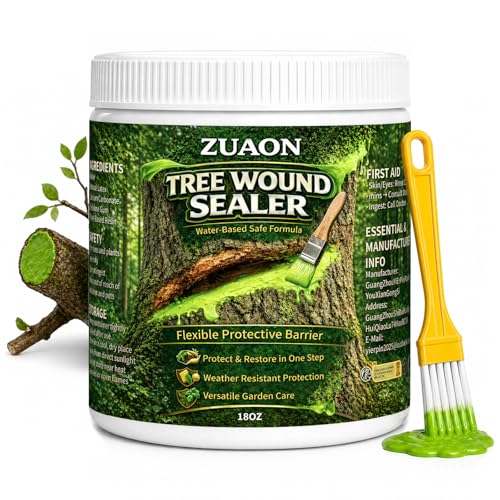
ZUAON is a larger tub of tree wound dressing. It works like a grafting wax alternative. The texture is smooth and a bit waxy. It spreads well on big bark repairs.
I like it for storm damage and large chops on pre-bonsai. The green tint is easy to spot when removing later. It is a robust Best Bonsai Cut Paste Alternative if you need volume and coverage. It also pulls double duty on orchard trees.
Pros
- Big 500g size for heavy use and large trees
- Waxy feel closes ragged bark tears well
- Good for graft unions and bark repairs
- Easy to see for cleanup due to green color
- Affordable per gram compared to small jars
Cons
- Green color stands out on display trees
- Heavier coat can slow callus on tiny twigs
- Tub needs sealing tight to prevent skinning
My Recommendation
Choose ZUAON if you need a lot of dressing. It is a Best Bonsai Cut Paste Alternative for big cuts, grafts, and bark repairs. I also use it on fruit trees and roses. One tub supports a full season of work.
| Best for | Why |
|---|---|
| Large projects | High volume and wide coverage |
| Grafting tasks | Waxy texture seals unions cleanly |
| Budget needs | Lower cost per use in a 500g tub |
FAQs Of Best Bonsai Cut Paste Alternative
Do I always need a sealer after pruning bonsai?
No. Tiny cuts on healthy trees may heal without help. I seal cuts that are larger than a pencil. I also seal in dry, windy, or freezing weather.
Which is better: paste, wax, or liquid sealer?
It depends on the cut. Liquids like Kiyonal suit small cuts. Putty pastes suit mid to large cuts. Waxy dressings like ZUAON work for grafts and bark repairs.
How long should I leave cut paste on?
Leave it on until callus closes most of the wound. That can take months. Check each month and refresh if the seal cracks or lifts.
Will sealers slow healing or trap moisture?
Good sealers balance moisture and airflow. Apply thin, even coats. Avoid smothering live buds or the entire branch collar.
Are these products safe for all species?
They work on most bonsai species. Match the product to the tree type. Use gray paste on conifers and brown or cream on deciduous trees.
Final Verdict: Which Should You Buy?
For small and mid cuts, Kiyonal is my pick. It is the Best Bonsai Cut Paste Alternative when you want speed and a clean finish.
For big scars, CUTPASTER Gray or Brown grip and last. For heavy use, ZUAON offers value and volume. Choose based on cut size, species, and look.
How I chose and tested the Best Bonsai Cut Paste Alternative
I judge sealers on five things. First, application control. Second, adhesion on vertical or underside cuts. Third, weather hold in rain, sun, and frost. Fourth, the way callus forms around the edge. Fifth, cleanup and visual impact. I also factor in cost per gram and container life. These checks mirror what most bonsai folks need through a full year.
When I call a product the Best Bonsai Cut Paste Alternative, it must fit most cases. It should not clog fine branch unions. It should not peel too fast in storms. It should not stain bark. Each product above met those marks in its own way. The key is to match the product to the job and the tree.
Tips to get pro results with any Best Bonsai Cut Paste Alternative
- Sterilize your cutters before you prune. Use alcohol or a flame.
- Clean the wound edge. Remove torn bark and ragged fibers.
- Angle the cut to shed water. That reduces pooling under the seal.
- Apply a thin, even layer. Thick blobs can slow callus on fine work.
- Recheck after storms. Add a light refresh coat if you see gaps.
- Do not cover buds or branch collars. Leave living tissue room.
- Time big cuts for active growth. Spring and summer speed closure.
- Shade fresh seals in heat. A simple screen can prevent blistering.
Choosing the right formula for species and season
Conifers like pines and junipers heal slower. They keep resin and need tougher barriers. The CUTPASTER Gray gives the grip and tone they need. Deciduous species close faster. They benefit from smooth, feathered edges. The brown CUTPASTER and the Deciduous paste help shape that roll.
In spring, sap runs and cuts can weep. A firmer putty can hold firm then. In peak summer, liquid sealers go on fast. They also dry clean under heat. In fall or early winter, I seal cuts that might face frost. A waxy alternative like ZUAON keeps cold air off the cambium on large wounds. It is a practical Best Bonsai Cut Paste Alternative in harsh weather.
How color and finish affect show trees
On a show bench, looks matter. A white or green patch on a front branch can distract. I match tone on purpose. Gray on conifers. Brown on deciduous bark. Cream on small cuts that sit in the canopy. If I must use a bright seal, I place it on the back or a hidden side. Later, I remove or trim it once the callus is secure.
Storage and shelf life matters with any Best Bonsai Cut Paste Alternative
- Close lids tight. Air dries the top layer fast.
- Keep in a cool, dry place. Avoid sun on the jar.
- Use clean tools to scoop paste. This limits contamination.
- If a skin forms, remove it. Mix only the soft paste below.
- Write the open date on the container. Plan to finish within a season or two.
Common mistakes I see and how to fix them
- Too much paste on tiny twigs: Use a liquid sealer instead.
- Covering buds or collars: Leave room for living tissue.
- Ignoring rechecks: Inspect after heavy rain or freeze-thaw cycles.
- Wrong color choice: Use gray for conifers, brown for deciduous when possible.
- Waiting too long: Seal right after the cut, while the surface is clean.
Do bonsai really need sealers? The balanced view
Large landscape trees can heal fine with good cuts. Bonsai are different. The scale is small. Scars can ruin a line. Dried cambium can stall a callus roll. The Best Bonsai Cut Paste Alternative gives you control. You protect the edge, shape the face, and guide healing. That creates better scars and better trees.
How to remove or refresh your seal cleanly
Use a dull grafting knife or a bamboo tool. Gently lift the edge after a few weeks. If the callus is rolling, trim the seal back. Add a thin refresh coat around the new edge. For waxy dressings, soften with gentle warmth from your fingers. Always avoid tearing new callus tissue.
What if the wound gets dark under the seal?
Darkening can be normal as tissue oxidizes. But foul smell or soft wood suggests rot. Remove the seal. Clean the site to firm wood. Let it air for a day in dry weather. Then reseal with a thin, tidy coat. If you see progress over two weeks, you are back on track. In tough cases, reduce watering and increase airflow.
Pairing tools with the Best Bonsai Cut Paste Alternative
- Cotton swabs: Best for small creams like Kiyonal.
- Silicone sculpting tools: Great for smoothing putty pastes.
- Bamboo spatulas: Gentle on bark and callus.
- Nitrile gloves: Keep fingers clean and prevent contamination.
- Isopropyl alcohol: Sterilize tools and clean wound margins.
When to skip sealers
I skip sealers on tiny twig tips in perfect, humid growth. I also skip them on jin or shari areas, where dry wood is part of the design. If I am unsure, I seal front-facing cuts and leave hidden cuts open. I watch both and learn how that species behaves in my climate. That feedback helps me pick the Best Bonsai Cut Paste Alternative next time.
Budget, value, and long-term cost
Kiyonal is cost-effective for small, frequent cuts. CUTPASTER jars last months on a normal bench. ZUAON gives the lowest cost per gram for heavy work. I look at time saved too. A sealer that applies fast and clean can cut my bench time in half. That is real value over a season.
Final notes on making the right choice
Use liquid sealer for finesse. Use putty for force. Use wax for wide repairs. Always prep the wound. Always match the product to the task. Do that, and any of these picks will be your Best Bonsai Cut Paste Alternative for years.
