
Best Fertilizer For Evergreen Trees And Shrubs: 2026 Guide

Slow-release, balanced evergreen fertilizers with micronutrients give steady growth and deep color.
If your spruce looks pale or your boxwood sulks in summer, the fix is often simple. Evergreens need steady food, not a quick sugar rush. The right formula builds strong roots, richer needles, and better drought tolerance. I’ve tested spikes, granules, and “protect and feed” blends across zones and soil types. Below, I break down what actually works, why it works, and how to match a product to your trees. If you want the Best Fertilizer For Evergreen Trees And Shrubs, this guide will save you time, money, and guesswork.
Miracle-Gro Tree & Shrub Food Spikes (12 pack)

Miracle-Gro spikes are the classic “set and forget” choice for many yards. They deliver slow-release nutrients right in the root zone. That tight placement reduces runoff and gives consistent feeding. I find them handy for busy homeowners who want quick improvement without granular mess.
Each spike goes in spring and fall, which keeps evergreens fed during active growth. The formula supports needles, stems, and root health. It works on evergreen trees, shrubs, and many acid lovers. If your hedge needs confidence, these spikes are a simple win.
Pros
- Very easy to apply with no spreader needed
- Slow-release feeding reduces burn risk
- Great for targeted feeding at the dripline
- Clean and tidy; no dust or granule scatter
- Good results on hedges, foundation plants, and small trees
- Reliable brand with wide availability
Cons
- Manual insertion can be tough in hard or rocky soil
- Not ideal for very large trees with wide root zones
- Limited fine-tuning compared to granular blends
My Recommendation
Choose these spikes if you want fuss-free feeding and steady results. They shine for boxwoods, arborvitae, junipers, and spruce under 20 feet. If you want the Best Fertilizer For Evergreen Trees And Shrubs with the least work, this product is a strong start. It is also smart for rental properties where simple upkeep matters.
I value them when I need controlled feeding in small beds. They help avoid staining pathways and reduce runoff. For most suburban evergreens, the value is strong and the supply is easy to find year-round.
| Best for | Why |
|---|---|
| Hedges and small evergreens | Targeted, slow-release feeding with minimal effort |
| Busy homeowners | Two applications per year cover main growth periods |
| Neat landscapes | No mess; spikes stay below mulch and soil |
Scotts Evergreen Tree & Shrub Plant Food, 3 lb
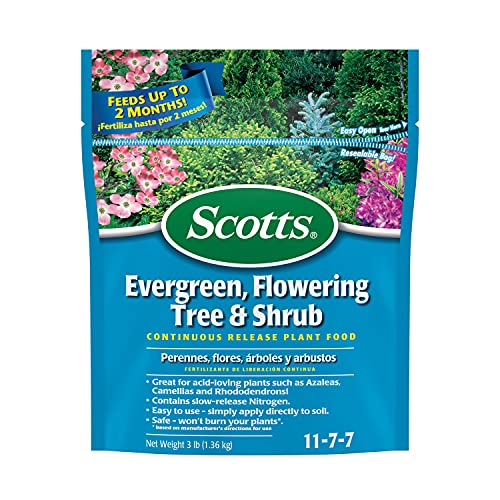
This Scotts blend offers continuous release in an easy-to-spread granular form. I like it for medium to large beds where spikes would be slow. You can dial in the dose based on plant size. The formula supports steady green color without a surge that fades fast.
Spread it evenly under the drip line and water it in. It feeds for weeks, so you get fewer applications. I see strong response in color and new growth on pines, spruces, and hollies. If you prefer granular control, this is a reliable pick.
Pros
- Continuous release for smooth, steady feeding
- Easy to measure and adjust per plant size
- Covers larger beds faster than spikes
- Helps maintain rich green needle color
- Good value per square foot treated
- Backed by a well-known lawn and garden brand
Cons
- Requires a clean spread and water-in step
- Granules can sit on mulch if not brushed in
- Can be misapplied if dosing is rushed
My Recommendation
Pick this if you want flexible dosing for mixed beds. It is one of the Best Fertilizer For Evergreen Trees And Shrubs when you need broad coverage. I use it for larger hedges and multi-species plantings. It lets me fine-tune feed rates, which helps avoid waste.
The value stands out when you treat many shrubs at once. Supply is stable in spring and fall, which makes planning easy. If you like granular control with trusted performance, this one hits the mark.
| Best for | Why |
|---|---|
| Large beds and hedges | Fast, even coverage with a spreader or by hand |
| Users who fine-tune doses | Granules allow precise application rates |
| Color maintenance | Continuous feeding sustains deep green tones |
Ferti-lome Tree & Shrub Food 19-8-10, 16 lb
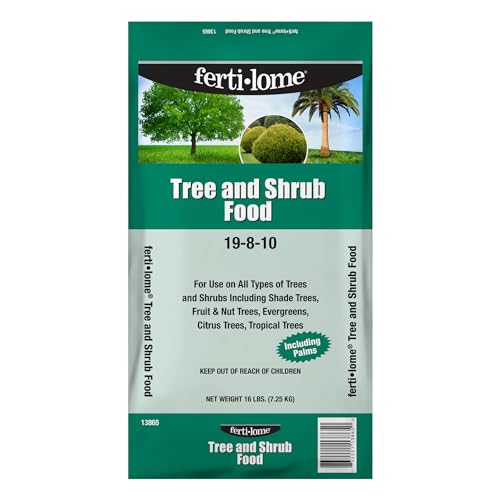
The 19-8-10 ratio in this Ferti-lome blend is a workhorse for evergreens. It supports foliage growth, root strength, and resilience. I use it where soils are average and trees need a push. The 16-pound bag treats many plants, which helps with cost control.
Apply around the drip line and water in for best results. I see a solid response in spruce, fir, juniper, and cedar. New growth looks full, not leggy. For many landscapes, this is a dependable, straightforward choice.
Pros
- Balanced 19-8-10 ratio for evergreen needs
- Large bag covers wide areas at lower cost
- Good for trees that need a general boost
- Predictable performance across many species
- Granular format is fast to apply
- Helps thicken canopies and fill bare spots
Cons
- Not a specialized acid-forming formula
- May be more than needed for tiny shrubs
- Requires careful measuring to prevent overfeeding
My Recommendation
Choose this when you want a solid, balanced feed for mixed evergreens. It ranks as a Best Fertilizer For Evergreen Trees And Shrubs for value and reach. Large properties benefit most from the bag size. If you manage long rows of trees, this one makes sense.
I also like it for recovering wind-burned or winter-weary trees. It helps rebuild energy reserves. The cost per application is friendly, and it is easy to source online.
| Best for | Why |
|---|---|
| Mixed evergreen plantings | Balanced NPK supports varied species |
| Large properties | 16 lb covers many trees with good economy |
| Recovery feeding | Helps rebuild vigor after stress |
SimplyGro Evergreen Fertilizer Spikes (24 pack)

SimplyGro’s 24-pack gives you extra coverage for larger beds and hedges. The spikes feed at the roots, which cuts waste and mess. I like spikes when I manage many small shrubs in tight spaces. They slip under mulch and stay hidden.
These spikes suit arborvitae, yews, and junipers that need steady nutrition. They are also useful for rental units or hands-off sites. I see even growth and good color when used spring and fall. They fill the same niche as other spikes, but with a bigger count.
Pros
- High spike count for bigger jobs
- Root-zone feeding reduces runoff
- Clean and simple installation
- Good for privacy hedges and long borders
- Predictable results with two seasonal uses
- Easy storage; no loose granules
Cons
- Pushing spikes into hard ground can be tiring
- Not ideal for very large trees with wide root spread
- Dose control is less flexible than granular
My Recommendation
Pick these if you want the convenience of spikes at scale. They rank among the Best Fertilizer For Evergreen Trees And Shrubs for long hedges. The 24-pack saves trips and time. If you prefer tidy beds with low upkeep, this is a good fit.
I also like them for condos and shared landscapes. They reduce the chance of misapplication. The value improves when you have many small to mid shrubs to feed.
| Best for | Why |
|---|---|
| Long hedges | Many spikes cover long runs with ease |
| Low-mess landscapes | Spikes stay out of sight under mulch |
| Time-saving care | Two seasonal placements keep feeding simple |
BioAdvanced 12-Month Protect & Feed, 4 lb
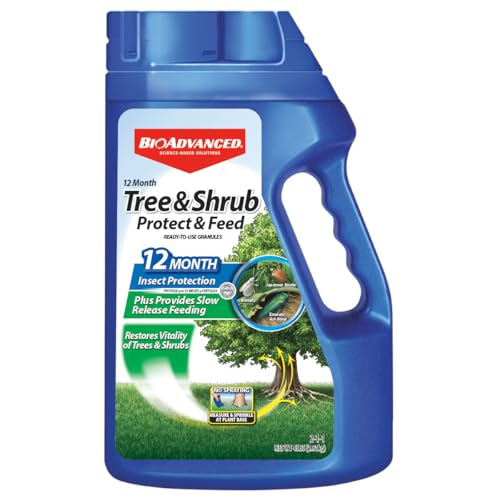
This “protect and feed” granule pairs fertilizer with systemic insect control. It can protect against listed pests for up to 12 months. I use it when scale, borers, or aphids threaten prized evergreens. It simplifies care by bundling feeding with pest defense.
Apply around the base as directed, water in, and let the systemic move through the plant. You get greener growth and fewer pest issues in one go. This is handy for boxwood leafminer zones or scale-prone hollies. Always follow label directions and restrictions.
Pros
- Fertilizes while delivering systemic insect protection
- Up to 12 months protection on listed pests
- Cuts separate insecticide steps
- Good for high-value evergreens under pest pressure
- Granules apply cleanly at the base
- Clear rate chart makes dosing simple
Cons
- Not for edible plants (fruit or nut trees)
- Use only where pest risks justify it
- Cost per plant is higher than feed-only options
My Recommendation
Reach for this when insects are a known issue. It is the Best Fertilizer For Evergreen Trees And Shrubs if you also need pest control in one step. I use it to protect boxwoods, hollies, and other high-value shrubs. It saves time and can prevent costly damage.
Make sure it matches your situation. If pests are rare, a feed-only product may be enough. Availability is strong during spring in most regions, and online ordering is steady.
| Best for | Why |
|---|---|
| Pest-prone evergreens | Systemic control plus feeding in one pass |
| High-value specimens | Prevents damage from listed insects |
| Time-strapped users | Combines two jobs into one application |
How to Choose the Best Fertilizer For Evergreen Trees And Shrubs
Evergreens need steady nutrition, not a quick spike and crash. The Best Fertilizer For Evergreen Trees And Shrubs should match your soil and plant size. Look for slow-release formulas that feed over weeks. Spikes help with tidiness and dosing in small beds.
Granules win when you have large areas or mixed plantings. You can measure them easily and adjust per plant. If pests are a real threat, a protect-and-feed blend makes sense. If not, stick with a straight fertilizer.
Check the NPK numbers. Many evergreens thrive with moderate nitrogen, plus phosphorus and potassium for roots and stress care. Micronutrients like iron, magnesium, and manganese help color. Always follow the label for rates and timing.
When and How to Apply for Best Results
Apply in early spring as growth wakes up. A second light feeding in fall supports roots. Avoid heavy feeding in late summer if winters are harsh. Tender growth can be hurt by early frost.
Spread granules at the drip line, not at the trunk. That is where feeder roots live. Water in to move nutrients into the root zone. With spikes, place them evenly around the drip line.
Mulch helps. Two to three inches of mulch holds moisture and smooths soil heat. Keep mulch off trunks to prevent rot. With regular care, your evergreens will look richer and fuller each year.
Soil, pH, and Micronutrients
Many evergreens prefer slightly acidic soil. If your soil is alkaline, you might see yellowing leaves. That often points to iron or manganese issues. A soil test helps you know for sure.
If pH is high, choose blends that support acid-loving plants. Some fertilizers include sulfur to nudge pH over time. Micronutrient packages can deepen green tones. Do not overdo it—follow directions closely.
Healthy soil is the base of the Best Fertilizer For Evergreen Trees And Shrubs. Add compost in beds if structure is poor. Good drainage prevents root stress. Slow and steady always wins here.
Common Mistakes to Avoid
Do not pile fertilizer at the trunk. That can burn roots and waste product. Spread it evenly under the canopy. Water after feeding to settle granules.
Do not overfeed in heat or drought. Stressed plants can burn. Light feeding is safer until conditions improve. Also, leave a buffer near streams or ponds to protect water quality.
Finally, match the product to your need. Use protect-and-feed only when pests are present or likely. Otherwise, a straight slow-release formula is usually best.
Signs Your Evergreens Need Feeding
Look for pale or yellowing needles, thin growth, and slow recovery after winter. New growth may be short or sparse. Branch tips can brown if roots lack support. In many yards, a spring feeding solves these issues.
If color stays weak after feeding, check water and soil pH. Compacted soil stops roots from growing well. A small aeration or fresh mulch can help. The Best Fertilizer For Evergreen Trees And Shrubs works best with good basic care.
Safety and Environmental Notes
Always read and follow the label. Keep kids and pets away during application. Sweep stray granules from hard surfaces to avoid runoff. Store products dry and sealed.
Avoid feeding before heavy rain. That can wash nutrients away. Use the lowest rate that gives good results. Thoughtful use keeps plants healthy and protects local waters.
FAQs Of Best Fertilizer For Evergreen Trees And Shrubs
How often should I fertilize my evergreens?
Feed in early spring. In many regions, a light fall feeding helps roots. Avoid late summer heavy feeding in cold climates.
Are spikes or granules better for evergreens?
Spikes are tidy and simple for small plants. Granules are better for large beds and precise dosing. Both can work well when used right.
What NPK ratio should I look for?
Choose a moderate nitrogen blend with balanced phosphorus and potassium. Slow-release is key. Micronutrients like iron help with deep green color.
Can I use lawn fertilizer on evergreens?
It is not ideal. Lawn foods can be too hot or lack needed micronutrients. Pick a tree and shrub formula designed for woody plants.
Is a protect-and-feed product safe for all trees?
Only for labeled, non-edible trees and shrubs. Do not use on fruit or nut trees. Always follow the product label.
Final Verdict: Which Should You Buy?
For most yards, Scotts Evergreen Plant Food gives the best control and value. For a set-and-forget pick, Miracle-Gro or SimplyGro spikes are easy wins.
If pests are active, BioAdvanced Protect & Feed is hard to beat. For big coverage at fair cost, Ferti-lome excels. Match your needs, and you’ll have the Best Fertilizer For Evergreen Trees And Shrubs for your space.
