
Best Soil Moisture Meter For Indoor Plants: Top Picks 2026

XLUX Long Probe is the most reliable and user-friendly pick for most houseplants.
You love your plants, but soil can be tricky. The top looks dry, yet the roots may still be soaked. That mismatch causes yellow leaves, fungus gnats, and root rot. A good moisture meter cuts the guesswork and tells you when to water, fast. I have tested dozens of analog meters across pots, soils, and fussy species. In this guide, I break down the Best Soil Moisture Meter For Indoor Plants for accuracy, ease, and value. If you want healthy roots and fewer emergencies, these picks will help you water with confidence.
XLUX Long Probe Soil Moisture Meter (Deep Use)

This XLUX model is my go-to for large pots and deep-rooted plants. The long probe reaches the true root zone in 8–12 inch planters where water can hide. The analog dial is simple and clear, with a fast response that settles in about two to five seconds. I get repeatable readings across different spots in the same pot, which is key for accuracy.
In clay-heavy mixes or coco blends, the probe glides well if I create a pilot hole. The build feels sturdy for daily use. I like that it needs no battery and has one job—read moisture—without extra fluff. For anyone who overwaters peace lilies or underwaters fiddle-leaf figs, this tool gives instant, useful truth.
Pros
- Extra-long probe reaches deep root zones in big pots
- Fast, stable readings on a clear analog dial
- No batteries or charging needed
- Works well in standard potting mix, coco coir, and peat blends
- Consistent results when testing multiple points in the same pot
- Durable feel for frequent indoor use
Cons
- Not ideal for very shallow or small nursery pots
- Probe can scuff if forced through coarse bark without a pilot hole
- Single-function tool (no light or pH)—great for focus, but basic
My Recommendation
If you tend to overwater large indoor plants, this XLUX is likely the Best Soil Moisture Meter For Indoor Plants in your home. It reads where it counts—the root zone—so you avoid soggy surprises. I trust it most for heavy drinkers like monstera, bird of paradise, and big rubber trees. Its long probe gives you honest data beneath the surface crust.
Use it in three spots around the pot, then average the results. If reading lands in the “dry” zone, water slowly until it rises to “moist.” Wipe the probe after use to keep it accurate. For beginners and seasoned growers, this is a dependable, simple pick that delivers value today and over years of care.
| Best for | Why |
|---|---|
| Large indoor planters (8–14 inches) | Long probe hits the true root zone for precise readings |
| Overwatering-prone plant parents | Reliable, repeatable moisture data reduces guesswork |
| Peat/coco potting mixes | Stable analog response across common indoor substrates |
Antonki Soil Moisture Meter, 2-Pack

The Antonki 2-pack is a wallet-friendly way to meter many plants. I keep one upstairs and one near my kitchen window herbs. Having two meters saves steps and helps with side-by-side testing across different soils. The dials read quickly and are easy to see at a glance.
These are ideal for small to mid-size pots where you want speed and coverage. They run without batteries and have a classic, simple build. I find the readings consistent for most all-purpose potting mixes. If your plant family is growing, this 2-pack is a smart start.
Pros
- Great value—two meters cover more plants
- Fast dial response helps avoid overwatering
- Lightweight and easy to move around
- No batteries required; simple maintenance
- Clear, readable scale for quick checks
- Good for small to medium planters
Cons
- Shorter probe limits reach in very deep pots
- Less sturdy feel than heavy-duty models
- May need a pilot hole in dense or barky mixes
My Recommendation
If you want the Best Soil Moisture Meter For Indoor Plants on a budget, Antonki’s 2-pack is hard to beat. It suits apartments, windowsill gardens, and anyone managing many small pots. Keep one tool on each floor or zone of your home and test often. You will water on time and catch dry spots before stress shows.
Pair the meter with a watering can that has a thin spout for slow, even pours. Check three points in the pot when possible. For herbs, African violets, and compact philodendrons, these meters make daily care easy and fast. They also work well as a backup set for larger collections.
| Best for | Why |
|---|---|
| Budget-minded plant parents | Two meters at a friendly price for full coverage |
| Small to mid-size pots | Probe length fits common indoor planters |
| Daily quick checks | Lightweight, easy to grab and go for routine testing |
XLUX Long Probe Moisture Meter, 2-Pack

Need deep reach across several big plants? This 2-pack of XLUX long probes builds a reliable routine. I keep one in my living room where the rubber tree and bird of paradise sit. The other lives by my office monstera. Both give fast, steady readings down in the root zone.
Doubling up reduces errors from rushing or sharing one tool across rooms. It also lets you test at two depths in the same pot. That’s useful for plants in chunky mixes where the top can dry fast. This set helps track how moisture moves through the entire profile.
Pros
- Two long probes for full-home coverage
- Accurate root-zone checks in large planters
- Repeatable readings across testing points
- No batteries; low-maintenance build
- Great for tropicals that like even moisture
- Ideal for learning each plant’s dry-down time
Cons
- Extra length is overkill for small pots
- Use care in bark-heavy mixes to avoid bending
- Analog only; no data logging for tech-focused users
My Recommendation
For multi-plant homes, this is the Best Soil Moisture Meter For Indoor Plants when pots are big or deep. You get accurate data where roots live, not just at the crust. I recommend one meter per room or plant zone. That habit keeps your checks fast and your watering schedule tight.
Test near the outer third of the pot to avoid thick central root mats. Read, wait two seconds for the needle to settle, and record notes for a week. You will spot patterns and water with confidence. This 2-pack is a strong long-term value for large-plant lovers.
| Best for | Why |
|---|---|
| Households with many large planters | Two deep probes speed up accurate, daily checks |
| Chunky aroid mixes | Check moisture at multiple depths for true readings |
| Routine root-zone tracking | Consistent results help build a precise watering plan |
GROWIT 26cm Plant Moisture Meter

GROWIT’s 26cm meter sits between compact and long-probe tools. It reaches most root zones in common 6–10 inch indoor pots. The dial is clean and the response is quick. I like it for mixed collections where pot sizes vary.
This meter feels balanced in hand and holds up to daily use. It reads well in standard peat blends and coco-perlite mixes. If you grow a mix of ferns, philodendrons, and smaller ficus, this length hits the sweet spot. It is a simple, battery-free helper you will use often.
Pros
- Versatile 26cm probe fits most indoor pots
- Clear analog dial with quick response
- Battery-free, low-hassle maintenance
- Good build quality for regular checks
- Works well in common indoor soil blends
- Comfortable size for daily use
Cons
- May not reach the base of very tall planters
- Not specialized for tiny nursery pots
- Analog only; no advanced features
My Recommendation
If you want one tool for most pots, this GROWIT model is a safe bet. For many homes, it is the Best Soil Moisture Meter For Indoor Plants because it fits the pots people actually use. It is accurate, simple, and built for routine checks. That makes daily plant care easier and more consistent.
Use it for ferns, calatheas, and trailing pothos where moisture balance is key. Insert the probe slowly to avoid root damage and wait a few seconds for the dial to settle. Clean the probe after each session. This meter offers excellent value and wide coverage in one tool.
| Best for | Why |
|---|---|
| Mixed-size indoor collections | 26cm length reaches most common root zones |
| Daily moisture checks | Fast, readable dial supports quick routines |
| Beginners and busy caretakers | Simple, no-battery design removes friction |
Censinda Soil Moisture Meter (White)
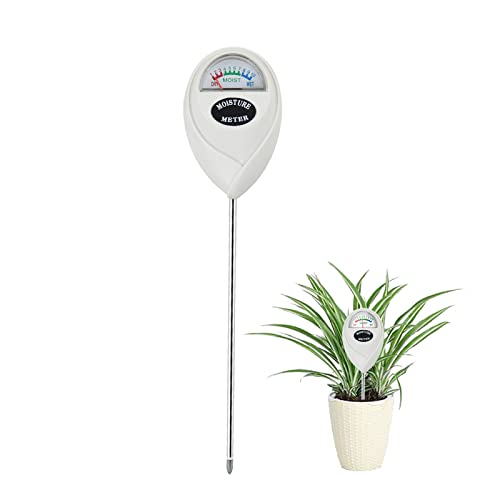
The Censinda meter blends clean looks with practical function. The white body is easy to spot in a tool caddy or on a shelf. It reads fast and gives clear dry-to-wet feedback on the dial. I reach for it when I want a quick snapshot before work.
It shines in everyday potting mixes and fits most planters. The feel is light, so treat it with care in coarse media. If you want a simple, neat meter that does the job and looks tidy, this one is appealing. No batteries, no fuss—just water timing you can trust.
Pros
- Clean, modern look in white
- Quick, easy-to-read dial
- Good fit for everyday indoor pots
- No batteries; simple care
- Lightweight and portable
- Affordable way to get started
Cons
- Lighter build needs gentle handling
- Probe may resist coarse bark; use a pilot hole
- Not optimized for very deep planters
My Recommendation
For style and simplicity, Censinda is a pleasant daily driver. It could be the Best Soil Moisture Meter For Indoor Plants if you prize speed and a clean design. I like it for windowsill herbs, pothos, and peperomia. It tells you what you need to know fast, so you can water with confidence and get on with your day.
Test a few points in the pot, then wipe the probe clean. Keep it in a drawer or caddy to protect the tip. If you grow in standard mixes and want a tidy, low-cost tool, this meter fits well. It is easy to gift, too, for new plant parents.
| Best for | Why |
|---|---|
| Quick daily checks | Fast reading, simple scale for go-to decisions |
| Standard indoor potting mixes | Consistent results without calibration |
| Gift-worthy starter tool | Clean design and friendly price |
How to Use a Moisture Meter the Right Way
Even the Best Soil Moisture Meter For Indoor Plants needs good technique. Insert the probe into the root zone, not just the top inch. Test two to three points around the pot’s edge. Average the readings to avoid a false wet or dry spot.
Wait a few seconds for the needle to settle. Wipe the probe after each use to prevent residue buildup. Do not leave the probe in soil for long periods. That can shorten its life and skew results over time.
Reading the Dial: What “Dry,” “Moist,” and “Wet” Mean
Most analog dials show zones, not exact percentages. Dry suggests the soil has little available water for roots. Moist is the target for many tropicals and common houseplants. Wet is for fresh watering events or plants that like high moisture.
For succulents and cacti, water when the meter reads dry at root depth. For calathea and fern, aim for moist and avoid hitting wet for too long. The Best Soil Moisture Meter For Indoor Plants helps you see these zones in seconds. That clarity saves plants from stress.
Tips for Special Media: Bark, LECA, and Coco
Chunky bark can resist probe entry. Use a chopstick to make a pilot hole first. Insert the meter along the pilot path to avoid bending or scratching. Read at several spots for a fair view of moisture.
In LECA, expect quicker dry-down at the top and wet readings near the reservoir. Measure at mid-level and near roots for the truth. In coco blends, readings are steady and predictable. The Best Soil Moisture Meter For Indoor Plants makes these patterns easy to track.
Watering Routines: Build a Simple Habit
Test, record, and act—keep that loop simple. I note readings in a phone memo with pot size and soil type. After a week, a pattern emerges for each plant. That pattern guides timing better than any calendar app can.
Use a slow pour and stop once the dial swings into moist. Recheck a few minutes later to confirm even spread. The Best Soil Moisture Meter For Indoor Plants turns “I guess” into “I know.” That change keeps roots safe and leaves glossy.
Maintenance and Care for Accuracy
Keep the probe clean and dry after use. Wipe it with a soft cloth. Do not use harsh abrasives. Store it upright or flat in a drawer.
Avoid stones and thick roots when inserting. If the dial ever sticks, tap the gauge lightly and clean the probe. With simple care, your meter stays accurate for years. That makes it a small tool with a big impact.
Troubleshooting Common Issues
If readings jump around, test in three spots and average. For sticky needles, clean the probe and try again. In very dry soil, pre-moisten slightly before inserting to avoid friction damage. Use a pilot hole in bark or orchid mix.
If your plant still declines despite “moist” readings, check drainage. Water can pool at the bottom of pots without holes. The Best Soil Moisture Meter For Indoor Plants shows moisture, not oxygen. Good drainage keeps roots breathing and healthy.
Plant-Specific Quick Guide
Peace lily: water at the lower “moist” zone to prevent droop. Monstera: let the top inch dry, but check root depth for truth. Snake plant: wait for “dry” at depth, then water well. Pothos: aim for mid “moist,” then dry down between drinks.
Ferns and calathea: keep in “moist,” but avoid a long stay in “wet.” Orchids in bark: use a pilot hole and test mid-level. Herbs: basil likes even “moist”; rosemary leans drier. The Best Soil Moisture Meter For Indoor Plants helps you tune care for each species.
FAQs Of Best Soil Moisture Meter For Indoor Plants
How do soil moisture meters work?
Analog meters use a probe that measures conductivity in moist soil. The dial shows zones from dry to wet. It gives a quick snapshot without batteries.
Are analog meters accurate for indoor plants?
Yes, when used right. Test at the root zone and in a few spots. Clean the probe after use for stable readings.
How often should I measure moisture?
Check every few days at first, then weekly once you learn each plant. In heat waves, test more often. Record patterns to time watering well.
Can I use a meter in cactus, orchid, or LECA media?
Yes, with care. Make a pilot hole in bark. For LECA, check near roots and mid-level. For cactus, read at depth and water only at “dry.”
Will meters damage roots?
Not if you insert gently and avoid thick roots. Use a pilot hole in tough media. Pull out slowly and wipe the probe clean.
Final Verdict: Which Should You Buy?
The XLUX Long Probe is the Best Soil Moisture Meter For Indoor Plants if you grow in large pots or want root-depth truth. It is reliable, fast, and easy to use.
For value, the Antonki 2-Pack covers many small pots well. If you want one tool for most homes, choose the GROWIT 26cm. Each helps you water with confidence and protect roots.
