
Inexpensive Bonsai Pots Online: Best Budget Picks 2026

Finding inexpensive bonsai pots online is easy with durable, stylish picks.
You love the art of bonsai, but quality pots can feel pricey. You need options that drain well, fit your tree, look clean, and do not break the bank. That is where Inexpensive Bonsai Pots Online shine. They let you train roots, cut mess, and upgrade display without stress. Whether you are starting a shohin juniper or refreshing a ficus on the windowsill, smart budget pots make the process smooth and neat. I tested popular low-cost choices, checked real-world fit, and weighed the build, trays, and value so you can buy once and use them for seasons.
Bonsai Outlet 6-Inch Training Pots, Set of 3

These Bonsai Outlet training pots deliver simple function with smart extras. Each 6-inch pot includes built-in mesh, so you skip prep work. The set also comes with humidity trays that catch runoff and reduce surface stains. The durable poly-resin is shatter-resistant, so you can move and stack them without fear.
I like these for early training and for small to mid starter trees. The shallow profile helps root ramification, and the trays make indoor watering easy. The pots clean fast, and they do not hold salt as much as thinner plastics. For the price, it is a tidy, low-stress kit that gets used again and again.
Pros
- Built-in mesh saves time and keeps soil in place
- Tray reduces drips and protects shelves and sills
- Shatter-resistant poly-resin feels sturdy and long-lasting
- Shallow shape supports bonsai root training
- Great value three-pack for new growers
- Easy to clean between repots
- Neutral look that blends with most settings
Cons
- 6-inch size is small for thicker trunks
- Plastic look lacks the charm of ceramic show pots
- Tray footprint needs a bit more shelf depth
My Recommendation
This set is best if you want clean, simple training pots that just work. If you live in an apartment or water indoors, the trays make life easy. I also suggest these if you want a no-fuss start kit for ficus, elm, or young juniper. As part of your hunt for Inexpensive Bonsai Pots Online, this is a strong baseline pick for training and tidy watering.
| Best for | Why |
|---|---|
| Beginners on a budget | Three-pack value, built-in mesh, and simple setup |
| Indoor growers | Humidity tray cuts drips and keeps surfaces clean |
| Root training stage | Shallow pot supports fine root growth and pruning |
MUZHI 5.2-Inch Oval Bonsai Pots, 3-Pack
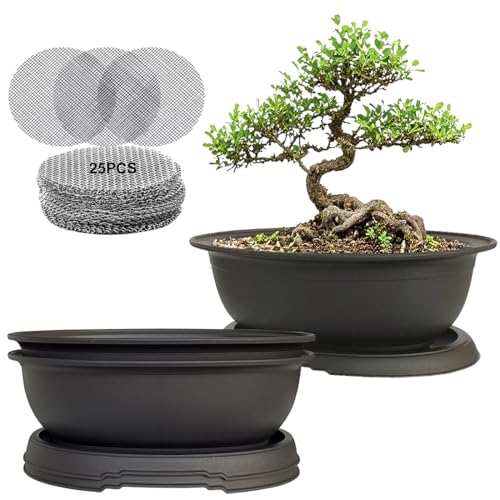
This MUZHI set focuses on tiny trees, cuttings, and mame-scale projects. The 5.2-inch oval pots have a matte finish, which hides scratches and looks nicer than glossy plastic. Each comes with a drainage tray and a generous pack of 2-inch mesh pads. You can set up many small starts fast.
I use this size for shohin trials, slow seedlings, and compact succulents. The oval shape gives a soft, classic bonsai look even in training. The small tray helps with indoor watering, though keep an eye on overflow. If you want Inexpensive Bonsai Pots Online for tiny work, this trio hits the sweet spot.
Pros
- Great size for mame and shohin projects
- Matte finish looks clean and hides wear
- Includes 25 mesh pads for quick setup
- Lightweight and easy to move around
- Tray helps protect shelves and desks
- Three-pack value for starting multiple trees
Cons
- Too small for mid to large bonsai
- Tray is shallow; watch watering volume
- Plastic can warm up in direct midday sun
My Recommendation
Pick this set if you love tiny trees or want to root cuttings with control. The included mesh pads speed up your prep, and the size fits windowsills and office shelves. If you want to explore Inexpensive Bonsai Pots Online for small, neat projects, MUZHI makes it easy to begin and test ideas at low cost.
| Best for | Why |
|---|---|
| Shohin and mame growers | Compact 5.2-inch footprint suits tiny trees |
| Cuttings and seedlings | Fast setup with mesh pads and trays |
| Office or windowsill use | Clean look, light weight, and small tray |
JEUIHAU 9-Inch Bonsai Pots with Trays, 16-Pack

This JEUIHAU bulk set is for growers who need volume. You get sixteen 9-inch rectangular training pots with trays. The format works for bonsai, herbs, or succulents when you want order and scale. Drainage holes help move water out fast to guard roots.
I like 9-inch pots for mid-sized starters and for trees that need a season to bulk. The brown color gives a neutral, nursery look. If you run classes, sell stock, or start club projects, the per-pot price is very low. It is a classic pick when you search Inexpensive Bonsai Pots Online for bulk training needs.
Pros
- Huge value per unit in a 16-pack
- 9-inch size suits mid training stages
- Tray controls mess on benches and shelves
- Lightweight and easy to stack
- Great for classes, clubs, and workshops
- Good drainage helps protect roots
Cons
- Bulk pack needs storage space
- Plastic look is more nursery than display
- Trays may feel thin with heavy watering
My Recommendation
Choose this if you plan a repot day for many trees or want a tidy, uniform look across a bench. The 9-inch size covers a wide range of species and growth stages. If your goal is to secure Inexpensive Bonsai Pots Online that scale for a group or side business, this is your cost saver.
| Best for | Why |
|---|---|
| Clubs and classes | Bulk value and consistent size for teaching |
| Mid-size training | 9-inch footprint fits many species and stages |
| Nursery growers or sellers | Low per-pot cost and tidy presentation |
PSW 8-Inch Composite Low Bowl Planter

This PSW bowl blends plastic, stone, and wood composite for a refined look. It ships without a drainage hole, but the base is drillable for custom flow. The shallow profile suits bonsai, succulents, and tabletop gardens. The “Chocolate” color works with warm woods and indoor decor.
I like this as a step up from pure training pots. It feels more like a display piece without a ceramic price. If you need control over drainage or plan to use it indoors, drilling your own hole is easy. For shoppers checking Inexpensive Bonsai Pots Online with a nicer finish, this is a smart middle lane.
Pros
- Composite build looks more like stone than plastic
- Drillable base gives custom drainage control
- Low bowl suits many bonsai styles
- Works indoors and outdoors
- Light but sturdy and easy to handle
Cons
- No drainage hole out of the box
- Single-pot price is higher than basic plastics
- Not a traditional glazed ceramic show pot
My Recommendation
Pick this if you want a better look than standard nursery pots but do not need high-end ceramics. It is ideal for living rooms, gifts, and accent spots. If you are browsing Inexpensive Bonsai Pots Online and aim for a “display ready” feel on a budget, this bowl hits that goal.
| Best for | Why |
|---|---|
| Budget display | Stone-like finish without ceramic cost |
| Indoor stylists | Warm tone matches home decor |
| Custom drainage users | Drillable base for precise water control |
How to Choose Inexpensive Bonsai Pots Online: A Simple Guide
Buying Inexpensive Bonsai Pots Online should feel calm and clear. Focus on fit, drainage, and material first. Style comes next. If you match these points, your tree will be happy and your space will be clean.
Size and depth: Match pot size to trunk and root mass. A common rule is a pot width near two-thirds the tree height or canopy width, and a depth close to the trunk’s caliper at the base. For training, pick a pot a bit wider to let roots grow and thicken. For show, go tighter to frame the tree.
Drainage: Bonsai roots need air and quick runoff. Look for multiple holes and a base that does not pool water. Trays are fine for catching drips, but avoid standing water in the tray. Use mesh over holes to hold soil and keep pests out of the mix.
Material: Plastic and resin are light, durable, and cheap. They work well for training and indoor spots. Composite bowls, like PSW, add a nicer look while staying light. Ceramic is classic for display but costs more. For most training stages, the best value sits in plastic or composite.
Shape and style: Ovals complement soft, informal trees. Rectangles suit strong, upright forms. Shallow pots enhance the bonsai look but need regular watering. Deeper trays hold more moisture but can reduce that clean bonsai vibe. Choose a neutral tone if you style many trees, so the pot does not distract.
Accessories: Mesh pads and trays save time and protect tables. Tie-down holes help anchor the tree after repot. If the pot lacks tie holes, you can run wires through drainage holes. Keep extra mesh on hand for quick repots.
Budget and bundles: Bulk packs lower the per-pot price. A three-pack is nice if you plan seasonal work or have a few trees. When I hunt for Inexpensive Bonsai Pots Online, I compare per-unit cost, tray value, and included mesh. Time saved matters too.
Practical Tips for Better Results
- Measure the inside of your current pot before you upgrade.
- Check listing photos for true color and depth clues.
- Use a well-draining mix; do not rely on the pot alone.
- Elevate pots on feet or mesh to boost airflow under the base.
- Clean trays weekly to prevent salts and algae.
- Disinfect used pots with a mild bleach solution, then rinse well.
- Drill composite or plastic slowly; support the base as you drill.
- Secure the tree with wire through holes during the first month post-repot.
Common Mistakes to Avoid with Budget Pots
- Going too small too soon: training needs room for roots.
- Ignoring drainage: one hole is not enough for bonsai health.
- Overwatering with trays: empty the tray if water stands.
- Leaving mesh out: soil can wash out and clog trays.
- Placing thin plastic in harsh sun: it can heat up and dry roots fast.
What I Look for When Buying Inexpensive Bonsai Pots Online
I check the photo angles for depth and hole count. I read the Q&A for real dimensions. I prefer sets with trays and mesh to save time. I also scan reviews for notes on brittleness and color accuracy. My goal is a pot that holds up through at least two repots.
I also factor species. Ficus and tropicals can handle slightly deeper pots and higher humidity. Junipers and pines prefer sharp drainage and more airflow. Maples like even moisture without waterlogging. The right pot shape and tray use can help hit those needs without high spend.
Price Benchmarks for 2026
In 2026, Inexpensive Bonsai Pots Online still bring solid value. Small training pots often come in three-packs that land under many single ceramic prices. Bulk 9-inch sets can drop the per-pot cost to a few dollars. Composite display bowls usually sit in a mid price lane, which fills the gap between nursery plastic and ceramic show ware. These ranges shift with shipping, but the value logic holds steady.
Care and Repotting Basics in Budget Pots
When you repot into a low-cost training pot, prepare all tools first. Pre-cut mesh, wires, and have soil ready. Loosen roots, trim circling growth, and set the tree slightly off-center to match style. Add soil in layers and chopstick to remove air pockets.
Water until you see clear runoff. Place the pot in bright shade for a few days before full sun. Monitor the tray and empty standing water. Light, frequent watering beats rare soaks in most mixes. These steps help budget pots perform like premium gear.
Environmental and Storage Notes
Light plastics and composites stack well and save space. Keep them out of direct hot sun in storage to prevent warping. Clean and dry them before stacking to stop mold. If a tray cracks, keep it as a mixing scoop or drip guard. Reuse is part of the value story.
When drilling a hole in composite or plastic, mark the center, use a step bit, and go slow. Support the base with a scrap block to avoid flex. Deburr the edge, add mesh, and you are set. This quick tweak turns a stylish bowl into a bonsai-ready home.
FAQs Of Inexpensive Bonsai Pots Online
Do I need a tray under every bonsai pot?
No, but trays help indoors by catching drips and soil. Empty standing water to prevent root issues.
How do I choose the right pot size?
Match width to about two-thirds of tree height or canopy. Depth often equals trunk base thickness. Allow more room in training.
Are plastic training pots bad for roots?
No. Good drainage and soil matter most. Plastic is light, cheap, and fine for training if holes and mesh are set right.
Should I drill a drainage hole in a bowl with none?
Yes, if you plan bonsai or succulents. Use a step bit, go slow, add mesh, and ensure clean runoff.
How often should I replace budget pots?
Replace when cracked, warped, or if holes clog often. Many last across several repots with care.
Final Verdict: Which Should You Buy?
The Bonsai Outlet 6-inch set offers the best balance of value, function, and ease. Built-in mesh and trays make training clean and fast.
If you want Inexpensive Bonsai Pots Online that work right away, start there. Add MUZHI for tiny trees and PSW for a budget display step-up.
