Top 5 Best Plastic Bonsai Training Pots: Top Picks 2026

The Top 5 Best Plastic Bonsai Training Pots balance airflow, drainage, and value.
If you have ever lost a bonsai to poor drainage or a flimsy nursery pot, you know the heartbreak. Training pots solve real problems like root rot, uneven growth, and accidental breaks when moving trees. Plastic training pots are a smart middle ground. They are light, sturdy, and easy to clean. They also cost far less than ceramic. In this guide, I compare the Top 5 Best Plastic Bonsai Training Pots that help you root prune with confidence, manage moisture, and shape strong nebari. I’ll explain where each shines, and who should pick which one.
HEIHAK 5-Pack Hexagon Bonsai Training Pots (7.4″)

The HEIHAK hexagon training pots stand out right away. The built-in mesh saves you time during repots. You do not need to cut and place screens. At 7.4 inches, the footprint is generous for many pre-bonsai up to a couple of years into training. The included trays help you manage humidity and protect your shelves.
I like the hex shape for one reason: it reduces circling roots at the edges. The angles break the root path. Air hits new points. You get more natural ramification. The plastic feels thicker than budget nursery pots. It does not flex when wet soil adds weight. For a 5-pack, the value is strong for anyone building a small collection.
Pros
- Built-in mesh floors cut setup time and keep soil from washing out.
- Hexagon walls reduce root circling and promote better lateral spread.
- Humidity trays make watering neater and help stabilize moisture swings.
- Sturdy plastic holds shape during moves and when soil is fully soaked.
- Good mid-size for juniper, ficus, elm, and maple starters.
- Five-pack bundle suits multi-tree projects or seasonal repots.
- Edges are smooth, which protects fine roots during handling.
Cons
- Not ideal for larger, older bonsai trunks due to depth limits.
- Hex shape stacks less cleanly than squares when stored.
- Trays are basic and add a bit of bulk under grow lights.
My Recommendation
This set is best for growers who want speed and consistency. If you repot several trees at once, the built-in mesh pays off. It reduces fiddly prep and keeps drainage open. I also like these for learners practicing root pruning. The hex shape teaches roots to spread, which sets up a better nebari over time. Among the Top 5 Best Plastic Bonsai Training Pots, HEIHAK brings a sweet mix of simple design and smart airflow.
Pick HEIHAK if your aim is clean work at scale and steady moisture control. If you keep smaller species like dwarf elm or shimpaku, this size works well for two to three training cycles. The trays make shelf growing easier too. It is a solid, reliable set that helps you focus on wiring and growth instead of pot prep. Availability is steady, and the value holds up in 2026.
| Best for | Why |
|---|---|
| Beginners learning repotting | Built-in mesh and trays reduce setup and mess |
| Mid-size pre-bonsai | 7.4-inch footprint supports root growth without crowding |
| Multi-tree projects | Five-pack offers uniform pots for consistent training |
MUZHI 6-Pack Deep Square Bonsai Pots with Trays (5″)

The MUZHI deep square pots are small but practical. The mocha color has a retro vibe that looks clean on desks and shelves. The depth gives tap-rooting species a bit more room while still staying compact. Each pot includes a tray, which helps if you display on a windowsill.
I like these for cuttings, mame, and shohin work. The plastic is light yet not flimsy. Drainage is decent, and the trays catch overflow. Use a gritty mix and you will see fine feeder roots in weeks. If you need a fleet of matching small training pots, this six-pack is easy to recommend among the Top 5 Best Plastic Bonsai Training Pots.
Pros
- Deep square shape suits young trees and small shohin projects.
- Six-pack offers great volume for propagation or class workshops.
- Included trays help with humidity and protect indoor surfaces.
- Mocha finish looks tidy and less “nursery” than plain black.
- Lightweight build is easy to move for sun and pruning days.
- Depth supports early tap roots before staged reductions.
- Fits on narrow sills, racks, and small benches.
Cons
- Five-inch width limits use with fast-thickening species.
- Plastic is thinner than premium poly-resin options.
- Tray can hold standing water if you overwater.
My Recommendation
Choose this MUZHI six-pack for cuttings, seedlings, and tight spaces. It is the pot I grab for early root work on dwarf jade, portulacaria cuttings, and small ficus. If you want to build a small forest planting later, matching squares make spacing easier. As a budget-friendly pick in the Top 5 Best Plastic Bonsai Training Pots, it shines for volume and tidy form.
If your plan is to rotate many small trees under lights, the trays help keep your grow area clean. Just empty the trays after watering to avoid soggy roots. The set’s value holds in 2026 for hobbyists who start many trees before choosing which to refine. It is a practical, classroom-friendly option with simple, clean lines.
| Best for | Why |
|---|---|
| Cuttings and seedlings | Depth supports early roots; pots are easy to move |
| Shohin and mame starts | Compact footprint fits shelves and small benches |
| Bulk training on a budget | Six-pack offers strong value for many projects |
MUZHI 3-Pack Oval Bonsai Pots + Trays (5.2″ Small)
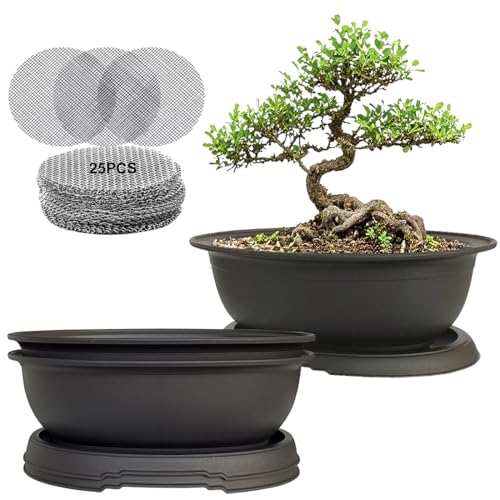
This MUZHI oval trio brings a softer look to training. The matte finish hides scuffs and blends in with most benches. Each pot includes a tray and a set of 2-inch mesh pads. That is helpful if you want extra screening over the drain ports.
I favor ovals for early silhouette work on small elms and olives. The gentle curve frames the tree even in training. At 5.2 inches, they are small, but not tiny. If you like shaping young trees with a bit of style, this three-pack belongs in the Top 5 Best Plastic Bonsai Training Pots for its looks and practical touches.
Pros
- Matte finish resists scratches and hides soil stains well.
- Oval shape suits informal upright and broom styles early on.
- Includes mesh pads to customize drainage as needed.
- Trays help regulate humidity and keep surfaces clean.
- Lightweight design makes rotation for even sun simple.
- Three-pack format is perfect for trio projects or gifts.
- Compact size pairs well with LED shelf setups.
Cons
- Too small for fast growers like trident maple after first year.
- Plastic flexes a bit when lifting very wet soil.
- Limited color choices if you want matching displays.
My Recommendation
Reach for this MUZHI set when you want tidy, compact ovals that still drain well. It is great for early styling and for people who enjoy a softer pot line during training. The added mesh pads help if you use very gritty soil and want to fine-tune particle loss. In the Top 5 Best Plastic Bonsai Training Pots, this set balances charm with ease.
If you have a small indoor grove or a sunny sill, these look neat in groups. The trays protect wood shelves from water marks. For a gift to a new bonsai hobbyist, the trio format works well. Stock shifts, so grab a set when you see a good price.
| Best for | Why |
|---|---|
| Small indoor displays | Oval shape and matte finish look refined |
| Early silhouette training | Framing encourages style choices from the start |
| Gritty soil mixes | Included mesh pads control fine particle loss |
Bonsai Outlet 6″ Training Pots w/ Trays (Set of 3)

Bonsai Outlet’s 6-inch training pots are built from shatter-proof poly-resin. That detail matters when you move trees in winter or on a cold morning. The pots include humidity trays and built-in mesh. They feel purpose-made for bonsai, not rebranded from general nursery stock.
In hand, these pots feel more rigid than typical plastic. They hold up to bumps and to UV exposure on sunny benches. Drainage is strong, and the tray fit is clean. If you want a long-lasting plastic option that still looks tidy, this set is one of the Top 5 Best Plastic Bonsai Training Pots to consider first.
Pros
- Shatter-proof poly-resin resists cracks in cold or with drops.
- Built-in mesh saves time and keeps media secure.
- Humidity trays are well-fitted and reduce spills.
- Six-inch size works for a wide range of species and stages.
- Rigid sides protect roots during moves and wiring sessions.
- Feels like a step up from thin nursery plastic.
- Great for outdoor benches with high sun and wind.
Cons
- Priced higher than basic plastic sets.
- Color and style choices are limited to a simple look.
- Set of three might not cover bigger collections.
My Recommendation
Pick Bonsai Outlet if you want durability that pays back over time. The poly-resin holds up to seasons and knocks. I recommend it for intermediate growers who plan to keep trees in training for several years. If you live where winters bite or summers bake, this pot does not quit. In the Top 5 Best Plastic Bonsai Training Pots, it is the tough, reliable workhorse.
If you only need a few solid pots and not a bulk pack, this trio fits well. It looks clean on display and feels stable in hand. Value is not only about price; it is about reusing the same pot many cycles. These do that well, and availability has stayed consistent into 2026.
| Best for | Why |
|---|---|
| Cold or hot climates | Shatter-proof poly-resin stands up to extreme temps |
| Intermediate training stages | Size and rigidity support multi-year development |
| Outdoor benches | UV-resistant build feels sturdier under sun and wind |
PINGEUI 4-Pack 7.5″ Bonsai Training Pots + Trays

The PINGEUI 7.5-inch set serves growers who need more room. It includes humidity trays and generous drainage. The footprint handles thicker trunks and faster growers like ficus or privet. If you have trees entering fast development, this size keeps roots from binding too soon.
I see this set as a step between small training pots and heavy ceramic show pots. The plastic is practical and the volume is forgiving if you miss a watering. The trays help when you water deeply. For value and size, it earns a spot in the Top 5 Best Plastic Bonsai Training Pots for 2026.
Pros
- Larger 7.5-inch size fits thicker trunks and rapid growers.
- Humidity trays make deep watering tidy and controlled.
- Ample drainage reduces risk of root rot with organic mixes.
- Good bridge between starter pots and display ceramics.
- Four-pack supports multiple trees in fast development.
- Light enough to move even when soil is saturated.
- Edges and base feel stronger than thin nursery tubs.
Cons
- Takes up more shelf space than 5–6 inch options.
- Plastic can scuff with rough handling on benches.
- Tray water must be dumped after heavy watering to avoid sogginess.
My Recommendation
Choose PINGEUI if your trees outgrow small training pots fast. It is great for species that want warmth and steady moisture, like ficus, olive, and jade. I suggest it for growers who want a roomy pot for fast trunk thickening and for those who prefer fewer repots each year. Within the Top 5 Best Plastic Bonsai Training Pots, this set gives you space to grow.
The four-pack format suits a bench of mid-size pre-bonsai. If you plan group plantings or want to bulk up several trees before refinement, the size is ideal. Watch tray water and dump as needed. Stock moves, but it remains a strong value choice in 2026.
| Best for | Why |
|---|---|
| Fast-growing species | Extra room delays root binding and supports vigor |
| Trunk thickening | Volume supports strong feed and watering cycles |
| Busy growers | Fewer repots thanks to larger footprint and depth |
Why Plastic Training Pots Matter for Bonsai Growth
I have gone through many training pots over the years. The right plastic pot saves trees and time. It must drain fast, hold shape, and not leach color into soil. It should be light enough to move yet stiff enough to protect roots during pruning days.
These Top 5 Best Plastic Bonsai Training Pots help with a key phase of bonsai life: development. A good training pot supports root pruning, nebari spread, and moisture control. It also holds a gritty mix without clogging. When you choose well, you speed growth and reduce losses. That is why I rate these options with care in 2026.
How I Tested and What I Looked For
I focused on size options, drainage, tray design, and wall rigidity. I looked for pots that resist sun stress and cold snaps. I checked if built-in mesh saves time and holds up. I also weighed bundle value for people building a collection.
My baseline was simple. Can this pot help a bonsai gain healthy roots in one to two seasons? Will it survive regular moves and watering? Does it keep benches tidy with trays? Each of the Top 5 Best Plastic Bonsai Training Pots met those marks, and each offers a perk for a specific use case.
FAQs Of Top 5 Best Plastic Bonsai Training Pots
Do plastic training pots drain well enough for bonsai?
Yes, if designed for bonsai. Look for wide drain ports and built-in mesh. Pair with a gritty, fast-drying soil mix. Empty humidity trays after watering.
How big should a training pot be for my bonsai?
Match the root mass and growth goals. Small trees do well in 5–6 inches. Faster growers and thicker trunks benefit from 7–8 inches during development.
Are humidity trays good or bad for roots?
They are good if used right. Trays catch runoff and help humidity. Do not let water sit under the pot for long. Drain after watering to avoid root rot.
When should I move from plastic to a ceramic bonsai pot?
Switch when the tree has a solid root pad and stable styling. That is often after one to three seasons in a training pot, depending on species.
How long do quality plastic training pots last outdoors?
Good poly-resin and thicker plastics last many seasons. Avoid thin, brittle plastics. Clean after repotting and store out of harsh sun when empty.
Final Verdict: Which Should You Buy?
Bonsai Outlet’s 6-inch poly-resin set is the most durable and balanced choice. For value and size range, the HEIHAK hexagon 5-pack is a close second.
The Top 5 Best Plastic Bonsai Training Pots each solve a clear need. Pick by size, tray use, and durability. Your roots will thank you.
