FFPOPU 3 Pack Ceramic Bonsai Pots Review: Pros & Cons

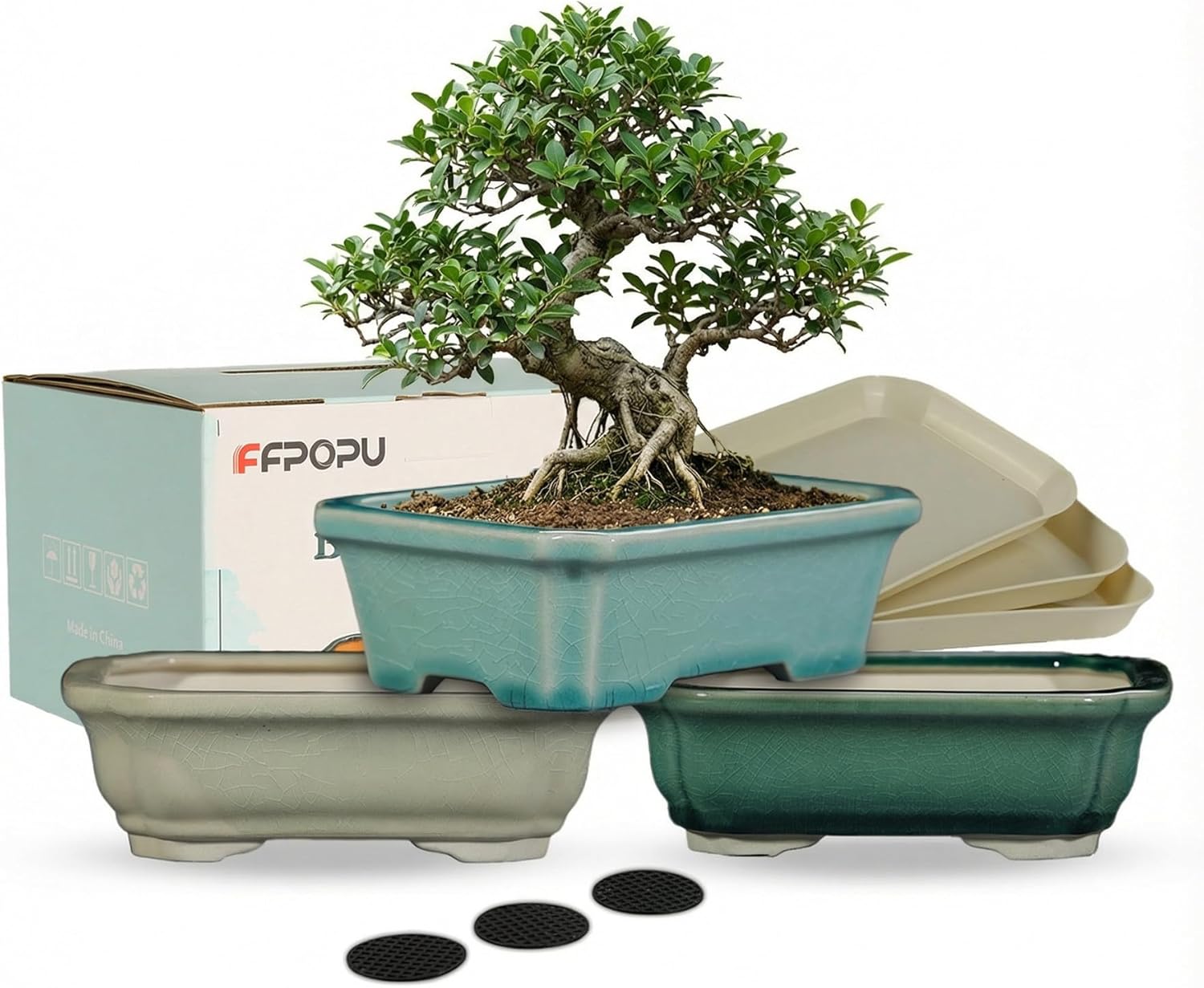
The FFPOPU 3 Pack Ceramic Bonsai Pots are a set of small glazed ceramic planters designed for miniature bonsai, succulents, and decorative tabletop planting. These ceramic bonsai pots are intended for growers who want compact planting containers with drainage provisions and coordinated trays without investing in large display pottery.
The set combines an ice-crack glaze appearance with a practical, shallow profile. Its strongest appeal is decorative convenience, although buyers should confirm the dimensions and drainage arrangement against their plants’ actual needs.
🏆 My Quick Verdict
💡 Best For: Beginners, indoor gardeners, and bonsai enthusiasts who want three compact decorative planters.
⚡ Key Specs:
Three ceramic pots; approximately 6.15 × 4.75 × 1.5 inches per pot according to published descriptions; ice-crack glaze; drainage openings; filter pads and trays listed.
✅ Bottom Line: This set is appealing for small indoor plant displays where coordinated styling matters. Its shallow dimensions limit root space, and the precise suitability for a particular bonsai depends on its species, root mass, and development stage.
At a Glance
- The three-piece set suits buyers planning several small plant displays.
- The ceramic construction provides a more finished appearance than basic plastic training containers.
- The ice-crack glaze gives the planters a decorative, traditional look.
- Published dimensions indicate a shallow planting space of approximately 6.15 × 4.75 × 1.5 inches per pot.
- Product descriptions list drainage provisions, filter pads, and trays.
- Large bonsai and trees needing substantial root depth may require a different container.
Premium Specifications Table
| Specification | Published information |
|---|---|
| Brand | FFPOPU |
| Product type | Ceramic bonsai planter set |
| Pack quantity | Three pots |
| Material | Ceramic |
| Published pot dimensions | Approximately 6.15 × 4.75 × 1.5 inches |
| Shape | Rectangular or oval options are described in product information; confirm the selected variant. |
| Finish | Ice-crack glaze pattern |
| Drainage | Drainage opening and filter listed |
| Accessories | Trays and drainage filters listed in descriptions |
| Warranty | Not independently verified |
These details come from available product descriptions rather than independent physical measurements. Confirm the selected shape, package contents, and dimensions on the current listing before ordering.
Design & Build Quality
The FFPOPU set prioritizes decorative ceramic styling over the utilitarian appearance of ordinary nursery pots. Its ice-crack glaze creates a patterned surface that can complement a small bonsai, succulent, or carefully arranged tabletop planting.
Ceramic gives the containers a more substantial presentation than lightweight plastic. However, ceramic can chip or break after impact, so careful handling is important during repotting, cleaning, and movement.
The shallow form is particularly relevant to the buying decision. A compact planter can frame a small tree attractively, but its external dimensions do not guarantee adequate internal room for every root system.
The included trays also support indoor placement by collecting ordinary drainage runoff. They should not be treated as a substitute for drainage, and standing water should not be allowed to accumulate around the pot’s base.
Setup, Installation & Ease of Use
- Inspect all three ceramic pots immediately after unpacking for chips, cracks, and uneven edges.
- Check that the supplied trays and drainage filters match the selected package description.
- Place the appropriate filter over each drainage opening when needed to retain growing medium.
- Choose a bonsai substrate suited to the plant species and its moisture requirements.
- Compare the available root space with the tree’s root mass before transferring it.
- Secure the tree appropriately if the pot provides suitable anchoring options and the planting requires them.
- Set each planted pot on a stable, level surface away from edges where it could fall.
- Empty collected runoff and store unused pots in a protected location to reduce accidental damage.
Core Performance & Feature Breakdown
The set’s usefulness depends on three practical factors: adequate root space, effective drainage, and a container design that suits the plant. Attractive glaze alone cannot compensate for a pot that is too shallow or unsuitable for the tree’s development stage.
Drainage openings allow excess water to leave the growing medium, while filter material can help keep substrate from escaping. Actual results depend on the condition of the openings, the growing mix, and the grower’s watering routine.
The shallow profile is appropriate only when the plant’s roots and intended growth stage fit the available space. A recently collected tree, a developing specimen, or a species requiring greater depth may need a more suitable training container.
Expert Insight
Choose a bonsai pot based on the tree’s root structure and cultivation goal before considering its finish. A shallow decorative container is most useful when it supports healthy root placement, reliable drainage, and the intended presentation.
Key Features Explained
1. Three-Pot Set
The three-piece format lets buyers prepare multiple small displays or use separate containers for compatible plants. It is less useful if you need only one pot or if all three containers are too small for your trees.
2. Ice-Crack Glaze
The patterned glaze gives the ceramic surface a decorative appearance that can complement indoor plant arrangements. The finish is primarily an aesthetic feature and should not be interpreted as proof of frost resistance or a particular level of durability.
3. Drainage Openings and Filters
The listed drainage arrangement supports excess-water removal, while a filter can help keep growing medium inside the container. Check the openings and supplied accessories because the precise configuration should be confirmed for the selected variant.
4. Matching Trays
The listed trays provide a convenient place to catch routine runoff and help protect desks or shelves. They still need to be emptied when water collects, since prolonged standing water can undermine appropriate root-zone moisture management.
Real-World Usability & Maintenance
For indoor use, place the pots on a level, water-resistant surface and check the trays after watering. This simple habit helps protect furniture and makes it easier to notice blocked drainage or excess runoff.
Clean the glaze gently with a soft cloth and remove debris from the drainage openings when necessary. Avoid harsh handling, sudden impacts, and abrasive cleaning tools that could damage the finish.
Outdoor placement needs more consideration than a sheltered windowsill. Because the exact freeze-thaw resistance is not verified, buyers in climates with freezing temperatures should confirm the manufacturer’s care guidance before leaving the ceramic pots outside.
Premium Pros & Cons Cards
Pros
- Three pots provide flexibility for small plant displays.
- The glazed ceramic finish offers more decorative character than basic plastic containers.
- The shallow format suits some miniature bonsai and compact succulent arrangements.
- Listed trays and drainage filters can simplify indoor planting setup.
Cons
- The shallow dimensions restrict suitability for plants with deeper root systems.
- Ceramic can chip or break if dropped or struck.
- Cold-weather durability and warranty coverage are not independently verified.
Common Issues & Fixes
1. Water Collects in the Tray
Excess water can remain beneath the pot after watering. Empty the tray and check that the drainage opening and filter are not blocked.
2. The Pot Looks Smaller Than Expected
Published outside dimensions may not reflect the usable planting area. Measure the root mass and compare it with the selected pot’s internal dimensions before repotting.
3. Ceramic Arrives Chipped
Impact damage can occur during handling or shipping. Inspect every pot when it arrives and contact the seller promptly if an item is damaged.
What to Know Before You Buy
The most important check is size compatibility, not appearance. A shallow pot may suit a compact bonsai in a suitable development stage, but it can restrict root placement for a larger tree.
Also confirm the selected shape and color, because product families may offer different variants. Do not assume that every configuration includes identical trays, filters, or drainage arrangements.
Consider where the pots will be used and how frequently you move them. Ceramic is a good fit for careful display, while growers who regularly transport plants or perform intensive training may prefer lighter, more rugged containers.
Who Should Buy It / Who Should Skip It
✅ Who Should Buy It
- Beginners building a small indoor bonsai collection.
- Plant owners who value decorative ceramic containers.
- Growers with miniature trees or compact plants that fit the shallow profile.
- Buyers who want several coordinated planters rather than a single container.
✗ Who Should Skip It
- Owners of large bonsai requiring more root volume.
- Growers who need a purpose-built training pot with verified anchoring holes.
- People who frequently drop, move, or transport their planters.
- Buyers who require confirmed frost resistance or a documented warranty.
Alternatives to Consider
Two alternatives offer different priorities: a more practical training container and a decorative ceramic pot with a different shape. Check the exact variant and current listing details before deciding.
Bonsai Outlet 8-Inch Training Pots
Best For: Growers prioritizing cultivation and repeated training work.
Main Advantage: The reviewed set uses poly-resin construction with trays and drainage mesh.
Trade-off: The utilitarian finish lacks the decorative ceramic character of the FFPOPU set.
Key Spec: Published exterior dimensions are approximately 9 × 6.5 × 3 inches.
MUZHI 9-Inch Glazed Oval Bonsai Pot
Best For: Buyers seeking a larger decorative glazed pot for a suitable bonsai.
Main Advantage: The published design includes multiple drainage holes and a tray.
Trade-off: Its larger footprint may not suit small desks or miniature trees.
Key Spec: Published dimensions are approximately 9.15 × 7 × 2.9 inches.
Is It Worth It?
The FFPOPU set is worth considering when you need several small ceramic containers and prefer a decorative finish over a basic training-pot appearance. The combination of three pots, a patterned glaze, and listed drainage accessories makes it a practical candidate for compact indoor displays.
Its value depends on whether the dimensions fit your plants and whether the current selling price compares favorably with suitable alternatives. The set is less compelling if you need deep root space, specialist anchoring features, or verified outdoor freeze resistance.
Final Verdict
The FFPOPU 3 Pack Ceramic Bonsai Pots are a reasonable choice for beginners and indoor plant enthusiasts who want coordinated, decorative containers for miniature bonsai or compact succulents. Buy only after confirming the selected variant, usable dimensions, drainage arrangement, and package contents; choose a deeper or more specialized pot if your tree needs additional root space.
Frequently Asked Questions
1. Are the FFPOPU ceramic bonsai pots suitable for every bonsai tree?
No, suitability depends on the tree’s root system and development stage. Their published shallow dimensions are better suited to compact plants than trees needing substantial root depth.
2. What are the dimensions of each pot?
Published descriptions give approximate dimensions of 6.15 × 4.75 × 1.5 inches. Confirm the selected variant and its internal planting dimensions before ordering.
3. Do the pots include drainage trays and filters?
Available product descriptions list trays, drainage openings, and filter pads. Verify the exact package contents on the current listing because variants can differ.
4. Can I use these ceramic bonsai pots outdoors?
Outdoor suitability in freezing conditions is not verified. Confirm the manufacturer’s guidance before exposing the pots to frost, and protect them from impact and unstable placement.
5. How should I clean and maintain the pots?
Clean the ceramic gently and keep the drainage openings clear. Empty the trays after watering and avoid abrasive tools or sudden impacts that could damage the finish.
6. Does the product come with a warranty?
A specific warranty could not be independently verified. Review the seller’s current warranty, return, and damage-replacement terms before purchase.
Affiliate disclosure: Our Bonsai earns a small commission when you purchase through links on this page — at no extra cost to you. Our editorial process is independent: affiliate relationships never influence which products we recommend or how we rank them.