How to Prevent Bonsai Fungal Diseases

Quick Answer
Prevent bonsai fungal diseases by providing well-draining soil, watering according to the tree’s needs, maintaining good airflow, removing infected foliage, and cleaning tools between trees. Avoid leaving foliage wet for extended periods, but never let the roots dry out simply to prevent disease. For additional background, consult this guide to bonsai pests and diseases.
Daily and Weekly Prevention Priorities
- Water correctly: Check the soil and water thoroughly when needed instead of following a rigid calendar.
- Improve airflow: Space trees so air moves through their foliage and around their pots.
- Inspect leaves: Look for expanding brown spots, white powder, unusual needle discoloration, and dying shoots.
- Keep things clean: Remove fallen leaves, dead needles, and decaying plant material.
- Protect healthy trees: Isolate new or potentially infected bonsai while you investigate symptoms.
- Act on evidence: Identify the likely disease before selecting a fungicide or removing major branches.
How to Confirm a Suspected Problem
- Check whether symptoms are spreading, inspect both sides of leaves, and examine the soil’s drainage.
- Remember that yellow leaves and brown tips can also result from watering mistakes, sun damage, pests, or root stress.
Learning how to prevent bonsai fungal diseases starts with understanding the conditions that make infections more likely. A small bonsai has limited soil volume, so watering, drainage, and environmental changes can quickly affect its health.
This guide explains the warning signs to watch for, the daily care habits that lower disease risk, and what to do when symptoms appear. It also covers differences between common bonsai species, because the right prevention routine depends on the tree.
In This Guide
- What causes fungal diseases in bonsai?
- How can you recognize early symptoms?
- How should you water bonsai to prevent disease?
- How do airflow, light, and humidity affect fungal growth?
- What sanitation and species-specific precautions help?
- What should you do if your bonsai develops a fungal disease?
- Frequently asked questions
What causes fungal diseases in bonsai?
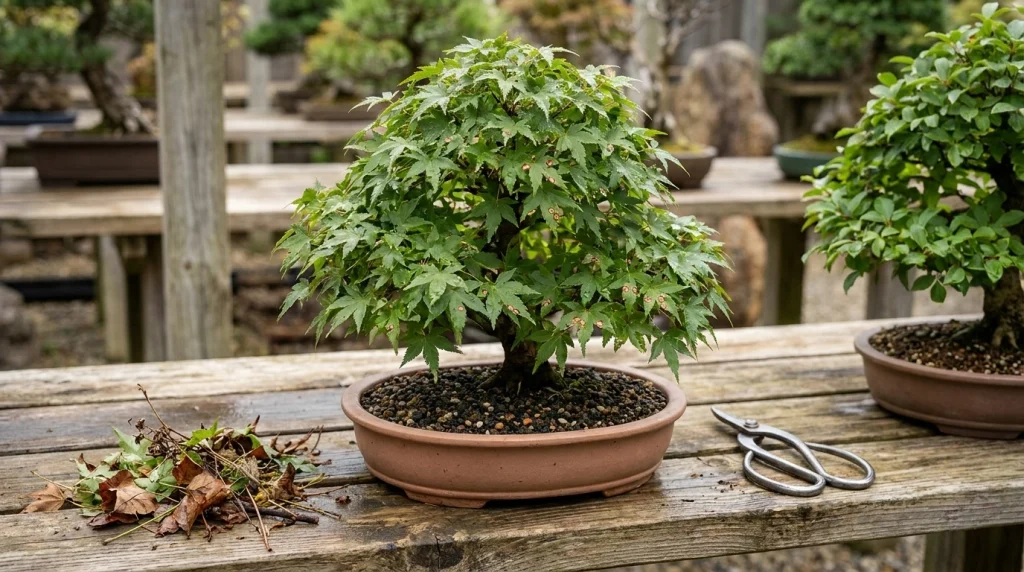
Bonsai fungal diseases are plant infections caused by certain fungi that grow and reproduce on susceptible tissues under favorable environmental conditions. Some fungi attack leaves and shoots, while others damage roots, stems, or branches.
Fungal spores can arrive through wind, rain splash, contaminated tools, infected plants, or growing media. Their presence alone does not guarantee disease; the tree’s condition and its environment also influence whether infection develops.
Which conditions make fungal infections more likely?
Persistent moisture, poor ventilation, unsuitable soil, and stressed growth can increase the risk of particular diseases. Prevention means correcting those conditions while still meeting the tree’s normal growing requirements.
- Prolonged leaf wetness: Some leaf-spot fungi need several hours of moisture on plant surfaces to infect them.
- Waterlogged soil: Oxygen-starved roots can become damaged and more vulnerable to root diseases.
- Dense foliage: Closely packed leaves and branches may dry slowly after rain or watering.
- Dead plant material: Fallen leaves, dead needles, and decaying flowers can support certain disease organisms.
- Plant stress: Poor light, root damage, extreme drought, or inappropriate fertilization can weaken a tree.
Not every disease associated with wet soil is caused by a true fungus. For example, Phytophthora and Pythium are oomycetes, often called water molds, that can cause serious root problems.
Which fungal diseases affect bonsai most often?
The most relevant disease depends on the species, local climate, and growing conditions. These examples illustrate the main problems worth recognizing.
| Problem | Possible signs | Main prevention priority |
|---|---|---|
| Fungal leaf spots | Expanding tan, brown, reddish, or black spots | Reduce prolonged leaf wetness and splash spread. |
| Powdery mildew | White, powder-like patches on susceptible foliage | Improve spacing, light, and air movement. |
| Gray mold | Soft or decaying tissues with gray fuzzy growth | Remove dead material and reduce persistent dampness. |
| Root or crown rot | Dark, soft roots, persistent wilting, or declining growth | Maintain root-zone aeration and suitable drainage. |
| Conifer shoot blights | Progressive browning or dieback of shoots or needles | Identify the pathogen and avoid prolonged dampness. |
These symptoms are clues, not definitive diagnoses. Similar changes can result from pests, nutrient problems, winter injury, sun scorch, or watering errors.
Section takeaway: Fungal disease prevention begins with healthy growing conditions and accurate identification. Excess moisture and poor airflow matter, but neither proves that a tree has a fungal infection.
How can you recognize early symptoms of bonsai fungal diseases?
Early detection gives you the best opportunity to limit a disease before it spreads to other foliage or nearby trees. Inspect your bonsai regularly and look for changes that progress rather than assuming every discolored leaf is infected.
What should you check during a routine inspection?
Examine the entire tree, including shaded areas that may remain damp longer than exposed foliage. A simple weekly inspection is useful, with more frequent checks during warm, rainy, or humid periods.
- Look for new spots, powdery coatings, unusual patches, or rapidly browning foliage.
- Check leaf undersides, branch junctions, shoot tips, and areas where foliage overlaps.
- Inspect the soil surface for persistent saturation, unusual growth, or decaying debris.
- Check whether affected branches are isolated or whether symptoms appear across the tree.
- Take photographs and note the date so you can compare changes over several days.
How can you distinguish fungal disease from watering problems?
Fungal leaf spots often appear as defined lesions that expand or merge over time. Watering stress can produce more general yellowing, wilting, crispy edges, or widespread decline, although the symptoms can overlap.
Root problems deserve particular attention. A bonsai that wilts while its soil remains wet may have damaged roots, but the cause could involve oxygen deprivation, root rot, or another underlying problem.
Use this comparison as an initial guide rather than a final diagnosis.
| Observation | Possible explanation | Next check |
|---|---|---|
| Circular or irregular spots that enlarge | Fungal or bacterial leaf spot | Track lesion growth and inspect neighboring leaves. |
| White powder-like patches | Powdery mildew or another surface deposit | Examine the pattern and species affected. |
| Yellowing with persistently wet soil | Poor aeration, root damage, or root disease | Check drainage, watering history, and root condition if appropriate. |
| Browning tips after a sudden exposure change | Sun scorch, cold injury, or moisture stress | Review recent weather and changes in placement. |
For more detailed diagnostic guidance, the University of California’s plant problem guide explains why leaf spots, gray mold, and root symptoms can have different causes.
Do not wait for complete certainty before taking low-risk precautions. If an infection seems plausible, separate the tree, avoid splashing water between plants, and clean the work area.
Section takeaway: Watch for changing patterns, not just individual symptoms. When a tree declines rapidly or major branches begin dying, seek a reliable diagnosis rather than relying on appearance alone.
How should you water bonsai to prevent fungal diseases?
Correct watering protects bonsai from both drought stress and the prolonged root-zone saturation that favors many root diseases. The goal is to provide enough water for the species and conditions while preserving oxygen around the roots.
How often should you water a bonsai?
Water when the tree and its growing medium need it, not simply because a calendar says it is time. Frequency changes with species, pot size, soil composition, temperature, wind, sunlight, rainfall, and season.
A shallow pot in hot, windy weather may need checking several times a day, while a tree in cool weather may use much less water. Never assume that all bonsai need daily watering or that all should dry out between waterings.
Use these practical habits:
- Check moisture in the growing medium rather than judging only its surface color.
- When watering is needed, wet the entire root ball thoroughly.
- Allow excess water to drain freely through the pot’s drainage holes.
- Empty standing water from trays or outer containers.
- Recheck moisture during rainy spells because repeated rainfall can keep small pots saturated.
Morning watering can help foliage dry before evening when conditions allow. However, root health takes priority: do not withhold necessary water from a thirsty tree merely to keep its leaves dry.
Why does bonsai soil drainage matter?
Bonsai soil needs a balance of water retention and air-filled pore space. A compacted or degraded medium may remain wet for too long, depriving roots of oxygen and creating favorable conditions for certain root pathogens.
Many bonsai growers use open, granular mixes containing materials such as pumice, lava rock, or suitable fired clay products. The right composition depends on the species, climate, watering habits, and the way the tree is cultivated.
Watch for these warning signs:
- Water pools on the surface instead of entering the soil.
- The pot remains unusually heavy or saturated for an extended period.
- Drainage holes are blocked by roots, debris, or compacted material.
- The tree wilts or loses vigor despite consistently wet soil.
Surface moss or a small amount of harmless fungal growth does not automatically mean the root system is diseased. However, persistent wetness and deteriorating soil structure warrant attention.
Should you repot a bonsai to prevent root rot?
Repotting may be necessary when the growing medium has broken down, drainage has deteriorated, or a confirmed root problem requires intervention. It should not be performed automatically whenever a little fungus appears on the soil surface.
Use a species-appropriate repotting schedule and choose a suitable season for the tree’s growth cycle. If root rot is suspected, the urgency and best treatment depend on the severity of the damage and the tree’s condition.
Pro tip: Root pruning is irreversible and can further stress a declining tree. Consult an experienced bonsai grower or plant-health specialist before removing substantial roots, especially when the cause of decline remains uncertain.
For general seasonal care principles, the Royal Horticultural Society’s bonsai advice explains the importance of matching watering and cultivation to the tree’s needs.
Section takeaway: Use an open, well-draining medium and adjust watering to actual conditions. Healthy roots need both moisture and oxygen, so neither constant saturation nor deliberate drought is a reliable prevention strategy.
How do airflow, light, and humidity affect fungal growth?
Air movement, suitable light, and sensible plant spacing help foliage dry and reduce conditions that favor some fungal diseases. These adjustments must still suit the bonsai species, since a juniper and a tropical ficus have different environmental needs.
How can you improve airflow around bonsai?
Place trees so their canopies do not press tightly against one another. A crowded collection can trap humid air, especially in sheltered corners, enclosed balconies, and poorly ventilated growing spaces.
Improve ventilation by following a few straightforward practices:
- Leave space between neighboring canopies.
- Keep the area around benches and drainage holes free of debris.
- Use gentle ventilation in enclosed growing areas when conditions permit.
- Avoid placing indoor tropical bonsai in stagnant, dark corners.
- Remove dead or congested growth when appropriate for the species and season.
Airflow does not mean exposing every tree to strong, drying wind. Excessive wind can rapidly dry a shallow pot and stress the roots, so balance ventilation with protection from damaging conditions.
Does humidity cause fungal diseases?
High humidity can encourage certain infections, especially when leaves remain wet for long periods. However, humidity alone does not explain every disease, and powdery mildew can develop under conditions that differ from those favoring other fungal pathogens.
Do not try to eliminate all humidity from your growing space. Tropical bonsai may need humid air, while outdoor conifers and temperate deciduous trees need species-appropriate outdoor conditions.
Instead, focus on the combination of humidity, air movement, temperature, and leaf wetness. If an indoor tree repeatedly develops disease, evaluate ventilation, light levels, watering practices, and crowding together.
Should you mist bonsai leaves?
Misting is not a dependable way to prevent fungal diseases. It may briefly raise local humidity, but it does not replace correct watering, suitable light, or good airflow.
Repeated misting can prolong leaf wetness in poorly ventilated conditions. If you need to raise humidity for a tropical species, consider the broader growing environment rather than repeatedly soaking its foliage.
Outdoor bonsai may receive rain without developing disease when their conditions are suitable. The concern is prolonged dampness combined with a susceptible tree and a pathogen, not every instance of wet foliage.
How should you adjust care in humid or rainy weather?
During rainy periods, check the soil before adding water and look for blocked drainage. Move vulnerable trees under suitable shelter if rainfall is keeping the root zone excessively wet, but preserve the light and ventilation they require.
During hot, humid weather, inspect foliage more often and clear fallen leaves promptly. Avoid drastic changes in light exposure or watering that could create additional stress.
Section takeaway: Good environmental management means matching light, ventilation, and humidity to the species. Aim for foliage that can dry naturally and roots that remain adequately moist without becoming waterlogged.
What sanitation and species-specific precautions help prevent bonsai diseases?
Clean tools, prompt debris removal, and sensible quarantine practices reduce opportunities for disease to spread between trees. Prevention becomes more effective when you also account for the particular species in your collection.
How should you clean bonsai tools and growing areas?
Plant debris and contaminated tools can carry pathogens from an affected tree to healthy tissue. Basic sanitation is especially important when pruning multiple trees or working with a suspected infection.
Use this routine:
- Clean blades: Remove sap, soil, and plant debris before disinfecting tools.
- Disinfect appropriately: Use a suitable tool disinfectant according to its directions, allowing the required contact time.
- Remove fallen material: Clear diseased leaves, dead needles, and decaying debris from pots and benches.
- Avoid soil sharing: Do not reuse potentially contaminated growing medium between trees.
- Clean containers: Wash and disinfect reused pots when disease contamination is suspected.
- Inspect new arrivals: Keep newly acquired or suspicious trees separate while monitoring for symptoms.
Never mix cleaning chemicals or apply household disinfectants directly to a tree. Follow the product directions and keep disinfectants away from roots and foliage unless the product is specifically approved for that use.
Do all bonsai species need the same prevention routine?
No. Species differ in their susceptibility to particular diseases, their preferred growing conditions, and their tolerance of humidity, direct sunlight, and root-zone moisture.
| Bonsai type | Prevention focus | Important caution |
|---|---|---|
| Juniper | Suitable outdoor light, good airflow, and well-drained soil | Progressive shoot browning needs investigation; do not assume it is simply drought. |
| Japanese maple | Monitor leaf spots, canopy congestion, and prolonged leaf wetness | Protect leaves from damaging exposure without placing the tree in excessive shade. |
| Pine | Maintain suitable outdoor conditions and inspect needles and shoots | Needle discoloration can have several causes, including seasonal needle shedding. |
| Ficus | Provide strong suitable light, ventilation, and careful root-zone watering | Do not expose a tropical tree to unsuitable cold or drying conditions. |
| Chinese elm | Monitor leaf health, soil drainage, and canopy density | Growing conditions vary with climate and whether the tree is kept indoors or outdoors. |
These are general prevention priorities, not a claim that each species will develop a particular disease. Correct identification matters because the same symptom can mean different things on different trees.
Does fertilizer help prevent fungal diseases?
Balanced nutrition supports healthy growth, but fertilizer is not a fungicide. Excessive feeding can encourage soft, vigorous growth that is vulnerable to certain diseases, while inadequate nutrition can weaken a tree.
Use a fertilizer appropriate for the species, season, and stage of growth. Avoid increasing the dose simply because foliage looks unhealthy; first investigate watering, roots, light, pests, and possible infection.
Section takeaway: Sanitation reduces avoidable spread, while species-specific care prevents additional stress. Keep your routine consistent, but adapt it to each tree rather than applying identical watering, light, and feeding rules to every bonsai.
What should you do if your bonsai develops a fungal disease?
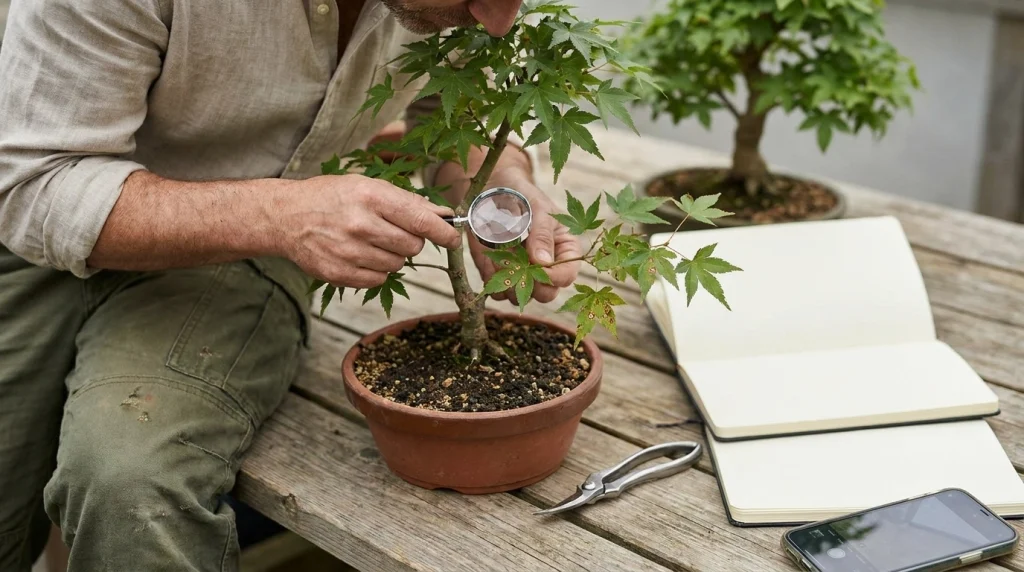
If you suspect a fungal infection, isolate the tree when practical, document the symptoms, and correct obvious environmental problems. The next step is to identify the likely disease and determine whether sanitation, environmental changes, or a targeted treatment is appropriate.
What are the first steps after spotting symptoms?
Start with measures that reduce spread without placing the tree under unnecessary stress.
- Separate the tree: Move it away from healthy bonsai when this can be done without creating unsuitable growing conditions.
- Record symptoms: Photograph affected leaves, shoots, the trunk base, and the soil surface.
- Check the environment: Review recent watering, rainfall, drainage, ventilation, and light exposure.
- Remove limited infected material carefully: Where appropriate, remove clearly diseased leaves or small affected plant parts with clean tools.
- Seek a diagnosis: Consult a knowledgeable bonsai grower, local horticulture service, or plant disease diagnostic laboratory if symptoms spread or remain unclear.
Do not automatically remove large branches or disturb the roots. Extensive pruning or repotting can compound the stress and may not solve the actual problem.
Should you use a fungicide on bonsai?
A fungicide may help manage certain confirmed or strongly suspected fungal diseases, but no single product treats every pathogen. Fungicides also cannot reverse tissue that is already dead, and they do not correct poor drainage or unsuitable growing conditions.
Before using a product, verify that its label permits use on the relevant plant and disease in your location. Follow the directions for dilution, application, protective equipment, repeat treatments, and environmental precautions.
Do not assume a product is safe for every bonsai species simply because it is marketed as a garden fungicide. If the diagnosis is uncertain, ask a qualified local specialist to help identify the problem before treatment.
When is professional help necessary?
Seek expert advice when symptoms spread rapidly, several branches die back, the root collar becomes soft or discolored, or the tree wilts despite persistently wet soil. Valuable or mature bonsai deserve particular care before any invasive intervention.
University plant diagnostic services can sometimes examine samples and help distinguish infectious disease from environmental injury. The Iowa State University Extension disease guide also explains common symptoms and prevention measures for container-grown plants.
Recovery depends on the pathogen, the amount of healthy tissue remaining, and the tree’s overall condition. Some infections can be contained, while advanced root or vascular diseases may have a poor prognosis.
Section takeaway: Isolate, inspect, and correct the growing conditions before choosing treatment. Use fungicides selectively, and get expert help when a diagnosis or an irreversible intervention is beyond your experience.
Frequently asked questions about preventing bonsai fungal diseases
Can bonsai recover from fungal diseases?
Yes, some bonsai recover when the disease is limited and the underlying conditions are corrected. Recovery depends on the pathogen, the affected tissues, and the amount of healthy root and shoot growth remaining. Severely damaged roots or extensive branch dieback can make recovery much less likely.
Does white fungus on bonsai soil mean the tree is diseased?
Not necessarily. White fungal growth on the soil surface can feed on organic matter without directly harming the tree. However, persistent wetness, poor drainage, and declining foliage warrant investigation. Remove excessive decaying debris, improve growing conditions, and check the tree for other symptoms.
Should I water my bonsai less to prevent fungus?
Only if the tree is receiving more water than its growing conditions require. Excessive watering and waterlogged soil can contribute to root disease, but underwatering also stresses bonsai. Check soil moisture, drainage, weather, and species requirements before changing your routine.
Is misting bonsai leaves harmful?
Misting is not automatically harmful, but frequent misting can prolong leaf wetness in poorly ventilated conditions. It is not a substitute for proper watering or a reliable fungal prevention treatment. Focus on species-appropriate humidity, adequate airflow, and foliage that can dry naturally.
How often should I inspect my bonsai for disease?
Inspect your bonsai at least weekly as a routine, and check more frequently during warm, rainy, or humid weather. Look at leaf undersides, shoot tips, branch junctions, and soil drainage. Newly acquired or symptomatic trees deserve closer monitoring until their condition is clear.
Can cinnamon or other home remedies prevent bonsai fungus?
Home remedies such as cinnamon are not reliable substitutes for diagnosing and managing a plant disease. Their effectiveness varies, and they may not control the organism responsible. Prioritize sanitation, suitable growing conditions, and a treatment specifically labeled for the diagnosed problem.
When should I remove a bonsai with a serious infection?
Consider removing a tree from the collection when a serious, contagious disease is confirmed and cannot be managed safely, or when the tree is unlikely to recover. Seek expert advice before discarding a valuable specimen. Dispose of infected material according to local guidance rather than composting it when that could spread the pathogen.
Keep Your Bonsai Healthy With Consistent Prevention
The most reliable way to prevent bonsai fungal diseases is to build good growing conditions into your regular care routine. Provide suitable light, well-draining soil, careful watering, enough airflow, and clean tools.
Inspect your trees regularly and respond to unusual symptoms before they become widespread. Just as importantly, distinguish a genuine infection from ordinary seasonal changes, watering stress, and pest damage.
Start with one simple habit today: examine each tree’s foliage and growing medium, remove fallen debris, and check that excess water can drain freely. Small, consistent improvements are safer and more effective than reaching for a fungicide whenever a leaf changes color.