Thrips Damage on Bonsai Leaves: Signs, Treatment, and Recovery

Quick Answer
Thrips damage on bonsai leaves usually appears as irregular silvery streaks, pale scars, tiny dark specks, or distorted new growth. Confirm the pest before treating because spider mites, leaf scorch, and other problems can look similar; the UC IPM thrips guide recommends checking for live thrips before taking control action.
Signs to check first
- Silvery scars: Damaged leaf cells create irregular silver, gray, bronze, or pale areas.
- Dark specks: Small shiny or black fecal spots often occur near feeding areas.
- Distorted leaves: Feeding on tender tissue can leave new leaves curled, puckered, or scarred.
- Tiny insects: Thrips look like narrow moving dashes and may run quickly when disturbed.
- Damaged buds: Feeding inside buds can cause misshapen foliage or flowers after they open.
What to do now
- Separate the bonsai, tap suspicious foliage over white paper, and confirm live thrips before applying a treatment.
Thrips damage on bonsai leaves can be confusing because the insects are much smaller than the scars they leave behind. You may notice silver patches or twisted growth long before you see a pest.
I prefer to diagnose the damage pattern first and spray second. That approach reduces unnecessary stress on a tree that may already be struggling.
In This Guide
What Does Thrips Damage Look Like on Bonsai Leaves?
Thrips feeding usually creates irregular silvery or pale scars rather than uniform yellowing. Tiny dark fecal specks beside those scars make thrips more likely.
Thrips are slender insects with rasping and sucking mouthparts. They damage plant cells and remove the contents, leaving visible scarring behind.
Definition: Thrips damage is plant-tissue injury caused by feeding or egg-laying activity from tiny insects in the order Thysanoptera. On bonsai, it most often appears as silvering, stippling, scarring, distortion, or damaged tender growth.
Early signs of thrips feeding
The earliest damage may be subtle. I look closely at fresh growth because injuries often become clearer as leaves expand.
- Silver or gray streaks: Irregular reflective areas form where surface cells were damaged.
- Pale stippling: Small light-colored marks can develop across the leaf.
- Bronzed tissue: Older feeding scars may darken or turn brown.
- Black specks: Tiny deposits of excrement can occur beside feeding areas.
- Leaf distortion: New foliage may open curled, folded, puckered, or asymmetrical.
- Damaged flowers: Flowering bonsai may develop scarred petals or buds that open poorly.
Thrips themselves are easy to overlook. Common pest species are often around 1/16 inch long or smaller and can appear tan, yellowish, brown, or dark.
Thrips damage vs. other bonsai pests
| Problem | Typical Leaf Damage | Best Separating Clue |
|---|---|---|
| Thrips | Silver scars, pale patches, distortion | Narrow insects plus dark fecal specks |
| Spider mites | Fine pale stippling and bronzing | Fine silk webbing and tiny moving mites |
| Aphids | Curled or weakened tender growth | Visible colonies and sticky honeydew |
| Scale | Yellowing and weakened foliage | Firm shell-like bumps on leaves or stems |
Section Takeaway: Silvering alone does not prove you have thrips. Look for the damage pattern, dark specks, and live narrow insects together.
How Can You Confirm Thrips on a Bonsai?
The easiest home test is to tap suspicious foliage over white paper. Tiny narrow insects become much easier to see against the clean background.
The University of Minnesota Extension indoor plant pest guide describes thrips as tiny, slender insects that run quickly when disturbed.
Use the white-paper test
- Place clean white paper directly below a suspicious branch.
- Tap or shake the branch several times.
- Wait a few seconds and watch the paper closely.
- Look for narrow insects moving like tiny dashes.
- Use a 10× hand lens if identification remains difficult.
Repeat the test on several areas. A single clean branch does not rule out thrips hiding elsewhere.
Where should you inspect?
- Leaf undersides
- Tender shoot tips
- Freshly expanding leaves
- Folded or distorted foliage
- Unopened buds
- Flowers
- Protected branch junctions
Sticky cards can help monitor flying adults. Yellow or pale blue cards are commonly used, but they do not remove eggs or immature insects hidden on the plant.
My practical rule is simple: I want to see either live insects or several matching signs before treating. This matters on small bonsai because unnecessary spraying can add another stress.
Why Does Thrips Damage Affect New Growth So Badly?
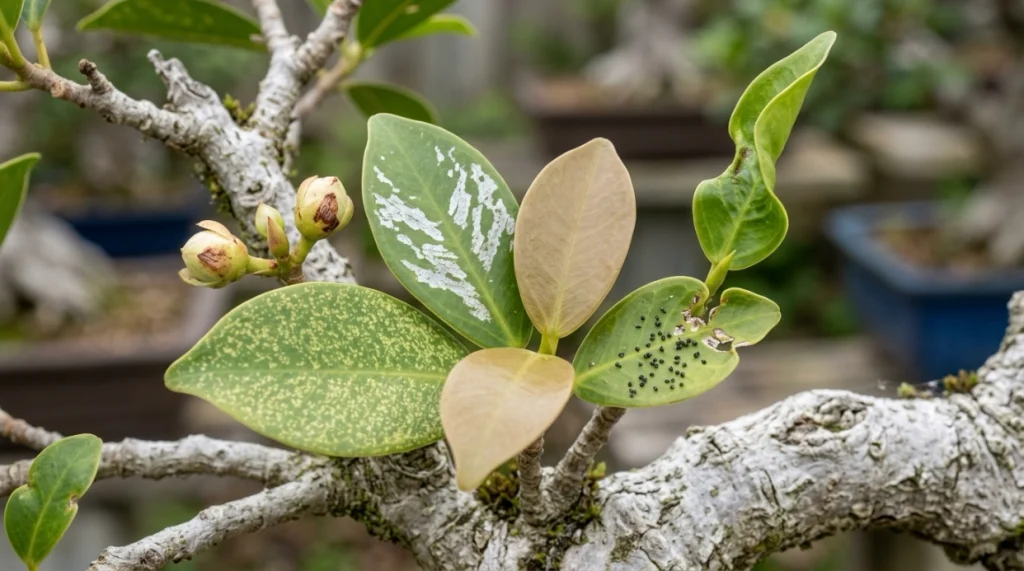
Tender leaves can become permanently distorted when thrips feed before the tissue finishes expanding. The damage then appears larger as the leaf grows.
That explains why a relatively small pest can produce surprisingly obvious damage. The feeding injury happened while the leaf was still compact.
The thrips life cycle also makes control harder
Many plant-feeding thrips insert eggs into plant tissue. They then pass through feeding larval stages and later nonfeeding developmental stages before becoming adults.
Depending on the species, later stages may occur in soil, leaf litter, plant crevices, or protected foliage. Warm conditions can allow some thrips to complete a generation quickly.
- Egg: Often protected inside plant tissue.
- Larva: Actively feeds on leaves, flowers, or tender growth.
- Prepupal and pupal stages: Usually do not feed and may be protected from foliar sprays.
- Adult: Feeds, reproduces, and can move to neighboring plants.
This is why one spray may appear successful and then thrips return. Hidden stages can survive and emerge after exposed insects disappear.
Some thrips also transmit plant viruses, although this risk varies greatly by thrips species and host. The Colorado State University Extension houseplant pest guide also notes insecticide resistance in some thrips populations.
Section Takeaway: New foliage shows severe damage because feeding often occurs before leaves expand. Hidden life stages also explain why repeated monitoring matters.
How Do You Treat Thrips on Bonsai Leaves?
Use an integrated approach rather than relying on one pesticide application. Start with isolation, physical removal, and careful monitoring.
1. Isolate the affected bonsai
Move the bonsai away from other susceptible plants. Keep it in conditions appropriate for its species rather than placing it somewhere dark just for quarantine.
Check nearby plants too. Adults can move between suitable hosts, especially when foliage is close together.
2. Rinse exposed insects away
A controlled stream of water can remove exposed thrips from sturdy foliage. Support delicate branches and avoid washing the bonsai substrate from its shallow pot.
- Concentrate on leaf undersides.
- Rinse tender shoots carefully.
- Clean fallen leaves from the bench.
- Remove loose plant debris around the pot.
3. Remove severely damaged material only when necessary
A badly folded leaf may shelter insects, but damaged foliage can still photosynthesize. Do not automatically defoliate an already stressed bonsai.
Pro tip: Removing live shoots or significant foliage is irreversible. If an important branch is involved, ask an experienced grower or local bonsai club before making a major cut.
4. Use a labeled contact treatment when needed
Insecticidal soaps and horticultural oils can suppress exposed thrips when products are labeled for your plant and use situation. Coverage matters because these treatments mainly work through direct contact.
Always follow the product label. Test sensitive foliage first because species, temperature, sunlight, concentration, and plant stress can affect the risk of leaf injury.
5. Repeat inspection instead of spraying blindly
Check the tree every few days during an active infestation. Look specifically at new leaves because old scars remain even after the insects are gone.
Do not judge success by whether damaged leaves turn green again. They usually will not.
As of 2026, integrated pest management remains the approach I prefer: identify the pest, reduce the population physically, protect plant health, and use pesticides only when justified.
Section Takeaway: Isolation plus repeated inspection is more reliable than a single aggressive spray. Treat the active insects while protecting the bonsai from unnecessary stress.
Can Damaged Bonsai Leaves Recover?
Thrips-scarred tissue normally cannot repair itself. Successful treatment stops new damage rather than restoring the appearance of old leaves.
Your best recovery signal is healthy new growth. Fresh leaves should open normally without new silver streaks, black specks, or increasing distortion.
Keep normal bonsai care stable
- Light: Give the species its normal light requirement.
- Water: Water according to substrate moisture rather than a fixed daily schedule.
- Fertilizer: Avoid trying to force recovery with excessive nitrogen.
- Airflow: Maintain circulation without exposing weakened foliage to damaging wind.
- Temperature: Keep tropical or temperate species within their appropriate seasonal range.
A practical example is a ficus with three badly scarred leaves but otherwise healthy foliage. I would usually keep those leaves temporarily rather than stripping the branch bare.
Once clean new leaves mature, badly damaged old foliage can be removed gradually if appearance matters. Tree strength comes before presentation.
The general Bonsai Empire pest and disease guide also emphasizes correct identification and maintaining appropriate bonsai care when pest problems occur.
How Do You Prevent Thrips From Coming Back?
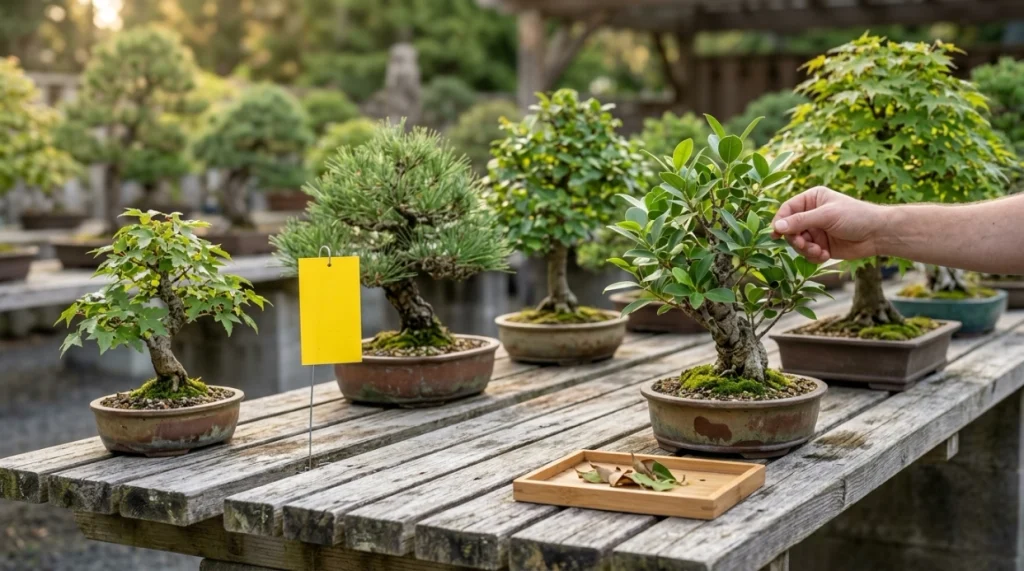
Prevention depends mainly on early detection and plant hygiene. A healthy tree can still get thrips, so inspection remains important.
Use a simple prevention routine
- Inspect new trees: Check leaves, shoots, buds, flowers, pots, and debris before adding them to your collection.
- Quarantine arrivals: Keep new or suspicious plants separate while monitoring them.
- Watch new growth: Tender foliage often shows fresh feeding first.
- Remove debris: Clean dead leaves and plant material from benches and pots.
- Space trees sensibly: Avoid keeping foliage constantly touching neighboring plants.
- Use monitoring traps: Sticky cards can reveal flying adults indoors or in greenhouse spaces.
- Avoid excessive nitrogen: Do not push unnecessary soft growth during a pest problem.
I also repeat the white-paper test after visible symptoms stop. Finding no active thrips over several inspections is more reassuring than one apparently clean day.
Do not repot automatically because you found thrips. Repotting disturbs the roots and can add substantial stress without solving a foliage infestation.
Section Takeaway: Quarantine, inspection, sanitation, and stable care are your best defenses. Catching a few thrips early is far easier than treating an established population.
Frequently Asked Questions
What is the first sign of thrips damage on bonsai leaves?
Irregular silver or pale streaks are among the most recognizable early signs. You may also see tiny dark fecal specks or distorted new leaves, but you should confirm live thrips before assuming they caused the damage.
What do thrips look like on a bonsai?
Thrips look like tiny, slender moving dashes rather than round insects. Their color varies from pale yellow or tan to brown or dark, and adults may move quickly when foliage is disturbed.
Can thrips kill a bonsai tree?
Thrips usually cause cosmetic foliage damage rather than killing healthy woody plants outright. However, a heavy or persistent infestation can weaken a small, stressed, recently repotted, or already unhealthy bonsai.
Will insecticidal soap kill thrips on bonsai?
Insecticidal soap can kill exposed thrips when it contacts them directly. Hidden eggs and protected developmental stages may survive, so repeat inspection and label-directed applications can be necessary.
Why do thrips keep coming back after spraying?
Some eggs are inserted into plant tissue, while other life stages may occupy protected areas that sprays do not reach. Survivors can emerge later, which is why monitoring matters after the visible adults disappear.
Should I remove leaves damaged by thrips?
Do not automatically remove every damaged leaf. Mildly scarred foliage can still support the tree, while removing too much foliage from a weak bonsai can slow recovery.
How do I know when the infestation is gone?
Watch the newest foliage rather than old scars. Several clean inspections combined with normal new leaves and no live thrips, fresh silvering, or new dark fecal spots indicate that control is working.
The main takeaway: Treat thrips damage on bonsai leaves as a diagnosis problem first and a pesticide problem second. Confirm the pest, isolate the tree, reduce the population carefully, and judge recovery by clean new growth.
If you make regular leaf inspection part of your bonsai routine, future infestations become much easier to catch while they are still small.