How to Treat Bonsai Root Rot: A Step-by-Step Recovery Guide

Quick Answer
To treat bonsai root rot, first stop watering on a fixed schedule, check drainage, and confirm that the roots are truly damaged. If roots are soft, dark, or deteriorating, remove only clearly dead tissue, repot when necessary into a well-aerated substrate, and adjust your bonsai watering routine so the root zone receives both moisture and oxygen.
Immediate Steps
- Check moisture: Let overly wet substrate begin drying before watering again.
- Open drainage: Make sure every drainage hole can release excess water freely.
- Inspect roots: Look for soft, limp, damaged roots rather than judging by leaf color alone.
- Remove decay: Trim only clearly dead root tissue with clean tools when root work is genuinely necessary.
- Improve substrate: Use a granular, aerated bonsai mix appropriate for the species and climate.
- Reduce stress: Avoid heavy fertilizer, major styling, or unnecessary root disturbance during recovery.
Before You Repot
- Make sure the problem is root rot rather than simple drought, fertilizer damage, seasonal leaf loss, or another root disorder.
Learning how to treat bonsai root rot starts with diagnosis, not emergency pruning. A yellowing bonsai does not automatically have rotten roots.
I treat suspected bonsai root decay as a drainage and root-health problem first. That approach prevents a stressed tree from being damaged further by an unnecessary repot.
In This Guide
- What Is Bonsai Root Rot, and How Can You Confirm It?
- How Do You Treat Bonsai Root Rot Step by Step?
- Should You Repot a Bonsai With Root Rot Immediately?
- How Do You Prevent Bonsai Root Rot From Returning?
- Can Fungicide Cure Bonsai Root Rot?
- How Long Does a Bonsai Take to Recover From Root Rot?
- Bonsai Root Rot FAQs
What Is Bonsai Root Rot, and How Can You Confirm It?
Bonsai root rot is deterioration of the root system caused by damaging root-zone conditions, disease organisms, or both. Persistently waterlogged substrate is especially dangerous because it limits oxygen around the roots.
Simple definition: Root rot means roots are losing healthy structure and function. Wet soil is an important risk factor, but you still need to inspect the entire situation before assuming a pathogen is responsible.
The leaves often show trouble before you see the roots. Yellowing, wilting, poor growth, leaf drop, or branch dieback can all occur when damaged roots cannot support the canopy.
Those symptoms are not unique to root rot. Drought, fertilizer injury, heat, cold, pests, and transplant stress can look similar.
What do rotten bonsai roots look like?
Healthy fine roots generally feel firm and intact. Seriously damaged roots may become dark, limp, soft, or lose their outer tissue.
| Root condition | What you may notice | Best response |
|---|---|---|
| Healthy | Firm roots, active fine-root growth, intact tissue | Avoid unnecessary root pruning |
| Oxygen stressed | Slow growth, persistently wet soil, weak foliage | Correct watering and drainage first |
| Severely damaged | Soft or limp roots, deteriorating tissue, few healthy tips | Assess whether careful root removal and repotting are needed |
Penn State Extension describes root-rot symptoms that can include darkened roots, poor root tips, and limp root tissue. Its guidance on fungal root rots also shows why symptoms alone cannot identify a specific pathogen.
Pro tip: Root inspection and root cutting are irreversible. For an old, valuable, collected, or badly weakened tree, get hands-on advice from an experienced grower or a local club through resources such as the American Bonsai Society.
How Do You Treat Bonsai Root Rot Step by Step?
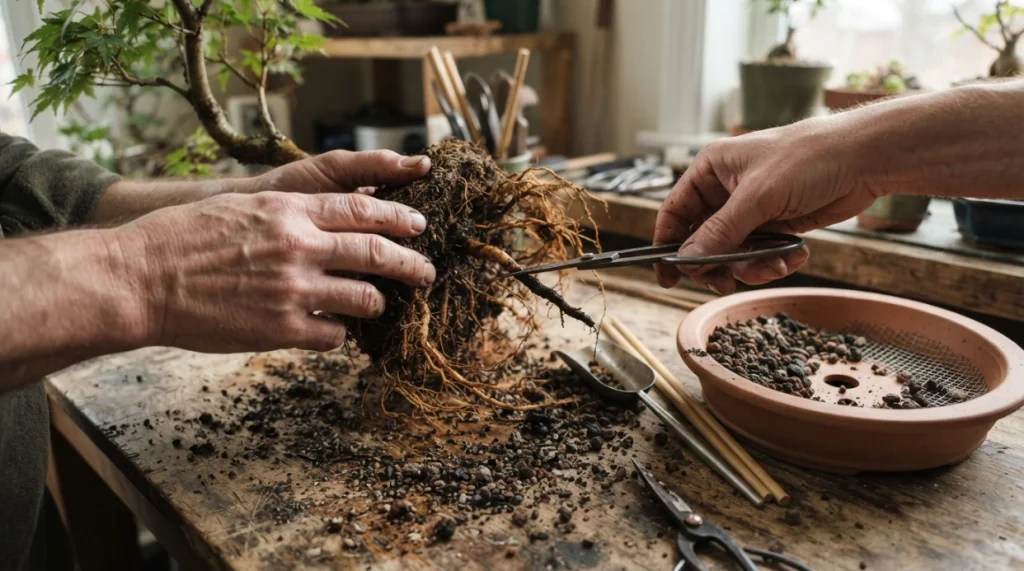
Treat bonsai root rot by correcting excess moisture and poor aeration first. Root pruning and repotting become appropriate when deterioration is serious enough that leaving the root system untouched is the greater risk.
1. Stop watering automatically
Do not keep watering because a calendar says it is watering day. Feel the substrate and judge how quickly the pot is drying.
A healthy watering routine responds to the tree, weather, season, pot size, and substrate. It does not follow a rigid daily schedule.
2. Check the drainage holes
Water should escape freely from the bottom of a bonsai pot. Blocked holes, compacted substrate, or a pot sitting in collected runoff can keep roots saturated.
- Remove debris blocking drainage holes.
- Do not leave the bonsai standing in a tray of water.
- Check whether old substrate has broken down into dense material.
- Make sure decorative outer containers are not trapping runoff.
3. Decide whether root inspection is justified
If the tree improves as the moisture problem is corrected, disturbing the roots may add unnecessary stress. If decline continues and serious root damage is likely, inspection becomes more reasonable.
I pay special attention when the substrate stays wet much longer than expected and foliage continues declining. That combination tells me to investigate the root environment rather than simply reducing water at the surface.
4. Remove only clearly dead root tissue
If you must work on the roots, use clean, sharp tools. Preserve every firm, functioning root you reasonably can.
Do not turn treatment into aggressive root pruning. A weakened bonsai needs living roots for recovery.
- Cut away roots that are clearly soft, collapsing, or dead.
- Keep healthy root tissue intact.
- Clean tools before moving between diseased and healthy plants.
- Discard badly decomposed substrate rather than mixing it into fresh material.
Pro tip: Never remove roots simply to reach a percentage or pruning target. If you cannot distinguish healthy tissue confidently, ask an experienced bonsai grower for help.
5. Repot into an aerated bonsai substrate when necessary
The replacement mix should balance drainage, moisture retention, and oxygen. Particle size and substrate choice depend on the species, pot depth, climate, and your watering habits.
A compact, waterlogged mix defeats the purpose of treatment. Fresh substrate should let excess water leave while still holding enough moisture for the tree.
6. Give the tree a low-stress recovery period
Place the bonsai where it receives the appropriate light for its species. Avoid suddenly moving a weak shade-acclimated tree into harsh midday sun.
Skip major wiring, defoliation, heavy pruning, and strong fertilizer applications while the roots are recovering. Let the tree rebuild vigor first.
Section Takeaway: Correct the root environment before reaching for drastic treatments. Preserve healthy roots, restore drainage, and reduce every avoidable source of stress.
Should You Repot a Bonsai With Root Rot Immediately?
No. A bonsai with suspected root rot does not always need an immediate emergency repot.
Repotting damages some fine roots even when done carefully. That cost may be worthwhile with severe decay, but unnecessary disturbance can weaken a tree whose main problem was simply poor watering.
Consider repotting sooner when:
- Substrate has collapsed and barely drains.
- Drainage holes cannot solve the saturation problem.
- Roots are clearly soft and deteriorating.
- The tree continues declining after moisture management improves.
- The potting medium smells sour or shows extensive decomposition.
Consider disturbing the roots less when:
- The tree is already extremely weak.
- Drainage is adequate and roots appear firm.
- The symptoms fit another problem better.
- The substrate has only been temporarily overwatered.
Normal repotting timing also depends on species. Deciduous, coniferous, and tropical bonsai do not share one universal repotting calendar.
Pro tip: An out-of-season emergency repot can sometimes be necessary, but it carries risk. Get local species-specific advice before making major root cuts.
How Do You Prevent Bonsai Root Rot From Returning?
Prevent recurring root rot by making the root zone easier to manage. Good drainage and careful watering matter more than trying to keep the soil constantly wet.
Use soil that holds both water and air
A good bonsai substrate has spaces between particles where air can enter after excess water drains. Bonsai Empire’s guide to bonsai soil and substrate emphasizes drainage and aeration as key properties.
Old organic material can break down and compact over time. That changes how long water remains around the roots.
Water according to moisture, not the clock
Check the soil before watering. For many bonsai, the goal is to water thoroughly as the surface begins drying rather than repeatedly adding small amounts to already wet soil.
- Inspect the soil surface.
- Feel slightly below the surface when needed.
- Water thoroughly when the tree needs it.
- Continue until water exits the drainage holes.
- Allow excess water to drain completely.
During cool or cloudy weather, a pot may dry much more slowly than it does during hot, windy weather. Seasonal watering changes are normal.
Never ignore the container
Drainage holes are essential in most container-grown plants. Illinois Extension notes that poorly drained containers create a greater risk of root rot and waterlogging problems.
- Keep drainage holes unobstructed.
- Do not allow standing water beneath the root ball.
- Check older soil for compaction.
- Match watering frequency to the species and substrate.
Can Fungicide Cure Bonsai Root Rot?
Fungicide is not an automatic cure for every bonsai called “root rotten.” Waterlogged roots can decline because of oxygen shortage, while some cases also involve disease organisms such as Phytophthora.
Penn State Extension explains that excess soil moisture both reduces root-zone oxygen and can encourage pathogens associated with root rots in woody plants. That distinction matters when choosing treatment.
If poor drainage caused the root damage, spraying or drenching a product without correcting the environment leaves the main problem in place. The roots still need oxygen.
A laboratory diagnosis may be necessary to identify a specific pathogen confidently. This is especially worthwhile for valuable collections or repeated losses among several trees.
Do not treat blindly
- Correct drainage first.
- Separate seriously affected plants when disease spread is suspected.
- Keep pots and tools clean.
- Follow product labels exactly if a diagnosed disease requires treatment.
- Do not use more fungicide than the label allows.
In 2026, the basic principle remains straightforward: environmental correction comes before chemical treatment unless a specific disease diagnosis indicates otherwise.
How Long Does a Bonsai Take to Recover From Root Rot?
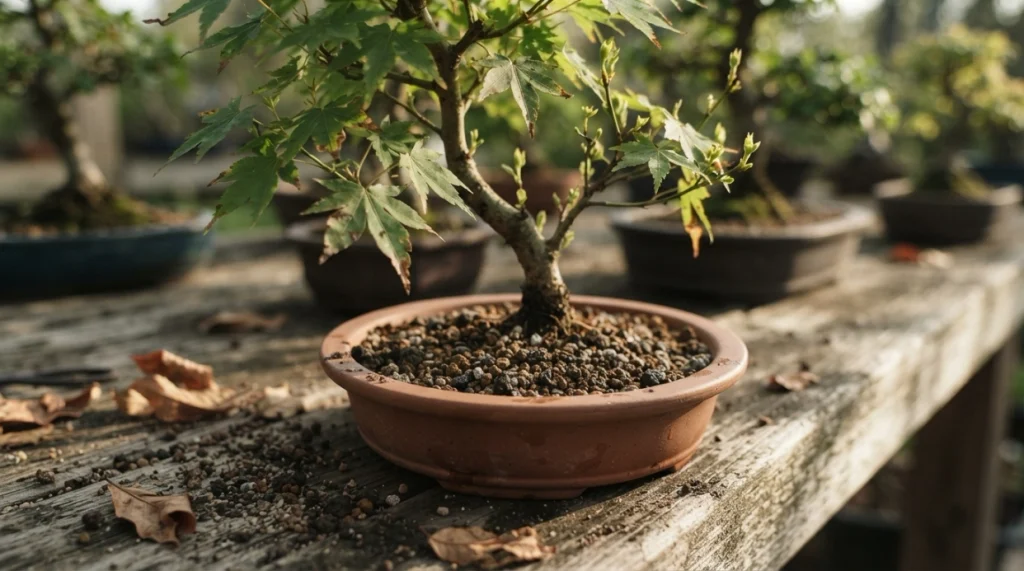
There is no fixed recovery time. Mild root stress may stabilize relatively quickly, while a bonsai with major root loss may need an entire growing period or longer to regain strong growth.
Species, temperature, season, remaining healthy roots, and foliage condition all affect the outcome. Watch the tree rather than counting days.
Signs recovery is progressing
- The decline stops spreading through the canopy.
- Leaves remain firmer and healthier.
- New buds or shoots appear during the normal growing season.
- The substrate begins drying at a more predictable rate.
- New root growth appears at the next appropriate inspection or repot.
Signs the tree is still declining
- More branches continue dying back.
- The trunk or base becomes soft.
- Foliage loss accelerates.
- The soil remains saturated despite reduced watering.
- Additional roots continue deteriorating.
Do not fertilize heavily to force recovery. Fertilizer cannot replace a functioning root system.
Once the tree resumes healthy growth, return gradually to normal care. Avoid celebrating the first new leaf with aggressive pruning or styling.
Bonsai Root Rot FAQs
Can a bonsai survive root rot?
Yes, a bonsai can survive root rot when enough healthy root tissue remains and the underlying moisture or drainage problem is corrected. Severe cases have a poorer outlook because extensive root loss reduces the tree’s ability to absorb water and nutrients.
Should I cut all brown roots off my bonsai?
No. Root color alone is not enough to decide what should be removed because some healthy roots are naturally darker than others. Focus on tissue condition, firmness, root tips, and the overall health of the root system.
Should I water a bonsai immediately after removing rotten roots?
After a necessary repot, the substrate is normally settled with water so it contacts the remaining roots evenly. After that, avoid keeping the new mix permanently saturated and resume watering according to actual moisture needs.
Can overwatering once cause bonsai root rot?
A single heavy watering usually causes less trouble than repeated saturation in poorly draining substrate. Risk rises when the root zone remains waterlogged long enough to reduce oxygen and weaken root tissue.
Does yellow foliage always mean root rot?
No. Yellow bonsai leaves can result from water stress, light changes, nutrient problems, seasonal behavior, root disturbance, pests, or disease. Check moisture, drainage, roots, species needs, and recent care changes before diagnosing root rot.
Can I save a bonsai without repotting it?
Sometimes. If roots remain functional and the main problem is excessive watering, blocked drainage, or temporary saturation, improving care may be enough. Repotting becomes more useful when the substrate or roots are seriously deteriorated.
Should I fertilize a bonsai recovering from root rot?
Avoid strong fertilizer applications while the root system is badly compromised. Wait for clear signs that the tree has stabilized and resumed active growth, then return gradually to a species-appropriate feeding schedule.
Root rot is easiest to manage when you catch the moisture problem early. Check drainage, preserve healthy roots, and give the tree time to rebuild before returning to demanding bonsai work.
If your tree is old, valuable, or continuing to decline despite these changes, take it to an experienced local bonsai grower for a hands-on root assessment.
