What Causes Root Rot in Bonsai Trees?

Quick Answer
Root rot in bonsai trees usually develops when the root zone stays wet for too long and loses oxygen. Frequent watering, compacted soil, blocked drainage, standing water, and root-rot pathogens can all contribute, which is why good bonsai watering practices matter so much.
Common causes and warning signs
- Too much moisture: Soil that remains constantly saturated can deprive fine roots of oxygen.
- Poor drainage: Dense soil, blocked holes, or standing water keeps the root zone wet longer.
- Compacted substrate: Old soil can lose pore space, reducing both drainage and airflow.
- Root pathogens: Organisms such as Pythium, Phytophthora, and Rhizoctonia may attack weakened roots under favorable conditions.
- Dark, soft roots: Brown or black mushy roots are more concerning than firm, light-colored healthy roots.
- Wet-soil wilting: A bonsai that wilts despite wet soil may have damaged roots that can no longer absorb water normally.
How to confirm the problem
- Check moisture, drainage speed, root color, root firmness, and whether the pot remains wet far longer than similar trees.
Root rot is one of the most worrying bonsai problems because the damage starts where you cannot easily see it. By the time foliage yellows or wilts, part of the root system may already be struggling.
I approach suspected root rot as a drainage and root-health problem first. Finding the reason the roots stayed unhealthy matters more than simply reducing water for a few days.
In This Guide
What Causes Root Rot in Bonsai Trees?
Bonsai root rot usually begins when roots remain in poorly aerated, overly wet conditions. Saturated substrate fills spaces that normally hold air, leaving roots with less oxygen.
Root rot describes the breakdown and death of roots, often associated with prolonged wet conditions, oxygen loss, damaged roots, and sometimes disease-causing microorganisms.
1. Watering before the soil needs it
Water itself is not the enemy. The problem appears when the root zone remains saturated long enough that healthy gas exchange cannot occur.
A bonsai growing in dense, moisture-retentive soil is especially vulnerable. Watering that tree every day simply because it is part of a routine can keep the substrate continuously wet.
I prefer checking each tree instead. Pot size, weather, species, substrate, root density, wind, and temperature can all change drying speed.
2. Poorly draining bonsai soil
Bonsai need a substrate that holds usable moisture while still allowing excess water to escape. Ordinary dense garden soil can perform badly in a shallow bonsai container because its small pores may remain water-filled.
Particle-based ingredients such as akadama, pumice, and lava rock are commonly used to improve structure. Bonsai Empire’s guide to bonsai soil and substrate explains why drainage and aeration are both essential.
3. Compacted or broken-down substrate
A soil mix that drained quickly when new may behave differently several years later. Organic components can break down, while some particles become smaller and fill important air spaces.
Water then moves through the pot more slowly. Roots remain wet longer, especially during cool or humid weather.
- Slow drainage: Water sits on the soil surface before disappearing.
- Long drying time: The pot stays wet much longer than it once did.
- Reduced aeration: Fine particles fill spaces that previously held air.
- Weak root growth: New fine roots may decline in oxygen-poor conditions.
4. Drainage holes that cannot work properly
Even good bonsai soil cannot drain freely when water has nowhere to go. Drainage holes can become obstructed by compacted substrate, roots, or poor pot placement.
A pot sitting continuously in collected water creates another problem. Water can remain available around the lower root zone far longer than intended.
5. Root-rot pathogens
Not every rotten root is caused by the same organism. Pythium, Phytophthora, Rhizoctonia, and other pathogens can be associated with root diseases in container-grown plants.
These organisms often become more damaging when environmental conditions already favor disease. Constant moisture and stressed roots can create that opportunity.
Section Takeaway: Root rot is rarely just a “too much water” problem. The important combination is prolonged moisture, reduced oxygen, poor root conditions, and sometimes disease organisms.
How Can You Tell If a Bonsai Has Root Rot?
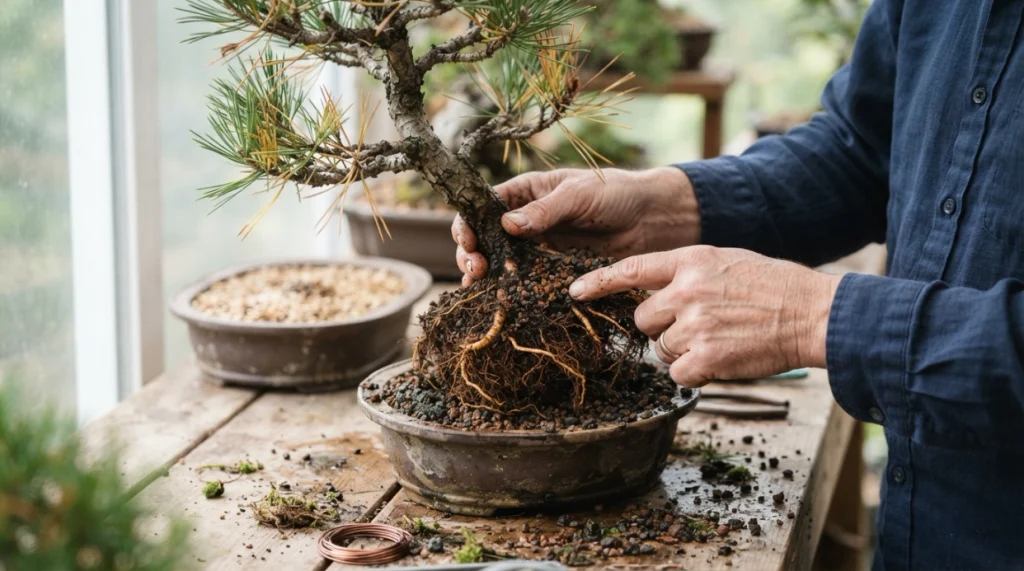
The strongest clues come from combining foliage symptoms with soil and root observations. Wilting alone does not prove root rot because drought can produce a similar appearance.
Healthy roots are generally firm. Roots affected by serious rot often become dark, soft, damaged, or easy to pull apart.
Above-ground warning signs
- Yellowing foliage: Leaves or needles lose healthy color without an obvious seasonal reason.
- Wilting in wet soil: The tree looks thirsty even though the substrate remains moist.
- Leaf drop: Stressed roots can no longer support normal foliage.
- Weak growth: New shoots may be smaller, slower, or absent.
- Branch dieback: Severe root loss can eventually affect entire branches.
The confusing symptom is wilting. Damaged roots may be surrounded by water yet remain unable to supply enough of it to the foliage.
University of Maryland Extension also identifies dark, soft roots and wilting despite moist growing media as useful root-rot warning signs in container plants. Their indoor plant diagnostic guide provides a useful comparison.
Root rot versus underwatering
| What to check | Possible root rot | Underwatering stress |
|---|---|---|
| Soil condition | Wet or slow to dry | Dry through much of the root mass |
| Root texture | May be soft or mushy | May be dry or brittle after severe drought |
| Root color | Often dark brown or black in damaged areas | Color alone may not identify drought damage |
| Wilting | Can occur while soil is wet | Usually accompanies dry substrate |
| Drainage | Often slow or restricted | Water may run rapidly through an extremely dry root ball |
Which Conditions Make Bonsai Root Rot More Likely?
Root rot risk rises when several moisture-related problems occur together. A tree in dense soil during cool weather can remain wet far longer than the same tree during a hot, windy week.
That is why fixed watering calendars cause trouble. The tree’s actual moisture use should guide watering.
Watch these combinations
- Dense soil plus frequent watering: Moisture enters faster than the pot can lose it.
- Cool temperatures plus wet soil: Evaporation and plant water use may slow.
- Large pot plus small root system: Unused substrate can remain wet for longer periods.
- Blocked drainage plus heavy rain: Water cannot leave the container efficiently.
- Weak tree plus root disturbance: Damaged roots may be less able to tolerate another stress.
- Standing water: A tray or outer container can keep the lower root area saturated.
As of 2026, I still consider drying behavior more useful than any universal rule such as “water every two days.” Two bonsai sitting beside each other can need water at different times.
Species matter too. Subtropical ficus, deciduous maples, pines, junipers, and azaleas do not respond identically to the same combination of soil, climate, and moisture.
How Do You Save a Bonsai With Root Rot?
Start by confirming that excess moisture or damaged roots are genuinely present. Do not automatically repot a stressed tree simply because a few leaves turned yellow.
If drainage is poor and substantial root damage is visible, corrective action may be necessary. The amount of intervention should match the severity of the problem.
Step 1: Stop automatic watering
Check the substrate before adding more water. You want to restore a healthier wet-dry cycle without allowing the entire root mass to become bone dry.
Step 2: Check drainage
- Make sure drainage holes are open.
- Remove standing water from trays or decorative outer pots.
- Check whether compacted soil is slowing water movement.
- Compare the pot’s drying time with its previous normal pattern.
Step 3: Inspect the roots when justified
Remove the tree carefully when the evidence points strongly toward root failure. Firm living roots should be preserved whenever possible.
Dark, mushy, collapsing roots are more concerning. Sterilize cutting tools before and after removing clearly dead or decayed root tissue.
Pro tip: Root pruning is irreversible and can severely stress an already weak bonsai. If the tree is valuable or you are unsure how much root mass can safely be removed, consult an experienced grower or local bonsai club before cutting.
Step 4: Repot into an appropriate substrate if necessary
Repotting can improve drainage when old substrate has become unsuitable. However, species and season affect how well a bonsai tolerates major root work.
For many temperate bonsai, early spring around bud movement is a common repotting period. Review species-specific timing before performing extensive work, and consult this verified bonsai repotting guide for the basic process.
Step 5: Reduce extra stress during recovery
- Avoid heavy fertilizer: Wait until the tree resumes healthy growth before pushing strong feeding.
- Avoid major styling: Delay wiring, defoliation, or structural pruning during root recovery.
- Protect damaged roots: Avoid extreme heat or drying winds immediately after necessary root work.
- Monitor moisture closely: Fresh, free-draining substrate may dry differently from the old mix.
Section Takeaway: Saving a bonsai with root rot means restoring healthy root conditions, not merely withholding water. Correct drainage, remove only clearly damaged tissue when necessary, and avoid piling new stress onto the tree.
How Can You Prevent Bonsai Root Rot?
Prevention comes down to maintaining oxygen as well as moisture around the roots. A healthy bonsai substrate should drain freely while retaining enough water for the species and climate.
Water based on need
Check the soil rather than following the calendar. A common beginner method is checking roughly 1 cm, or about 0.4 inches, below the surface and watering as it becomes slightly dry.
When watering is needed, water thoroughly. The entire root mass should receive moisture, with excess water escaping through the drainage holes.
Maintain an open substrate
Watch how quickly water enters and exits the pot. A noticeable decline in drainage can signal substrate breakdown, compaction, or an increasingly root-bound tree.
Do not assume that adding gravel beneath dense soil will solve the problem. The root zone itself needs suitable structure and pore space.
Match the soil to your conditions
- Wet climate: Favor stronger drainage and careful moisture monitoring.
- Hot, dry climate: Use a mix that retains enough water to prevent rapid dehydration.
- Indoor tropical bonsai: Account for lower airflow and different evaporation rates.
- Outdoor bonsai: Adjust watering during rain, heat, wind, and seasonal temperature changes.
I also watch individual pots after heavy rain. A pot that remains saturated noticeably longer than the rest deserves investigation before foliage symptoms appear.
Can a Bonsai Recover From Root Rot?
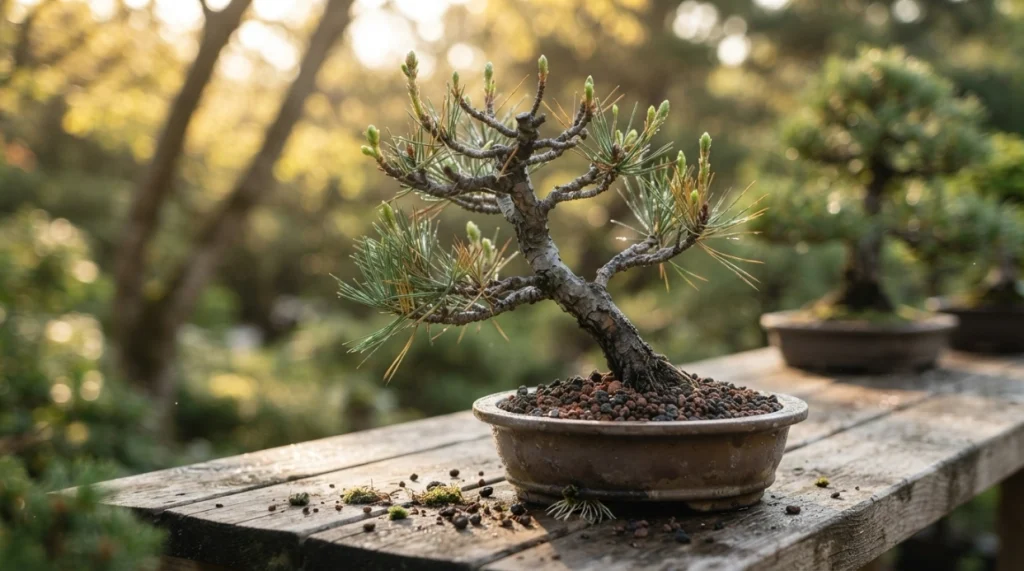
Yes, a bonsai can recover when enough healthy roots and living vascular tissue remain. Recovery becomes less likely after extensive root loss, trunk-base decay, or prolonged decline.
Early detection makes a major difference. A tree with a small area of damaged roots has more reserves than one whose entire fine-root system has collapsed.
Signs recovery is progressing
- New buds begin extending normally.
- Foliage stops declining.
- The tree regains normal water use.
- Substrate begins following a predictable drying cycle.
- New healthy roots develop over time.
Do not expect damaged foliage to become perfect again. Judge recovery mainly by stable existing growth and healthy new growth.
Patience is important here. Constantly lifting the tree, pruning more roots, changing locations, or applying multiple treatments can slow recovery rather than help it.
Frequently Asked Questions About Bonsai Root Rot
Does overwatering always cause root rot in bonsai?
No. Frequent watering is most dangerous when the substrate cannot maintain enough air around the roots.
A highly free-draining bonsai mix behaves differently from compacted organic soil, so drainage and aeration must be considered alongside watering frequency.
What do rotten bonsai roots look like?
Badly rotted roots are often dark brown or black and may feel soft, mushy, or fragile. Healthy roots are generally firmer, although exact root color varies among species and with age.
Should I immediately repot a bonsai with yellow leaves?
No. Yellow foliage can result from many stresses, including watering problems, seasonal changes, light issues, pests, or damaged roots.
Check moisture, drainage, species needs, and root condition before deciding that emergency repotting is justified.
Can I treat bonsai root rot with fungicide?
A fungicide is not a substitute for correcting saturated soil or poor drainage. Some root diseases involve pathogens, but treatment choice depends on the organism, plant species, and products legally available in your region.
Should I cut off every dark bonsai root?
No. Root color alone is not enough to decide what should be removed.
Focus on roots that are clearly dead, soft, collapsing, or badly decayed, and preserve healthy root tissue whenever possible.
How often should bonsai soil dry between waterings?
There is no universal number of days. Water use changes with species, pot size, temperature, wind, season, root density, and substrate.
Check each bonsai individually and water when its substrate reaches the appropriate level of dryness for that tree.
Can root rot spread to other bonsai trees?
Some disease-causing organisms associated with root rot can move through contaminated soil, water, pots, or tools. Keep suspicious material away from healthy trees and clean tools and reusable containers before using them elsewhere.
Final Takeaway
The most common answer to what causes root rot in bonsai trees is prolonged wet, poorly aerated root conditions. Overwatering, compacted substrate, poor drainage, standing water, and root pathogens can work alone or together.
Check the roots and drainage before making drastic changes. Catch the problem early, restore a healthier root environment, and give the bonsai time to rebuild strength.
