Bonsai Root Rot Symptoms: How to Spot and Save a Sick Tree

Quick Answer
Common bonsai root rot symptoms include persistent wilting despite wet soil, yellowing or dropping leaves, weak growth, and dark, soft roots. Healthy roots are generally firm, while badly damaged roots may feel limp or mushy and lose their outer tissue; the bonsai care resources at Bonsai Empire are also useful when separating watering problems from other causes.
Signs that deserve a closer root check
- Wet-soil wilting: The tree droops even though the root ball is still moist.
- Yellowing foliage: Leaves progressively yellow or fall while the soil remains damp.
- Weak growth: New shoots become sparse, small, or unusually slow.
- Soft roots: Damaged roots feel limp or mushy instead of firm.
- Poor drainage: Water sits on the surface or the root ball remains saturated for long periods.
Best confirmation tip
- Check several roots rather than diagnosing the tree from leaf color alone. Root texture, drainage, soil moisture, smell, and the tree’s overall condition give a much clearer picture.
Bonsai root rot can be confusing because its early symptoms look like several other care problems. A tree may wilt, turn yellow, or lose leaves even though lack of water isn’t the real problem.
I prefer to diagnose the whole root environment before reaching for scissors or treatments. This guide explains what root rot looks like, what causes it, how to confirm it, and what you can safely do next in 2026.
In This Guide
What Are the First Bonsai Root Rot Symptoms?
The first visible signs are usually declining vigor, yellow foliage, wilting, or leaf loss. These symptoms become more suspicious when the root ball stays wet for unusually long periods.
Bonsai root rot is the decline and death of roots associated with prolonged unhealthy root conditions, often involving excess moisture, poor oxygen availability, damaged roots, and sometimes disease-causing organisms.
Above-ground warning signs
A root problem often appears first in the canopy because damaged roots cannot support normal water and nutrient movement. Don’t assume every yellow leaf means rot, though.
- Progressive yellowing: Several leaves change color rather than one old leaf aging naturally.
- Unexpected leaf drop: Foliage falls while the soil remains consistently moist.
- Wilting in wet soil: The tree looks thirsty even though water is available around damaged roots.
- Slow growth: Buds, shoots, or leaves develop more slowly than expected during active growth.
- Branch decline: Advanced root damage may eventually contribute to twig or branch dieback.
The wet-soil wilt is especially important. Adding more water because a tree looks wilted can make oxygen-starved root conditions worse.
What unhealthy bonsai roots may look like
Color helps, but texture tells me more. Healthy root colors differ among species, so brown roots are not automatically rotten.
- Firm roots: Usually a better sign, even when naturally tan or brown.
- Soft or mushy roots: More concerning, particularly when combined with declining foliage.
- Blackened sections: Can indicate dead tissue, especially when those sections collapse easily.
- Sloughing tissue: Severely damaged roots may lose their outer layer when handled.
- Unpleasant odor: Sour or decaying smells can accompany badly deteriorated, waterlogged root systems.
The American Bonsai Society is also a useful starting point for finding bonsai education and local clubs when a valuable specimen needs experienced, hands-on assessment.
How Can You Confirm Root Rot Without Guessing?
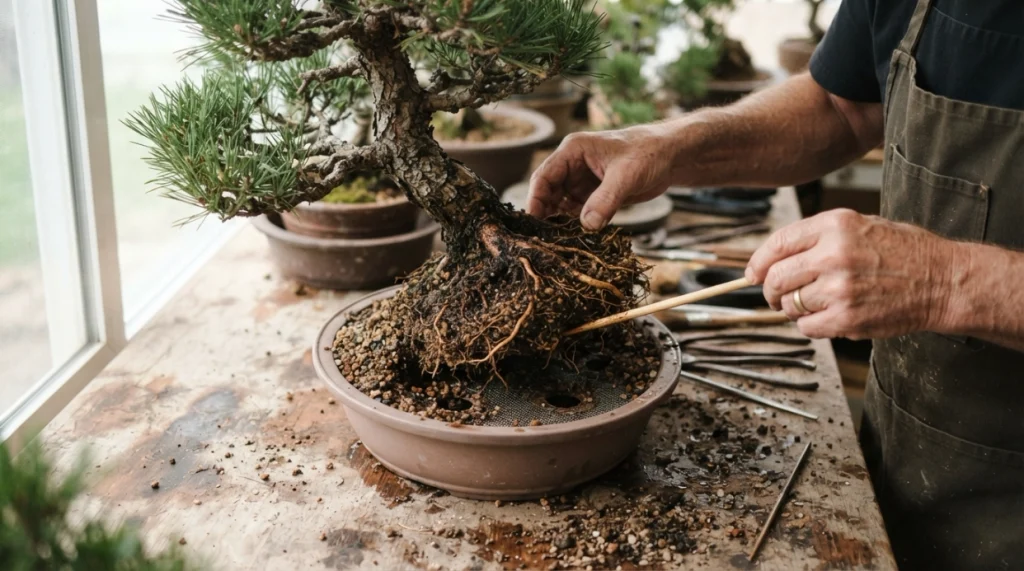
You confirm suspected root rot by combining several clues instead of relying on one symptom. Start with moisture and drainage before disturbing the root system.
Check the soil first
Feel below the surface rather than judging only by appearance. The top layer can look dry while the center of a compact root ball remains saturated.
- Check whether drainage holes are open.
- Notice how quickly water exits after watering.
- Check whether the soil stays soaked for days.
- Look for dense, broken-down substrate with little visible air space.
- Make sure the pot isn’t standing in collected drainage water.
If those conditions look poor and the foliage is declining, a root inspection becomes more useful. Handle the root mass gently because stressed fine roots are easy to damage.
| Observation | Root Rot More Likely | Possible Lookalike |
|---|---|---|
| Tree wilts | Soil remains wet and roots are soft | Underwatering if root ball is dry |
| Leaves turn yellow | Yellowing increases with persistent wetness | Old foliage, low light, pests, or nutrient stress |
| Roots look brown | Roots are also limp, mushy, or deteriorating | Naturally darker healthy roots |
| Growth slows | Root health and drainage are visibly poor | Dormancy, recent repotting, or insufficient light |
A scratch test on a small branch or trunk area can tell you whether living green tissue remains beneath the bark. It doesn’t diagnose root rot, but it can help assess whether a severely stressed tree is still alive.
What Causes Root Rot in Bonsai Trees?
Root rot usually develops when roots spend too much time in an unhealthy, oxygen-poor environment. Frequent watering is only one part of that equation.
Watering too frequently
Bonsai should usually be watered according to the tree and soil condition, not a fixed calendar. Watering every day simply because the clock says so can keep a slow-drying substrate constantly saturated.
Temperature, sun, wind, species, pot size, and substrate all change drying speed. Check the root zone before deciding whether another watering is needed.
Poorly draining or compacted soil
Particle structure matters in a shallow bonsai container. Air-filled spaces between substrate particles allow roots to receive oxygen while excess water drains away.
Old organic soil can break down and become compacted. A dense nursery root ball may also remain wet long after the outer substrate appears ready for water.
- Akadama: A fired clay commonly used for moisture retention and root development.
- Pumice: A porous volcanic material that improves aeration and drainage.
- Lava rock: A durable aggregate that helps maintain open structure.
A 1:1:1 akadama, pumice, and lava-rock blend is a common starting framework, not a universal prescription. Climate, species, watering habits, and availability should guide the final mix.
Blocked drainage and unsuitable containers
A beautiful pot still needs functional drainage. Blocked holes or a container sitting continuously in water can keep the lower root zone saturated.
Pathogens associated with root disease also benefit from wet conditions in many woody plants. This is why improving drainage is more important than simply reducing each watering to a small splash.
Can a Bonsai Recover From Root Rot?
Yes, some bonsai can recover when enough living roots and healthy vascular tissue remain. Recovery becomes less certain as root loss, branch dieback, and general weakness increase.
Early cases have the best outlook
A tree that still has firm roots, viable buds, and living tissue has more resources for recovery. Correcting drainage before severe root death occurs can make a major difference.
I also avoid judging recovery after only a few days. A stressed tree may need time before stable buds or new growth show that the root system is functioning again.
Species and season matter
A tropical ficus behaves differently from a temperate Japanese maple or juniper. Repotting timing, light requirements, dormancy, and tolerance of root work all depend on the species.
The U.S. National Arboretum is a useful reference for understanding bonsai as living woody plants rather than decorative indoor objects.
Temperate species generally need their normal outdoor seasonal cycle. Tropical species often require warmer conditions and protection from cold.
Section Takeaway: Recovery depends on how much healthy root and living tree tissue remains. Correct the cause first, then give the tree stable conditions instead of repeatedly changing its care.
How Do You Treat Bonsai Root Rot Safely?
Treatment starts by removing the environmental cause and deciding whether immediate root work is justified. Don’t automatically bare-root and prune every bonsai showing yellow leaves.
1. Stop automatic watering
Check moisture before watering again. The goal isn’t to make a moisture-loving tree bone dry; it’s to restore a healthy balance of moisture and oxygen.
2. Improve drainage and growing conditions
- Clear blocked drainage holes.
- Empty standing water from trays or decorative outer containers.
- Give the species appropriate light and airflow.
- Avoid unnecessary fertilizer while a severely stressed root system is recovering.
Fertilizer cannot replace functioning roots. Heavy feeding may add another stress when a tree is already struggling.
3. Inspect roots if the evidence is strong
Remove the tree carefully when a root inspection is genuinely needed. Compare multiple roots rather than cutting everything that looks dark.
Retain firm living roots whenever possible. Dead, collapsing, or badly deteriorated tissue may need removal during appropriate repotting.
Pro tip: Root pruning is irreversible. If the bonsai is valuable, severely weakened, or unfamiliar to you, ask an experienced grower or local bonsai club for help before removing substantial roots.
4. Repot into an appropriate substrate when necessary
For many temperate bonsai, planned repotting is safest around the period just before strong spring growth. Tropical species and true emergencies may require different timing.
Choose a substrate that balances drainage, aeration, and water retention for your species and climate. Secure the tree so newly developing roots aren’t repeatedly disturbed by movement.
5. Use disease treatments only when justified
Not every damaged root system has the same pathogen. Fungicides also differ in what organisms they control, so a random treatment isn’t a substitute for diagnosis and better drainage.
When a serious pathogen is suspected, local horticultural or plant-diagnostic services can provide more specific guidance. This matters most when several valuable plants show similar symptoms.
Section Takeaway: Treat the root environment before chasing products. Better drainage, correct watering, careful diagnosis, and species-appropriate repotting are the foundation of recovery.
How Can You Prevent Root Rot From Coming Back?
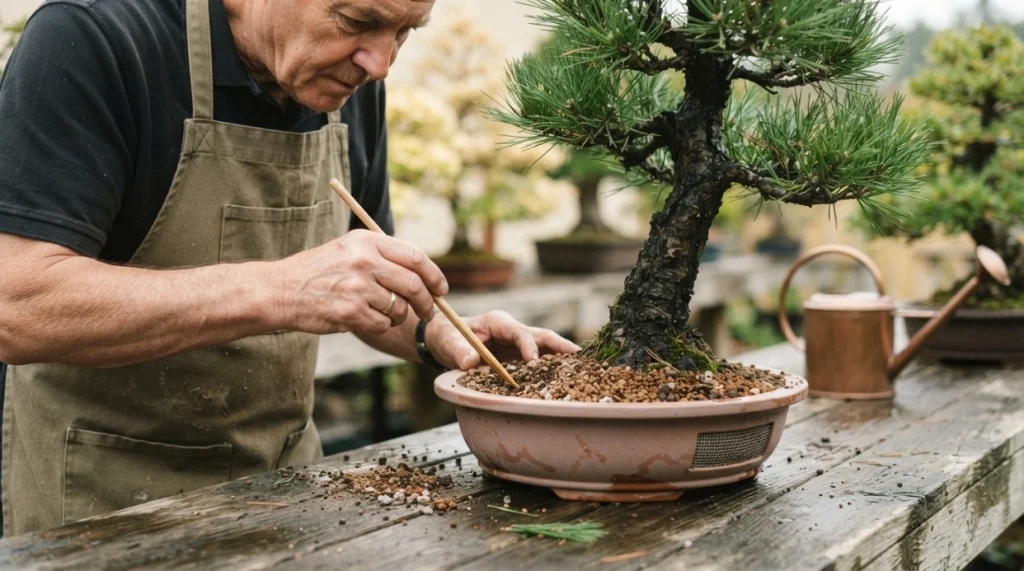
Prevention is mostly about keeping roots moist enough without keeping them chronically saturated. Good bonsai culture makes that balance much easier.
Water the tree, not the calendar
Check moisture daily when conditions are hot or windy, but don’t assume checking means watering. The same tree may need water much more often in summer than during cool, slow-growth periods.
- Observe the substrate: Learn how its color and texture change as it dries.
- Check below the surface: Don’t rely only on the top few millimeters.
- Water thoroughly when needed: Wet the root mass evenly and let excess water escape.
- Recheck after weather changes: Rain, heat, wind, shade, and humidity can alter drying time quickly.
Maintain the root environment
Repot before badly degraded substrate becomes a permanent drainage problem. Repotting frequency varies widely with species, tree age, pot size, root growth, and substrate.
Make sure drainage screens and holes stay functional. Avoid allowing a bonsai pot to sit in stagnant water unless a particular horticultural technique specifically calls for different moisture management.
Watch trends instead of isolated leaves
One yellow leaf rarely tells the whole story. A pattern of yellowing, prolonged wet soil, weak growth, and deteriorating roots is much more meaningful.
I use the same approach whenever a tree begins declining: moisture, drainage, light, season, pests, and roots. Checking those factors in order prevents a lot of unnecessary emergency repotting.
Frequently Asked Questions
What do rotten bonsai roots look like?
Badly rotted roots are often dark, soft, limp, or mushy rather than firm. Severe damage may cause the outer root tissue to slip away, but root color alone isn’t enough because healthy root colors vary among species.
Can overwatering cause bonsai root rot?
Consistently wet conditions can contribute to root decline by reducing oxygen around the roots and favoring some disease organisms. The real risk depends on watering frequency, drainage, substrate structure, temperature, and the tree’s water use.
Can a bonsai have root rot even if the leaves are still green?
Yes. Root problems can develop below the soil before severe canopy symptoms appear, especially when drainage has been poor for some time. Watch for slowing growth, prolonged soil wetness, and declining root quality.
Should I cut off every brown bonsai root?
No. Some healthy roots are naturally tan or brown, depending on the species and age. Judge roots by firmness and condition, and remove living tissue only when you’re confident root pruning is appropriate.
Should I repot a bonsai immediately if I suspect root rot?
Not always. Mild watering or drainage problems may be corrected without emergency root work, while severe deterioration can require intervention. Species, season, root condition, and the seriousness of the problem should guide the decision.
Should I use fungicide for bonsai root rot?
Don’t assume fungicide is automatically necessary. Several pathogens and non-disease problems can produce similar symptoms, and different products target different organisms. Fix drainage first and seek a proper diagnosis when disease is strongly suspected.
How long does a bonsai take to recover from root damage?
There is no fixed recovery period. Species, season, remaining healthy roots, environmental conditions, and the severity of damage all matter. Stable buds and new growth are better indicators of recovery than a calendar deadline.
What Should You Do When You Notice Bonsai Root Rot Symptoms?
Start by checking moisture, drainage, root firmness, and the overall pattern of decline. Don’t diagnose root rot from a single yellow leaf or dark root.
If several warning signs point toward root failure, correct the wet conditions and inspect the root system carefully. Use conservative root pruning and species-appropriate repotting rather than aggressive treatment based on guesswork.
A bonsai’s small pot leaves little room for watering mistakes, but it also makes the root environment easier to observe. Learn how quickly your substrate dries, and you’ll catch many root problems before they become severe.
