Black Roots on Bonsai: What Do They Mean?

Quick Answer
Black roots on bonsai do not automatically mean root rot. Some older or naturally dark roots can be healthy, while soft, limp, mushy, foul-smelling, or easily stripped roots are more concerning. The safest approach is to judge color together with firmness, smell, drainage, fine-root condition, and the health of the foliage. Penn State’s root-rot guidance also notes that some healthy plants naturally have dark-colored roots.
Signs to check before assuming root rot
- Root firmness: Healthy roots should have structure instead of collapsing when gently handled.
- Root smell: A strong rotten or sour odor makes active decay more likely.
- Fine roots: Look for intact feeder roots and fresh growing tips rather than judging only the darkest woody roots.
- Soil condition: Constantly saturated or compacted substrate raises concern because roots need oxygen as well as water.
- Tree condition: Yellowing, wilting, weak growth, leaf loss, or branch dieback make unhealthy roots more significant.
Best first move
- Check moisture and drainage first. Do not perform an emergency root pruning simply because several roots look black.
Seeing black roots during a bonsai repot can be alarming. I treat the color as a clue, though, rather than a diagnosis.
This guide explains what black roots on bonsai can mean, how healthy dark roots differ from rotting roots, when to repot, and what to do when decay is genuinely present.
In This Guide
What Do Black Roots on Bonsai Actually Mean?
A black bonsai root may be healthy, aging, stained by substrate, damaged, or dead. Color alone cannot tell you which situation you have.
Root rot is the deterioration and death of root tissue caused by damaging root-zone conditions, disease organisms, or a combination of both. In bonsai, prolonged saturation and poor aeration can create conditions where roots decline quickly.
Fresh feeder roots often look lighter than older structural roots. Older roots can develop darker outer tissue while remaining firm and functional inside.
I therefore avoid using a simple “white is healthy, black is dead” rule. Bonsai roots vary by species, age, substrate, moisture, and the section of the root system being examined.
Black color matters more when other symptoms appear
Dark roots become more concerning when the tree is also declining above the soil. Look at the entire pattern rather than one root.
- Wilting in wet soil: Damaged roots may no longer move enough water into the canopy.
- Yellowing foliage: Root damage can interfere with normal water and nutrient uptake.
- Weak growth: New shoots may stay short or fail to develop normally.
- Branch dieback: Advanced root loss can eventually affect larger sections of the tree.
- Poor anchoring: Severe loss of roots may leave a tree unusually loose in its pot.
A healthy-looking tree with several dark, firm roots presents a different situation from a weakening tree sitting in saturated soil with widespread soft roots.
How Can You Tell Healthy Dark Roots From Root Rot?
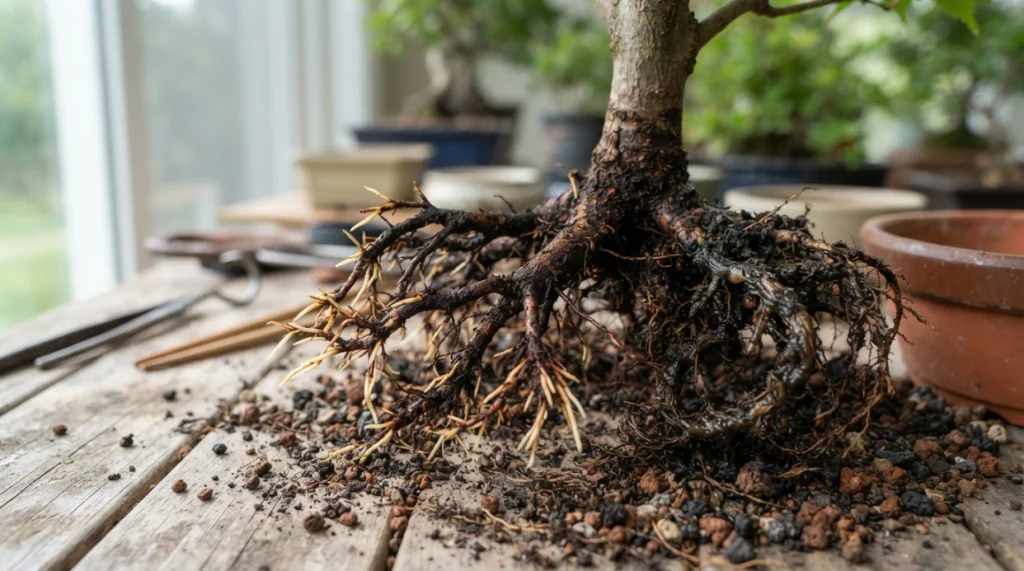
Firmness is usually more useful than color. Healthy roots resist gentle pressure, while badly decayed roots may feel limp, mushy, hollow, or fragile.
The University of Maryland Extension describes several root-rot diseases as producing brown-to-black roots that become soft or mushy. That combination is much more meaningful than dark coloration by itself.
| What to Check | More Consistent With Healthy Roots | More Concerning for Root Decline |
|---|---|---|
| Color | Light roots mixed with tan, brown, or naturally darker mature roots | Widespread darkening combined with tissue breakdown |
| Texture | Firm and intact | Soft, mushy, limp, or collapsing |
| Outer tissue | Stays attached during gentle handling | Slips away easily and may expose a thin inner core |
| Smell | Normal earthy substrate smell | Strong sour, stagnant, or rotting odor |
| Fine roots | Plenty of intact fine feeder roots | Fine roots disappearing or decomposing |
| Substrate | Drains freely and changes moisture between waterings | Remains saturated, dense, or poorly aerated |
Use the gentle pull test carefully
If a suspicious root is already exposed during a properly timed repot, gently examine its surface. Dead or severely rotted outer tissue may separate much more easily than healthy tissue.
Don’t keep pulling roots apart just to investigate. Fine feeder roots are valuable, and unnecessary handling can weaken an otherwise healthy tree.
Pro tip: Root cutting is irreversible. If you’re working with an old, collected, expensive, or already weak bonsai, get hands-on guidance before removing questionable roots.
Why Do Bonsai Roots Turn Black?
Bonsai roots can darken for several reasons. The most important question is whether the tissue is still functioning.
1. Normal aging and natural root color
Older woody roots are not expected to look like fresh white root tips forever. Their outer surfaces can become brown or dark while the root remains firm.
Substrate can also stain roots. Akadama fines, organic components, algae, minerals, and decomposed material can change the appearance of the root surface.
2. Soil stays wet for too long
Roots need both moisture and oxygen. When the air spaces between soil particles remain water-filled for long periods, root function can suffer.
- Watering again before the substrate needs it
- Using dense, broken-down organic soil
- Blocked drainage holes
- A pot sitting in standing water
- A weak tree using water slowly
- Cool weather reducing water use
This is why I don’t water every bonsai on the same calendar. I check the substrate and the tree first.
3. Root-rot organisms
Root diseases can involve fungi and fungus-like organisms such as Phytophthora and Pythium. Wet root environments can favor several of these problems.
Visual inspection cannot reliably tell you which organism is present. A laboratory diagnosis may be necessary when identifying a specific pathogen matters.
4. Previous root damage
Roots can die after freezing, severe drying, excessive fertilizer salts, rough repotting, or aggressive pruning. Dead tissue may later darken and decompose.
That means blackened roots don’t always prove that overwatering caused the original damage. Recent care history matters.
Should You Repot a Bonsai With Black Roots?
No, not automatically. Repot when the root system or substrate gives you a strong reason and the timing is appropriate for the species.
A healthy tree with good drainage should not be disturbed merely because an exposed mature root looks dark. Unnecessary repotting creates its own stress.
Repotting becomes more reasonable when:
- The substrate stays saturated much longer than it should.
- Drainage has deteriorated because the soil has compacted.
- A large portion of the root system is soft or decomposing.
- Healthy fine roots are disappearing.
- The tree is severely root-bound and drainage is affected.
- The normal species-specific repotting window has arrived.
For many temperate bonsai, the normal repotting period falls around early spring as dormant trees approach active growth. Tropical species, conifers, and trees grown in different climates need species-specific timing.
The Bonsai Empire repotting guide recommends checking the root system instead of repotting merely by habit. It also emphasizes early-spring timing for many commonly grown trees.
How much root should you remove?
Remove only tissue that needs to be removed and avoid turning a health problem into a drastic styling session. A weakened bonsai needs enough functional roots left to recover.
As a general reference, Bonsai Empire advises against removing more than about 30% of the total root mass in its standard repotting procedure. Species such as pines and stressed trees can require more conservative handling.
Pro tip: Don’t combine severe root pruning, heavy branch pruning, major wiring, and other stressful work on a declining bonsai unless an experienced grower has assessed the situation.
How Do You Treat Black or Rotting Bonsai Roots?
Treatment should correct the cause, not merely remove dark roots. Start with moisture, drainage, and root condition before thinking about chemicals.
- Stop watering by schedule. Check the substrate before adding more water.
- Inspect drainage. Make sure drainage holes are open and water can escape freely.
- Assess the tree. Check foliage, recent growth, soil moisture, and recent care changes.
- Inspect roots only when justified. Avoid repeatedly removing a weak tree from its pot.
- Remove clearly dead tissue carefully. During an appropriate repot, trim roots that are decomposed rather than firm and functional.
- Use clean tools. Clean cutting tools before moving between diseased and healthy plant material.
- Replace unsuitable substrate. Choose a mix that balances drainage, aeration, and moisture retention for your species and climate.
- Stabilize the tree. A freshly repotted bonsai should not rock in its pot because movement can damage new roots.
Should you use fungicide?
Don’t assume fungicide is the first solution. Fungicides target particular disease problems and won’t correct compacted soil, blocked drainage, or chronically poor watering.
When a valuable tree keeps declining despite corrected care, professional diagnosis can be worthwhile. Identifying the actual cause prevents repeated treatments that add stress without solving the problem.
If you’re uncertain about irreversible root work, the American Bonsai Society club directory can help growers in the United States locate bonsai communities where experienced members may provide hands-on guidance.
How Can You Prevent Root Problems From Returning?
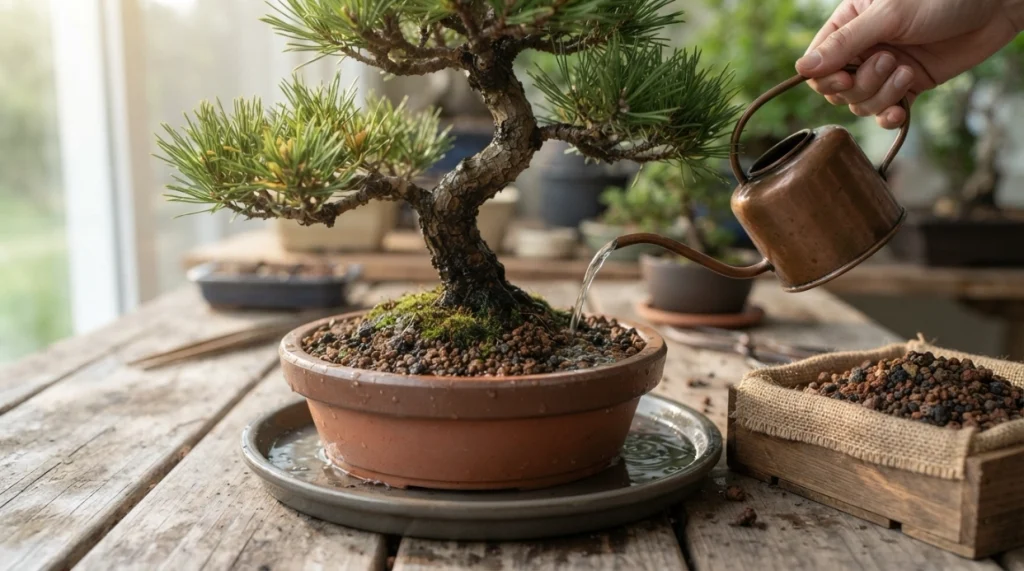
Healthy bonsai roots depend on balance. The goal is neither permanently wet soil nor a root ball that repeatedly dries to the point of stress.
Use a structured bonsai substrate
Good bonsai substrate should provide both drainage and useful moisture retention. Particle structure helps preserve air spaces around fine roots.
Common components include akadama, pumice, lava rock, bark, and other species-appropriate materials. The ideal proportions change with climate, tree type, pot depth, and watering habits.
The Bonsai Empire soil guide explains how drainage, aeration, and water retention interact in common bonsai substrates.
Water the tree, not the calendar
A tree may use much more water during hot, sunny, windy growth than during a cool, cloudy period. Check moisture instead of assuming yesterday’s watering interval still applies.
- Hot active growth: Inspect moisture more frequently.
- Cool conditions: Expect the substrate to dry more slowly.
- Small pots: They can change moisture rapidly.
- Dense organic soil: It may stay wet much longer than a coarse mineral mix.
- Weak trees: Reduced foliage and root activity can lower water use.
Watch drainage during every watering
Water should move through the root ball instead of pooling indefinitely on top. A sudden change in drainage is worth investigating.
Slow drainage can come from compacted substrate, dense roots, clogged holes, or soil particles breaking down. Catching that change early is much easier than rescuing a severely damaged root system.
Section Takeaway: Preventing black, rotting bonsai roots comes down to maintaining oxygen, drainage, appropriate moisture, and healthy substrate structure. Root color is useful, but root function matters more.
Frequently Asked Questions About Black Roots on Bonsai
Are black bonsai roots always dead?
No. Older roots and roots from some plants can naturally appear brown or dark while remaining firm and functional. Check firmness, fine-root condition, smell, soil moisture, and overall tree health before deciding that a dark root is dead.
What color should healthy bonsai roots be?
Healthy root color varies by species and age. Fresh active root tips are often light-colored, while mature roots may be tan, brown, or darker, so texture and tissue integrity are more reliable than color alone.
What do rotting bonsai roots feel like?
Advanced root rot commonly produces soft, limp, mushy, or collapsing tissue. The outer root tissue may separate easily, and severely decayed material can develop an unpleasant odor.
Can overwatering make bonsai roots black?
Repeatedly saturated substrate can deprive roots of adequate aeration and contribute to root decline. Wet conditions can also favor some root-rot organisms, so watering and drainage should be checked together.
Can a bonsai recover from root rot?
A bonsai can recover when enough functional root and living tissue remain and the underlying problem is corrected. Recovery becomes less likely when decay has destroyed most fine roots or progressed into major roots and the trunk base.
Should I cut off every black root?
No. Cutting solely by color risks removing healthy mature roots. Remove roots only when they are clearly dead or decayed, and perform root pruning at an appropriate time for the species whenever circumstances allow.
Should I repot immediately if my bonsai has black roots?
Not necessarily. Check drainage, moisture, root firmness, foliage, season, and species first. Emergency repotting can add major stress, especially when a tree is already weak.
If you’ve found black roots on your bonsai, start with the simplest question: are those roots firm and functional, or are they breaking down? That distinction will guide your next move far better than color alone.
Inspect carefully, fix drainage and watering problems early, and keep aggressive root work for situations where it is genuinely needed. That approach gives the tree the best chance to rebuild a healthy root system.
