
Bonsai Canker: Symptoms, Causes, and Treatment
Quick Answer
Bonsai canker is a damaged or dead area of bark and underlying wood, often linked to fungal or bacterial infection. Typical signs include sunken or dark bark, branch dieback, cracking, discolored wood, and sometimes sap or fungal structures. According to University of Maryland Extension canker guidance, established cankers can girdle branches and kill growth beyond the infected area.
Signs to check first
- Sunken bark: Look for depressed, rough, or unusually dark areas on twigs, branches, or the trunk.
- Branch dieback: Leaves and shoots beyond a canker may wilt, discolor, or die.
- Bark cracking: Diseased bark may split, loosen, or separate from healthy tissue.
- Discolored wood: Wood beneath suspicious bark may appear brown, reddish, or blackened.
- Ooze or spores: Some bacterial cankers ooze, while certain fungal cankers develop tiny fruiting bodies.
What to do
- Isolate the bonsai, identify the damaged area, prune infected branches when appropriate, sanitize tools, and correct stresses such as drought, poor drainage, or excessive moisture.
Finding a dark, sunken patch on a bonsai trunk can be alarming, especially when nearby shoots start dying. Canker deserves attention, but not every bark mark means your tree has an infectious disease.
I use a simple rule when troubleshooting suspicious bark: identify the pattern before reaching for a chemical. This guide explains what bonsai canker looks like, what causes it, how treatment works, and when a tree may still recover.
In This Guide
What Is Bonsai Canker?
A canker is a localized area where bark and the living tissue beneath it have died. It may appear on a twig, branch, trunk, or occasionally near the base of a bonsai.
Canker describes a symptom rather than one single disease. Fungi, bacteria, environmental injury, and other stresses can produce canker-like damage.
- Annual cankers may stop expanding after the tree walls off the damaged tissue.
- Perennial cankers can expand over several seasons as the tree and pathogen repeatedly interact.
- Diffuse cankers may spread rapidly through bark and woody tissue.
The danger comes from girdling. A canker that expands around most or all of a branch can interrupt movement through the living tissues and cause everything beyond it to die.
Bonsai need special attention because their important branches are small. Losing one branch can change the entire design of a mature tree.
What Are the Symptoms of Canker on a Bonsai?
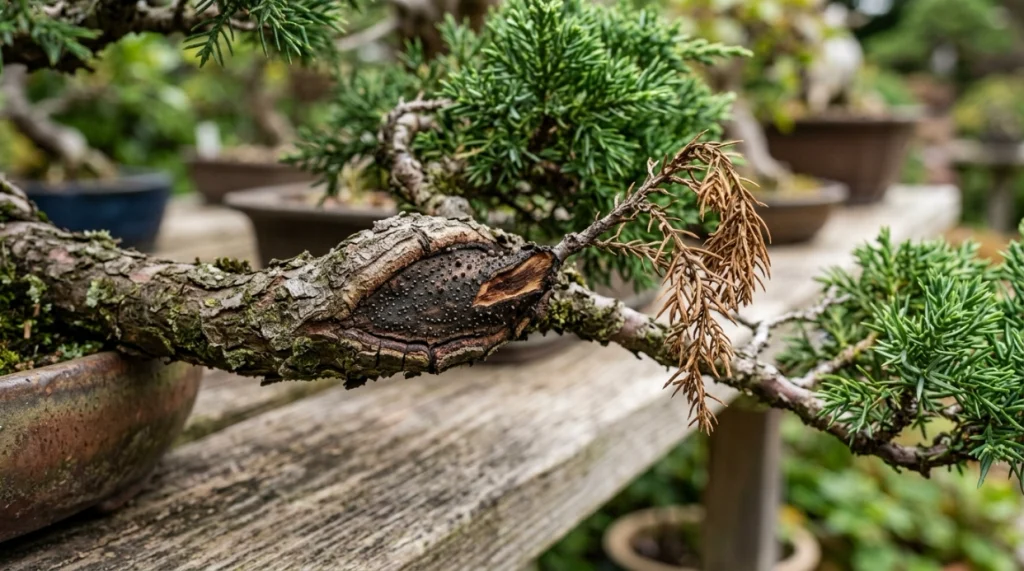
Bonsai canker often starts as an abnormal patch of bark rather than dramatic whole-tree decline. Watch for a combination of bark changes and dieback above the suspicious area.
Early signs of canker
- Darkened bark that contrasts with surrounding healthy tissue.
- Sunken areas where bark looks slightly depressed.
- Rough or cracked bark developing around a wound or branch junction.
- Localized swelling or callus growth surrounding dead tissue.
- Small dead twigs above the affected section.
Signs of a more advanced problem
As damage expands, the tree may no longer support foliage beyond the canker. Leaves can wilt, brown, or remain attached after the branch dies.
- Progressive twig or branch dieback
- Loose or peeling dead bark
- Brown or black discoloration beneath the bark
- Gummy, resinous, or watery ooze in some diseases
- Tiny dark fungal fruiting structures in some fungal cankers
- Target-like rings or repeated callus ridges in some perennial cankers
The University of Wisconsin Plant Disease Diagnostics Clinic has also published a bonsai disease reference that includes canker diseases and stresses the importance of sanitation, proper care, and removal of diseased branches.
Canker vs. other bonsai bark problems
| Problem | Typical clues | What happens next |
|---|---|---|
| Canker disease | Sunken, dark, cracked, or dead bark with possible wood discoloration | May enlarge and cause dieback beyond the lesion |
| Normal pruning scar | Clean wound with firm tissue and organized callus forming at the edges | Usually closes gradually without spreading dieback |
| Cold or sun injury | Bark injury often follows a weather event or abrupt exposure change | Damage may remain localized unless secondary infection enters |
| Root stress | General wilting, weak growth, poor drainage, or root deterioration without a clear bark lesion | Decline may affect several branches rather than one area beyond a canker |
Section Takeaway: Canker usually combines localized bark death with decline beyond the damaged area. One discolored spot alone is not enough for a confident diagnosis.
What Causes Canker in Bonsai Trees?
Cankers can have infectious or noninfectious causes. Accurate identification matters because treatment for one type may do little for another.
Fungal cankers
Several fungal groups can cause cankers on woody plants. Examples include Botryosphaeria, Cytospora, Nectria, Phomopsis, and related pathogens.
Penn State Extension’s Botryosphaeria guidance notes that these fungi can enter through wounds or natural openings and commonly become more damaging on stressed plants.
- Pruning wounds
- Broken twigs
- Insect damage
- Drought stress
- Cold injury
- General loss of vigor
Bacterial cankers
Bacterial diseases can also produce blackened or sunken lesions, dieback, and sometimes ooze. Wet conditions and wounds often help bacteria enter susceptible tissue.
The University of Illinois Extension bacterial canker guidance recommends removing infected shoots, pruning during dry conditions, sanitizing tools, and avoiding excessive nitrogen that produces vulnerable succulent growth.
Noninfectious injury
Not every canker-like patch contains a pathogen. Frost injury, sunscald, mechanical damage, poor pruning, severe dehydration, or other environmental stress can kill a localized area of bark.
Dead tissue can later become colonized by fungi. That makes diagnosis from appearance alone difficult.
How Do You Treat Canker on a Bonsai?
Treatment starts by removing or containing infected tissue and correcting whatever weakened the tree. There is no universal spray that cures every bonsai canker.
1. Separate the affected bonsai
Move the tree away from healthy bonsai while you investigate. This is especially sensible when several plants share benches, watering equipment, or tools.
2. Inspect the entire tree
- Check every branch for additional lesions.
- Look for dieback above suspicious bark.
- Inspect pruning wounds and branch junctions.
- Check soil moisture and drainage.
- Look for insect damage or recent physical injuries.
Photograph the lesion before cutting anything. Comparing photos over several days can reveal whether the margin is expanding.
3. Prune infected branches when appropriate
If a canker is confined to a removable branch, pruning back into healthy tissue is often the most practical control. The exact pruning distance depends on the disease, species, and location of the lesion.
Do not assume one universal “two-inch” or “twelve-inch” margin applies to every pathogen. Some specific bacterial diseases require wider removal than ordinary fungal dieback.
Pro tip: Cutting live bonsai wood is irreversible and can permanently alter the design. For a valuable tree, trunk canker, or uncertain diagnosis, consult an experienced grower, bonsai club, arborist, or plant diagnostic laboratory before making a major cut.
4. Sanitize your tools
Clean tools after cutting diseased tissue and before touching healthy branches. Seventy-percent alcohol is commonly recommended by university plant-disease programs for tool sanitation.
Avoid repeatedly dipping contaminated tools into one shared container. Follow the disinfectant label and protect carbon-steel bonsai tools from corrosion afterward.
5. Reduce environmental stress
A stressed tree usually has fewer resources available to contain invading organisms. Correct care without suddenly pushing the bonsai into excessive growth.
- Water according to soil moisture rather than a rigid schedule.
- Keep drainage holes open.
- Protect severely stressed trees from extreme exposure.
- Provide species-appropriate sunlight.
- Avoid heavy nitrogen feeding during active disease.
- Improve airflow around crowded foliage.
- Avoid unnecessary wetting of damaged bark.
6. Use pesticides only after identifying the problem
Fungicides do not repair tissue already killed by a canker. Some products may help suppress particular pathogens, but other canker diseases have no useful chemical treatment.
Never apply a fungicide simply because the bark looks dark. Confirm that the product label covers the target plant and disease, and follow all label directions.
UC Integrated Pest Management also emphasizes sanitation, removal of infected branches, and reducing plant stress when managing Botryosphaeria canker.
Section Takeaway: Remove manageable infected tissue, sanitize tools, improve growing conditions, and treat only a correctly identified pathogen. Chemicals cannot restore bark and wood that are already dead.
Can a Bonsai Recover From Canker?
Yes, a bonsai can recover when the canker is limited and enough healthy vascular tissue remains. Recovery becomes less likely when the disease has girdled the trunk or reached several major structural branches.
Better signs
- The canker is limited to one small branch.
- New growth remains vigorous elsewhere.
- The lesion stops expanding.
- Healthy callus develops around the damaged area.
- No new cankers appear after infected tissue is removed.
More serious signs
- The main trunk is girdled or nearly girdled.
- Dieback continues after affected branches are removed.
- Several independent cankers appear.
- The trunk base becomes soft, blackened, or extensively dead.
- The tree is simultaneously suffering severe root decline.
A trunk canker deserves more caution than a small twig canker. Cutting into a trunk to “clean out” an unidentified disease may create a larger wound without removing the actual pathogen.
As of 2026, visual diagnosis still has clear limits. When an important bonsai keeps declining, a university plant diagnostic clinic can be more useful than trying multiple treatments at random.
How Can You Prevent Bonsai Canker?
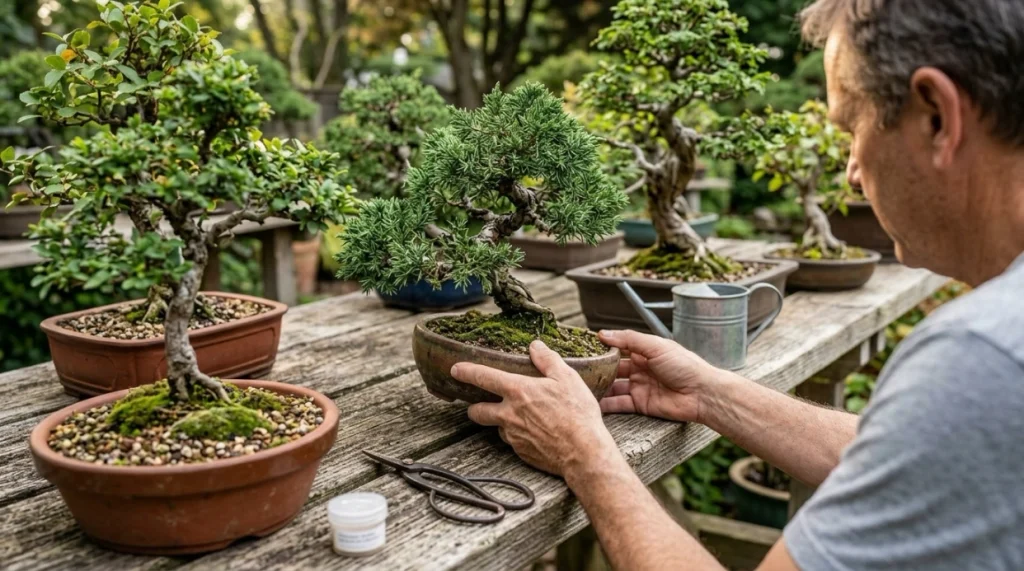
Prevention mainly means avoiding unnecessary wounds and keeping the tree vigorous enough to defend damaged tissue. Good bonsai horticulture matters more than routine preventive spraying.
- Make clean cuts: Use sharp tools instead of crushing branches.
- Sanitize after disease: Clean pruning tools before moving to another tree.
- Protect fresh wounds: Avoid careless handling that tears bark around cuts.
- Manage water carefully: Prevent repeated severe drought and prolonged waterlogging.
- Respect seasonal timing: Perform major pruning when appropriate for the species.
- Avoid excessive fertilizer: Overfeeding can create weak, overly succulent growth on susceptible plants.
- Inspect often: Early twig cankers are easier to remove than extensive trunk infections.
I like to inspect branch junctions whenever I rotate a tree for watering. That small habit makes subtle bark changes easier to notice before an entire branch begins declining.
After major styling, watch the tree more closely for several weeks. Wiring injuries, branch cracks, and poorly placed cuts can create entry points for opportunistic organisms.
Bonsai Canker FAQ
Is bonsai canker always caused by fungus?
No. Fungi cause many cankers, but bacteria can also produce canker diseases. Cold injury, sun damage, mechanical wounds, and other noninfectious problems may create similar areas of dead bark.
Can I use fungicide to cure bonsai canker?
Not as a universal cure. Fungicides cannot restore wood that has already died, and some canker pathogens do not respond to fungicides. Identify the likely cause first and use only products specifically labeled for the plant and disease.
Should I cut a canker out of the trunk?
Not automatically. Carving an unidentified trunk lesion can enlarge the wound and permanently damage an important bonsai. Seek experienced or diagnostic help before cutting into the trunk of a valuable tree.
Should a bonsai with canker be repotted?
Usually not unless there is a separate root-zone problem such as failed drainage, decomposed substrate, or serious root disease. Repotting adds stress and will not remove a canker located in the trunk or branches.
Can canker spread from one bonsai to another?
Some fungal and bacterial pathogens can spread through contaminated tools, infected debris, water splash, or other routes. Isolating a suspicious tree and cleaning tools reduces avoidable transmission while you identify the problem.
When should I give up on a bonsai with canker?
Consider professional advice when a lesion girdles most of the main trunk, extensive dieback continues, or multiple major branches become affected. A small branch can often be sacrificed, but widespread trunk and root decline is harder to overcome.
The key is early action without panic. Watch the lesion, remove clearly infected branches when appropriate, keep tools clean, and correct the stress that allowed the problem to develop.
A healthy bonsai can often compartmentalize limited damage. When the diagnosis is uncertain, confirm the cause before making an irreversible cut or applying a pesticide.
