Why Is the Trunk of My Bonsai Turning Black?

Quick Answer
A bonsai trunk can turn black because the bark is simply wet, because algae or other surface growth is present, or because the lower trunk is developing unhealthy tissue. Blackening becomes more concerning when the bark is soft, sunken, cracked, mushy, foul-smelling, or paired with yellowing, wilting, root decline, or branch dieback. The University of Maryland’s root-rot guidance notes that root and crown problems can produce brown-to-black tissue and softening.
What to check first
- Feel the bark: Firm bark is more reassuring than soft, collapsing, or peeling tissue.
- Watch it dry: Bark that darkens after watering but returns to normal may simply be wet.
- Check the soil: Constantly saturated substrate raises concern about poor root aeration.
- Inspect the foliage: Yellowing, wilting, weak growth, or dieback makes trunk blackening more significant.
- Look for damage: Sunken areas, cracks, ooze, loose bark, or spreading discoloration deserve closer investigation.
Best first move
- Do not immediately cut roots, scrape bark, or apply fungicide. First determine whether the black color is only superficial or whether living tissue is deteriorating.
Seeing a bonsai trunk turn black can make a healthy tree look as though it is suddenly rotting. The color alone, however, does not tell you what is happening.
I use a simple troubleshooting order: bark first, soil second, foliage third, and roots only when the other signs justify disturbing the tree. That approach prevents a cosmetic issue from turning into unnecessary repotting or pruning.
In This Guide
Why Is My Bonsai Trunk Turning Black?
A black bonsai trunk may reflect harmless surface moisture, natural bark coloration, algae, deadwood weathering, or damaged living tissue. The important question is whether the bark underneath remains healthy and firm.
Definition: Bonsai trunk blackening is a visible darkening of the bark or underlying trunk tissue. It is a symptom or appearance, not a diagnosis by itself.
Water alone can make dry bark look dramatically darker. This is especially noticeable on textured bark, old trunk bases, and exposed surface roots.
Watch what happens after the tree dries normally. A trunk that returns close to its usual color without becoming soft or damaged is less concerning.
- Temporary wet color: Appears during or after watering and fades as the bark dries.
- Surface growth: May appear green, gray, brown, or almost black and sit on top of firm bark.
- Deadwood discoloration: Old deadwood can darken through weathering without indicating that living trunk tissue is dying.
- Living tissue damage: Blackening accompanied by softening, cracking, sinking, or dieback deserves attention.
The location matters too. A black patch high on a dry branch suggests a different problem from a soft dark ring where the trunk enters saturated soil.
As of 2026, plant-disease guidance still emphasizes examining several symptoms together. Color is useful, but texture, moisture, root condition, and canopy health provide much stronger diagnostic clues.
How Can I Tell Harmless Black Bark From Rot?
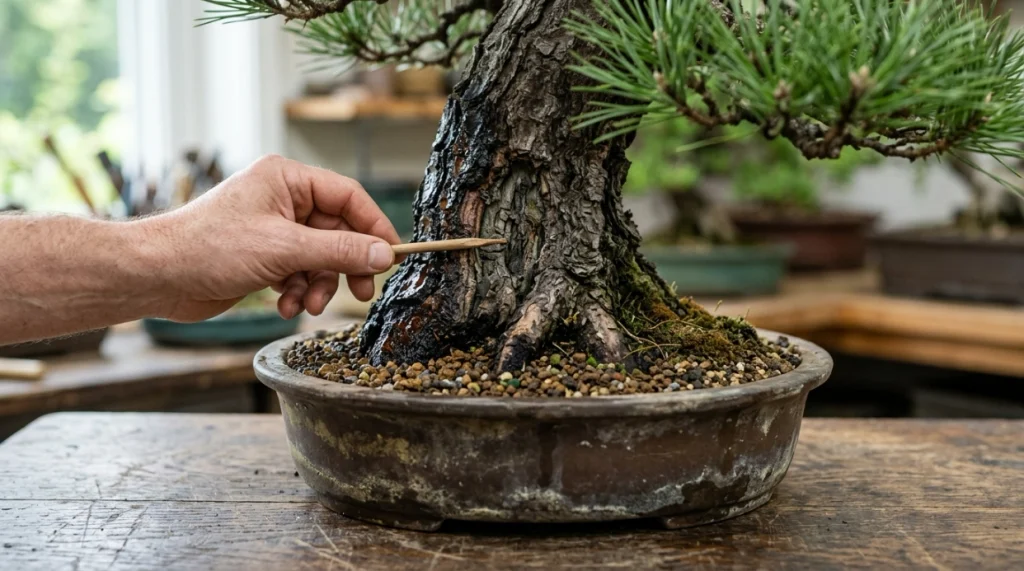
Healthy dark bark should usually remain firm and structurally sound. Rot or serious tissue decline is more likely when blackening comes with softness, collapsing bark, unpleasant odor, or declining foliage.
| What you see | What it may indicate | First check |
|---|---|---|
| Bark turns dark only after watering | Normal wet bark | See whether normal color returns after drying |
| Green-to-black surface film on firm bark | Algae, moss, or similar surface growth | Check moisture, shade, and airflow |
| Dark trunk base plus saturated soil | Possible crown or root-zone trouble | Check drainage and foliage condition |
| Soft, mushy, or collapsing lower stem | Serious tissue decay | Inspect roots and seek species-specific help |
| Sunken, cracked, localized black patch | Possible canker, wound, or dead bark | Look for expanding margins and branch dieback |
Root health provides another clue. University extension guidance describes diseased roots as dark and soft, while healthier roots retain firmness and structure.
Do not assume every brown or black root is dead. Penn State notes that some plants naturally have darker roots, which is why firmness and tissue integrity are important diagnostic features.
Another useful clue is the canopy. A bonsai with vigorous foliage, normal new growth, firm bark, and freely draining soil is less alarming than one wilting while the root ball stays wet.
Section Takeaway: Black color alone is weak evidence. Soft tissue, persistent wetness, poor roots, and declining foliage make the diagnosis more serious.
What Causes Blackening on a Bonsai Trunk?
Several unrelated conditions can make a bonsai trunk look black. Start with the least destructive possibilities before assuming disease.
1. Wet bark after watering
Water fills tiny surface spaces in bark and changes how light reflects from it. The result can be a much darker trunk for a while.
This is usually cosmetic when the bark dries normally and remains firm. Avoid keeping the trunk continuously wet just because occasional darkening is harmless.
2. Algae, moss, or lichen on the surface
Moist, shaded bark can support surface organisms. The University of Maryland notes that algae can range from green to black and that algae, moss, and lichen generally live on bark without harming the tree.
You can read their overview of lichen, algae, and moss on tree bark for identification clues.
On bonsai, heavy surface growth may still tell you something useful. It can suggest that the lower trunk stays shaded or damp for long periods.
3. Poor drainage and root-zone decline
Bonsai roots need both moisture and oxygen. Dense, compacted, or constantly saturated substrate reduces air around fine roots.
Bonsai Empire’s watering guidance stresses that watering frequency depends on species, pot size, soil mixture, season, and climate rather than a fixed calendar.
When damaged roots can no longer function properly, foliage may wilt even though the soil is wet. Lower-stem discoloration can occur with some crown and root diseases.
4. Cankers, wounds, and dying bark
Cankers are localized areas of damaged or dead bark and underlying tissue. Depending on the pathogen and tree species, affected areas may become dark, cracked, sunken, or surrounded by callus tissue.
A spreading black patch with branch dieback deserves more attention than uniform darkening caused by water. Identification is species-specific, so avoid diagnosing a pathogen from color alone.
5. Deadwood weathering
A bonsai with intentional deadwood, old scars, or naturally dead sections can develop gray, brown, or black weathering. Deadwood behaves differently from living bark.
The key is determining whether the discoloration is confined to already dead tissue. Expansion into healthy living bark changes the situation.
What Should I Do When the Trunk Starts Turning Black?
Start with observation rather than treatment. A rushed repot or aggressive scraping can damage a tree that only needed a watering adjustment.
- Photograph the area. Take a clear picture today so you can tell whether the black patch expands over the next several days.
- Let the bark dry normally. Check whether the color fades as surface moisture disappears.
- Press gently. Firm bark is more reassuring than tissue that feels soft, spongy, loose, or collapsing.
- Check the substrate. Confirm that water exits the drainage holes freely and that the root ball does not remain waterlogged.
- Inspect the canopy. Look for yellowing, wilting, sparse growth, leaf drop, or branch dieback.
- Inspect visible roots. Look for firm roots and intact fine roots rather than judging them by color alone.
- Check the trunk base. Remove loose debris resting against the bark so the root flare is visible and can dry normally.
Avoid watering by weekday. Instead, check the actual moisture in the substrate and water according to your species, weather, pot, and soil.
If the surface growth looks like algae or moss, improving light exposure and airflow may reduce the conditions favoring it. Do not scrub aggressively enough to damage living bark.
Do not automatically reach for hydrogen peroxide, bleach, vinegar, or a fungicide. A chemical treatment cannot correct compacted soil, blocked drainage, or incorrect watering, and the wrong concentration can injure plant tissue.
For general bonsai education and local expert support, the American Bonsai Society provides resources and connections to bonsai clubs.
Section Takeaway: Diagnose before treating. The safest first actions are documenting the change, checking firmness, evaluating drainage, and watching the tree’s overall health.
Should I Repot or Cut Away Black Tissue?
Do not repot solely because a trunk looks dark. Repotting becomes more reasonable when you have stronger evidence of root decline, failed drainage, decomposed substrate, or genuinely rotting roots.
Repotting itself stresses the root system. An emergency repot outside the appropriate seasonal window can add another problem to an already weak tree.
When root inspection becomes more justified
- The substrate remains saturated for an unusually long time.
- The tree wilts despite a wet root ball.
- Foliage is yellowing or growth has stalled.
- Visible roots are soft, mushy, or collapsing.
- A sour or rotten odor comes from the root zone.
- The lower trunk is becoming soft rather than merely dark.
Penn State’s root-rot guidance lists dark brown or black roots, loss of healthy root tips, limp tissue, and outer root tissue stripping away as warning signs.
If you uncover clearly decayed roots during an appropriately timed repot, remove only tissue you can confidently identify as dead or rotten. Preserve firm, functional roots whenever possible.
Pro tip: Cutting roots or living trunk tissue is irreversible. With an old, valuable, collected, or severely weakened bonsai, get hands-on guidance from an experienced grower or local bonsai club before making major cuts.
A black or sunken trunk lesion also should not be carved out blindly. Some cankers and vascular diseases require species-specific diagnosis, sanitation, or pruning decisions.
If discoloration keeps advancing upward, living bark becomes soft, or major branches begin dying, professional plant-disease diagnosis is worthwhile. Clear photos of the tree, bark, root zone, leaves, and growing conditions will make that diagnosis easier.
How Can I Prevent Trunk Blackening From Returning?
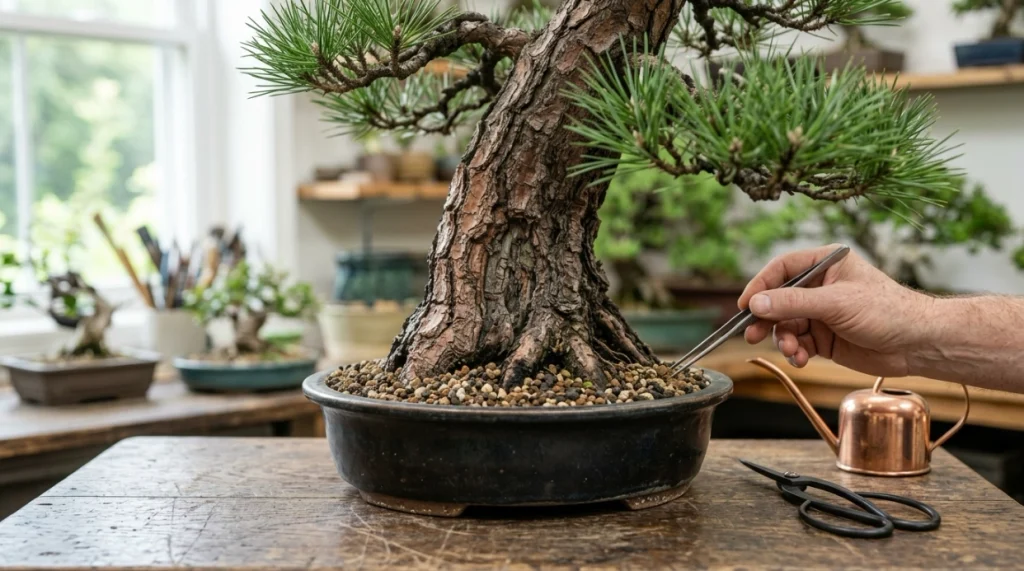
Prevention centers on moisture control, root aeration, sanitation, and species-appropriate care. You want a root zone that receives water thoroughly but also drains and regains air.
- Use free-draining substrate: The correct particle size and mix vary by species and climate, but drainage and aeration are essential.
- Keep drainage holes open: A clogged pot can hold water even when your watering technique is otherwise sound.
- Water by need: Check soil moisture instead of following a fixed daily schedule.
- Keep the trunk base exposed: Avoid piling moss, organic debris, or soil tightly against living bark.
- Provide airflow: Crowded, stagnant conditions keep bark surfaces wet longer.
- Match light to the species: Weak placement can slow drying and weaken the tree over time.
- Use clean tools: Sanitize cutting tools when working on suspicious or diseased tissue.
Pay special attention after repotting. Drainage behavior can change when you switch soil, pot depth, particle size, or root mass.
I also like using photos as a simple diagnostic record. A picture taken every few days makes it easier to distinguish a stable stain from discoloration that is actively spreading.
Most importantly, learn what normal bark looks like on your species. Juniper, ficus, elm, maple, pine, jade, and azalea bonsai do not all have the same bark texture or color.
Section Takeaway: Healthy bonsai management is more useful than trying to keep every trunk perfectly clean. Good drainage, correct watering, airflow, and regular observation catch genuine problems earlier.
Frequently Asked Questions
Does a black bonsai trunk always mean root rot?
No. Wet bark, natural coloration, algae, lichen, moss, deadwood, and old scars can all look dark. Root or crown rot becomes more likely when blackening is paired with soft tissue, persistently wet soil, unhealthy roots, wilting, yellowing, or dieback.
Why does my bonsai trunk turn black after watering?
Bark commonly appears darker when wet because moisture changes its surface appearance. If the trunk becomes lighter again as it dries and the bark remains firm, the color change alone is usually less concerning than persistent soft or spreading black tissue.
Can overwatering make a bonsai trunk black?
Constantly wet conditions can contribute indirectly by reducing oxygen around roots and encouraging root or crown problems. The real issue is not simply the amount of water applied but how long the root zone stays saturated and poorly aerated.
Should I scrape black bark off my bonsai?
No, not simply to check the color underneath. Scraping can injure living cambium and create a new wound. Examine texture, drainage, foliage health, and visible roots first, and seek experienced help before cutting into suspicious living trunk tissue.
Can algae make a bonsai trunk look black?
Yes. Algae growing on persistently moist bark can range from green to dark blue-green or black. Algae itself is generally superficial, but its presence can indicate that the bark stays damp or shaded for long periods.
When should I worry about a black trunk base?
Take it seriously when the area remains black after drying, becomes soft or sunken, smells rotten, expands upward, or appears with wilting and declining roots. Those combined symptoms justify closer root inspection and species-specific disease diagnosis.
Can a bonsai recover from trunk or root rot?
Recovery depends on how much healthy root and trunk tissue remains and what caused the damage. Early problems caused by poor drainage may improve after correcting the root environment, while advanced decay that has girdled major trunk tissue has a much poorer outlook.
Final takeaway: A black bonsai trunk is a reason to investigate, not a reason to panic. Check whether the bark is firm, see how it looks when dry, examine drainage and foliage health, and only disturb the roots when several signs point to a genuine root-zone problem.
If the black area is spreading or the tree is declining, photograph the trunk, roots, foliage, soil, and pot before taking action. Those details can help an experienced bonsai grower or plant diagnostic service identify the problem much more accurately.
