
How to Prevent Bonsai Pest Infestations

Quick Answer
To prevent bonsai pest infestations, inspect leaves and branches weekly, quarantine newly acquired trees, provide suitable light and watering, and keep foliage and growing areas clean. Check leaf undersides, shoot tips, and bark crevices for early signs of aphids, spider mites, scale insects, and mealybugs. Learn to recognize common problems with this bonsai pest identification guide before choosing a treatment.
Essential prevention steps
- Inspect weekly: Examine both sides of leaves, new shoots, twigs, and the trunk with a 10× hand lens when needed.
- Quarantine new trees: Keep new or potentially infested bonsai separate from your collection for approximately two to four weeks, inspecting them throughout.
- Water correctly: Check the soil before watering and avoid prolonged drought or waterlogged roots.
- Provide proper light: Match sunlight, airflow, and humidity to the species rather than keeping every bonsai in the same conditions.
- Keep the area clean: Remove fallen leaves, dead twigs, weeds, and discarded plant material that can conceal pests.
- Act early: Isolate affected trees and identify the pest before applying insecticidal soap, horticultural oil, or another suitable treatment.
A simple verification tip
- Hold a white sheet of paper beneath a branch and gently tap it. Examine any moving specks with a magnifier, then inspect the foliage for matching damage before deciding whether treatment is necessary.
Bonsai pest prevention starts with consistent observation, not routine pesticide spraying. Small trees have limited foliage and root reserves, so an unnoticed infestation can quickly affect their appearance and vigor.
In this guide, I’ll explain how to recognize common bonsai pests, create less favorable conditions for them, and build a prevention routine that works for indoor tropical trees and outdoor species alike.
In This Guide
Why do bonsai trees get pest infestations?
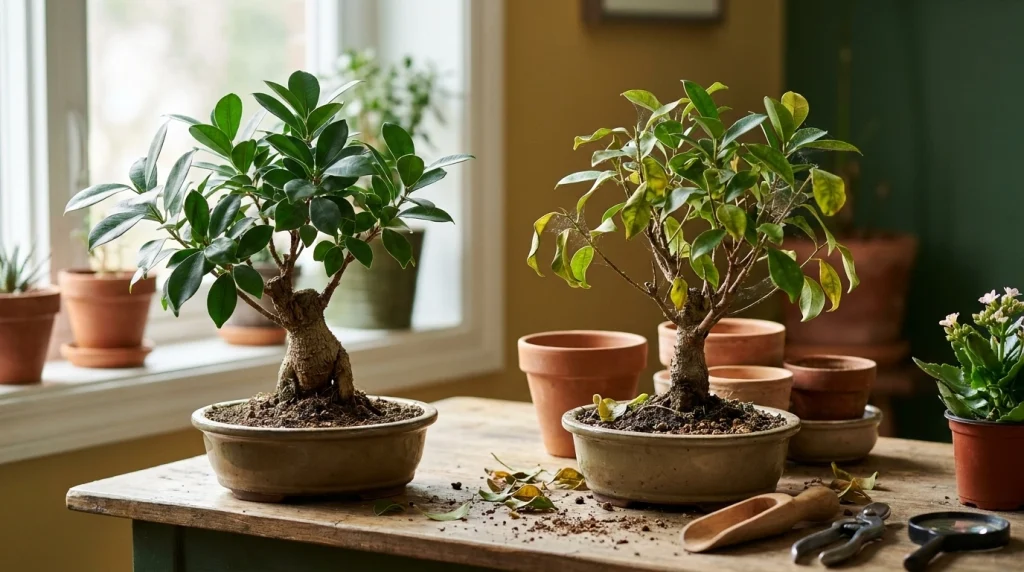
Bonsai trees develop pest problems when insects or mites find a suitable host and conditions allow their populations to grow. Inadequate light, water stress, poor air circulation, and missed inspections can make prevention harder.
A bonsai is a normally growing tree maintained in a small container through pruning, wiring, and careful root management. Its miniature size does not make it immune to pests found on ordinary garden trees and houseplants.
What causes pest problems on indoor and outdoor bonsai?
Indoor and outdoor bonsai face different risks. Indoor trees may encounter pests brought home on new plants, while outdoor trees can attract pests from surrounding vegetation.
- New plants: Eggs, immature insects, and mites may arrive on purchased bonsai or nursery stock.
- Environmental stress: Underwatering, unsuitable temperatures, and insufficient light can weaken growth and increase damage from certain pests.
- Excessively crowded placement: Closely packed branches and plants make inspection harder and may allow some infestations to spread unnoticed.
- Poor sanitation: Dead foliage, weeds, and discarded cuttings create places where pests can remain concealed.
- Unsuitable growing conditions: Hot, dry conditions often favor spider mites, while persistently damp potting media can encourage fungus gnats.
Not every unhealthy bonsai has a pest problem. Yellow leaves, leaf drop, and branch dieback can also result from watering mistakes, root damage, nutrient problems, or disease.
Can healthy bonsai still attract pests?
Yes. Even vigorous trees can attract aphids, scale insects, and other pests because insects locate suitable host plants regardless of how carefully those plants are maintained.
Good growing conditions improve a tree’s ability to tolerate damage, but they do not guarantee protection. Regular inspection remains essential.
Prevention also means avoiding unnecessary interventions. Applying broad-spectrum pesticides without identifying a pest can kill beneficial insects and sometimes contribute to new pest outbreaks.
Section Takeaway: Healthy growing conditions reduce avoidable stress, while regular inspection catches infestations that good care alone cannot prevent.
Which bonsai pests should you watch for?
The most useful prevention skill is recognizing early warning signs before pests become widespread. Aphids, spider mites, scale insects, mealybugs, and fungus gnats are among the problems bonsai growers may encounter.
Look for the pest itself whenever possible. Leaf discoloration alone rarely identifies the cause reliably.
Common bonsai pests and their warning signs
| Pest | Early signs | Prevention priority |
|---|---|---|
| Aphids | Clusters on tender shoots, curled leaves, sticky honeydew | Inspect new growth and growing tips |
| Spider mites | Fine pale speckles, bronzing, tiny moving dots, sometimes webbing | Check leaf undersides and avoid water stress |
| Scale insects | Fixed brown or pale bumps on twigs, leaves, or stems | Examine bark crevices and branches |
| Mealybugs | White cottony clusters, sticky residue, weakened shoots | Inspect branch junctions and sheltered areas |
| Fungus gnats | Small dark flies near the pot and growing medium | Avoid persistently wet substrate |
| Whiteflies | Tiny white adults flying from foliage when disturbed | Check leaf undersides and new arrivals |
How can you distinguish pests from normal bonsai symptoms?
Use a magnifier and examine the affected area closely. Spider mites often produce fine stippling, while aphids commonly gather on soft new growth and leave sticky honeydew.
Scale insects can resemble natural bark bumps, so check whether the spots have a recognizable covering or can be carefully distinguished from the plant’s own tissue. Don’t scrape healthy bark just to investigate.
Fungus gnats are often associated with damp growing media, but their presence does not automatically mean the tree’s roots are damaged. Their larvae may become a concern when populations are high or roots are already vulnerable.
Do different bonsai species attract different pests?
Yes. Some pests prefer particular host plants, so the species you grow can help narrow the possibilities.
- Ficus bonsai: Watch for scale insects, mealybugs, and spider mites, particularly when grown indoors.
- Juniper bonsai: Inspect needles and branch junctions for mites and scale insects; some pest damage can resemble fungal or environmental problems.
- Japanese maple bonsai: Check tender leaves for aphids and inspect for mites when foliage develops unusual speckling.
- Chinese elm bonsai: Examine new growth and leaf undersides for aphids, mites, and other sap-feeding pests.
- Indoor tropical bonsai: Monitor sheltered foliage, pot rims, and growing media for mealybugs, scale, and fungus gnats.
These are useful inspection priorities, not exclusive host lists. A pest that affects one species may also occur on other suitable plants.
For more identification examples, consult the University of California’s houseplant pest management resource.
Section Takeaway: Identify the pest before choosing a treatment, and pay particular attention to the species, location, and pattern of damage.
How can daily bonsai care prevent pests?
Consistent watering, appropriate light, good drainage, and suitable airflow help keep bonsai growing well and reduce conditions that favor certain pests. The goal is to meet each tree’s needs rather than follow one care formula for every species.
Water bonsai according to the tree’s needs
Water stress can make plants more vulnerable to spider mite damage. However, keeping the soil constantly saturated is not a safe prevention strategy because it can damage roots and encourage fungus gnats.
Instead, check the growing medium and water thoroughly when the tree needs it. Frequency depends on species, pot size, substrate, weather, and whether the bonsai grows indoors or outdoors.
- Check moisture regularly, especially during hot or windy weather.
- Water the root ball thoroughly rather than giving frequent, shallow splashes.
- Allow excess water to drain freely through the pot.
- Adjust your routine as temperatures and seasonal growth change.
Don’t follow a rigid watering calendar without checking the tree. A small bonsai in a shallow pot can dry much faster than a larger tree in a deeper container.
Provide the right light and airflow
Light requirements differ substantially between species. Outdoor junipers and many maples need outdoor conditions, while tropical ficus bonsai generally need warmth and bright light to grow well indoors.
Insufficient light can weaken growth, but abruptly moving a shade-grown tree into intense sunlight can cause leaf scorch. Make changes gradually and respect the tree’s normal seasonal requirements.
Keep enough space between trees to inspect branches and maintain suitable airflow. Good ventilation helps foliage dry when wet, although it will not eliminate pests that arrive on new plants or from the surrounding environment.
Keep foliage and growing areas clean
Cleanliness makes pests easier to detect and reduces the number of hiding places around your collection. It also helps you notice changes in foliage before they become widespread.
- Remove fallen leaves and dead plant material promptly.
- Clear weeds from pots and the surrounding growing area.
- Clean tools after working on an infested tree.
- Wash pots and reusable trays before reusing them with another plant.
- Keep pruning debris away from healthy bonsai.
Avoid unnecessary leaf wetting when it conflicts with a species’ needs or local disease conditions. Washing foliage can help dislodge some pests, but wet leaves are not a substitute for proper diagnosis and growing conditions.
Should you increase humidity to prevent bonsai pests?
Not for every tree. Spider mites often thrive in hot, dry conditions, and suitable humidity may help reduce their advantage, but different bonsai species have different requirements.
For tropical indoor bonsai, maintain an appropriate environment without creating persistently wet foliage or stagnant air. For outdoor temperate species, focus on proper outdoor placement and watering instead of trying to recreate a tropical climate.
Section Takeaway: Match light, moisture, and airflow to the species. Avoid both drought stress and permanently wet growing conditions.
How should you inspect and quarantine bonsai?
Inspect every bonsai at least once a week and quarantine newly acquired trees before placing them beside your established collection. These two habits help catch pests before they spread across multiple plants.
Follow a five-point bonsai inspection routine
A short, repeatable inspection is easier to maintain than waiting for visible damage. Check the same areas each time so you don’t overlook hidden pests.
- Examine new shoots: Look for aphid clusters, distorted leaves, and unusual discoloration.
- Turn over leaves: Check undersides for mites, eggs, whitefly nymphs, and scale insects.
- Inspect branch junctions: Look for mealybugs, cottony deposits, and sheltered colonies.
- Check the trunk and bark: Examine crevices for scale insects and other attached pests.
- Inspect the pot and soil surface: Look for fungus gnats, unexplained webbing, and persistently wet substrate.
A 10× hand lens is a useful addition to a bonsai toolkit because many mites and immature pests are difficult to identify with the naked eye.
How long should you quarantine a new bonsai?
A practical starting point is two to four weeks of separation, with frequent inspections throughout that period. Extend the quarantine if you discover pests, observe new symptoms, or cannot confidently identify a suspected problem.
Quarantine is a precaution, not a guarantee that every egg or hidden pest will be detected. Some pests have life cycles that require longer observation.
During quarantine:
- Keep the new tree physically separated from other bonsai.
- Use dedicated or cleaned tools when handling it.
- Check foliage and stems every few days, particularly if you notice damage.
- Inspect nearby plants if you discover a pest.
- Do not share drainage water or move potentially infested debris between plants.
Can sticky traps help prevent bonsai infestations?
Yellow sticky traps can help monitor flying pests such as fungus gnats and whiteflies. They are useful warning tools, but they do not reliably detect or control every life stage.
Place traps near affected pots without allowing them to touch foliage. Inspect them regularly and investigate the plant whenever catches increase.
Sticky traps are not a replacement for checking leaves, stems, and roots when symptoms suggest a problem. They also capture beneficial insects, so use them thoughtfully.
Section Takeaway: Quarantine new trees, inspect the same plant areas every week, and use monitoring tools to support—not replace—direct observation.
Which preventive treatments are safe for bonsai?
The safest pest prevention program begins with monitoring and suitable growing conditions, not routine chemical applications. Use a treatment only when you have a reasonable identification and a product labeled for the pest and plant involved.
Can you prevent bonsai pests without pesticides?
Often, yes. Many small, localized infestations can be managed initially through physical removal, water rinsing, sanitation, and isolation.
- Water rinsing: A controlled stream can dislodge some aphids and spider mites from suitable foliage.
- Manual removal: Remove visible insects carefully with a soft brush or appropriate tool.
- Pruning affected material: Remove badly infested expendable shoots when doing so will not compromise the tree’s structure or health.
- Biological control: Beneficial predators may help manage certain pests when used appropriately.
- Sanitation: Dispose of infested debris and clean equipment between plants.
Be careful with water pressure on delicate foliage, fresh shoots, moss, and loosely attached soil particles. Protect the root ball and avoid damaging fine branches during cleaning.
When should you use insecticidal soap or horticultural oil?
Consider insecticidal soap or horticultural oil when monitoring confirms a pest that the product can control and nonchemical methods are insufficient. These products work differently from conventional insecticides, and neither is harmless to every bonsai species.
Before applying a product:
- Confirm that the label covers the target pest and the intended plant or growing situation.
- Test a small area first when the label permits, then watch for leaf damage before treating the entire tree.
- Avoid application to drought-stressed trees or during temperatures and sunlight conditions prohibited by the label.
- Cover the target pest’s hiding places as directed, including leaf undersides when required.
- Follow the exact label rate, protective equipment requirements, and reapplication interval.
Do not assume that homemade dish-soap mixtures, rubbing alcohol, or concentrated essential oils are safe for bonsai foliage. Such mixtures can burn leaves or damage sensitive bark, especially under hot conditions.
Why is routine pesticide spraying a poor prevention strategy?
Spraying without evidence of a pest can expose a bonsai to unnecessary chemical stress. Broad-spectrum products may also kill natural enemies that normally suppress pest populations.
Some pesticides can make spider mite problems worse by eliminating their predators without controlling the mites effectively. Others fail because they do not reach eggs or protected insects.
Repeat treatments only when the product label and the pest’s life cycle justify them. Recheck the tree after treatment rather than assuming that one application solved the problem.
For additional guidance, review the University of California’s spider mite identification and management advice and the National Pesticide Information Center’s spider mite control guidance.
Section Takeaway: Start with accurate identification and targeted, low-impact methods. Use pesticides only when needed and according to the label.
What is the best bonsai pest prevention routine?
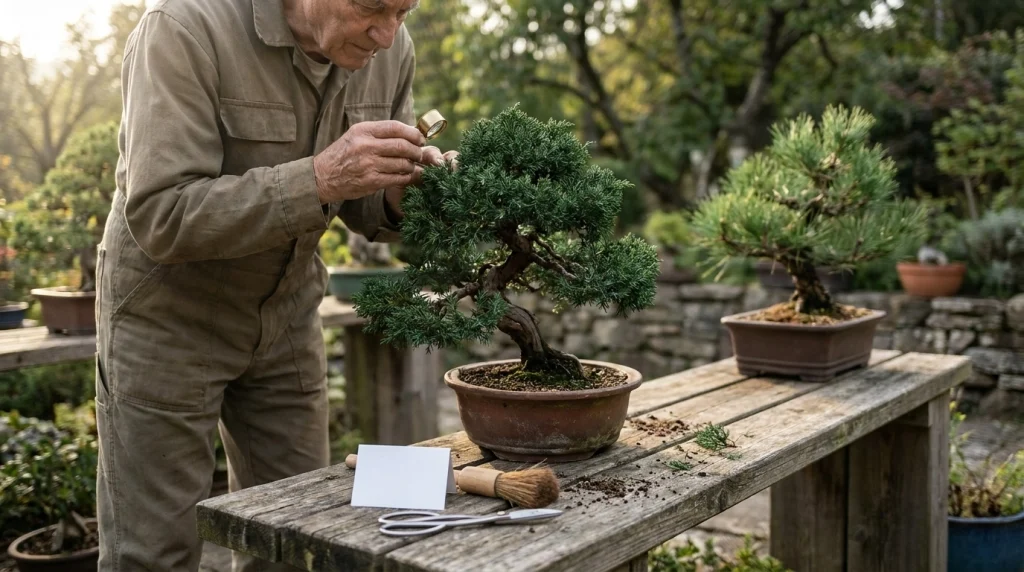
The best routine is simple enough to repeat throughout the year. Combine daily observation with a more thorough weekly inspection and additional checks whenever you introduce a plant or change its growing conditions.
A practical weekly and seasonal checklist
| When | What to do | Purpose |
|---|---|---|
| Daily | Observe foliage, check watering needs, and notice unusual changes. | Catch early warning signs. |
| Weekly | Inspect leaf undersides, shoot tips, bark, and pot surfaces. | Find hidden pests. |
| When buying plants | Inspect and quarantine each new tree. | Reduce the risk of introducing pests. |
| During hot, dry weather | Monitor moisture and inspect for spider mites more frequently. | Catch stress-related outbreaks. |
| During active growth | Pay attention to tender shoots and new leaves. | Find aphids and other sap-feeding pests. |
| After treatment | Reinspect the plant and follow label directions for further action. | Check whether control is working. |
What should you do when you discover pests?
Respond promptly, but avoid treating every tree in your collection automatically. The right response depends on the pest, its distribution, and the tree’s condition.
- Isolate the affected tree: Move it away from healthy bonsai without spreading insects or contaminated debris.
- Identify the pest: Use a magnifier and reliable horticultural references, or ask an experienced grower for help.
- Assess the severity: Determine whether the infestation is localized or spread across several branches.
- Choose a targeted response: Use physical removal or an appropriate labeled treatment based on the pest.
- Monitor recovery: Look for new pest activity, fresh damage, and signs of chemical injury.
If a tree continues to decline despite your efforts, reconsider the diagnosis. Root problems, fungal diseases, poor light, and watering errors can mimic pest damage or occur at the same time.
Where can you get help identifying an unfamiliar pest?
When identification remains uncertain, consult a local bonsai club, a qualified horticulturist, or a university extension service. Clear photographs of the whole tree, affected leaves, and suspected pest can make diagnosis easier.
The Missouri Botanical Garden and local horticultural organizations can also provide useful plant-care information, although a local extension service may be better positioned to identify region-specific pests.
As of 2026, the basic principles remain the same: inspect regularly, maintain suitable growing conditions, identify problems correctly, and use targeted interventions rather than routine spraying.
Section Takeaway: A consistent prevention routine is more reliable than occasional intensive cleaning. Investigate changes early, isolate affected trees, and confirm that your response addresses the actual cause.
Frequently asked questions
How often should I check my bonsai for pests?
Observe your bonsai daily and conduct a closer inspection at least once a week. Check leaf undersides, growing tips, bark crevices, and the soil surface. Inspect more frequently during hot, dry weather or whenever you notice unusual discoloration, sticky residue, or distorted growth.
What is the best natural way to prevent bonsai pests?
Start with regular inspection, proper watering, suitable light, good sanitation, and quarantine for new trees. Remove small, confirmed infestations manually or with a careful water rinse when appropriate. Natural methods can reduce pest populations, but they cannot guarantee that pests will never appear.
Should I spray neem oil on my bonsai every week?
No. Routine neem oil spraying is not necessary for every bonsai and can damage sensitive foliage under unsuitable conditions. First identify the pest, confirm that the product is labeled for the intended use, and follow its application instructions. Prevention should focus on monitoring and good growing conditions.
Can indoor bonsai get spider mites?
Yes. Indoor bonsai, including tropical ficus, can develop spider mite infestations, particularly in warm, dry environments. Look for pale speckles, bronzed leaves, and tiny moving mites on leaf undersides. Check suspected webbing closely because ordinary spiders can produce harmless webs.
Does misting prevent bonsai pest infestations?
Misting is not a dependable way to prevent all bonsai pests. It may temporarily affect conditions around foliage, but it does not reliably eliminate established mites, scale insects, or aphids. Provide species-appropriate humidity and ventilation, and inspect the plant regularly instead of relying on misting alone.
Should I quarantine every new bonsai?
Yes, quarantining new bonsai is a sensible precaution, especially when you maintain several trees together. Separate each new arrival for roughly two to four weeks as a starting point and inspect it throughout. Extend the period if you find pests or remain uncertain about symptoms.
Can bonsai pests spread from one tree to another?
Yes. Some pests move between nearby plants, while others can spread through contaminated tools, plant material, or the movement of infested trees. Separate affected bonsai, clean tools, dispose of infested debris, and inspect neighboring plants whenever you discover an outbreak.
Final takeaway: Keep your bonsai healthy and pest-aware
Preventing bonsai pest infestations is mostly about developing consistent habits. Healthy growing conditions, clean surroundings, and careful inspections make problems easier to detect before they cause significant damage.
Start with a weekly inspection, quarantine new trees, and learn the warning signs of aphids, spider mites, scale insects, and mealybugs. If you find a pest, identify it before choosing a treatment.
You don’t need to spray your entire collection to keep it safe. A thoughtful, prevention-first approach helps protect your bonsai, preserve beneficial insects, and avoid unnecessary stress to delicate trees.