How to Protect Bonsai During Humid Weather

Quick Answer
To protect bonsai during humid weather, improve airflow, water according to soil moisture, maintain good drainage, and remove diseased foliage promptly. High humidity combined with prolonged leaf wetness and poorly drained soil can increase fungal disease risk, especially during warm, cloudy, rainy periods. Follow a species-appropriate routine and use guidance from the University of Maryland Extension’s disease prevention advice when symptoms appear.
Essential humid-weather precautions
- Improve airflow: Space trees apart and avoid placing them in stagnant, enclosed corners.
- Check soil first: Water when the root zone needs it, rather than following a fixed daily schedule.
- Protect drainage: Keep drainage holes clear and never let the pot sit in standing water.
- Control leaf wetness: Water early enough for foliage to dry, and avoid unnecessary misting during persistently damp weather.
- Inspect regularly: Look for leaf spots, powdery growth, sticky residue, pests, and unusual yellowing.
- Keep conditions suitable: Preserve the light, temperature, and seasonal exposure required by your bonsai species.
A simple daily check
- Check the soil moisture, drainage holes, leaf surfaces, and underside of foliage.
- Move a tree under temporary rain protection if its soil remains saturated, while preserving sufficient light and ventilation.
- Isolate trees showing suspicious disease symptoms until you can assess the problem.
Knowing how to protect bonsai during humid weather helps prevent avoidable problems with roots, foliage, and pests. High humidity isn’t automatically harmful, but persistent dampness and poor ventilation can create trouble.
This guide explains how to manage watering, airflow, rain exposure, fungal diseases, and common pests without stressing your tree. The goal is to maintain healthy growing conditions rather than trying to eliminate humidity altogether.
In This Guide
- Why is humid weather challenging for bonsai?
- How can you improve airflow and manage rain?
- How should you water bonsai during humid weather?
- How do you prevent fungal diseases and root rot?
- How do you manage pests during humid conditions?
- What is the best humid-weather care routine?
- Frequently asked questions
Why is humid weather challenging for bonsai?
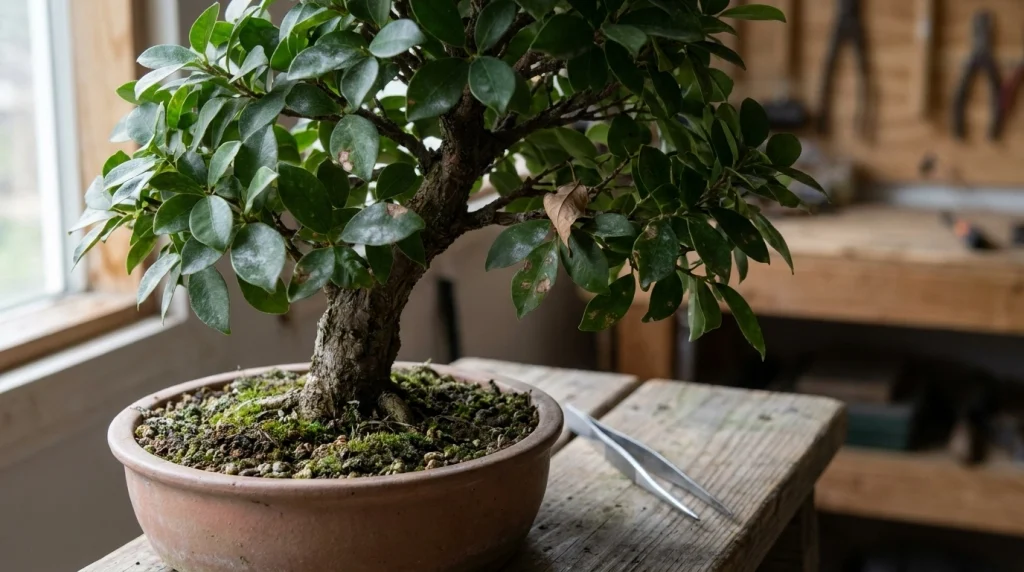
Humid weather becomes a concern when moisture lingers around leaves, branches, and roots for extended periods. Limited airflow, frequent rain, and saturated soil can increase the risk of fungal diseases and root damage.
How does humidity affect bonsai health?
Humidity is the amount of water vapor present in the air. Relative humidity expresses that amount as a percentage of the maximum water vapor the air can hold at its current temperature.
High relative humidity slows water loss from foliage through transpiration. As a result, a bonsai may use water more slowly than it would during hot, dry weather.
That change matters because bonsai grow in relatively small containers. However, their watering needs still depend on light, temperature, wind, soil composition, tree size, and species.
High humidity alone doesn’t guarantee disease. The greater concern is a combination of susceptible plant tissue, disease-causing organisms, prolonged moisture, and conditions that restrict drying.
Which problems should you watch for?
- Fungal leaf spots: Small brown, black, or tan marks that may expand or merge.
- Powdery mildew: Whitish, powder-like patches on susceptible foliage.
- Gray mold: Grayish growth and deteriorating plant tissue, sometimes affecting older leaves or flowers.
- Root rot: Declining roots associated with persistently wet, poorly aerated growing media.
- Pest activity: Aphids, scale insects, mealybugs, and fungus gnats may become noticeable when growing conditions or plant health deteriorate.
These problems have different causes, so don’t treat every yellow leaf or white patch as a fungal infection. Check the plant carefully before choosing a remedy.
Does every bonsai need less humidity?
No. Tropical species such as ficus can benefit from humid air, while many outdoor temperate species need appropriate seasonal conditions rather than a controlled indoor environment.
Junipers and pines generally need strong outdoor light and good airflow. Moving them into a dim room to escape rain or humidity can create additional problems.
Choose protection that reduces prolonged wetness without sacrificing the light, temperature, and seasonal exposure your tree requires.
Section Takeaway: Humidity is not the enemy by itself. Focus on drainage, airflow, leaf wetness, and species-specific care.
How can you improve airflow and manage rain?
Good airflow helps foliage dry and reduces stagnant, damp conditions around a bonsai. During rainy spells, adjust the growing area before resorting to drastic changes in the tree’s environment.
Where should you position your bonsai?
Place outdoor bonsai where air can circulate around the entire canopy. Avoid crowding trees together or pushing their foliage against walls, fences, and dense shrubs.
A raised, slatted bench can help keep drainage unobstructed beneath the pots. It also makes routine inspections easier after heavy rain.
Use these placement guidelines:
- Leave space between neighboring canopies.
- Keep pots above puddles and poorly drained ground.
- Remove nearby debris that blocks airflow beneath benches.
- Preserve the sunlight required by each species.
- Avoid strong, drying fan blasts or exposure that damages delicate foliage.
Should you shelter bonsai from heavy rain?
Temporary rain protection is useful when repeated downpours keep the growing medium saturated. An open-sided shelter or a translucent roof can reduce direct rainfall while allowing light and air to reach the tree.
Don’t enclose the bonsai in a sealed plastic cover. Trapped moisture and stagnant air can worsen the very conditions you’re trying to prevent.
After a storm, check the drainage holes and examine the soil before watering again. Remove fallen leaves and other debris that collect on the soil surface or inside the canopy.
Should you use a fan or dehumidifier?
For outdoor trees, natural air movement and sensible spacing are usually the first steps. A fan may help in a sheltered growing area, provided it doesn’t dry the tree excessively or expose delicate foliage to a harsh, continuous draft.
A dehumidifier may help in a suitable indoor growing space, but it isn’t a universal solution. Tropical bonsai can suffer if indoor air becomes too dry, particularly when temperatures and light levels change.
The better approach is to manage stagnant air and wet surfaces while keeping conditions appropriate for the species.
Section Takeaway: Use open, well-ventilated growing spaces and temporary rain protection when needed. Avoid sealed covers and unnecessary environmental changes.
How should you water bonsai during humid weather?
Water bonsai according to the moisture in the root zone, not a fixed calendar. Humid weather often slows drying, so a routine that worked during a hot spell may provide too much water during prolonged rain.
How do you decide when to water?
Check the growing medium directly rather than judging moisture from the appearance of the leaves alone. The soil surface can dry while deeper areas remain wet, especially in dense or aging mixes.
Use this practical sequence:
- Inspect the surface: Look for moisture, algae, or persistent standing water.
- Check below the surface: Use a fingertip or a suitable wooden probe without damaging fine roots.
- Consider recent weather: Account for rain, cloud cover, temperature, and wind.
- Water when needed: Thoroughly moisten the root ball and let excess water drain freely.
- Recheck later: Adjust your routine as conditions change.
Don’t wait until every species becomes completely dry. Some bonsai need consistently moist growing media, while others tolerate greater drying between waterings.
Why is drainage so important?
A bonsai soil mix must retain enough moisture for roots while leaving air spaces that support root function. Poor drainage can keep those spaces waterlogged and increase the risk of root damage.
Inspect the pot for blocked drainage holes, compacted soil, and a tray that holds standing water. Empty collected water and keep the pot itself above the water level.
If the growing medium has broken down and no longer drains properly, a future species-appropriate repotting may be necessary. Avoid repotting solely because the weather is humid.
How does humid weather change watering needs?
The following table gives a starting point for adjusting your routine. These are practical conditions to assess, not a rigid watering schedule.
| Weather or soil condition | Recommended response |
|---|---|
| Warm, humid, and cloudy | Check soil moisture frequently, but water only when needed. |
| Several hours of heavy rain | Check drainage and suspend additional watering while the root zone remains adequately moist. |
| Hot, humid, and windy | Monitor more often because heat, wind, and sunlight can still increase water use. |
| Cool conditions with persistently wet soil | Improve drainage and avoid adding water until the tree’s actual needs justify it. |
| Indoor tropical bonsai | Check both the root zone and indoor airflow; don’t assume high outdoor humidity means the indoor soil stays wet. |
For more background on balancing moisture and aeration, consult the Arnold Arboretum’s bonsai care guidance.
Section Takeaway: Let soil moisture guide watering. Good drainage and oxygen around the roots matter more than following a fixed number of watering days.
How do you prevent fungal diseases and root rot?
Preventing fungal diseases starts with reducing prolonged leaf wetness, removing infected material, and keeping the root zone well aerated. These steps reduce risk, although they cannot prevent every infection.
How can you recognize fungal disease?
Different diseases produce different symptoms, and several noninfectious problems can look similar. Examine the pattern of damage, the affected plant parts, and how quickly symptoms develop.
- Powdery mildew: Look for pale, powder-like patches on susceptible leaves.
- Leaf spot: Watch for distinct brown, tan, reddish, or black lesions.
- Gray mold: Check deteriorating foliage and dead plant material for gray, fuzzy growth.
- Possible root rot: Look for persistent wilting despite wet soil, declining growth, and dark or soft roots if the root system is inspected.
One symptom rarely confirms a diagnosis. Yellow leaves, for example, can result from root damage, insufficient light, watering problems, nutrient issues, or pests.
What should you do when you find infected leaves?
Remove clearly diseased foliage when doing so won’t cause excessive stress. Use clean, sharp tools and discard affected material rather than leaving it beneath the tree.
Clean tools between trees, particularly when disease is suspected. Avoid handling a healthy bonsai immediately after working on an infected one without cleaning your hands and equipment.
Keep the canopy open enough for light and air to reach its interior. However, don’t strip away large amounts of foliage simply to increase ventilation.
Should you spray fungicide during humid weather?
Not automatically. Fungicides work against particular diseases, and the wrong product may do little to solve the problem.
First, identify the likely disease and correct the growing conditions that favor it. If treatment is necessary, choose a product labeled for the identified problem and the intended plant use.
Follow the label’s application rate, protective precautions, temperature restrictions, and instructions about beneficial organisms. Avoid spraying during unsuitable weather or combining products without label guidance.
University of Wisconsin plant disease resources provide useful background on bonsai diseases, including powdery mildew and root or crown rots, in their bonsai disease management handout.
How can you prevent root rot without repotting?
Start with drainage and watering adjustments rather than disturbing the roots. Check whether the pot drains freely and whether the growing medium remains saturated long after rain.
Allow moisture levels to move toward the range appropriate for your species, but don’t deliberately dry out a moisture-sensitive tree. Root rot cannot be diagnosed from wet soil alone.
If the tree continues to decline, inspect the roots only when justified and when you can do so safely. Severe root damage may require expert assessment and a carefully planned recovery approach.
Section Takeaway: Remove diseased material, sanitize tools, and correct excess moisture. Treat confirmed disease rather than spraying every bonsai as a precaution.
How do you manage pests during humid conditions?
Humid weather can coincide with increased pest activity, especially in crowded growing areas and sheltered spaces. Regular inspections help you find infestations before they spread or cause significant damage.
Which pests should you check for?
Inspect both sides of the leaves, tender shoots, branch junctions, and the soil surface. Use a hand lens when symptoms are small or difficult to identify.
- Aphids: Small insects clustered around tender growth, often accompanied by sticky honeydew.
- Scale insects: Fixed-looking brown or pale bumps on stems and leaves.
- Mealybugs: White, cottony-looking clusters around leaf joints and sheltered stems.
- Spider mites: Fine stippling, pale foliage, or delicate webbing; a hand lens can reveal the mites.
- Fungus gnats: Small flying insects around persistently moist growing media, sometimes associated with organic debris.
Not every insect around a bonsai is harmful. Identify the pest before using a pesticide, and distinguish harmless spiders or other beneficial organisms from plant-feeding pests.
How can you reduce pest problems naturally?
Start with sanitation and targeted physical control. These measures can reduce small infestations without exposing the entire collection to unnecessary treatments.
- Isolate an infested tree when practical.
- Remove dead leaves and debris that collect around the pot.
- Wash off suitable soft-bodied pests with a gentle stream of water when the species and conditions permit.
- Remove accessible scale insects or mealybugs carefully without damaging bark or foliage.
- Reinspect the tree and nearby plants for surviving pests.
Insecticidal soaps and horticultural oils may help against certain pests, but they can injure sensitive foliage under unsuitable conditions. Test and apply products according to their labels.
Do fungus gnats mean your bonsai has root rot?
No. Fungus gnats often indicate moist growing media containing organic material, but their presence doesn’t prove that roots are diseased.
Persistent wetness can nevertheless encourage conditions that favor both fungus gnats and root problems. Improve drainage, remove decaying debris, and adjust watering without allowing the tree to become excessively dry.
For additional guidance on recognizing common plant pests and diagnosing care-related problems, consult the University of California’s Integrated Pest Management resources.
Section Takeaway: Inspect regularly, identify pests accurately, and begin with targeted control. Avoid broad pesticide applications when the cause of a problem is still uncertain.
What is the best humid-weather care routine?
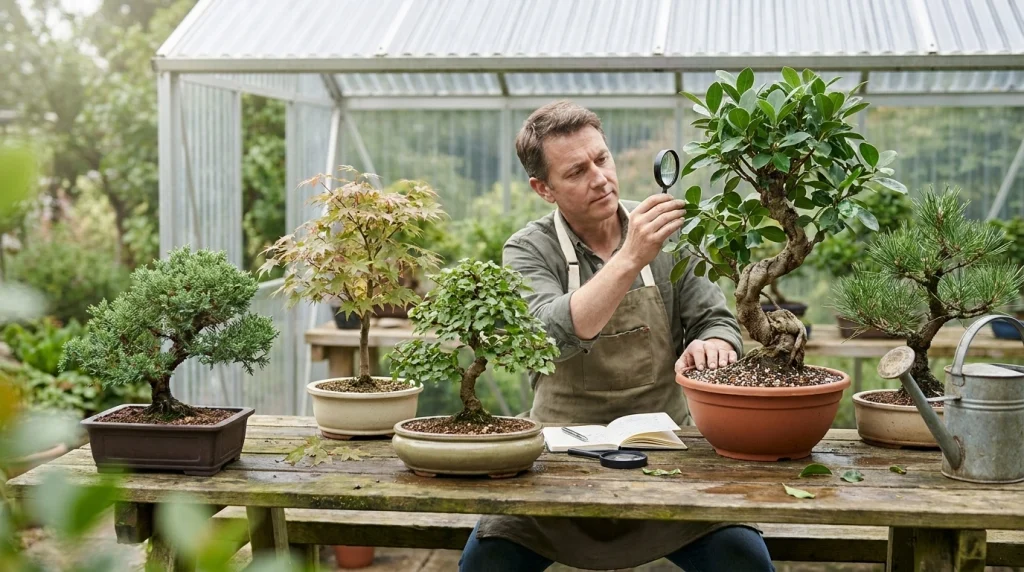
A consistent inspection routine makes humid-weather bonsai care easier. It helps you catch drainage issues, emerging pests, and fungal symptoms before they become harder to manage.
What should you check each day?
During prolonged humid or rainy weather, make a brief inspection in the morning and revisit any tree with unusual moisture or symptoms later in the day.
- Soil moisture: Check the root zone before watering.
- Drainage: Ensure excess water can escape the pot.
- Foliage: Look for spots, powdery growth, yellowing, and damaged leaves.
- Airflow: Check whether foliage is crowded or enclosed.
- Pests: Examine tender shoots and leaf undersides.
- Weather: Consider upcoming rain, temperature, wind, and sunlight.
Adjust the frequency of these checks to the weather and the tree’s condition. A small pot in hot, windy conditions may dry faster than a larger pot in a cool, sheltered spot, even when both experience similar humidity.
How should care change for different bonsai species?
Humidity management should never override a tree’s basic species requirements. The same sheltered location that helps one bonsai during heavy rain may deprive another of essential sunlight.
| Bonsai type | Humid-weather priority | Important caution |
|---|---|---|
| Ficus | Maintain warmth, suitable light, and free drainage. | Don’t keep the root zone saturated or move the tree abruptly into poor light. |
| Juniper | Preserve outdoor light, airflow, and appropriate soil moisture. | Avoid prolonged indoor shelter in low light. |
| Japanese maple | Protect delicate foliage from harsh conditions while allowing ventilation. | Avoid sudden exposure changes and unnecessary heavy pruning during stress. |
| Chinese elm | Balance suitable light, airflow, and moisture according to its growing conditions. | Don’t assume that a shedding or yellowing canopy always indicates fungal disease. |
| Pine | Maintain appropriate outdoor exposure and an aerated root zone. | Avoid excessive watering and abrupt changes to its established seasonal routine. |
These are general guidelines, not substitutes for species-specific care. Cultivar, local climate, growing medium, and the tree’s current health can change the best approach.
What should you avoid during prolonged humidity?
Several common reactions can create more stress than the weather itself. Keep the routine measured and make changes based on observable conditions.
- Don’t water automatically every morning when the root zone is still wet.
- Don’t mist foliage repeatedly when it already stays wet for long periods.
- Don’t move outdoor species into dark rooms just to avoid rain.
- Don’t apply fertilizer excessively to compensate for slow or weak growth.
- Don’t prune heavily, repot, or disturb roots without a sound horticultural reason.
- Don’t use fungicides or insecticides without identifying the likely problem.
In particular, postpone unnecessary styling work when a tree is stressed or showing unexplained symptoms. Major pruning and root work can reduce a bonsai’s ability to recover.
Section Takeaway: Use a repeatable inspection routine, adapt care to each species, and avoid drastic interventions. Consistent observation is more useful than reacting to humidity alone.
Frequently asked questions
Should I bring my bonsai indoors when humidity is high?
Usually not if it’s an outdoor species receiving appropriate light and seasonal conditions. Instead, improve airflow and provide temporary rain protection when necessary. Tropical bonsai may be grown indoors when their light and temperature needs can be met, but moving a tree indoors solely because of humidity can create additional stress.
Is 80% humidity too high for bonsai?
Not necessarily. Many tropical plants tolerate or benefit from high humidity, and outdoor bonsai regularly experience humid weather. The more important questions are whether foliage stays wet, the soil drains properly, and the tree receives suitable light and ventilation.
Should I mist my bonsai during humid weather?
Usually, routine misting is unnecessary when the surrounding air is already humid. It can prolong leaf wetness if foliage doesn’t dry promptly. Concentrate on the tree’s actual watering needs, and use humidity-management methods suited to its species and growing environment.
How often should I water bonsai during the rainy season?
There is no universal schedule. Check the root zone and account for rainfall, temperature, wind, sunlight, pot size, and soil composition. Water thoroughly when the tree needs it, then let excess water drain. Don’t water simply because another day has passed.
Why are my bonsai leaves turning yellow in humid weather?
Yellowing can result from waterlogged roots, insufficient light, normal seasonal leaf turnover, nutrient problems, pests, or disease. Check the soil moisture and drainage first, then examine the foliage for spots, insects, or other symptoms. Avoid applying fungicide until you have a reasonable diagnosis.
Can a bonsai recover from root rot?
Recovery depends on how much root tissue remains healthy, the cause of the damage, and the species. Correct drainage and watering problems promptly. Severe cases may need expert assessment, because removing roots or repotting at the wrong time can worsen stress.
Do I need fungicide every time the weather becomes humid?
No. Preventive fungicide use is not automatically necessary during humid weather. Good airflow, appropriate watering, sanitation, and early inspection are the first steps. Use a suitable labeled treatment only when the disease risk and product instructions justify it.
Final takeaway: Keep your bonsai healthy through humid weather
Protecting bonsai during humid weather is about managing excess moisture without depriving the tree of the conditions it needs to grow. Good drainage, adequate airflow, careful watering, and regular inspections provide a strong foundation.
Start by checking your growing medium and the space around your tree. Remove unhealthy debris, monitor for pests, and respond to suspicious symptoms before they spread.
If you grow several bonsai species, keep separate care notes for each tree. Over time, these observations will help you recognize how rainfall, humidity, and seasonal changes affect your collection.
Make small, informed adjustments rather than drastic changes. Healthy roots, suitable light, and consistent care are your best defenses against humid-weather problems.