How Overwatering Leads to Bonsai Disease

Quick Answer
Overwatering leads to bonsai disease when the soil stays saturated long enough to deprive roots of oxygen, weaken root tissue, and favor certain disease-causing organisms. Damaged roots cannot absorb water and nutrients properly, so the tree may develop yellow leaves, wilting, leaf drop, poor growth, and root rot. Following proper bonsai watering practices helps prevent these problems.
Common causes and warning signs
- Oxygen shortage: Water fills the air spaces between soil particles, making it harder for roots to function.
- Root rot: Damaged roots may become dark, soft, and unpleasant-smelling.
- Yellowing foliage: Root damage interferes with water and nutrient uptake.
- Persistent wetness: Soil that stays saturated long after watering deserves investigation.
- Fungal disease: Some pathogens thrive in wet conditions and can attack weakened roots or foliage.
- Secondary pests: Fungus gnats may appear around persistently damp substrate, although they do not prove root disease.
What to check first
- Check moisture below the surface, inspect drainage holes, and empty any standing water beneath the pot.
- Do not water again simply because the leaves look wilted; both overwatering and underwatering can cause wilting.
Overwatering is one of the most important bonsai care problems to understand because root damage often develops before the foliage shows obvious distress. A tree can look thirsty even when its soil is saturated.
In this guide, I’ll explain how excess moisture contributes to bonsai disease, which symptoms deserve attention, and how to restore healthier growing conditions without adding unnecessary stress.
In This Guide
- How does overwatering cause bonsai disease?
- Which bonsai diseases are linked to overwatering?
- What are the signs of an overwatered bonsai?
- How can you distinguish overwatering from underwatering?
- How can you prevent bonsai disease caused by overwatering?
- How do you treat an overwatered bonsai?
- Frequently asked questions
How does overwatering cause bonsai disease?
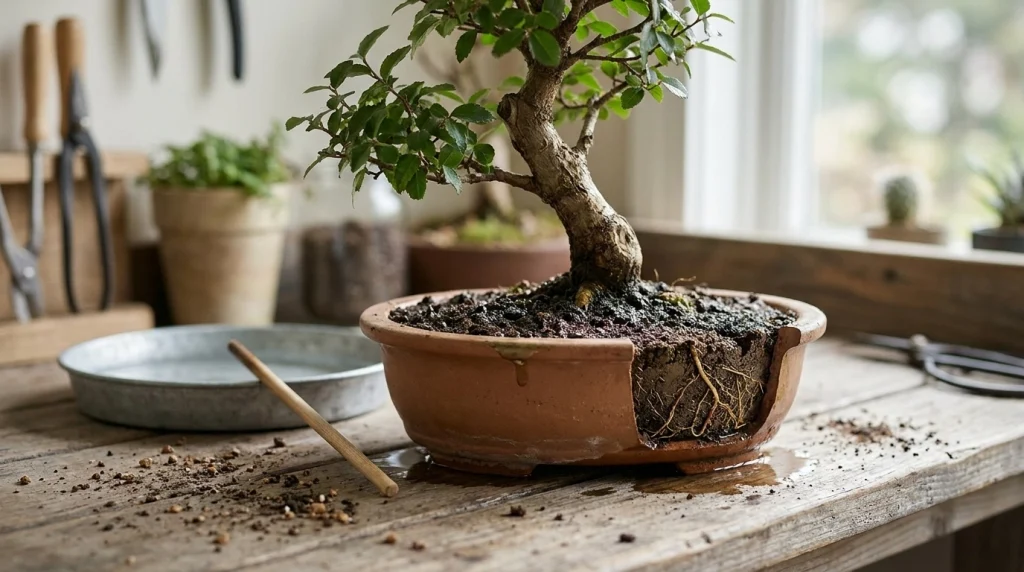
Overwatering causes disease risk to rise when excess moisture reduces oxygen around the roots and creates conditions that favor root decay. Healthy roots need both water and oxygen to absorb nutrients, support growth, and maintain the tree’s normal functions.
What happens to roots in waterlogged bonsai soil?
Waterlogged bonsai soil is a growing medium that remains excessively saturated, leaving too little air in the spaces around the roots for normal root function. It differs from soil that becomes wet immediately after thorough watering and then drains freely.
When water fills the spaces that should contain air, oxygen becomes less available to root cells. Prolonged oxygen deprivation can damage fine feeder roots, which are responsible for much of the tree’s water and nutrient absorption.
As the roots decline, the foliage may receive less water despite the wet soil. This explains why a bonsai suffering from root damage can wilt even when its pot feels heavy.
Why does poor drainage increase disease risk?
Drainage controls how quickly excess water leaves the container and how readily air returns to the root zone. A shallow bonsai pot has limited soil volume, so problems with compacted substrate or blocked drainage holes can quickly affect root health.
Several conditions can contribute to prolonged saturation:
- Compacted soil: Fine particles and decomposed organic material reduce the spaces through which air and water move.
- Blocked drainage holes: Water cannot escape freely from the bottom of the pot.
- Frequent watering: Adding water before the substrate needs it keeps the root zone excessively wet.
- Cool, low-light conditions: Slower growth and reduced water use can extend the time the soil remains moist.
- Poor positioning: A pot standing in a tray of water may remain saturated longer than intended.
According to Bonsai Empire’s guide to bonsai soil, a suitable substrate must balance moisture retention with drainage and aeration. The aim is not to make the soil dry immediately, but to prevent excess water from remaining trapped around the roots.
Section Takeaway: Overwatering becomes dangerous when the root zone remains saturated and poorly aerated. Improving drainage and adjusting watering frequency addresses the conditions that allow root problems to develop.
Which bonsai diseases are linked to overwatering?
Overwatering is strongly associated with root decline and several forms of root or crown rot. However, excess water does not automatically mean a bonsai has an infectious disease; pathogens, tree susceptibility, and growing conditions all influence the outcome.
Root rot
Root rot is the breakdown of root tissue caused by disease organisms, unfavorable growing conditions, or a combination of both. Prolonged saturation can damage roots directly and encourage pathogens that attack already stressed tissue.
Potential warning signs include:
- Dark, soft, or mushy roots rather than firm, living tissue.
- Unpleasant odors coming from the substrate.
- Persistent wilting despite moist soil.
- Yellowing leaves, weak growth, and progressive branch decline.
Root color varies among species, so color alone cannot confirm rot. Texture, odor, overall root condition, and the tree’s recent watering history provide more useful evidence together.
Which pathogens can attack waterlogged roots?
Several organisms can cause root and crown diseases in susceptible plants, including Pythium, Phytophthora, Fusarium, and Rhizoctonia. Some are associated with waterlogged conditions, while others can attack roots under a broader range of circumstances.
Pythium and Phytophthora are commonly called water molds. They are not true fungi, although their root diseases are often discussed alongside fungal infections.
The University of Wisconsin–Madison’s bonsai disease resource identifies several organisms associated with root and crown rot in bonsai. Correct diagnosis matters because different pathogens may require different management approaches.
Can overwatering cause fungal leaf diseases?
Excessive watering can contribute indirectly to some foliage diseases, especially when it leaves leaves wet for long periods or promotes poor air circulation. Water splashing between plants may also spread certain pathogens.
Common symptoms worth investigating include:
- Expanding brown or black leaf spots.
- Yellow halos around damaged leaf tissue.
- Premature leaf drop.
- Repeated spotting during prolonged wet weather.
These symptoms are not exclusive to fungal disease. Sun scorch, chemical injury, nutrient problems, and other environmental stresses can produce similar damage.
Fungus gnats may also appear around damp soil, but their presence does not establish that the roots have a fungal infection. Treat the underlying moisture problem instead of assuming every fungus-related sign has the same cause.
Section Takeaway: Root rot is a major disease concern associated with persistent saturation. Foliage spots and fungus gnats require separate assessment rather than an automatic diagnosis of fungal disease.
What are the signs of an overwatered bonsai?
An overwatered bonsai often develops a combination of persistent soil moisture, declining foliage, weak growth, and unhealthy roots. No single symptom proves overwatering, so check the growing conditions before deciding what treatment the tree needs.
Which symptoms should you look for first?
- Yellowing leaves: Damaged roots may struggle to absorb nutrients and water normally.
- Wilting foliage: Root dysfunction can prevent adequate water uptake even when the substrate is wet.
- Leaf drop: Stress may trigger premature shedding, particularly when conditions remain unfavorable.
- Stunted growth: A weakened root system may not support normal shoot development.
- Soft or decaying roots: These findings raise concern for root rot or severe root damage.
- Slow soil drying: Substrate that remains saturated unusually long may indicate poor drainage or excessive watering.
Indoor tropical bonsai, such as many Ficus varieties, can suffer from excess moisture when light levels are low and the substrate remains wet. Outdoor junipers and pines can also develop root problems if their soil stays waterlogged.
How can you check whether the soil is too wet?
Start with the soil rather than the leaves. Surface moisture can be misleading because the upper layer may dry while the lower root zone remains saturated.
- Feel the substrate about 1 cm below the surface, where appropriate for the soil structure.
- Check whether the pot feels unusually heavy compared with its normal post-watering condition.
- Observe whether water exits freely through the drainage holes.
- Look for standing water in the tray or decorative outer container.
- Record how long the substrate stays wet and whether foliage symptoms continue to worsen.
If the tree is declining severely, root inspection may be necessary. However, repeatedly removing a bonsai from its pot can damage fine roots and add stress.
For more diagnostic guidance, the University of Maryland Extension’s overwatering guide explains how excess moisture can cause wilting, yellowing, leaf drop, and root damage.
Section Takeaway: Persistent wetness combined with declining foliage is a reason to investigate root health. Confirm the moisture and drainage problem before treating the tree for a particular disease.
How can you distinguish overwatering from underwatering?
Overwatering and underwatering can both cause yellow leaves, wilting, weak growth, and leaf drop. The most useful distinction is the condition of the substrate and roots, not the appearance of the foliage alone.
Use this comparison to guide your initial assessment.
| Clue | Overwatering | Underwatering |
|---|---|---|
| Substrate | Remains excessively wet or saturated | Dry, lightweight, or pulling away from the pot |
| Roots | May become soft, dark, or decayed | May become dry, brittle, or damaged |
| Foliage | Yellowing, wilting, or premature drop | Drooping, curling, or dry, crispy edges |
| Drainage | May be slow or obstructed | Water may run past a dry, water-repellent root ball |
| First response | Correct saturation and investigate root damage | Rehydrate the root ball thoroughly |
These are diagnostic clues, not absolute rules. A bonsai with advanced root rot may have a mixture of symptoms, and a severely dehydrated tree can also have damaged roots.
Another useful distinction is the speed of soil drying. A tree in a coarse, airy substrate may need frequent watering during hot weather, while one in compacted organic soil may remain wet for much longer.
Do not respond to wilting by automatically adding water. Check the root zone first, then correct the condition you actually find.
Section Takeaway: Soil moisture and drainage provide stronger initial clues than foliage alone. If the tree is wilting in wet soil, investigate root dysfunction before watering again.
How can you prevent bonsai disease caused by overwatering?
The most reliable prevention strategy combines appropriate watering, a suitable substrate, open drainage holes, and regular observation. No single watering frequency works for every species, pot, season, and growing environment.
How often should you water a bonsai?
Water when the substrate indicates that the tree needs it, rather than following a rigid calendar. Temperature, wind, sunlight, humidity, species, pot size, and soil composition all influence how quickly the root ball dries.
For healthier watering habits:
- Check each tree individually, especially during hot weather.
- Water thoroughly when needed so moisture reaches the entire root ball.
- Allow excess water to drain through the pot.
- Recheck moisture before watering again.
- Reduce watering frequency when cool conditions slow drying, without allowing the tree to become completely dry.
A bonsai in full summer sun may need water much more frequently than the same tree during a cool, cloudy period. In humid climates, slow drying can make moisture checks particularly important.
Which bonsai soil helps prevent root disease?
A good bonsai substrate balances water retention with drainage and air space. Common components include akadama, pumice, and lava rock, although the best mixture depends on species, local conditions, and watering habits.
Consider these practical differences:
- Akadama: Retains moisture while maintaining useful structure, but gradually breaks down.
- Pumice: Holds some water while helping maintain an airy substrate.
- Lava rock: Helps create structure and open spaces for drainage and aeration.
- Fine, compacted potting soil: May retain excess moisture and lose air space as organic material decomposes.
These materials are not interchangeable in every situation. Choose a mixture appropriate for the species and climate instead of relying on one universal recipe.
How do pot design and growing conditions affect watering?
A shallow pot offers limited room for roots and soil, making drainage and moisture management especially important. Ensure the drainage holes remain open and that the container does not sit in standing water.
Also consider the tree’s environment. Adequate species-appropriate light and good air circulation support healthy growth, while prolonged shade and cool conditions may slow water use.
Fertilizer cannot compensate for damaged roots. Avoid heavy feeding when a tree is declining, and resume a suitable feeding routine only when its condition and growth stage support it.
Section Takeaway: Prevention depends on matching watering to actual soil moisture. A suitable substrate, functioning drainage holes, and careful observation reduce the risk of prolonged saturation and root disease.
How do you treat an overwatered bonsai?
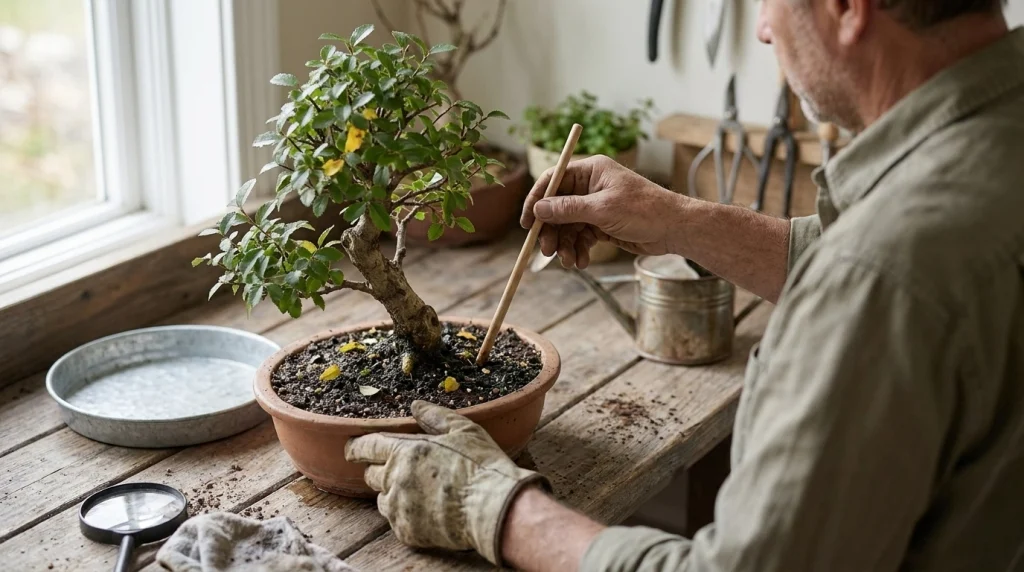
To treat an overwatered bonsai, correct the moisture problem first and determine whether the roots show signs of decay. Mild cases may improve after drainage and watering habits are corrected, while advanced root disease may require expert diagnosis and carefully timed intervention.
What should you do immediately?
- Stop unnecessary watering. Do not add more water while the substrate remains saturated.
- Empty standing water. Remove water from trays and outer containers so the pot can drain freely.
- Check the drainage holes. Look for visible obstructions without forcing tools through the root mass.
- Adjust the growing environment. Provide appropriate light and ventilation for the species, avoiding sudden exposure to extreme heat or harsh sunlight.
- Monitor the tree. Record changes in soil moisture, foliage, and new growth over the following days.
Do not attempt to dry the root ball rapidly with a heater, intense direct sun, or strong airflow. A tree with damaged roots can become dehydrated even while some of its substrate remains wet.
When should you inspect or repot the roots?
Repotting may be necessary when the substrate has broken down, drainage is severely compromised, or root rot is strongly suspected. However, unnecessary repotting can worsen stress, particularly if the tree is already weak or the season is unsuitable.
If inspection is justified, look for firm, living roots and identify clearly decayed tissue. Root color differs among species, so avoid removing healthy roots simply because they are not pale.
Pro tip: Root pruning is difficult to reverse. If the bonsai has extensive root decay or requires substantial root removal, consult an experienced grower or local bonsai club before cutting.
When repotting is appropriate, use a clean pot with unobstructed drainage and a suitable fresh substrate. Avoid reusing soil that may contain root pathogens.
Should you use fungicide on an overwatered bonsai?
Not automatically. Overwatering symptoms can result from oxygen deprivation without an infectious disease, and fungicides do not correct poor drainage or restore dead roots.
When symptoms strongly suggest an infectious root or foliage disease, seek an accurate diagnosis before choosing a treatment. Use only products labeled for the relevant plant and disease, following their instructions and local regulations.
Recovery depends on how much functional root tissue remains, the species, and whether the underlying conditions have been corrected. Some trees recover gradually, while others with extensive root damage may not survive.
Section Takeaway: Restore healthy growing conditions before adding treatments. Repot only when the evidence justifies it, preserve healthy roots, and seek expert help when disease is severe or uncertain.
Frequently asked questions about overwatering and bonsai disease
Can overwatering kill a bonsai tree?
Yes. Prolonged saturation can deprive roots of oxygen, damage their tissues, and encourage root rot. If enough functioning roots are lost, the tree may no longer absorb sufficient water and nutrients to survive. Early correction improves the chances of recovery.
How long can bonsai soil stay wet before it becomes dangerous?
There is no universal safe number of hours or days. The answer depends on the species, substrate, temperature, humidity, and drainage. Soil that remains saturated unusually long deserves attention, especially if the foliage is declining or the roots smell rotten.
Does yellow foliage always mean a bonsai is overwatered?
No. Yellow foliage can result from overwatering, underwatering, poor light, seasonal changes, nutrient problems, pests, or disease. Check soil moisture and recent care conditions before deciding what is wrong. Leaf color alone cannot establish the cause.
Can a bonsai recover from root rot?
Recovery is possible when enough healthy roots and living tissue remain. Correct the moisture and drainage problem, protect the remaining roots, and avoid unnecessary stress. Severe infections or extensive root loss can be fatal, so recovery cannot be guaranteed.
Should I let my bonsai soil dry completely after overwatering?
No. The goal is to restore an appropriate moisture balance, not to leave the tree completely dry. Let excess moisture drain and allow the substrate to move toward the level of moisture appropriate for the species. Damaged roots may be especially vulnerable to drought.
Can fungus gnats indicate bonsai root rot?
Fungus gnats can indicate persistently damp growing conditions, but their presence does not confirm root rot. Check drainage, moisture, and root health. Correcting prolonged wetness helps discourage gnats and reduces the risk of moisture-related root problems.
Should I fertilize a bonsai that has been overwatered?
Avoid strong or excessive fertilization while the tree is stressed and its roots may be damaged. Fertilizer does not repair root rot and can add further stress. Resume an appropriate feeding program when the tree stabilizes and active growth supports it.
Keep your bonsai healthy by managing moisture
Overwatering leads to bonsai disease when persistent saturation interferes with root function and creates conditions that favor certain pathogens. Learning to recognize wet soil, poor drainage, yellowing foliage, and root decay helps you respond before the damage becomes severe.
Make soil checks part of your routine, water each tree according to its needs, and keep drainage holes clear. When a bonsai begins declining despite wet soil, investigate the roots rather than assuming it needs more water.
Healthy bonsai care is about balance. Provide enough moisture for growth while preserving the oxygen and drainage that roots need to remain functional.