Water Bonsai Vacation Guide: 7 Ways to Keep Trees Alive

This post contains affiliate links. As an Amazon Associate, OurBonsai earns from qualifying purchases at no extra cost to you. Read our disclosure.
In this guide
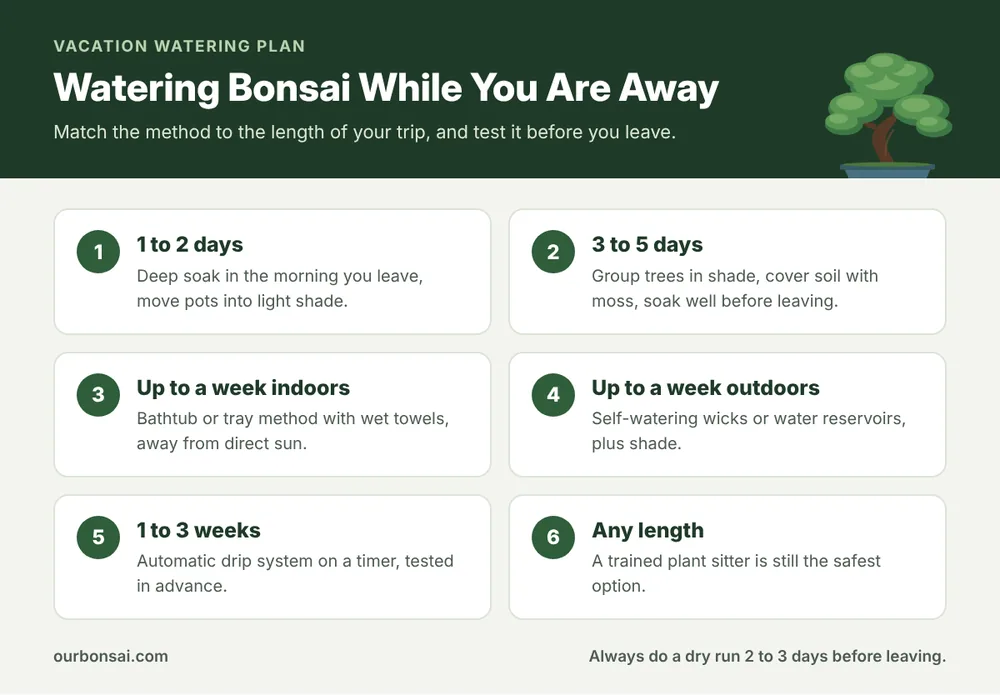
Planning a trip and wondering how to water bonsai vacation style without coming home to dead trees? It depends on how long you will be gone. For one or two days, a deep soak and a move into light shade is enough. For three to five days, group your trees together in the shade and cover the soil to slow drying. For a week or more, you need either a self-watering setup, an automatic drip system on a timer, or a person who checks and waters for you. Whatever you choose, test it a few days before you leave.
This guide covers seven methods, what each one is good for and how to set it up.
Why bonsai are hard to leave alone
A bonsai pot holds very little soil, so it holds very little water. In summer, a small outdoor tree can use its entire supply in a day. Unlike garden plants, bonsai cannot reach deeper soil for moisture. That is why even a long weekend needs a plan, especially between May and September.
The good news is that you can slow water loss a lot. Plants lose water through their leaves by transpiration, which speeds up with sun, heat and wind. Shade, shelter and humidity all reduce it.
Choose a method by trip length
| Trip length | Outdoor trees | Indoor trees |
|---|---|---|
| 1 to 2 days | Deep soak, light shade | Deep soak, away from window sun |
| 3 to 5 days | Group in shade, cover soil, soak | Bathtub tray method |
| About a week | Wicks or reservoirs, shade | Tray method or wicks |
| 1 to 3 weeks | Drip system on a timer | Drip kit or plant sitter |
| Longer | Plant sitter or bonsai nursery boarding | Plant sitter |
7 methods to water bonsai on vacation
1. The deep soak
On the morning you leave, water each tree three times until it drains, or stand each pot in a basin of water for 10 to 15 minutes so the whole root ball is saturated. Then let it drain. This alone covers a day or two in mild weather.
2. Shade and shelter
Move trees out of direct sun and wind, ideally into bright shade under a larger tree or on the north side of a building. Dropping from full sun to shade can roughly halve how fast pots dry. Do not put them in deep shade for weeks, though, and do not move sun-lovers like junipers into a dark garage.
3. Grouping and ground contact
Place pots close together on the ground rather than on a bench. They shade each other, the air around them stays more humid, and the ground keeps the pots cooler. Put a layer of damp mulch, gravel or sand around the pots to hold moisture.
4. Covering the soil
A layer of fresh moss, damp sphagnum or a thin layer of shade cloth over the soil surface reduces evaporation. Leave the trunk base uncovered so it does not stay wet.
5. The bathtub or tray method (indoor trees)
Line a bathtub or a large tray with an old towel, soak it, and add a couple of centimeters of water. Stand the pots on bricks or upturned saucers so they sit just above the water, or directly on the wet towel for small pots. Close the curtains partly so the room stays bright but not sunny. This keeps humidity high and gives the soil a slow supply of moisture. It works for about a week for tropicals like ficus and jade. See our guide on how to take care of a bonsai tree inside for general indoor care.
6. Wicks and water reservoirs
A cotton or nylon wick pushed into the soil through a drainage hole, with the other end in a bucket of water, draws water up into the pot by capillary action. This works best for small pots and fine soil. Test it for a few days before you leave, because results vary with soil type. Some growers use commercial self-watering spikes with bottles for larger pots.
7. Automatic drip irrigation
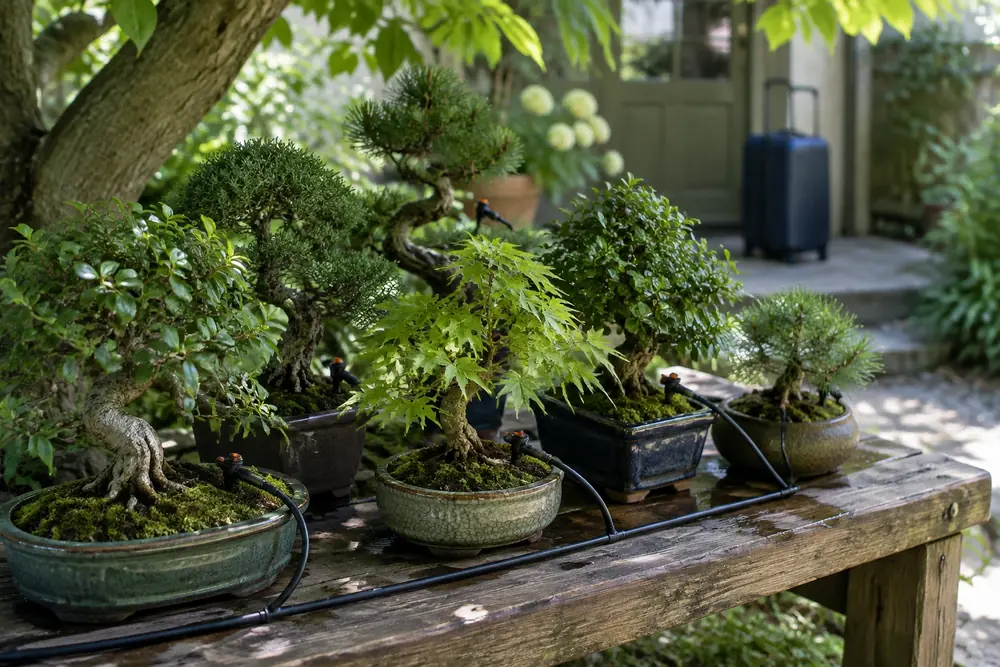
For trips of a week or more, a drip system with a timer is the most reliable automated option. A main line runs along the bench, with a thin tube and adjustable dripper or micro-sprayer for each pot. A battery timer on the tap waters once or twice a day. Our guide to the best automatic watering system for bonsai compares kits. Run it for several days before you leave and adjust each dripper so every pot gets soaked.
The best option: a plant sitter
No automatic system is as safe as a person who knows what to look for. A neighbor, friend or local bonsai club member can check your trees every day or two. Give them a short lesson before you go:
- How to check the soil with a finger.
- How to water each pot until it drains.
- Which trees need more water (azaleas, maples) and which need less (junipers, pines, jade).
- A written note for each tree, or colored labels for “thirsty” and “dry-tolerant”.
- A phone number to call if something looks wrong.
Some bonsai nurseries also offer boarding for valuable trees during long absences.
Getting your trees ready before you leave
- Do not repot, prune hard or wire in the two weeks before a trip. Stressed trees use water unpredictably.
- Check for pests so nothing spreads while you are away. Our bonsai pests and diseases guide helps.
- Skip fertilizer the week before you go. Growth spurts increase water use.
- Do a test run of your chosen method for two or three days.
Seasonal tips
- Summer: the hardest season. Use shade plus a drip system or a sitter for anything longer than a weekend. See our guide on watering bonsai in summer.
- Spring and autumn: trees use less water, and rain helps. Grouping and shade can cover several days.
- Winter: dormant outdoor trees need little water. Protect pots from hard frost and they may go a week or two. Indoor trees still need watering because of heating. See watering indoor bonsai in winter.
Common mistakes
- Leaving trees in full sun. Even a perfect drip system can fall short on a hot day.
- Overwatering before leaving and sealing pots in plastic bags. Bags trap heat and encourage rot. Only use them for short trips with trees out of the sun.
- Trusting a system you have not tested. Drippers clog and timers fail.
- Putting all trees in saucers of water. Roots rot when they sit in water for days.
FAQ: water bonsai vacation
How long can a bonsai go without water?
In summer, a small outdoor bonsai may only last a day. In cool weather, a few days. Dormant trees in winter can go a week or more. Always plan for the hottest possible weather.
Can I put my bonsai in the bathtub while on vacation?
Yes, for indoor trees. Stand them on a wet towel or on bricks above a little water, in a bright room out of direct sun. It works for about a week.
Do self-watering spikes work for bonsai?
They can help for larger pots, but the flow varies. Test them for a few days before relying on them.
What is the safest way to water bonsai while away?
A plant sitter who knows how to check and water each tree. For long trips, combine a sitter with a drip system.
Final thoughts
The right way to water bonsai vacation style depends on the trip. For short trips, a deep soak, shade and grouping go a long way. For longer ones, use a tested drip system or, best of all, a friend who knows what to do. Plan ahead, run a test, and you can travel without worrying about your trees. For everyday watering basics, see our main bonsai care guide.