Bacterial Canker on Bonsai Trees: Signs, Causes, Treatment, and Prevention

Quick Answer
Bacterial canker on bonsai trees causes localized bark lesions, shoot dieback, darkened tissue, leaf spotting, and sometimes gum-like sap. Species of Pseudomonas, including Pseudomonas syringae, can infect susceptible woody plants through wounds or damaged tissue, especially during cool, wet conditions. Penn State Extension has a useful overview of Pseudomonas on woody plants.
Signs to Check First
- Sunken bark: Look for dark, depressed, cracked, or rough areas on shoots and branches.
- Branch dieback: Leaves or needles beyond an infected area may wilt, brown, or die suddenly.
- Dark tissue: Bark beneath a suspicious lesion may look brown or black instead of healthy green tissue.
- Leaf symptoms: Some infections also cause dark leaf spots, blackened veins, or blighted young growth.
- Gum or ooze: Prunus bonsai may develop amber or sticky gum around infected bark.
What to Do Immediately
- Separate the tree: Keep it away from nearby bonsai while you identify the problem.
- Keep foliage dry: Avoid unnecessary overhead watering and splashing.
- Pause major styling: Do not add more pruning, wiring, or repotting stress until you understand the damage.
- Clean tools: Disinfect cutting tools before using them on another tree.
Bacterial canker is one of those bonsai problems that can look deceptively simple at first. I have seen small dark lesions resemble pruning damage until the shoot beyond them begins to weaken.
The safest approach is to diagnose before treating. This guide explains what bacterial canker looks like, why it develops, how to manage suspicious infections, and how to reduce the chance of another outbreak.
In This Guide
What Is Bacterial Canker on a Bonsai Tree?
Bacterial canker is a disease in which pathogenic bacteria damage bark, shoots, buds, or nearby woody tissue. The damaged area may develop into a distinct lesion called a canker.
Definition: A canker is a localized area of dead or damaged bark and underlying tissue on a woody stem, branch, or trunk.
Pseudomonas syringae is one important bacterial pathogen associated with cankers and shoot blights on many woody plants. However, the exact pathogen and symptoms depend on the bonsai species.
Why bacterial canker matters more on a small bonsai
A canker that kills a small branch on a landscape tree may be relatively minor. The same lesion can remove a large percentage of a bonsai’s designed branch structure.
The problem becomes more serious if a lesion expands around a branch or trunk. Once damaged tissue effectively circles, or girdles, that section, water movement through the affected tissue can be severely disrupted.
- Small branches: One lesion may kill the entire shoot beyond it.
- Primary branches: Dieback can permanently change the tree’s design.
- Trunk infections: These deserve more caution because aggressive cutting may threaten the whole tree.
- Recently styled trees: Fresh pruning and other injuries can create potential infection sites.
I treat unexplained branch dieback differently from routine leaf yellowing. A sharply defined bark lesion deserves a close inspection before I reach for fertilizer or change the watering schedule.
Section Takeaway: Bacterial canker damages woody tissue rather than simply causing cosmetic leaf discoloration. Early recognition matters because a small bonsai has little structural wood to spare.
What Are the Signs of Bacterial Canker on Bonsai?
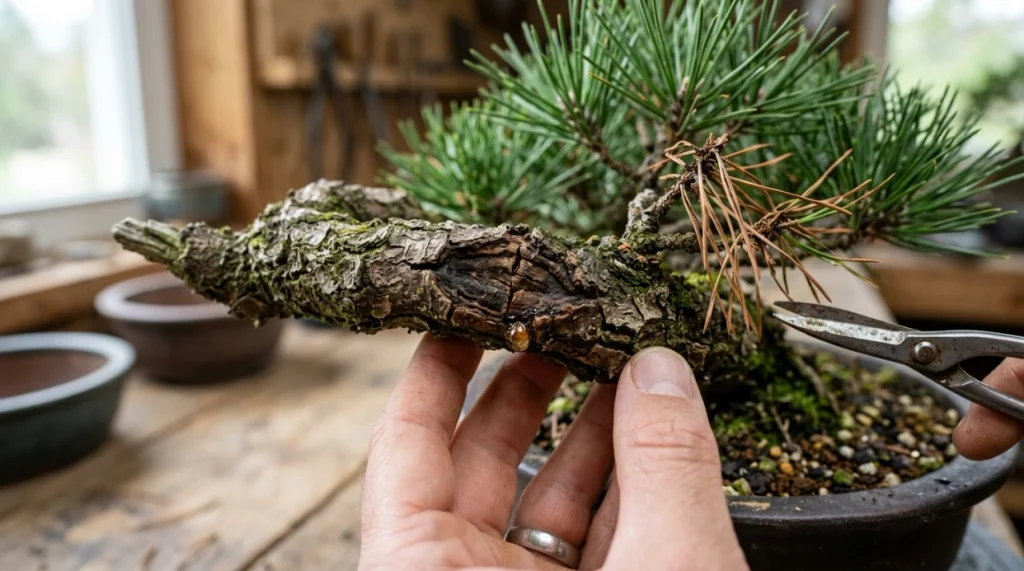
The most useful clue is a combination of localized bark damage and dieback beyond that point. Symptoms can vary substantially among species.
The University of California’s bacterial canker guidance describes rough cankers, limb dieback, gumming, leaf symptoms, and damaged inner bark in susceptible Prunus trees.
Inspect the bark first
- Sunken lesions: An infected patch may sit slightly lower than surrounding healthy bark.
- Dark discoloration: Bark can become brown, black, or unusually dull.
- Cracking: Older cankers may split or become rough around the margin.
- Gummosis: Cherry, plum, and related Prunus species may release sticky amber-colored gum.
- Dead shoot tips: Young growth may blacken or collapse.
Look at everything beyond the lesion
A branch with damaged conducting tissue may struggle to support foliage above the canker. Leaves can wilt, yellow, brown, or remain attached after dying.
Do not diagnose bacterial canker from branch dieback alone. Root problems, frost injury, fungal cankers, wiring damage, and severe drought can produce similar patterns.
Check beneath suspicious bark carefully
Healthy living bark usually has moist green tissue underneath when lightly examined. Diseased areas may contain brown or dark tissue extending beyond what you can see externally.
Do not repeatedly scrape bark simply to investigate. Every unnecessary wound removes living tissue and creates another possible entry point for pathogens.
Pro tip: Cutting or peeling living bark can permanently damage a valuable bonsai. If the suspected canker affects the trunk, nebari, or a primary branch, consider getting help from an experienced grower, bonsai club, or plant diagnostic service before making an irreversible cut.
Which Bonsai Trees Are Most at Risk?
Bacterial canker is not one single disease affecting every bonsai equally. Susceptibility depends on the host species, bacterial strain, weather, tissue condition, and previous injuries.
Penn State Extension reports that Pseudomonas syringae can affect a wide range of woody plants. Hosts include Japanese maple, apple, pear, cherry, plum, poplar, dogwood, and several other ornamental trees.
Pay closer attention to vulnerable broadleaf species
- Japanese maple: Watch for leaf spotting, blackened veins, shoot injury, and tip dieback.
- Cherry and plum: Inspect for sunken bark, dead shoots, and abnormal gumming.
- Apple and crabapple: Do not assume shoot dieback is bacterial canker because other bacterial diseases can affect these hosts.
- Pear: Bacterial diseases can produce shoot and branch symptoms requiring careful diagnosis.
Cool, wet weather can increase risk
Pseudomonas syringae commonly benefits from wet conditions and can move in splashing water. Frost or physical damage may also make susceptible tissue easier to infect.
A freshly worked bonsai deserves extra attention during damp periods. I avoid unnecessary pruning when rain is expected because wet foliage, fresh wounds, and repeated tool use make disease management harder.
Stress can make recovery more difficult
Stress does not magically create bacterial canker. It can reduce a tree’s ability to compartmentalize damaged tissue and replace lost roots or shoots.
- Recent repotting or heavy root pruning
- Severe drought or repeated wilting
- Winter or frost injury
- Large pruning wounds
- Poor drainage and persistently unhealthy roots
- Incorrect light or temperature for the species
Section Takeaway: Host species, wounds, wet conditions, and tree vigor all influence risk. Diagnose the specific tree rather than assuming every dark branch is bacterial canker.
How Can I Tell Bacterial Canker From Other Problems?
You usually cannot confirm a bacterial disease from appearance alone. Fungal cankers, mechanical damage, frost injury, and root stress can overlap closely.
The University of Minnesota’s Prunus diagnostic guide shows how bacterial canker, fungal cankers, and insect problems can create similar branch symptoms.
| Problem | Typical Clues | Useful Next Check |
|---|---|---|
| Bacterial canker | Sunken or dark bark, shoot dieback, possible leaf spotting, gumming on some hosts | Check host species, recent frost or wounds, and lesion margins |
| Fungal canker | Sunken lesions and dieback; some diseases develop fruiting bodies or colored spore structures | Look for fungal structures and consider laboratory diagnosis |
| Wire damage | Damage follows wire position or a tight spiral around expanding bark | Inspect wire marks and swelling above constricted areas |
| Frost injury | Tender shoots blacken after a cold event, often across similarly exposed growth | Review temperature history and affected parts of the canopy |
| Root or watering stress | Broader wilting, yellowing, weak growth, or branch loss without a clear canker | Check soil moisture, drainage, root condition, and recent repotting |
When should you get a laboratory diagnosis?
Consider professional diagnosis when the trunk is affected, symptoms keep returning, several bonsai develop similar lesions, or the tree is valuable. Your local university extension plant clinic may be able to examine tissue samples.
A confirmed diagnosis prevents wasted treatments. Applying fungicide to a bacterial disease, for example, does not address the cause.
How Do You Treat Bacterial Canker on Bonsai?
There is no simple spray that restores bark already killed by bacterial canker. Management focuses on removing manageable sources of infection, limiting spread, protecting healthy tissue, and helping the tree remain vigorous.
1. Isolate the affected bonsai
Move the tree far enough from the rest of your collection to reduce splashing and accidental tool transfer. Give it the light, airflow, and temperature its species normally requires.
2. Avoid working on the tree while it is wet
Rain and splashing water can help move some bacterial pathogens. Avoid pruning suspicious tissue during wet conditions whenever possible.
3. Remove infected branches when appropriate
If a canker is confined to a disposable twig or secondary branch, pruning back into clearly healthy tissue may remove much of the infected area. Make cuts during dry conditions.
Do not automatically carve a trunk canker away. Aggressive removal can create a much larger wound without eliminating bacteria already present beyond the visible margin.
Pro tip: Major branch or trunk cutting is irreversible. Get species-specific advice from an experienced bonsai grower, plant pathologist, or local bonsai club if preserving that structure matters to the design.
4. Disinfect your tools
Disease organisms can travel on contaminated blades. The University of Minnesota recommends cleaning debris first and provides detailed tool-disinfection guidance.
- 70% isopropyl alcohol: It can be used on small hand tools such as pruning shears.
- Remove sap first: Organic debris can interfere with sanitation.
- Work cleanly: Disinfect before moving from diseased material to healthy plants.
- Handle bleach cautiously: It can corrode sharp metal tools and should never be poured into bonsai soil.
5. Be cautious with copper products
Copper-based bactericides are sometimes used against bacterial diseases on particular ornamental or fruit-tree hosts. They are not universal cures, and bacterial resistance to copper can occur.
Only use a pesticide if its label specifically permits use on your plant and target problem. Follow the label exactly because concentration, timing, temperature, and species sensitivity can affect plant injury.
6. Reduce avoidable stress
Do not compensate for disease with heavy fertilizer. Focus on correct watering, appropriate light, good drainage, and stable species-appropriate conditions.
As of 2026, sanitation and cultural management remain central parts of bacterial canker control on woody plants. Protecting healthy tissue is more realistic than trying to revive wood that is already dead.
Section Takeaway: Remove manageable infected tissue during dry conditions, keep tools clean, reduce splashing, and avoid adding new stress. Treatments cannot restore bark that the canker has already killed.
How Can You Prevent Bacterial Canker?

Prevention starts with fewer unnecessary wounds and cleaner growing habits. A healthy bonsai can still become infected, but sensible care reduces several avoidable risk factors.
Use a simple prevention routine
- Inspect weekly: Look at branch junctions, pruning sites, new shoots, leaf undersides, and damaged bark.
- Prune in suitable weather: Avoid unnecessary cutting immediately before prolonged wet weather.
- Keep tools clean: Sanitize blades when disease is suspected.
- Water the soil: Reduce needless splashing across infected bark and foliage.
- Provide airflow: Avoid keeping susceptible trees packed tightly together.
- Protect from frost: Give tender or actively growing species suitable protection without disrupting required winter dormancy.
- Quarantine new trees: Inspect newly acquired bonsai before placing them among established plants.
Do not confuse prevention with keeping a tree sterile
Bonsai live outdoors with bacteria, fungi, insects, rain, and changing temperatures. The goal is not sterilization.
The better goal is to prevent conditions that make infection or spread easier. Bonsai Empire’s general guide to bonsai pests and diseases also emphasizes correct care and careful problem identification.
Photograph suspicious areas
I like to photograph a questionable lesion with the date and a small ruler beside it. Comparing images seven to fourteen days apart makes subtle expansion much easier to notice.
That simple record also helps if you later contact a plant clinic or experienced grower. You can show exactly how quickly the lesion, dieback, or discoloration changed.
Section Takeaway: Clean tools, dry pruning conditions, careful watering, routine inspection, and strong general care form the most practical prevention strategy for a bonsai collection.
Bacterial Canker on Bonsai FAQ
Can bacterial canker kill a bonsai tree?
Yes. A severe canker can kill a branch, and an expanding lesion on the trunk can threaten the entire tree if enough living tissue is destroyed. Small bonsai may have less unaffected wood available than a full-size tree.
Does bacterial canker spread from one bonsai to another?
Some bacterial pathogens can move in splashing water, infected plant material, or contaminated cutting tools. Separating a suspicious tree and cleaning tools reduces avoidable opportunities for spread.
Can bacterial canker heal on its own?
Dead bark does not become living bark again. A vigorous tree may compartmentalize damage and grow healthy tissue around a limited wound, but active or expanding disease still needs monitoring and appropriate management.
Should I use fungicide for bacterial canker?
No general-purpose fungicide should be assumed to treat bacterial canker. Fungicides target fungi, while bacterial diseases require a different diagnosis and management approach.
Can I use copper on a bonsai with bacterial canker?
Copper products are used for some bacterial diseases on certain plant species, but suitability depends on the host, product, timing, and label. Copper may damage sensitive foliage, and resistance can reduce effectiveness in some bacterial populations.
Should I repot a bonsai with bacterial canker?
Do not automatically repot unless there is a separate root or soil problem requiring it. Repotting and root pruning add stress, so delaying unnecessary work can give an already weakened tree more resources for recovery.
When should I ask an expert for help?
Get help when a canker involves the trunk, nebari, major branch, or a valuable specimen. A university plant diagnostic clinic, knowledgeable bonsai professional, or experienced local bonsai club can help distinguish bacterial disease from fungal cankers and environmental injury.
Final Takeaway: Bacterial canker on bonsai trees is easiest to manage when you notice it early and avoid guessing. Watch for localized bark lesions, dieback, darkened tissue, and species-specific symptoms, then isolate the tree, keep tools clean, reduce splashing, and get a firm diagnosis before making major cuts or applying pesticides.
