
GROWNEER 6.5 Inch Bonsai Pots Review: Worth It?

The GROWNEER 6.5 Inch Bonsai Pots are a six-pack of plastic bonsai training planters designed with drainage openings and matching trays. They provide practical growing containers for small bonsai trees, young plants, succulents, and other compact specimens.
These GROWNEER 6.5 Inch Bonsai Pots target beginners and enthusiasts who need several affordable training containers rather than decorative ceramic displays. Their strongest selling point is the combination of drainage, lightweight construction, and useful planting accessories.
However, the shallow design requires thoughtful watering and careful root-size matching. This review examines the documented specifications, practical advantages, limitations, and buying considerations without claiming hands-on testing.
🏆 My Quick Verdict
💡 Best For: Beginners, small bonsai collections, seedlings, and growers needing multiple compact training pots.
⚡ Key Specs:
Six plastic pots, approximately 6.5 × 4.8-inch pot footprint, drainage grid, matching trays, and plant labels.
✅ Bottom Line: A sensible training-focused package for maintaining several small trees. The practical accessories improve convenience, although limited root volume and plastic construction make these less suitable for mature display bonsai.
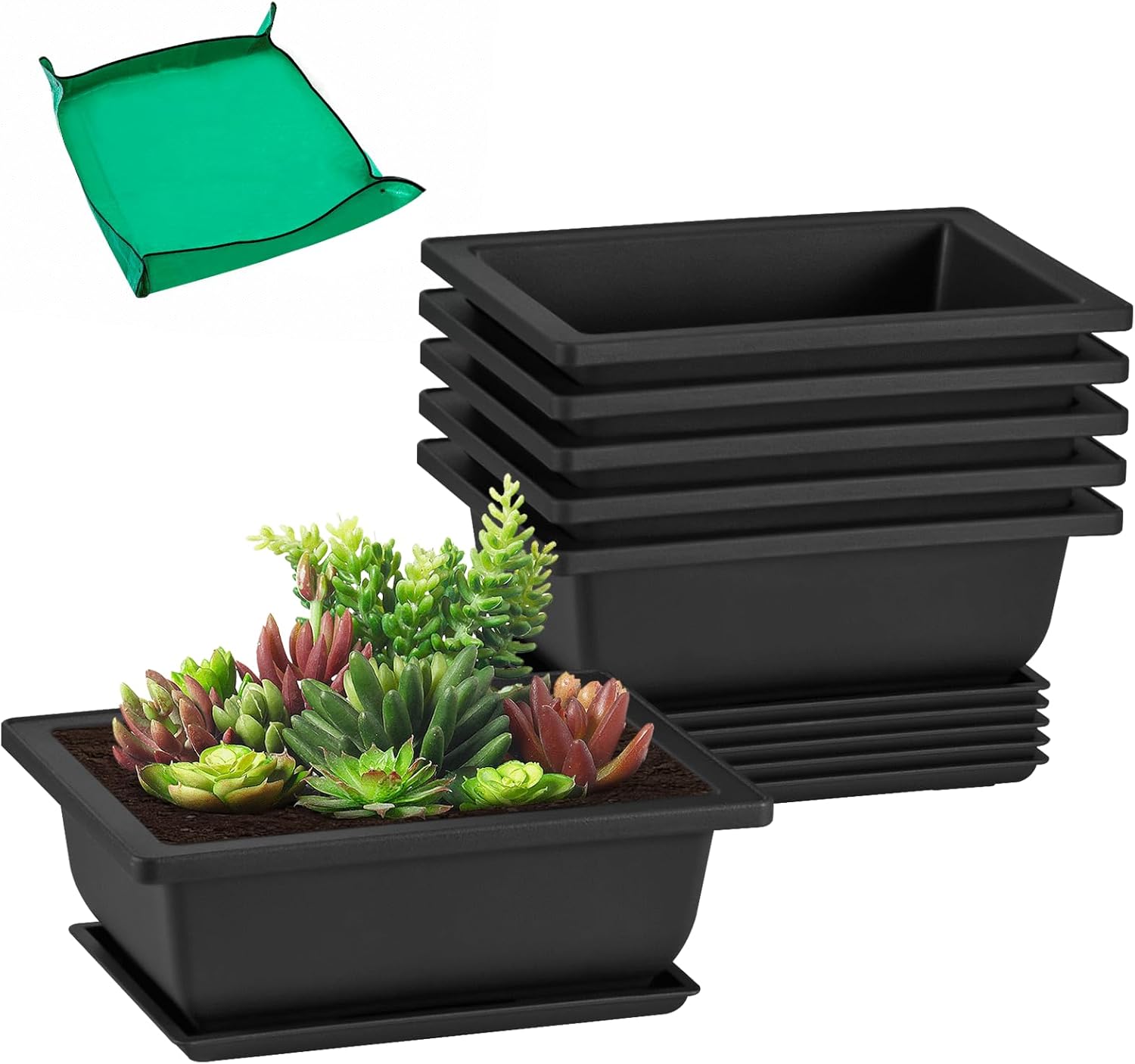
GROWNEER 6.5 Inch Bonsai Pots at a Glance
- Six matching training containers support small bonsai collections.
- Plastic construction makes everyday handling convenient.
- Integrated drainage openings allow excess water to escape.
- Matching trays help protect surrounding surfaces from runoff.
- Plant labels make organizing several specimens easier.
- The shallow footprint limits suitability for larger root systems.
GROWNEER 6.5 Inch Bonsai Pots Specifications
| Specification | Details |
|---|---|
| Brand | GROWNEER |
| Product type | Bonsai training pots |
| Material | Plastic |
| Quantity | 6 pots with 6 trays |
| Pot footprint | 6.5 × 4.8 inches |
| Overall height | Approximately 2.4 inches including tray |
| Tray dimensions | 5.2 × 3.7 inches |
| Drainage | Built-in mesh openings and raised feet |
| Plant labels | 15 included |
| Use | Indoor and outdoor growing |
Design & Build Quality
The GROWNEER pots prioritize practical cultivation over decorative presentation. Their rectangular profile suits training benches, windowsills, and compact growing areas.
Plastic construction reduces handling weight compared with traditional ceramic containers. This becomes particularly useful when moving several young bonsai trees between growing locations.
The manufacturer’s design includes raised feet and a built-in drainage grid. These structural details are more important for cultivation than ornamental finishes.
However, lightweight plastic does not provide the same visual character or substantial feel as quality ceramic. Buyers seeking a permanent exhibition container should consider that distinction.
The shallow form also places a practical limit on root space. A tree with an established, deep root mass may require a larger training container before transitioning into this size.
Setup, Installation & Ease of Use
- Unpack the six containers and inspect their rims and drainage grids for shipping damage.
- Separate the matching trays and confirm each sits securely beneath its planter.
- Check drainage openings for plastic debris or manufacturing obstructions.
- Choose a free-draining bonsai soil suitable for the tree species.
- Test the tree’s root mass against the available planting space before repotting.
- Secure unstable trees using an appropriate anchoring method when necessary.
- Water thoroughly and confirm excess moisture exits through the drainage openings.
- Empty collected runoff before pots remain standing in water.
- Label each specimen to track its species, repotting date, or maintenance needs.
- Store unused containers clean and dry, away from unnecessary heat exposure.
Core Performance & Feature Breakdown
Drainage management is the most important functional strength of these GROWNEER bonsai training pots. Their integrated openings allow irrigation water to escape rather than remain trapped inside a completely closed container.
However, drainage holes alone cannot guarantee healthy roots. Soil particle size, watering frequency, root density, and growing conditions determine how effectively the entire system works.
The raised base creates clearance beneath the planting container. This supports water movement and helps prevent direct contact between the pot bottom and a flat supporting surface.
Another advantage is having several matching pots available simultaneously. Growers managing different cuttings or young trees can maintain a consistent container arrangement while monitoring individual development.
The included trays offer useful runoff collection indoors. Nevertheless, collected water should not remain against the drainage grid for prolonged periods, especially with moisture-sensitive species.
Expert Insight
A shallow bonsai pot should be selected according to the root system, not merely the tree’s height. Check root spread, soil capacity, drainage, and anchoring needs before transferring a growing tree into a smaller container.
For developing bonsai, these features make the pots useful intermediate containers. They should not be treated as a substitute for suitable soil, careful repotting, or species-specific horticultural practices.
Key Features Explained
Built-In Drainage Grid
The integrated drainage grid supports water discharge while helping contain larger soil particles. Fine potting materials may still escape, so appropriate bonsai substrate remains important.
Matching Water Collection Trays
Each planter comes with a matching tray to collect excess irrigation water. This simplifies surface protection, although trays require regular emptying and cleaning.
Lightweight Plastic Construction
The plastic body is easier to reposition than a similarly sized heavy ceramic pot. The trade-off is a less traditional appearance and potentially different long-term aging characteristics.
Multiple Pots and Plant Labels
A six-pot package supports organized cultivation of several small plants. The included labels help distinguish specimens, especially where young trees have similar foliage.
Real-World Usability & Maintenance
Routine maintenance mainly involves checking drainage, washing the trays, and removing accumulated soil deposits. Mild cleaning methods are preferable to harsh abrasives that might damage plastic surfaces.
Outdoor placement requires attention to sun exposure and changing moisture levels. Small volumes of soil can dry or heat differently from soil in larger containers.
Indoor growers should protect furniture and avoid leaving standing water beneath their plants. Regular inspections also help identify blocked drainage holes before they become a persistent problem.
GROWNEER 6.5 Inch Bonsai Pots Pros & Cons
Pros
- Six containers make small collection management convenient.
- Integrated drainage openings support appropriate watering practices.
- Matching trays help contain runoff on protected surfaces.
- Lightweight construction simplifies routine repositioning.
Cons
- Limited root volume restricts larger bonsai specimens.
- Plastic lacks the traditional appearance of ceramic bonsai pottery.
- Dedicated tree-anchoring holes are not confirmed in the specifications.
Common Issues & Fixes
Water Collecting Beneath the Pot
Excess water may remain inside the matching saucer after irrigation. Empty the tray and verify that the pot drains freely.
Soil Drying Too Quickly
A shallow container can lose moisture rapidly during hot or windy conditions. Check the substrate regularly and adjust watering according to actual moisture.
Tree Moving After Repotting
An unsecured trunk can shift while new roots establish. Use a suitable support or anchoring arrangement without damaging the trunk or restricting drainage.
What to Know Before You Buy
Start by measuring the existing root system rather than relying on the advertised outer dimensions. The internal planting space will be smaller than the external footprint.
Also, confirm which package configuration the retailer currently offers. GROWNEER markets multiple bonsai pot sizes and bundles, including versions with different accessories.
The manufacturer’s six-pot listing references a repotting mat, while another retailer describes the six pots, trays, and labels. Verify the current package contents before purchasing if the mat is essential.
For more buying guidance, compare designs in our plastic bonsai training pots guide. It explains how alternative footprints and drainage arrangements affect container selection.
Who Should Buy It / Who Should Skip It
✅ Who Should Buy It
- Beginners starting several miniature bonsai projects.
- Growers organizing small trees during development.
- Gardeners prioritizing practical drainage and convenient handling.
- Owners wanting matching containers for compact planting spaces.
✗ Who Should Skip It
- Collectors seeking premium ceramic display pottery.
- Growers with large or deep root systems.
- Buyers requiring verified specialist wiring-hole configurations.
- Anyone expecting containers suitable for unrestricted trunk development.
Alternatives to Consider
Different root-development goals can justify choosing another training container. These two alternatives offer useful comparisons in size, materials, and intended application.
HEIHAK 5-Pack Hexagon Bonsai Training Pots
Best For: Growers seeking a slightly broader training container.
Main Advantage: Hexagonal shape with integrated mesh.
Trade-off: Different shape and package quantity.
Key Spec: 7.4-inch advertised size.
Bonsai Outlet 6-Inch Training Pots
Best For: Growers wanting classic brown training containers.
Main Advantage: Poly-resin construction with integrated drainage mesh.
Trade-off: Smaller advertised nominal size.
Key Spec: Approximately 6.5-inch outside length.
The HEIHAK option emphasizes a different growing footprint, while Bonsai Outlet offers a traditional training-pot profile. Compare actual root-space requirements before choosing either design.
Is the GROWNEER 6.5 Inch Bonsai Pot Worth It?
The GROWNEER six-pack offers a practical combination of containers and basic planting accessories. Its value is strongest for growers who can use several pots rather than purchasing one decorative container.
However, an attractive bundle is not automatically the correct horticultural choice. If your tree requires more root space, a larger pot delivers greater practical value regardless of package quantity.
Consider the current selling price, exact included accessories, and expected growing stage. Those factors should determine whether this set represents a worthwhile purchase.
Final Verdict
The GROWNEER 6.5 Inch Bonsai Pots are a sensible choice for small bonsai training projects where drainage, organization, and convenient handling matter most. Choose them for developing compact specimens, not as premium display containers for mature trees.
Frequently Asked Questions
Are GROWNEER 6.5 Inch Bonsai Pots suitable for beginners?
Yes, these pots are suitable for beginners growing appropriately sized bonsai. Their drainage design and lightweight construction simplify basic container management. Beginners must still learn correct watering and repotting techniques.
Can these pots accommodate mature bonsai trees?
Only mature trees with suitably compact root systems may fit. Measure the existing root mass and assess the species’ needs before selecting this shallow container.
Do the GROWNEER bonsai pots have drainage holes?
Yes, the manufacturer specifies integrated drainage openings and a mesh-style base. Use appropriate soil and keep the openings unobstructed.
Can these bonsai training pots be used outdoors?
Yes, the manufacturer lists indoor and outdoor applications. Monitor soil moisture and protect plants according to their temperature and light requirements.
How should I clean and maintain the pots?
Remove old soil, wash the containers, and clear blocked drainage openings. Sanitize between plants when disease contamination is suspected, using a plant-container-safe cleaning procedure.
Do GROWNEER 6.5 Inch Bonsai Pots include a warranty?
A specific product warranty could not be verified. Review the current seller’s warranty and return terms before ordering, because marketplace policies can differ.
Affiliate disclosure: Our Bonsai earns a small commission when you purchase through links on this page — at no extra cost to you. Our editorial process is independent: affiliate relationships never influence which products we recommend or how we rank them.
