
How Often Should You Check a Bonsai for Pests? A Complete Bonsai Health Guide

Your bonsai may look healthy on the surface, but tiny pests can quietly damage leaves, branches, roots, and overall tree strength before you notice obvious problems. Many bonsai owners only start looking for pests after leaves begin turning yellow, dropping, curling, or showing unusual spots. By that time, the infestation may already be affecting the tree’s growth.
Understanding How Often Should You Check a Bonsai for Pests? helps beginners and experienced growers prevent serious problems before they become difficult to control. Regular inspections allow you to catch insects early, maintain healthy growth, and protect the shape and beauty of your bonsai.
This guide explains how frequently you should inspect your bonsai, what signs to look for, where pests usually hide, how different seasons affect pest activity, and what steps to take when you discover an infestation. Whether you grow an indoor tropical bonsai or an outdoor deciduous species, consistent monitoring is one of the simplest ways to keep your tree healthy.
Quick Answer
How Often Should You Check a Bonsai for Pests? You should inspect your bonsai at least once a week during normal growth periods and check more often during warm, humid seasons when pests multiply quickly. A quick inspection of leaves, branches, soil, and roots helps detect problems early before they harm the tree.
Why Regular Bonsai Pest Checks Are Important
Bonsai trees live in small containers, which means they have limited soil, limited nutrients, and less space to recover from stress compared with trees growing naturally in the ground. A small pest problem can become a major issue faster because the tree has fewer resources available.
Pests such as aphids, spider mites, scale insects, fungus gnats, and mealybugs can weaken a bonsai by feeding on plant tissues or damaging roots. Even a small infestation can reduce photosynthesis, slow growth, and make the tree more vulnerable to disease.
Regular checking gives you several advantages:
- Early detection: Small pest populations are easier to remove than large infestations.
- Better tree health: Healthy bonsai trees recover faster from minor pest damage.
- Lower treatment costs: Early problems often require simple solutions instead of stronger treatments.
- Better appearance: Preventing pest damage protects leaves, branches, and styling work.
- Reduced spread: Checking one tree helps prevent pests from moving to your other plants.
According to general plant health guidance from the [USDA Integrated Pest Management resources](https://www.usda.gov/topics/farming/pest-management), regular monitoring is an important part of preventing and managing pest problems. The same principle applies to bonsai because prevention is usually easier than repairing damage.
How Often Should You Inspect a Bonsai?
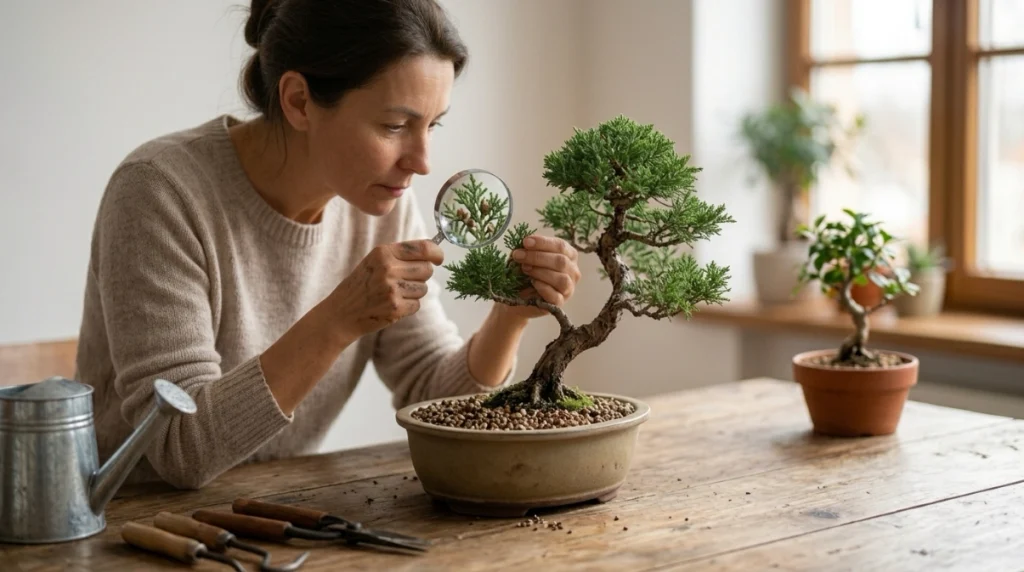
The ideal inspection schedule depends on the species, growing environment, season, and overall health of your tree. However, most bonsai growers should follow a simple routine.
| Situation | Recommended Checking Frequency | Why It Matters |
|---|---|---|
| Healthy bonsai during normal growth | Once every week | Helps catch early pest activity before damage spreads |
| Warm and humid weather | Two to three times per week | Many insects reproduce faster in warm conditions |
| Recently purchased bonsai | Daily checks for the first two weeks | New plants may carry hidden pests |
| Weak or stressed bonsai | Every few days | Stressed trees attract more problems |
| After pest treatment | Follow-up checks every few days | Ensures the infestation is actually controlled |
Best Time of Year to Check Bonsai for Pests
Spring Pest Monitoring
Spring is one of the most important times to inspect bonsai trees. As temperatures rise, insects become more active and many pests begin feeding on fresh new growth.
New leaves are especially attractive to pests because they are softer and easier to damage. Aphids, caterpillars, and mites often appear during this period.
During spring inspections, pay attention to:
- Young leaves that are curling or distorted
- Sticky residue on leaves
- Small insects around new shoots
- Unusual slowing of growth
Summer Pest Monitoring
Summer often creates ideal conditions for pest activity. Warm temperatures and increased humidity can quickly increase insect populations.
Bonsai kept outdoors may experience problems from spider mites, scale insects, and chewing insects. Indoor tropical bonsai may also develop pests if airflow is poor.
During summer, inspect:
- The underside of leaves
- Branch junctions
- Areas close to the trunk
- Soil surface and drainage holes
Fall and Winter Pest Checks
Many growers assume pests disappear in colder months, but indoor bonsai can still experience infestations. Warm indoor temperatures may allow insects to remain active throughout winter.
Deciduous outdoor bonsai may lose leaves during dormancy, but you should still inspect bark, branches, and soil for overwintering pests.
Where Bonsai Pests Usually Hide
A common mistake among beginners is checking only the top surface of leaves. Many pests hide in areas that are difficult to notice.
Check the Leaves
Leaves are one of the first places to look because many insects feed directly on plant tissue.
Look for:
- Tiny moving insects
- Yellow dots or speckled damage
- Sticky honeydew residue
- White cotton-like patches
- Fine webbing between leaves
Check Branches and Trunk Areas
Scale insects often attach themselves to branches and trunks where they can be mistaken for natural bark texture. Carefully examine unusual bumps or spots.
Do not scrape aggressively because damaging the bark can create additional problems.
Check the Soil
Some pests attack roots or live in the growing medium. Fungus gnats, for example, are often noticed when tiny flies appear around the soil surface.
Healthy bonsai soil should have good drainage and airflow. Constantly wet soil can encourage both pests and root problems.
Check Roots During Repotting
You usually do not need to disturb roots just to search for pests. Root inspections should happen during normal repotting periods or when the tree shows signs of serious stress.
Warning signs include:
- Poor growth despite proper care
- Leaves wilting even when soil moisture seems correct
- Root discoloration
- Unpleasant soil smell
Common Bonsai Pests and Their Warning Signs
| Pest | Common Signs | Typical Damage |
|---|---|---|
| Aphids | Small insects on new growth, curled leaves | Weak shoots and distorted leaves |
| Spider mites | Fine webbing, yellow speckles | Reduced photosynthesis and leaf damage |
| Scale insects | Small bumps on stems and branches | Weak growth and sticky residue |
| Mealybugs | White cotton-like clusters | Leaf and stem damage |
| Fungus gnats | Tiny flying insects near soil | Possible root stress from larvae |
How to Perform a Weekly Bonsai Pest Inspection
A bonsai inspection does not need to take a long time. A few minutes each week can prevent major problems.
Step 1: Examine the Overall Tree
Before touching the tree, look at it from a distance. Compare the current appearance with how it normally looks.
Ask yourself:
- Does the tree look weaker than usual?
- Are leaves changing color?
- Are new shoots developing normally?
Step 2: Inspect Leaves Carefully
Turn leaves over and inspect both sides. Many pests hide underneath because that area provides protection.
Step 3: Check Branches and Bark
Look closely around branch joints and areas where leaves connect to stems.
Step 4: Examine Soil Conditions
Check whether the soil remains too wet for too long. Poor moisture management can create conditions that attract certain pests.
Step 5: Record Changes
Experienced growers often keep notes about watering, feeding, pruning, and pest observations. A simple record helps identify patterns.
Expert Tip
Expert Tip: Spend a few minutes inspecting your bonsai while watering. Combining these two habits makes pest detection easier and prevents small problems from being overlooked.
Factors That Increase Bonsai Pest Risk
Overwatering
Overwatering does not directly create every pest problem, but it weakens roots and reduces the tree’s ability to defend itself. Constantly wet soil can also encourage fungus gnat problems.
Poor Air Circulation
Bonsai kept in crowded spaces may have reduced airflow. Humid, stagnant conditions are favorable for some pests, especially spider mites and fungal issues.
Weak Tree Health
A stressed bonsai is more likely to suffer serious damage. Problems such as incorrect lighting, poor soil, improper fertilizing, or root stress can make pest issues worse.
New Plants Without Quarantine
New bonsai trees should be inspected carefully before placing them near existing plants.
A simple quarantine period can prevent introducing pests to your entire collection.
When to Ask an Experienced Bonsai Grower or Arborist
Many small pest problems can be handled by beginners, but some situations require professional advice.
Consider asking an experienced bonsai grower or qualified plant professional when:
- The infestation continues after several treatments.
- The bonsai shows severe decline.
- You are unsure whether symptoms are caused by pests, disease, or environmental stress.
- The tree requires major root work or structural pruning while already weakened.
- You own a valuable or old bonsai and want to avoid accidental damage.
Major treatments should always be approached carefully. Applying the wrong product, using excessive chemicals, or treating the wrong problem can create additional stress for the tree.
Safe Pest Management Practices for Bonsai Owners
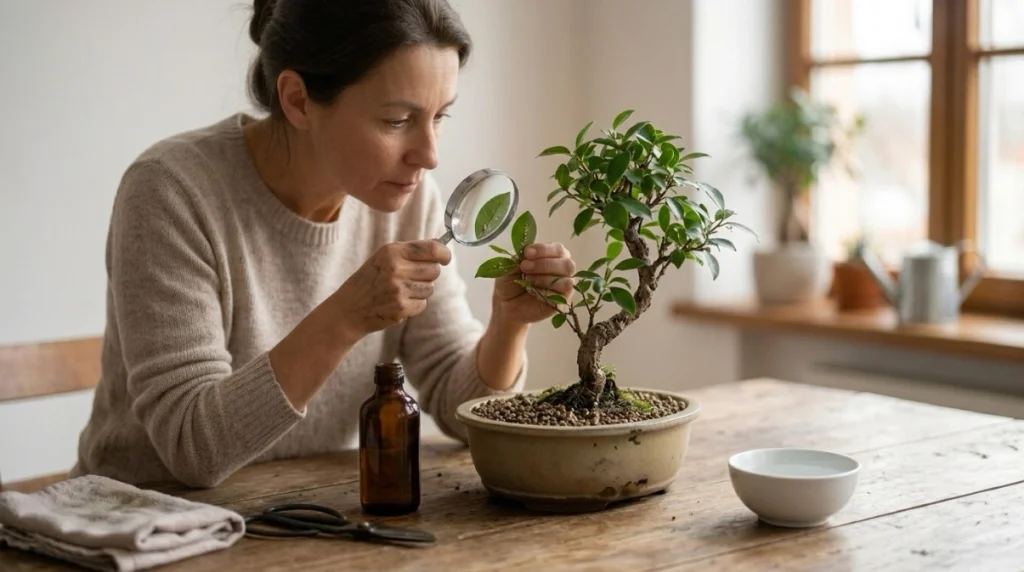
The best pest strategy starts with prevention, but treatment may be necessary when insects are discovered.
General approaches include:
- Removing heavily affected leaves when appropriate.
- Using gentle cleaning methods for visible insects.
- Improving airflow around the tree.
- Adjusting watering practices.
- Using suitable pest control products according to label instructions.
Always identify the pest before choosing treatment. A product designed for one insect may not work for another problem.
For pesticide safety information, growers can review guidance from the [EPA pesticide safety resources](https://www.epa.gov/pesticide-worker-safety) before using chemical treatments around plants, pets, or family areas.
Common Mistakes Bonsai Owners Should Avoid
- Waiting until damage becomes obvious: Prevention is easier than recovery.
- Checking only the top of leaves: Many pests hide underneath leaves and near stems.
- Ignoring new bonsai purchases: New trees can introduce pests.
- Using random treatments: Identify the pest first.
- Overwatering after noticing stress: Yellow leaves do not always mean the tree needs more water.
- Removing too much foliage: Overpruning can weaken a bonsai further.
FAQs
How often should I check my bonsai for pests?
You should check your bonsai once a week in normal conditions. During warm or humid weather, inspect more frequently because pests can multiply quickly.
Can bonsai trees get pests indoors?
Yes. Indoor bonsai can still develop pests because insects may enter through windows, new plants, soil, or gardening tools.
What is the first sign of bonsai pests?
Common early signs include curled leaves, sticky residue, small insects, leaf discoloration, webbing, or unusual growth changes.
Should I isolate a bonsai with pests?
Yes. Separating an affected bonsai can help prevent pests from spreading to other plants in your collection.
Can healthy bonsai trees still get pests?
Yes. Healthy trees can still attract pests, but strong bonsai usually recover better when problems are detected early.
Do I need professional help for every bonsai pest problem?
No. Many minor infestations can be managed at home. However, serious damage or valuable trees may benefit from expert guidance.
Can pruning remove bonsai pests?
Removing affected parts can help in some cases, but excessive pruning may weaken the tree. Always treat the actual cause of the problem.
Conclusion
Regular monitoring is one of the most important habits for keeping a bonsai healthy. Knowing How Often Should You Check a Bonsai for Pests? allows you to catch problems early, protect your tree’s appearance, and avoid unnecessary stress.
For most bonsai owners, a weekly inspection is enough during normal conditions, while warmer seasons and stressed trees require more frequent checks. Always examine leaves, branches, soil, and overall growth patterns.
A few minutes of careful observation can protect years of bonsai development. Make pest checking part of your regular watering routine, stay patient with your tree, and continue learning how your bonsai responds to proper care.
