
Bonsai Roots Smell Bad: Causes and Solutions

Quick Answer
If your bonsai roots smell bad, the root zone may be staying wet too long, losing oxygen, or developing decaying tissue. A sour, swampy, or rotten smell deserves attention, especially when it appears with soft dark roots, yellow leaves, or wet soil that drains slowly; the University of Maryland Extension’s root rot guidance describes similar root symptoms in container plants.
Common causes and warning signs
- Constantly wet soil: Saturated substrate limits the air available around fine roots.
- Poor drainage: Compacted soil or blocked drainage holes can leave the bottom of the pot waterlogged.
- Decaying roots: Soft, collapsing, or slimy roots combined with a foul smell are concerning.
- Old organic substrate: Decomposing bark, peat, and dead roots can create stale or sour odors.
- Root disease: Damaged roots in prolonged wet conditions can become vulnerable to root-rotting organisms.
How to confirm the problem
- Check drainage, soil moisture, root firmness, foliage health, and odor together instead of diagnosing root rot from smell alone.
Bad-smelling bonsai roots are alarming because the problem is hidden below the soil. The good news is that odor can give you an early reason to inspect the growing conditions.
I treat smell as a warning sign, not a diagnosis. Root texture, drainage, soil moisture, and the tree’s overall condition tell me much more.
In This Guide
Why Do Bonsai Roots Smell Bad?
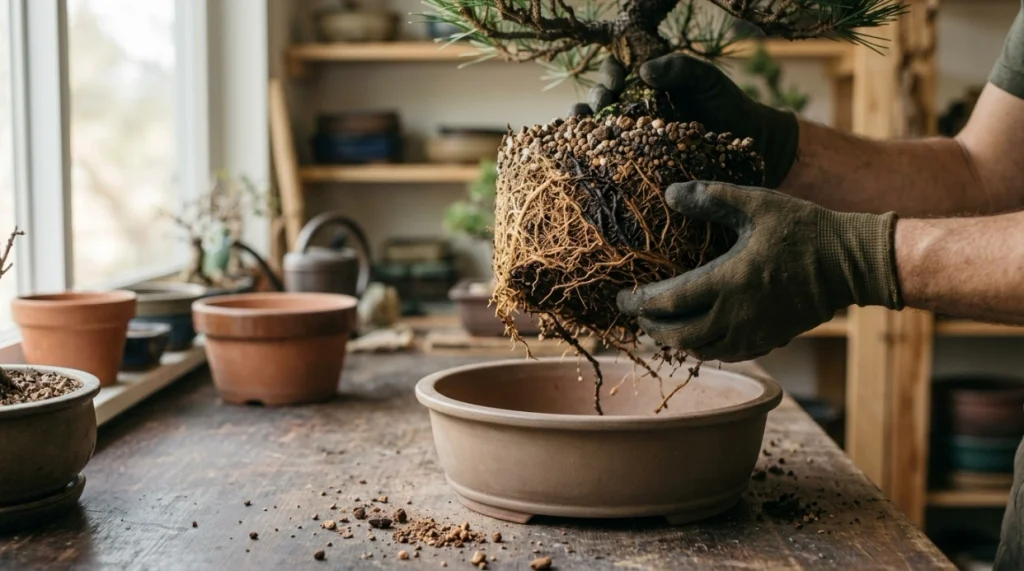
Bonsai roots usually smell bad when the root environment contains decomposing organic material or stays excessively wet and poorly aerated. A strong sour, sewage-like, swampy, or rotten odor is more concerning than an ordinary earthy soil smell.
Definition: A foul root-zone odor is an abnormal smell coming from the bonsai substrate, drainage water, or root mass. It often indicates excessive moisture, decaying organic material, damaged roots, or microbial activity in a poorly aerated root zone.
Healthy roots need both moisture and oxygen. A bonsai pot’s limited soil volume makes that balance especially important.
When pore spaces remain filled with water, less air reaches the roots. Fine feeder roots can weaken as unhealthy conditions persist.
What should healthy bonsai roots smell like?
A healthy root ball normally has a mild earthy smell. Fresh mineral bonsai substrates may have almost no noticeable odor.
Organic ingredients can produce a natural soil scent, especially after watering. That alone isn’t evidence of disease.
- Earthy or neutral: Usually normal when roots and foliage look healthy.
- Mild woody smell: Can come from bark or other organic substrate ingredients.
- Sour smell: Check whether the soil remains saturated for unusually long periods.
- Swampy smell: Inspect drainage and the lower root zone.
- Rotten smell: Look closely for soft, deteriorating roots and declining foliage.
The smell becomes more meaningful when several symptoms appear together. I would worry far more about foul odor plus mushy roots than odor by itself.
Does a Bad Smell Always Mean Bonsai Root Rot?
No. Bad-smelling bonsai soil can occur without widespread root rot, so odor alone shouldn’t decide whether you cut roots or repot the tree.
Old organic material, stagnant water, decaying fallen leaves, accumulated fertilizer residue, or dead fine roots can all affect smell. The entire symptom pattern matters.
| What You Notice | Possible Explanation | What to Check Next |
|---|---|---|
| Earthy smell, firm roots | Normal soil and microbial activity | Normal watering and drainage |
| Sour smell, wet soil | Poor aeration or decomposing substrate | Drying rate and drainage holes |
| Rotten smell, soft roots | Serious root deterioration or root rot | Root firmness, foliage decline, drainage |
| Odor from pot surface only | Decaying leaves, moss, algae, or organic debris | Remove debris and inspect substrate beneath it |
| Bad drainage but little odor | Compacted or root-bound soil | Water flow and root density |
What does actual root rot look like?
Root rot is better identified through several signs rather than color alone. Roots can naturally be tan or brown depending on species and age.
- Soft texture: Damaged roots may feel limp, mushy, or slimy.
- Collapsing tissue: The root’s outer tissue may pull away unusually easily.
- Dark damaged areas: Blackened roots are more suspicious when they’re also soft or deteriorating.
- Few healthy fine roots: The root system may lack firm feeder roots and fresh tips.
- Wet-soil wilting: The canopy wilts even though the substrate remains moist.
- Foliage decline: Yellowing, leaf drop, weak growth, or dieback may accompany severe root damage.
University extension guidance likewise describes diseased roots as dark and soft rather than relying on color alone. That distinction prevents unnecessary root cutting.
How Can I Check Whether My Bonsai Roots Are Rotting?
Start with the least invasive checks. Removing a stressed bonsai from its pot can add more stress, especially outside its normal repotting period.
Step 1: Check how long the substrate stays wet
Feel below the surface instead of judging only the top layer. The surface can look dry while the lower root zone remains soaked.
The Bonsai Empire watering guide recommends watering according to soil condition rather than following a fixed daily schedule. That’s a useful habit when diagnosing smelly roots.
- Check whether water exits the drainage holes freely.
- Notice whether the pot remains heavy for several days.
- Compare its drying rate with healthy bonsai in similar conditions.
- Look for compacted soil or standing water beneath the pot.
Step 2: Check the tree above the soil
Roots and foliage work as one system. A bad smell matters more when the canopy also shows unusual stress.
- Yellow leaves during active growth
- Unexpected leaf loss
- Wilting while the soil remains wet
- Weak shoots or stalled growth
- Progressive twig or branch decline
Step 3: Inspect accessible roots carefully
If the tree’s health and season allow it, gently inspect the outer root ball. Avoid tearing the root system apart merely to satisfy curiosity.
Firm roots are encouraging. Soft, slimy, collapsing, or foul-smelling tissue deserves more concern.
Pro tip: Root inspection and pruning can cause irreversible damage. If the tree is valuable, severely weakened, or you’re unsure about timing, ask an experienced grower or local bonsai club before disturbing the root ball.
Section Takeaway: Diagnose the whole tree, not the smell alone. Moisture, drainage, root texture, and foliage symptoms provide a much stronger diagnosis together.
What Causes Sour or Rotten-Smelling Bonsai Roots?
The most common underlying problem is an unhealthy water-and-air balance around the roots. Several different care issues can create that condition.
1. Watering again before the soil needs it
Overwatering is better understood as watering too frequently for the substrate and growing conditions. Even excellent bonsai soil can stay excessively wet if environmental conditions slow evaporation.
Water use changes with temperature, sunlight, wind, species, foliage mass, pot depth, and season. That’s why calendar-based watering often causes trouble.
2. Compacted or decomposed substrate
Bonsai substrates need pore spaces that hold both water and air. Fine, degraded, or compacted material can reduce those spaces.
Organic components also break down over time. An old root ball may therefore drain differently than it did when first potted.
3. Blocked drainage holes
Drainage mesh, roots, broken-down soil, or debris can obstruct the bottom of a pot. Water then leaves more slowly after each watering.
A drainage hole doesn’t guarantee good drainage. Water must also move freely through the substrate above it.
4. Decomposing roots and organic debris
Dead roots, fallen leaves, bark particles, and other organic material feed decomposition. In a wet, poorly aerated pot, the resulting smell can become unpleasant.
Remove loose surface debris when you find it. Don’t dig aggressively into healthy roots simply to remove every organic particle.
5. Root-rotting organisms
Root disease can involve organisms such as Pythium, Phytophthora, or Rhizoctonia. Wet conditions and damaged roots can make some root problems more likely.
The University of Maryland Extension describes dark, soft, or mushy roots among the signs associated with several root-rotting diseases. Correct diagnosis matters before considering chemical treatment.
6. A pot sitting in collected water
A bonsai shouldn’t remain in a water-filled saucer unless you’re intentionally using a species-specific growing method. Standing water can keep the lowest part of the substrate saturated.
Raise or drain the pot so excess water can leave freely. Make sure decorative cachepots don’t secretly trap runoff.
Section Takeaway: The smell is usually a symptom of the root environment. Fix the reason the pot stays unhealthy rather than masking the odor.
How Do I Fix Smelly Bonsai Roots Safely?
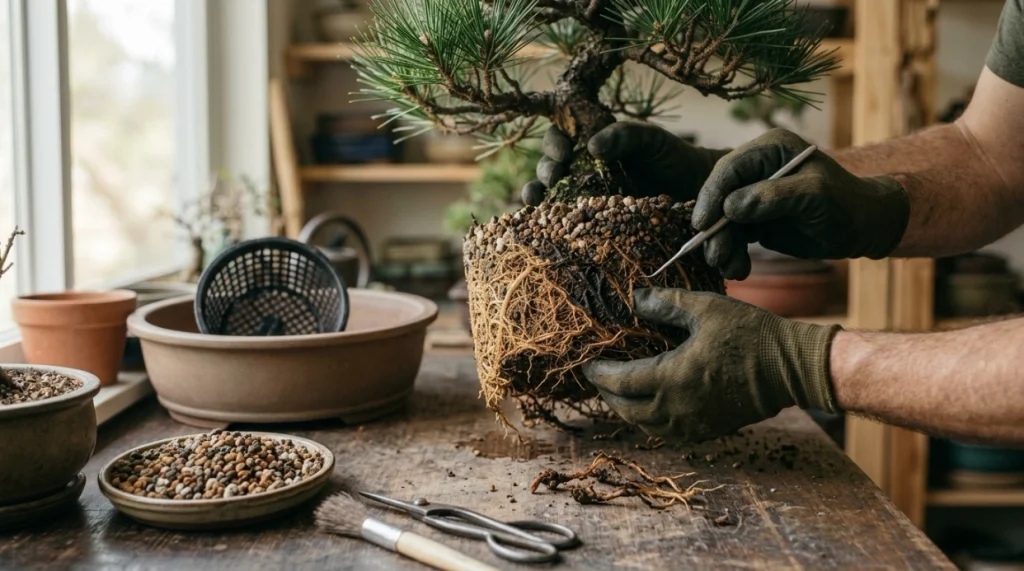
The safest solution depends on whether the roots are still healthy. Don’t jump straight to emergency root pruning because the pot smells unusual.
If the roots are firm and the tree looks healthy
Start by correcting moisture and drainage. Give the root zone a chance to return to a normal wet-to-slightly-dry cycle.
- Stop watering by schedule. Check the substrate before watering again.
- Empty standing water. Don’t leave the pot sitting in runoff.
- Clear drainage openings. Confirm water can leave the pot freely.
- Remove surface debris. Pick away fallen leaves and obviously decomposing material.
- Improve appropriate airflow. Keep the tree in the environment required by its species.
- Watch the tree closely. Track odor, foliage, moisture, and drainage over the next watering cycles.
If roots are soft, rotten, or collapsing
More serious root deterioration may require repotting into fresh, well-draining substrate. Timing and species matter greatly, however.
The Bonsai Empire repotting guide notes that early spring is the standard repotting period for many bonsai. It also stresses evaluating whether repotting is necessary before beginning root work.
- Prepare clean tools, suitable substrate, drainage mesh, and the pot before disturbing the tree.
- Remove the tree carefully and preserve healthy roots whenever possible.
- Identify clearly dead, soft, deteriorated tissue rather than cutting roots based on color alone.
- Remove rotten material conservatively with clean, sharp tools when root pruning is appropriate.
- Correct blocked drainage or degraded substrate before replacing the tree.
- Secure the tree so freshly worked roots aren’t repeatedly disturbed.
- Give species-appropriate aftercare and avoid stacking additional stresses immediately afterward.
Pro tip: Don’t perform aggressive root pruning on a weak bonsai without understanding the species and season. For valuable or advanced trees, get hands-on guidance from an experienced bonsai grower or local club.
Should I use fungicide?
Don’t assume every smelly root ball needs fungicide. Waterlogging, degraded soil, and dead organic material can create root problems without a fungicide solving the underlying cause.
If you suspect a specific pathogen, accurate diagnosis comes first. Follow local label directions for any plant treatment and use only products registered for that purpose.
Section Takeaway: Fix water, air, and drainage first. Root pruning or disease treatments should follow evidence, not smell alone.
How Do I Prevent the Smell From Returning?
Long-term prevention comes from maintaining a predictable root environment. Bonsai shouldn’t stay permanently wet, but they also shouldn’t be allowed to dry blindly according to a rigid rule.
Use a free-draining bonsai substrate
A granular mix helps maintain pore spaces around roots. Akadama, pumice, lava rock, and other bonsai substrates are commonly combined according to species and climate.
The right mix isn’t identical for every grower. Hot, dry climates often demand different moisture retention than cool, humid ones.
Water according to the tree
Check moisture instead of choosing fixed watering days. Then water thoroughly when the tree actually needs it.
- Hot weather: Pots may dry quickly.
- Cool weather: Moisture can persist longer.
- Dense foliage: Active trees may use more water.
- Recently pruned foliage: Water demand may change.
- Fine substrate: It may retain moisture longer.
- Open granular substrate: It often drains and aerates more freely.
Monitor drainage after every repotting cycle
Notice how quickly water enters and exits the pot. A significant change can reveal substrate breakdown, dense root growth, or a blocked opening.
As of 2026, my preferred diagnostic habit remains simple: observe trends instead of chasing one isolated symptom. A tree’s drying rate can tell you plenty before a foul odor becomes severe.
Keep the root zone clean
Remove large amounts of fallen foliage and decomposing debris from the soil surface. Don’t let muck accumulate around the trunk base.
Also clean reusable pots and tools appropriately when dealing with diseased root material. Good hygiene reduces the chance of moving contaminated material between trees.
Section Takeaway: Good drainage and responsive watering prevent most avoidable odor problems. Watch how the root environment changes through the seasons.
Frequently Asked Questions
What does root rot smell like in a bonsai?
Root rot can produce a sour, swampy, musty, or decaying smell, but odor varies. A stronger diagnosis comes from combining smell with soft roots, persistent wetness, poor drainage, and declining foliage.
Are brown bonsai roots always rotten?
No. Healthy roots can naturally be tan or brown, especially older structural roots and roots from certain species.
Texture is often more informative. Soft, mushy, collapsing tissue is more concerning than brown color by itself.
Why does my bonsai smell bad after watering?
Water can make odors more noticeable by saturating old organic substrate or decomposing material. If the smell repeatedly appears after watering, check how long the lower root zone stays wet and whether drainage remains free.
Can bonsai root rot recover?
A bonsai may recover when enough healthy roots and living vascular tissue remain. Correct the underlying watering, drainage, substrate, or disease problem while avoiding unnecessary additional stress.
Should I repot a bonsai immediately if its roots smell bad?
Not always. First check soil moisture, drainage, root condition, foliage symptoms, species, and season.
Emergency intervention may be justified with serious deterioration, but unnecessary off-season root work can add stress.
Can old bonsai soil smell sour without root rot?
Yes. Decomposing organic components, stagnant moisture, dead fine roots, algae, or surface debris can change the smell even without widespread root rot.
Inspect the roots before making a diagnosis. Firm roots and healthy foliage are reassuring signs.
How can I tell whether my bonsai is being overwatered?
Watch for soil that stays wet unusually long, slow drainage, yellowing, weak growth, or wilting despite moist soil. Overwatering is mainly a problem of excessive moisture duration rather than the amount poured during one thorough watering.
If your bonsai roots smell bad, don’t try to hide the odor. Use it as a prompt to check moisture, drainage, substrate condition, root firmness, and foliage health.
The earlier you recognize an unhealthy root environment, the easier it is to correct the cause without unnecessary root work. Healthy bonsai roots need water, air, and enough space to function together.
