White Fungus on Bonsai Roots: What It Means and What to Do
Quick Answer
White fungus on bonsai roots is not automatically a disease. It may be beneficial mycorrhizal fungus, harmless fungal growth feeding on organic material, or a sign of root disease. The safest approach is to inspect root firmness, smell, soil moisture, drainage, and the tree’s overall health before removing anything. The USDA Forest Service explains how mycorrhizae form beneficial associations with tree roots.
Signs to check first
- Firm roots: Firm roots with healthy tips usually point away from severe root rot.
- Mushy roots: Soft, slimy, collapsing roots are a much stronger warning sign.
- Sour smell: A stagnant or rotten odor suggests unhealthy conditions inside the root ball.
- Wet soil: Constantly saturated substrate increases the risk of damaging roots and root pathogens.
- Tree decline: Wilting, yellowing, dieback, or stalled growth makes the white growth more concerning.
- Pine or conifer: Visible mycorrhizal growth can be normal and useful around conifer roots.
Before treating it
- Don’t apply fungicide or bare-root the tree based only on white coloration. Confirm that the roots themselves are unhealthy first.
Finding white fungus on bonsai roots can look alarming, especially during repotting. The important point is that white fungal growth has several possible causes, and some of them are beneficial.
My approach is simple: I judge the roots before I judge the fungus. This guide shows you how to separate normal fungal activity from conditions that need immediate attention.
In This Guide
- What does white fungus on bonsai roots actually mean?
- How can I tell mycorrhiza from root rot?
- Why does white fungus appear on bonsai roots?
- Should I repot a bonsai with white fungus on the roots?
- How do I treat harmful white fungus and root rot?
- How can I prevent root problems from returning?
- Frequently asked questions
What Does White Fungus on Bonsai Roots Actually Mean?
White material around bonsai roots is a symptom or observation, not a diagnosis. You need to identify what the fungus is doing and whether the roots beneath it remain healthy.
Mycorrhiza is a beneficial association between certain fungi and plant roots. Fungal hyphae extend through the growing medium and can help roots obtain water and nutrients.
Beneficial mycorrhiza
Mycorrhizal growth is especially important with many conifers, including pines. It may appear as pale threads, fine webbing, or light-colored material associated with feeder roots.
- Roots stay firm: They don’t collapse when gently handled.
- The tree remains vigorous: Foliage color and growth remain normal for the species and season.
- No rotten odor develops: The root ball smells earthy rather than sour.
- Fine roots remain present: Healthy feeder roots haven’t turned into soft strands.
For conifers, I would not wash away white fungal growth automatically. Bonsai specialists commonly preserve part of the established root mass when repotting pines because of their mycorrhizal associations.
Saprophytic fungal growth
Some fungi feed mainly on decomposing organic matter rather than living bonsai roots. You may notice white fuzz on bark particles, dead roots, moss, or decomposing organic substrate.
This growth can still tell you something useful. Heavy surface fungal activity often means the growing medium is staying damp and contains material fungi can feed on.
Pathogenic fungal growth
White fungal material can occasionally accompany root disease. Certain root pathogens can produce pale mycelium on or around infected woody tissue.
For example, UC Integrated Pest Management describes white mycelial growth associated with Rosellinia root rot. That does not mean every white patch on a bonsai is Rosellinia.
The condition of the plant matters much more than color alone.
How Can I Tell Mycorrhiza From Root Rot?
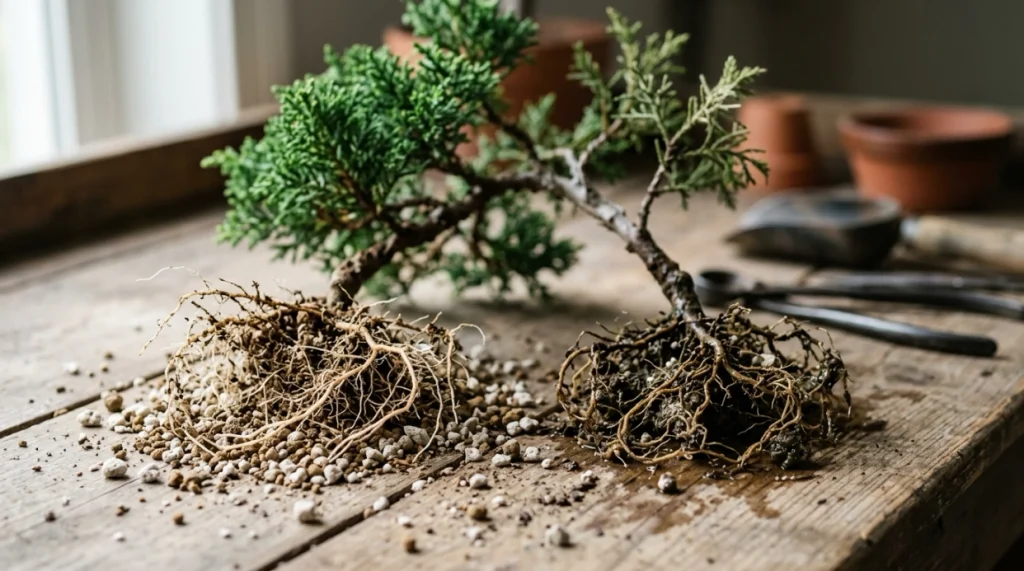
Look at several signs together. Healthy mycorrhiza and destructive root rot usually produce different root texture, odor, drainage, and above-ground symptoms.
| What to Check | Healthy/Mycorrhizal Situation | Possible Root Rot |
|---|---|---|
| Root texture | Firm and resilient | Soft, slimy, or collapsing |
| Root tips | Healthy fine roots or active tips present | Few healthy tips; extensive dead tissue |
| Smell | Normal, earthy smell | Sour, stagnant, or rotten odor |
| Soil condition | Drains freely and contains air spaces | Compacted or stays saturated for long periods |
| Foliage | Normal seasonal appearance | Unexpected yellowing, wilting, or dieback |
| Growth | Normal vigor | Weak or stalled growth |
Root color alone can mislead you. Some healthy roots are naturally tan or brown, depending on their age and species.
Penn State Extension notes that root-rot diagnosis should consider dark roots, loss of healthy root tips, softness, and other plant symptoms. Several noninfectious problems can produce similar decline.
Try the gentle firmness test
Choose a questionable root that is already exposed. Touch it gently rather than pulling or scraping healthy tissue.
- Firm root tissue is encouraging.
- Soft tissue that collapses easily is concerning.
- An outer layer that slips away from the inner root is a serious warning sign.
- Large areas of dead roots combined with wilting need prompt attention.
Don’t repeatedly unpot a healthy-looking bonsai simply to check the roots. Each disturbance adds stress.
Why Does White Fungus Appear on Bonsai Roots?
Fungal growth depends on moisture, oxygen, temperature, organic material, and the microorganisms already living around the roots. A bonsai pot creates a small environment where those factors change quickly.
1. Normal mycorrhizal colonization
This is the best-case explanation. The fungus and tree form a biological relationship rather than the fungus attacking healthy tissue.
This is especially relevant when dealing with pines and other ectomycorrhizal hosts. The white material may be part of a healthy root environment.
2. The substrate stays wet too long
Constant moisture is one of the first things I check when a bonsai develops suspicious fungal growth. The issue isn’t that water creates fungus by itself.
The problem is prolonged saturation. Roots need oxygen as well as water.
- Compacted substrate reduces air spaces.
- Decomposed organic particles can slow drainage.
- Blocked drainage holes keep the lower root ball wet.
- A pot sitting in standing water remains saturated.
- Low light and cool weather reduce water use.
Bonsai Empire’s soil guidance emphasizes both rapid drainage and aeration, two characteristics that help keep roots functioning properly.
3. Organic material is decomposing
Bark, dead roots, dead moss, and other organic material provide food for decomposer fungi. White fuzz in these areas doesn’t necessarily mean living roots are infected.
However, a heavily decomposed bonsai substrate may eventually lose structure. That can create the wet, poorly aerated conditions that roots dislike.
4. A root pathogen is present
Root disease becomes more likely when white fungal growth appears with progressive tree decline. Look for weak growth, abnormal leaf loss, wilting despite wet soil, and substantial root death.
As of 2026, visual appearance alone still isn’t enough to identify many root pathogens reliably. Laboratory diagnosis may be needed when a valuable tree declines despite corrected care.
Should I Repot a Bonsai With White Fungus on the Roots?
Not necessarily. Repot because the root environment needs correction, not because you saw something white.
When I would avoid an emergency repot
- The tree is growing normally.
- Roots feel firm.
- The substrate drains well.
- There is no sour smell.
- The white growth resembles mycorrhiza around a pine or another compatible species.
In that situation, monitor watering and leave the root system alone until the proper repotting period.
When repotting becomes more reasonable
- Large numbers of roots are mushy or dead.
- The substrate remains waterlogged.
- Drainage has become severely restricted.
- The tree is wilting or declining despite moist soil.
- Rotten roots and an unpleasant smell occur together.
Repotting time depends on the species. Virginia Tech’s bonsai guidance notes that repotting schedules differ among deciduous trees, pines, junipers, and other groups.
For pines and other sensitive conifers, don’t automatically wash away the entire root ball. Preserving healthy roots and their associated microorganisms may be important.
Pro tip: Root pruning is irreversible. If you’re dealing with an old, valuable, recently collected, or weak bonsai, ask an experienced grower or local bonsai club to inspect it before making major root cuts.
How Do I Treat Harmful White Fungus and Root Rot?
If the roots are genuinely rotting, correct the growing conditions first. Fungicide cannot compensate for a pot that remains saturated and oxygen-starved.
Step 1: Stop watering on a fixed schedule
Check the substrate instead. Water according to the tree’s needs, weather, species, pot size, and drainage rate.
Don’t intentionally dry a moisture-loving tree to the point of stress. The goal is appropriate moisture, not drought.
Step 2: Check the drainage holes
Make sure water can leave the container freely. Remove material blocking the holes without damaging the root mass.
Step 3: Inspect the roots if decline is serious
If symptoms justify unpotting, separate clearly dead tissue from healthy roots. Keep root exposure as short as practical.
Pro tip: Avoid aggressive root surgery simply because a few roots look dark. Root color varies, so use firmness and tissue condition as your main clues.
Step 4: Remove only clearly rotten roots
Use clean, sharp bonsai scissors when removal is necessary. Cut back to firm, healthy tissue rather than trimming roots indiscriminately.
Disinfect tools before using them on another tree. Don’t reuse obviously contaminated, decomposed growing medium.
Step 5: Repot into an appropriate free-draining mix
Bonsai substrates commonly use structurally stable particles such as akadama, pumice, lava, or comparable regional materials. The ideal blend depends on climate, species, pot depth, and your watering habits.
This bonsai repotting guide also emphasizes careful root work and preserving part of a pine’s root mass. Don’t copy one soil ratio blindly for every climate.
Step 6: Use fungicides only when justified
I wouldn’t spray or drench a bonsai just because white fungus is visible. Beneficial fungi can also be affected by indiscriminate treatment.
If a disease is identified, choose a product legally labeled for the plant and pathogen in your location. Follow the label exactly.
How Can I Prevent Root Problems From Returning?
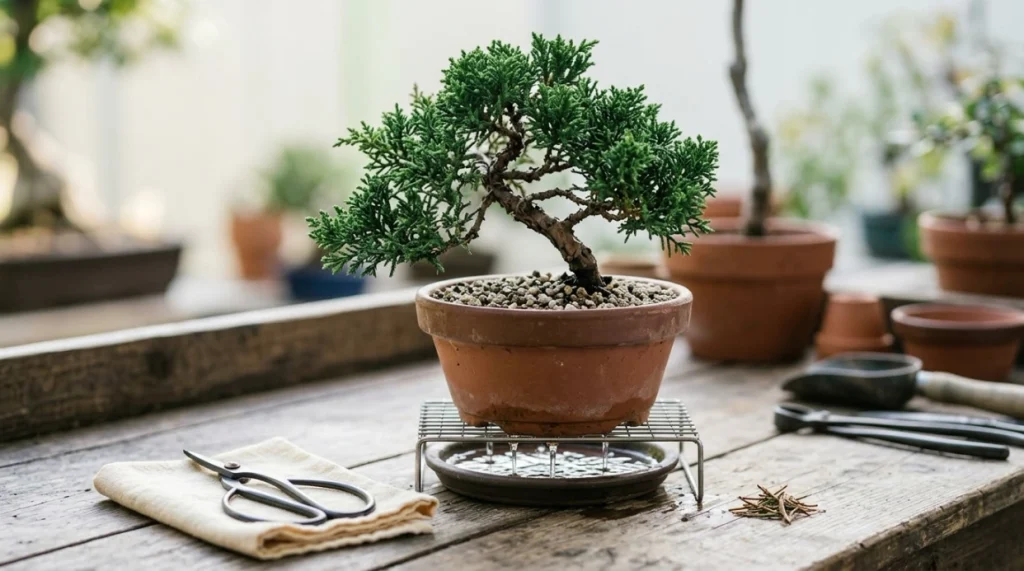
Healthy roots depend more on daily growing conditions than emergency treatments. Focus on drainage, watering, airflow, and appropriate timing.
- Use structured substrate: Avoid mixes that quickly collapse into dense mud.
- Keep drainage open: Water should pass through the pot rather than pool inside it.
- Water by need: Check moisture instead of watering automatically every day.
- Match light to the species: A tree in inadequate light often uses water more slowly.
- Remove decaying debris: Clear excessive dead leaves and decomposing surface material.
- Use clean tools: Clean equipment between trees, particularly after cutting diseased roots.
- Repot on schedule: Don’t wait until the substrate has completely broken down.
- Protect beneficial fungi: Avoid unnecessary chemical drenches and aggressive bare-rooting.
One useful habit is to watch how long the pot takes to drain after a thorough watering. A sudden change can reveal substrate breakdown or blocked drainage before foliage symptoms become obvious.
Also compare the tree with itself over time. Seasonal changes are normal, but declining vigor combined with persistently wet soil deserves attention.
Frequently Asked Questions About White Fungus on Bonsai Roots
Is white fungus on bonsai roots always bad?
No. White fungal growth may be beneficial mycorrhiza, particularly around certain tree species, or fungi decomposing organic material. Root disease becomes more likely when the roots are soft or rotten and the tree shows unexplained decline.
What does healthy mycorrhiza look like on bonsai roots?
Mycorrhizal growth may appear as pale fungal threads, webbing, or coatings around fine roots. Appearance varies greatly by fungal and tree species, so combine visual clues with root firmness and overall tree health rather than relying on color alone.
Should I remove white fungus from pine bonsai roots?
Don’t automatically remove it. Pines commonly depend on ectomycorrhizal associations. If the roots remain firm and the tree is healthy, aggressive washing or bare-rooting may remove useful fungi and cause unnecessary root disturbance.
Can overwatering cause white fungus around bonsai roots?
Excess moisture can encourage fungal activity and, more importantly, reduce oxygen around roots. Persistent saturation also creates conditions favorable to several root diseases. Improve watering practices and drainage instead of treating visible fungus alone.
Can I use hydrogen peroxide on bonsai root fungus?
I wouldn’t use hydrogen peroxide routinely without knowing what you’re treating. White growth may include beneficial organisms, and concentration or exposure mistakes can damage living tissue. Diagnose the root problem and correct the growing conditions first.
Should I use fungicide on white bonsai root fungus?
Only when there is reasonable evidence of a fungal disease and an appropriate labeled product exists. Fungicides differ in the pathogens they control, so an unidentified white growth isn’t enough reason for a preventative drench.
Can a bonsai recover from root rot?
A bonsai can recover when enough healthy roots remain and the underlying problem is corrected early. Severe rot is harder to reverse. Remove clearly dead tissue when appropriate, restore drainage, adjust watering, and avoid additional pruning or styling stress during recovery.
The main takeaway is simple: white fungus on bonsai roots isn’t automatically an enemy. Check root texture, drainage, smell, moisture, species, and overall tree health before reaching for scissors or chemicals.
When the roots are firm and the tree is vigorous, observation may be all that’s needed. When roots are mushy and the tree is declining, act on the root problem quickly and carefully.
