How to Treat Fungal Diseases on Bonsai
Quick Answer
To treat fungal diseases on bonsai, isolate the tree, identify the symptom pattern, remove badly infected material, correct excess moisture and poor airflow, then use a fungicide only when it is labeled for the plant and suspected disease. Before spraying, compare your symptoms with a reliable bonsai pest and disease guide because watering stress and insects can imitate fungal problems.
What to do first
- Isolate the tree: Move the affected bonsai away from healthy plants while you investigate.
- Confirm the pattern: Check leaves, branches, trunk, substrate, drainage holes, and visible roots.
- Remove infected debris: Discard badly diseased leaves and dead material instead of leaving them in the pot.
- Reduce excess moisture: Correct waterlogged soil, long periods of wet foliage, and restricted airflow.
- Treat the cause: Use only a product labeled for the target disease and plant type.
- Watch new growth: Recovery is shown by healthy new leaves and shoots, not by old spots disappearing.
Learning how to treat fungal diseases on bonsai starts with diagnosis, not a spray bottle. Brown spots, white coatings, wilting, and branch dieback can also come from watering mistakes, pests, heat, or damaged roots.
I start with the least invasive steps and look for a repeating pattern. That approach protects an already stressed tree from unnecessary treatments.
In This Guide
- What Is a Fungal Disease on a Bonsai?
- How Can You Tell If Your Bonsai Has a Fungal Disease?
- How Do You Treat Fungal Disease on Bonsai Step by Step?
- Which Treatment Fits Common Bonsai Fungal Problems?
- How Should You Handle Suspected Bonsai Root Rot?
- How Can You Prevent Fungal Disease From Returning?
- Frequently Asked Questions
What Is a Fungal Disease on a Bonsai?
A bonsai fungal disease is an infectious plant problem caused by a disease-producing fungus damaging living tissue. It may affect foliage, shoots, bark, branches, or roots.
Some root diseases often grouped with fungi are caused by oomycetes, or water molds. Phytophthora is an important example, so an accurate diagnosis can affect treatment choice.
Simple definition: Fungal disease is not the same thing as finding harmless mold or mushrooms near a bonsai. Disease means a pathogen is damaging the tree itself.
- Powdery mildew: White or gray powder-like growth develops on leaves or tender shoots.
- Leaf spots: Tan, brown, reddish, gray, or black lesions repeat across several leaves.
- Rust diseases: Yellow, orange, reddish, or brown spore-producing areas may form.
- Cankers: Localized dead, sunken, cracked, or discolored bark develops on stems.
- Root diseases: Weak growth, wilting in wet soil, and damaged feeder roots may appear.
A yellow leaf alone proves almost nothing. Look for symptoms that repeat and continue spreading.
As of 2026, that symptom-first approach remains one of the safest ways to troubleshoot bonsai disease. It helps separate infection from normal seasonal change and environmental stress.
How Can You Tell If Your Bonsai Has a Fungal Disease?
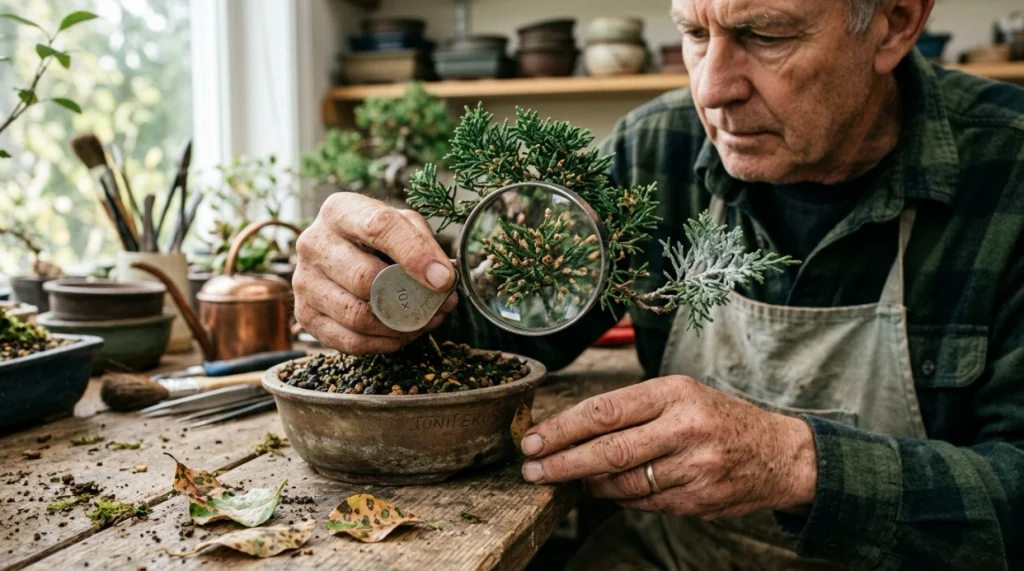
Look for a consistent symptom pattern before deciding fungus is responsible. Inspect the entire tree instead of focusing on the first damaged leaf.
The University of Maryland Extension notes that fungal leaf spots can produce tan, reddish-brown, or black lesions and may cause leaf drop when severe. Its fungal leaf spot guidance is useful when comparing suspicious foliage.
Check the foliage first
- White powder: Check whether it appears to grow across tissue rather than following dried water droplets.
- Expanding spots: Mark or photograph several lesions and see whether they enlarge.
- Yellow halos: Look for yellow tissue surrounding darker centers.
- Premature leaf drop: Note whether affected leaves fall while healthy foliage remains attached.
- Similar symptoms: Repeated lesions are more meaningful than one damaged leaf.
Rule out pests and care problems
Inspect both sides of leaves with bright light or a 10× hand lens. Aphids, spider mites, scale, mealybugs, and thrips can create discoloration that resembles disease.
Then review recent watering, light, heat, fertilizer, and repotting. A bonsai sitting in saturated soil may wilt from root oxygen problems even before a pathogen is confirmed.
- Fine webbing: Suspect spider mites before fungus.
- Sticky residue: Look for sap-feeding insects and honeydew.
- Uniform yellowing: Investigate watering, roots, light, and nutrition.
- Crispy edges: Consider heat, wind, drought, or fertilizer injury.
- Black surface coating: Check for sooty mold growing on insect honeydew.
I like to photograph the leaves, trunk base, soil surface, and any damaged roots before treatment. Comparing those photos several days later makes progression easier to judge.
Section Takeaway: Diagnose the pattern before treating the pathogen. Similar-looking bonsai symptoms can have completely different causes.
How Do You Treat Fungal Disease on Bonsai Step by Step?
Treatment should remove infection pressure while reducing stress on the bonsai. Start with sanitation and growing conditions before escalating to chemicals.
- Separate the affected bonsai. Give it space from healthy plants while you determine whether the problem is infectious.
- Inspect every part of the tree. Check foliage, young shoots, bark, trunk base, substrate, drainage holes, and exposed roots.
- Remove badly diseased material. Pick off severely spotted leaves and collect fallen debris from the pot and bench.
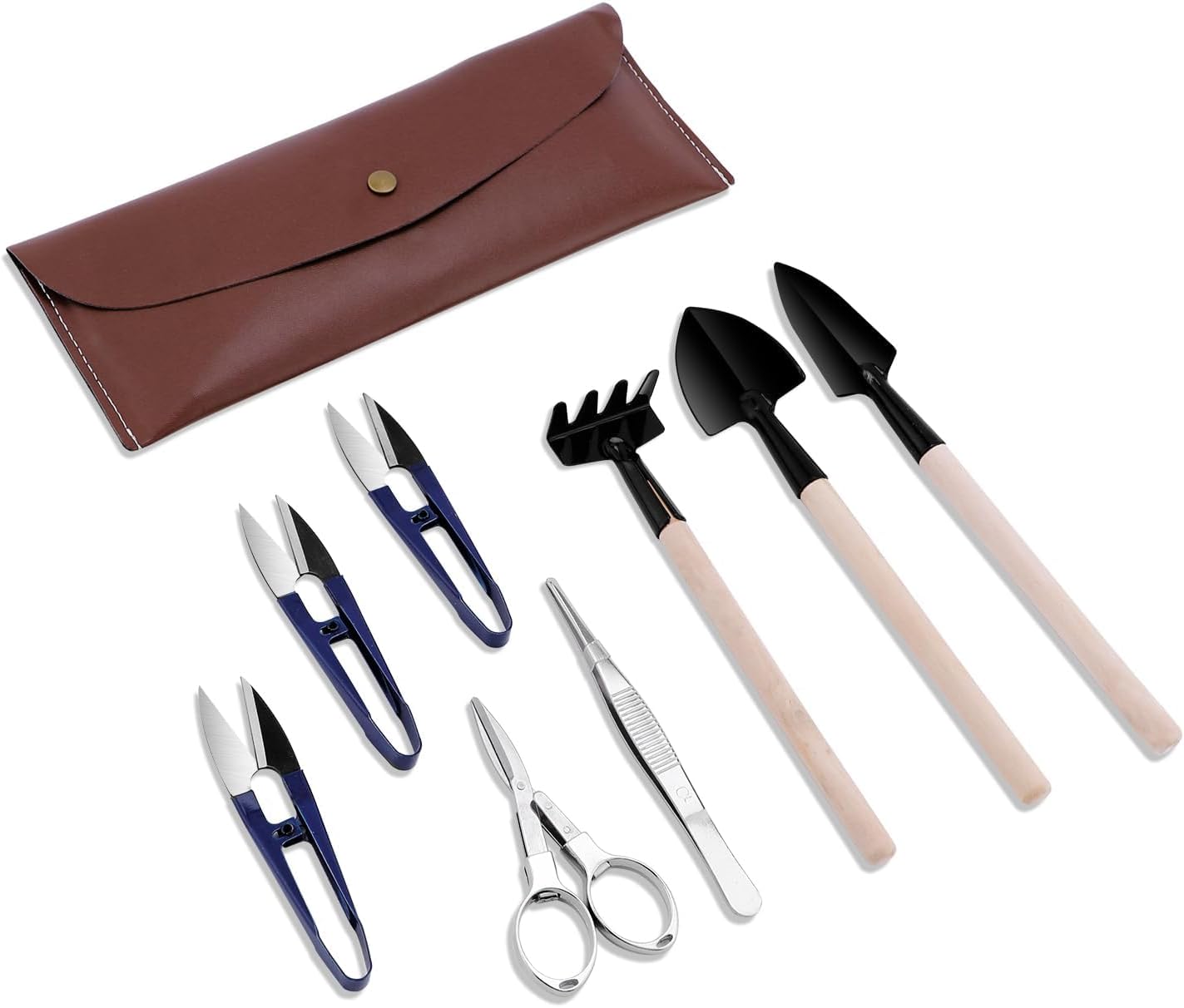
- Clean your tools. Sanitize cutting tools between diseased and healthy plants.
- Correct excessive moisture. Improve drainage and stop keeping the substrate continuously saturated unless the species specifically requires unusually wet conditions.
- Improve airflow. Avoid crowding the canopy against other plants, walls, or enclosed humid spaces.
- Choose a targeted treatment. If a fungicide is necessary, use one whose label covers the plant and disease you are trying to manage.
- Follow the label exactly. Never assume that stronger concentrations produce better control.
- Monitor healthy new growth. Old lesions usually remain visible even after the disease stops progressing.
The University of Minnesota Extension recommends early disease detection, removing affected material where appropriate, managing moisture, and improving air movement. Its plant disease management guidance explains these principles in more detail.
Should you prune infected branches?
Prune only when you have clearly dead or badly diseased tissue and the timing is reasonable for that species. Avoid removing healthy branches simply because one nearby leaf has a spot.
Pro tip: Cutting live wood is irreversible. If the bonsai is valuable, heavily weakened, or unfamiliar to you, ask an experienced grower or local bonsai club before making major cuts.
When should you use fungicide?
Use fungicide when the disease has been reasonably identified and the product label supports that use. Different fungicides control different pathogen groups.
Do not spray several unrelated products hoping one will work. That can stress foliage while leaving the original problem unresolved.
Section Takeaway: Start with isolation, diagnosis, sanitation, moisture correction, and airflow. Add a fungicide only when you have a reasonable target.
Which Treatment Fits Common Bonsai Fungal Problems?
Different diseases require different responses. The table below gives a practical starting point rather than a substitute for species-specific diagnosis.
| Problem | Typical Clues | First Response | Treatment Consideration |
|---|---|---|---|
| Powdery mildew | White or gray powder on leaves and shoots | Improve airflow and remove badly affected foliage | Use a labeled powdery-mildew fungicide if needed |
| Fungal leaf spot | Repeating brown, tan, red, gray, or black lesions | Remove diseased debris and limit prolonged leaf wetness | Confirm fungal rather than bacterial damage before spraying |
| Rust | Orange, yellow, reddish, or brown pustules | Isolate and identify the host-specific disease | Treatment depends strongly on species and rust type |
| Canker or dieback | Sunken bark and localized branch death | Confirm the extent of dead tissue | Pruning may be needed, depending on species and diagnosis |
| Root disease | Wet soil, weak growth, wilting, damaged feeder roots | Correct drainage and inspect roots carefully | Professional diagnosis may be needed for severe cases |
One important lesson is that fungicides do not repair damaged leaves. The goal is to prevent or slow new infection while the tree produces healthy tissue.
Also remember that bacterial leaf spots will not respond to ordinary fungal treatments. Diagnosis matters.
How Should You Handle Suspected Bonsai Root Rot?
Suspected root rot needs careful attention because above-ground symptoms can look like drought. A tree may wilt even while its substrate remains wet.
Penn State notes that poorly drained, wet growing media favor Phytophthora root disease in susceptible woody ornamentals. Its Phytophthora root rot guidance also emphasizes clean containers and well-drained growing media.
Check these warning signs
- Persistent wetness: The root ball stays saturated far longer than expected.
- Wilting: Foliage droops even though the substrate is wet.
- Weak growth: New shoots become smaller or fail to develop normally.
- Root damage: Fine roots appear dark, soft, or dead rather than firm.
- Progressive dieback: Decline moves from weak foliage into twigs or branches.
Do not respond by automatically watering more. Check the root zone and drainage first.
Should you repot immediately?
Not every suspicious root problem requires emergency repotting. Repotting itself stresses the root system, especially when performed at the wrong seasonal stage.
If the substrate is physically failing, drainage has collapsed, or roots are severely decayed, intervention may be justified. Preserve as many firm, healthy roots as possible.
Pro tip: Root pruning is irreversible. For severe root disease, valuable bonsai, or species with strict repotting windows, get help from an experienced grower before cutting roots.
A confirmed Phytophthora problem can be more complicated than ordinary overwatering. Some treatments suppress specific oomycetes rather than curing already destroyed roots.
Section Takeaway: Wet soil plus wilting deserves root inspection, not extra watering. Correct drainage while avoiding unnecessary root disturbance.
How Can You Prevent Fungal Disease From Returning?
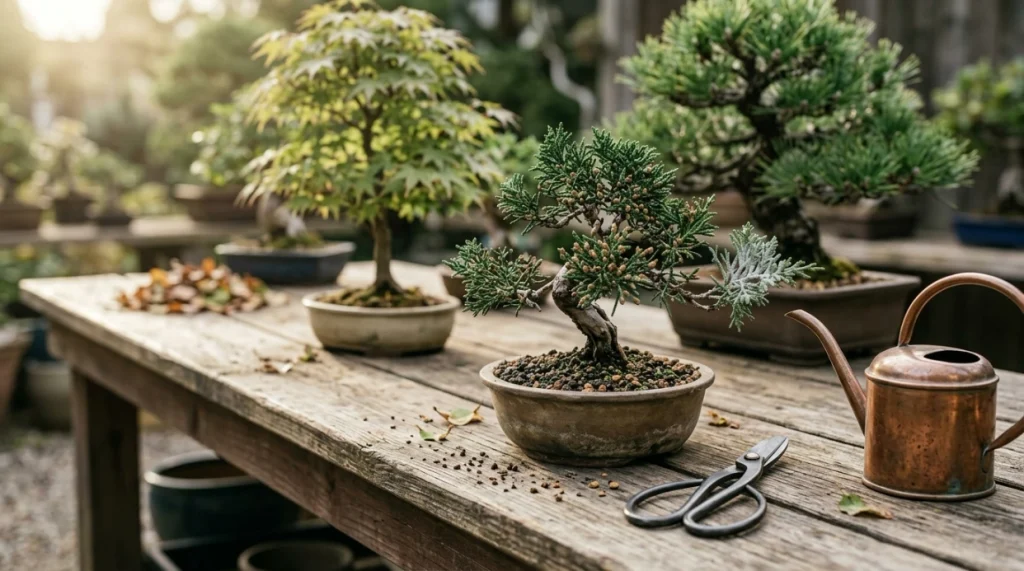
Prevention comes from reducing the conditions that help disease develop while keeping the bonsai vigorous. The exact routine still needs to match your species.
Water according to the tree, not the calendar
Check substrate moisture before watering. Bonsai can dry at different speeds depending on species, pot size, soil particle size, temperature, wind, and season.
When watering is needed, wet the root mass thoroughly and let excess water escape. Do not leave a tree constantly standing in drainage water unless its cultivation requirements specifically call for it.
Give foliage room to dry
- Allow airflow: Avoid tightly crowding multiple bonsai together.
- Watch leaf wetness: Avoid keeping foliage damp for unnecessarily long periods.
- Clean fallen material: Remove dead leaves and diseased debris from pots and benches.
- Separate new trees: Inspect recent purchases before mixing them into the collection.
- Keep tools clean: Sanitize tools after working on suspicious or infected tissue.
Keep the tree suited to its species
Junipers, pines, maples, ficus, elms, and azaleas do not need identical conditions. Correct light, watering, substrate, dormancy, and seasonal care reduce avoidable stress.
If a diagnosis is difficult, local knowledge helps. The American Bonsai Society provides educational resources and connections with bonsai clubs where experienced growers can help with regional problems.
Section Takeaway: Good drainage, species-appropriate watering, clean tools, airflow, sanitation, and regular inspections give fungal disease fewer opportunities to become established.
Frequently Asked Questions
What are the first signs of fungus on a bonsai?
Early signs may include repeating brown or black spots, white powdery growth, unusual orange or rust-colored areas, localized twig dieback, or foliage that declines despite suitable care. Check several affected leaves because one damaged leaf does not reliably prove fungal disease.
Can a fungal disease kill a bonsai tree?
Yes. Severe root diseases, cankers, vascular infections, or widespread foliar disease can seriously weaken or kill a bonsai. Early diagnosis improves your options because dead roots, bark, and branches cannot simply be restored with fungicide.
Should I remove leaves with fungal spots?
Removing severely infected leaves can reduce diseased material, but do not strip a weak tree of most of its foliage. Remove the worst leaves first, clean fallen debris, and balance sanitation against the tree’s need to retain healthy photosynthetic tissue.
Can I use any fungicide on a bonsai?
No. Use a fungicide only when its label allows use on the relevant plant or plant group and targets the suspected disease. Follow application rates, intervals, temperature restrictions, and safety directions exactly because bonsai foliage can be sensitive to chemical injury.
Does overwatering cause fungal disease?
Overwatering does not automatically create a fungal pathogen, but prolonged wet conditions can damage roots and favor several root-disease organisms. Poor drainage also makes diagnosis harder because oxygen-starved roots may cause wilting and yellowing without a confirmed infection.
How long does a bonsai take to recover from fungus?
Recovery time depends on the disease, species, season, and amount of damaged tissue. Instead of waiting for old spots to disappear, monitor healthy new leaves, stable branches, improved root conditions, and the absence of new lesions.
Should I isolate a bonsai with suspected fungus?
Temporary isolation is sensible when an infectious problem is possible. It reduces contact with other trees while you diagnose the symptoms, clean debris, and monitor progression without immediately exposing the rest of your collection.
Final takeaway: Treat fungal disease by identifying the problem first, then correcting the conditions helping it spread. Careful diagnosis usually protects a bonsai better than applying the strongest treatment you can find.
Keep checking the tree after symptoms stabilize. Healthy new growth is the clearest sign that your treatment and care changes are moving in the right direction.