
Black Mold on Bonsai Soil: Causes and Treatment

Quick Answer
Black mold on bonsai soil usually means the surface is staying damp and contains organic material that fungi can feed on. Surface fungal growth is often more of a moisture warning than a direct threat to the tree, but persistent wet soil can also increase the risk of root problems. The University of Maryland Extension explains that fungal growth on potting media is commonly associated with moist conditions.
What to check first
- Check moisture: See whether the substrate stays wet for several days after watering.
- Check drainage: Water should move freely through the pot’s drainage holes.
- Inspect texture: Fuzzy or web-like growth is more consistent with fungus than mineral deposits.
- Remove debris: Dead leaves, old fertilizer, and decaying organic material can feed surface fungi.
- Watch the tree: Yellowing, wilting in wet soil, weak growth, or soft roots deserve closer investigation.
First treatment
- Remove the affected surface material, improve airflow, and adjust watering based on the actual moisture in the soil rather than a fixed schedule.
Finding black mold on bonsai soil can look alarming, especially when the tree sits in a shallow pot where every change is easy to notice. The good news is that dark fungal growth on the soil surface does not automatically mean your bonsai is dying.
The important question is why the surface stays favorable for fungal growth. In this 2026 guide, I’ll show you how to identify the likely cause, correct the growing conditions, and recognize signs that point to a more serious root problem.
In This Guide
What Does Black Mold on Bonsai Soil Actually Mean?
Black mold on bonsai soil is a descriptive term for dark fungal growth appearing across the substrate surface. The color alone does not identify a specific fungal species, so you should diagnose the growing conditions instead of assuming you know the organism.
Definition: Surface fungal growth is a colony of fungi feeding on organic material at or near the top of the growing medium. It often becomes visible when moisture, organic matter, temperature, and limited air movement create favorable conditions.
Is mold on bonsai soil always dangerous?
No. Surface fungi can live on decomposing bark, peat, dead roots, fertilizer residue, or fallen plant material without attacking living bonsai tissue.
The larger concern is what persistent mold tells you about moisture. A bonsai mix that stays saturated for too long can lose air around the roots.
- Minor surface growth: The tree looks healthy and water still drains quickly.
- Recurring heavy growth: The soil stays wet for long periods or feels compacted.
- Mold plus decline: Yellow foliage, wilting, weak growth, or damaged roots may indicate a root-zone problem.
- Mold plus small flies: Damp organic media may also support fungus gnats.
Good bonsai substrate must balance moisture with oxygen. Bonsai Empire’s guide to bonsai soil and substrate emphasizes drainage, aeration, and appropriate water retention as core requirements.
That balance matters even more in shallow bonsai pots. There is little room for error when the mix becomes dense or remains wet.
What Causes Black Mold on Bonsai Soil?
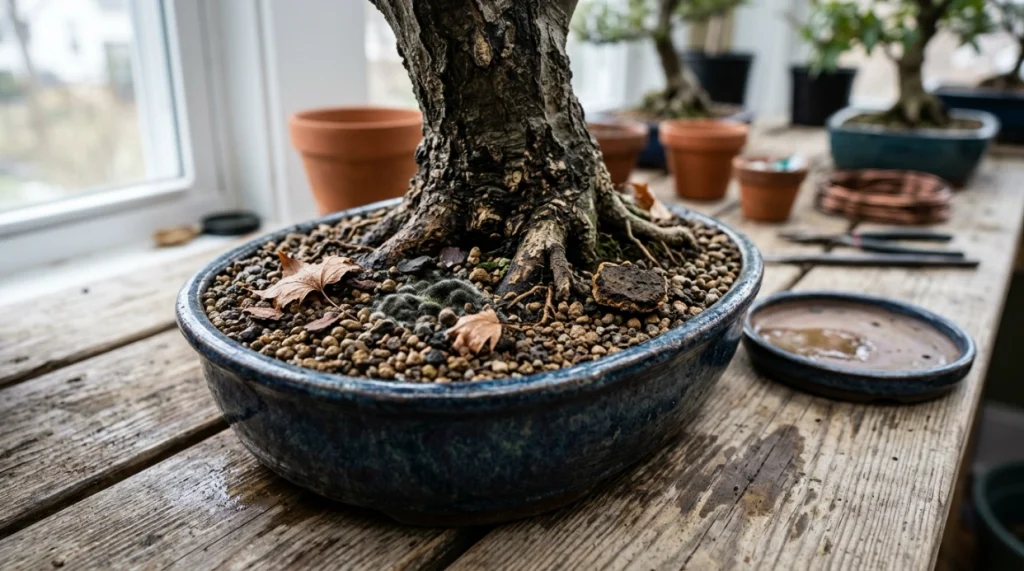
The most common cause is a persistently damp soil surface combined with material fungi can decompose. Overwatering is only one possible reason, so check the whole growing setup.
1. The bonsai stays wet too long
Watering again before the root zone needs it keeps the surface damp. Mold can then return even after you scrape it away.
Do not water by calendar alone. Check the tree, substrate, season, temperature, wind, and pot before deciding.
2. The substrate has too much decomposing organic matter
Bark, peat, compost, dead fine roots, and fallen leaves can support fungal growth. Organic material is not automatically bad, but old material can break down and reduce pore space.
- Old pine bark may become softer and finer.
- Peat-heavy mixes can retain significant moisture.
- Dead leaves can collect between soil particles.
- Organic fertilizer cakes may remain damp on the surface.
3. Drainage or aeration has declined
A bonsai pot may have drainage holes yet still drain poorly. Fine particles can clog spaces between larger particles or accumulate near the bottom.
Check whether water exits promptly during a thorough watering. Slow runoff, standing water, or a muddy surface deserves attention.
4. Air movement is limited
Still air slows evaporation from the substrate surface. This is especially noticeable with indoor tropical bonsai kept in warm rooms.
Give the tree appropriate ventilation without placing it in a harsh artificial draft. Species needs should always come first.
5. Dead material is sitting on the soil
Fallen leaves and old flowers trap moisture against the substrate. They also provide fungi with an easy food source.
- Remove dropped foliage.
- Clear dead moss where appropriate.
- Remove rotting fertilizer residue.
- Keep the trunk base visible enough to inspect.
Section Takeaway: Mold is often the symptom, while persistent moisture, decaying material, and poor aeration are the conditions that allow it to keep returning.
How Can You Tell Mold From Algae, Salt, or Sooty Mold?
Look at texture, location, moisture, and nearby symptoms before treating anything. Several common bonsai problems can resemble mold at first glance.
| What You See | Typical Clue | Where It Appears | First Response |
|---|---|---|---|
| Dark, fuzzy or web-like growth | Often associated with damp organic material | Soil surface or decaying debris | Reduce persistent surface moisture and remove affected debris |
| Green or dark green film | Often algae in consistently moist, bright conditions | Soil, pot edges, or damp surfaces | Improve drying and surface airflow |
| White or pale crust | May be mineral or fertilizer salt buildup | Pot rim, trunk base, or substrate | Review water quality and fertilizer use |
| Black soot-like coating | May develop on sticky insect honeydew | Leaves, branches, surfaces below insects | Inspect for scale, aphids, mealybugs, or other sap feeders |
Black soil mold is not the same as sooty mold
Sooty mold usually grows on sugary honeydew produced by sap-feeding insects. It is commonly noticed on leaves, twigs, or objects underneath an infested plant rather than only within the soil.
The University of Maryland Extension explains the relationship between insect honeydew and sooty mold. If your bonsai has sticky foliage and a black coating above the soil line, inspect carefully for insects.
Check for root trouble separately
Surface mold does not prove that roots are rotting. Root problems become more concerning when the tree declines while the substrate remains wet.
- Leaves wilt even though the soil is moist.
- Foliage yellows without an obvious seasonal reason.
- New growth becomes weak or stops.
- The root zone develops an unpleasant smell.
- Visible roots become dark, soft, or easily damaged.
UC Integrated Pest Management notes that root rot is commonly associated with poor drainage, overwatering, and loss of aeration in aging container media. Its container plant disease guidance also stresses appropriate watering and drainage.
How Do You Treat Black Mold on Bonsai Soil Safely?
Treat the environment that supports the mold instead of reaching immediately for a fungicide. Start with the least disruptive changes and watch how the tree responds.
Step 1: Remove visible contaminated surface material
Gently lift away obvious fungal mats, dead foliage, and decomposing debris. Avoid digging deeply through healthy feeder roots near the surface.
- Use a clean chopstick, tweezers, or small spoon.
- Remove only the affected loose surface material.
- Discard it rather than mixing it back into the pot.
- Clean tools before using them on another tree.
Step 2: Correct your watering pattern
Let the substrate tell you when to water. Different species and soil mixes dry at very different rates.
When watering is needed, water thoroughly until excess drains from the holes. Then wait until the tree needs water again rather than giving small daily splashes automatically.
Step 3: Improve drainage and airflow
Make sure drainage holes are open and the pot is not sitting continuously in runoff. Remove decorative covers that prevent you from seeing or feeling the growing medium if they interfere with moisture checks.
- Keep appropriate space between trees.
- Provide species-appropriate light.
- Improve room ventilation for indoor tropicals.
- Avoid permanently wet trays touching the pot base.
Step 4: Decide whether repotting is actually necessary
Surface mold alone is not a reason for emergency root work. Repotting becomes more reasonable when the substrate has broken down, drainage is failing, or root health is clearly deteriorating.
If repotting is needed, use a structured bonsai substrate suited to the species and your climate. Pumice, lava rock, akadama, fired clay, and controlled amounts of organic material are common components.
Pro tip: Root pruning is irreversible and can seriously stress a weak bonsai. If you find extensive dark or soft roots, get help from an experienced grower or local bonsai club before making aggressive cuts.
Should you spray fungicide on the soil?
Not automatically. A fungicide cannot correct compacted substrate, blocked drainage, excess watering, or decaying organic debris.
If a diagnosed disease requires treatment, use only a product labeled for the plant and problem. Follow the label exactly.
Section Takeaway: For ordinary surface mold, moisture correction, sanitation, airflow, and better substrate management matter more than simply killing the visible fungus.
How Do You Prevent Black Mold From Coming Back?
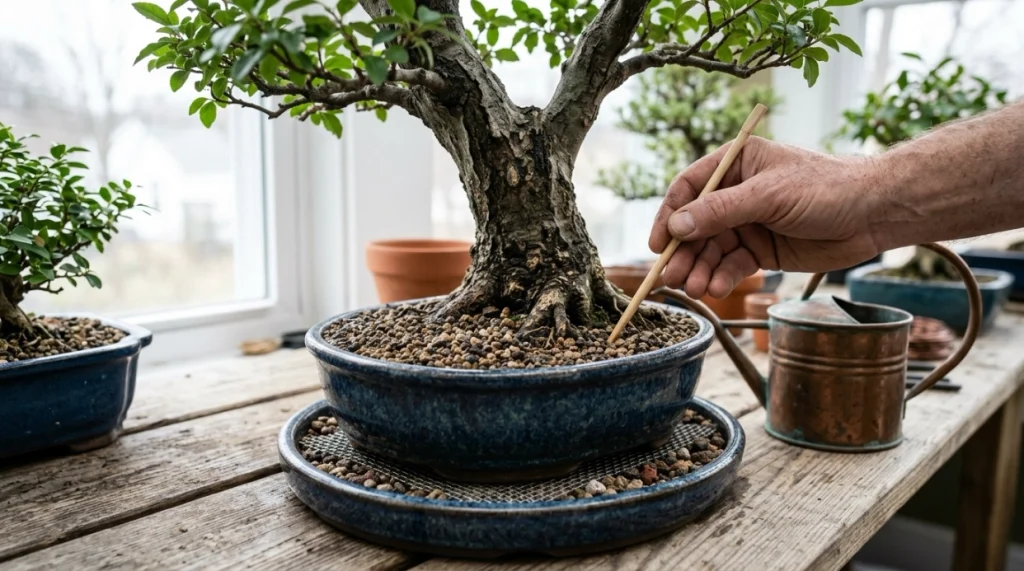
Prevention depends on making the soil surface less consistently favorable for fungal growth. You do not need to keep bonsai soil bone dry.
Use a substrate that matches your conditions
A humid, rainy climate usually needs more drainage than a hot, windy climate. The species, pot depth, particle size, and your watering habits all affect the right mix.
- Wet climate: Favor stronger drainage and stable particles.
- Dry climate: Retain enough moisture to prevent dangerous dehydration.
- Indoor tropicals: Balance moisture with airflow and adequate light.
- Outdoor conifers: Avoid dense media that remains saturated around fine roots.
Check moisture before every watering
The surface may look dry while deeper soil is still wet. Likewise, a gritty surface can hide a rapidly drying root ball.
Learn the drying pattern of each tree. Pot weight, substrate color, touch, and a wooden chopstick can all provide useful clues.
Keep the surface clean
Small maintenance habits reduce places where fungi can feed. They also make pest and disease problems easier to spot early.
- Remove dead leaves promptly.
- Do not leave rotting fertilizer cakes indefinitely.
- Inspect moss rather than letting it cover every problem.
- Clean benches, trays, and tools.
- Check drainage during regular watering.
Watch for fungus gnats
Small dark flies around consistently damp soil are worth investigating. Their presence often points to moist organic media where their larvae can feed on fungi and decaying material.
Do not dry a moisture-sensitive bonsai dangerously just to control gnats. Correct the underlying moisture problem while protecting the tree’s normal water needs.
Section Takeaway: A clean, airy, correctly watered bonsai pot is much less likely to develop recurring surface mold.
Black Mold on Bonsai Soil FAQ
Is black mold on bonsai soil harmful to the tree?
Surface mold is often feeding on dead organic material rather than the living tree. However, recurring mold can warn you that the soil remains wet, dense, or poorly aerated, and those conditions can eventually damage roots.
Should I remove moldy bonsai soil immediately?
Remove obvious surface mats and decaying debris first. Do not replace the entire root ball or disturb roots simply because a small patch of mold appears.
Can overwatering cause black mold on bonsai soil?
Yes, frequent watering can keep the soil surface wet enough for fungal growth. The better approach is to check moisture before watering and make sure excess water drains freely.
Can I use cinnamon to kill mold on bonsai soil?
Cinnamon is often suggested online, but sprinkling household remedies on the surface does not correct poor drainage or excessive moisture. Correct the growing conditions first and avoid adding unverified treatments around sensitive roots.
Does black mold mean my bonsai has root rot?
No. Surface mold and root rot are separate issues, although both may occur under persistently wet conditions.
Root rot becomes more likely when wet soil is accompanied by wilting, yellowing, weak growth, unpleasant odors, or dark and soft roots.
Should I repot a bonsai that has moldy soil?
Repot only when there is a stronger reason, such as compacted substrate, seriously reduced drainage, a root-bound tree, or confirmed root deterioration. Routine seasonal repotting is safer than unnecessary emergency root work on many species.
How quickly should the mold disappear after treatment?
There is no fixed timetable because temperature, humidity, substrate, and watering all affect fungal growth. Visible mold may decline quickly after the surface dries better, but recurring growth means the underlying conditions still need correction.
Black mold on bonsai soil is best treated as a clue rather than a diagnosis. Clean the surface, check drainage, correct watering, and keep a close eye on the tree’s roots and foliage.
If the bonsai remains vigorous and the substrate drains well, a small surface patch is usually manageable. If the tree starts declining while the root zone stays wet, investigate the roots and substrate before the problem progresses.
