
White Fungus on Bonsai Soil: Causes and Solutions

Quick Answer
White fungus on bonsai soil is often surface mold growing on damp organic material, but it can also be confused with mineral deposits or signs of a deeper root problem. Start by checking moisture, drainage, airflow, and the texture of the white growth, while remembering that a healthy bonsai soil structure should balance moisture retention with fast drainage and root aeration.
Check These Causes First
- Constant moisture: Soil that stays wet for too long encourages fungal growth.
- Organic debris: Dead leaves, bark, moss, and decomposing material can feed harmless fungi.
- Poor airflow: Still, humid conditions slow surface drying.
- Slow drainage: Compacted substrate or blocked drainage holes keep roots wet.
- Mineral buildup: White crusty deposits from hard water or fertilizer may look fungal but are not.
What to Do
- Remove loose surface growth, correct excessive moisture, improve drainage and airflow, and inspect the roots if the tree also shows decline.
Finding white fungus on bonsai soil can look alarming, especially when it appears overnight. In many cases, however, the white growth is a symptom of the growing conditions rather than a disease attacking the tree.
I treat it as a diagnostic clue. The important question is not just how to remove the white material, but why the soil stayed favorable for it.
In This Guide
- What Is the White Fungus Growing on Bonsai Soil?
- Why Does White Fungus Grow on Bonsai Soil?
- Is It Mold, Mineral Buildup, or a Serious Disease?
- How Do You Get Rid of White Fungus on Bonsai Soil?
- How Can You Prevent White Fungus From Returning?
- When Should You Repot or Use a Fungicide?
- Frequently Asked Questions
What Is the White Fungus Growing on Bonsai Soil?
White fungus on the surface of bonsai soil is often a colony of fungi feeding on dead organic material. The visible white threads are commonly described as fungal mycelium, which is the network of microscopic filaments produced by a fungus.
Definition: Surface fungal growth is biological material growing across damp substrate or decomposing organic matter. It is different from white mineral deposits, which are non-living salts left behind by water or fertilizer.
Surface mold does not automatically mean your bonsai has a fungal disease. Many decomposer fungi live on dead bark, peat, leaf fragments, moss, or other organic material without invading living roots.
The growing conditions still deserve attention. A bonsai pot has limited soil volume, so prolonged saturation can reduce oxygen around the roots.
What does harmless surface fungus usually look like?
It often appears as fine white threads, wispy patches, or a soft fuzzy layer across the soil. You may see it around bark pieces or decomposing organic particles first.
- Texture: Soft, fuzzy, web-like, or thread-like.
- Location: Mainly on the soil surface or organic debris.
- Tree condition: The bonsai may otherwise look healthy.
- Soil condition: The surface usually stays damp for long periods.
On my own troubleshooting routine, I check the tree before treating the fungus. Healthy foliage and firm roots point me in a different direction than wilting leaves and foul-smelling soil.
Why Does White Fungus Grow on Bonsai Soil?
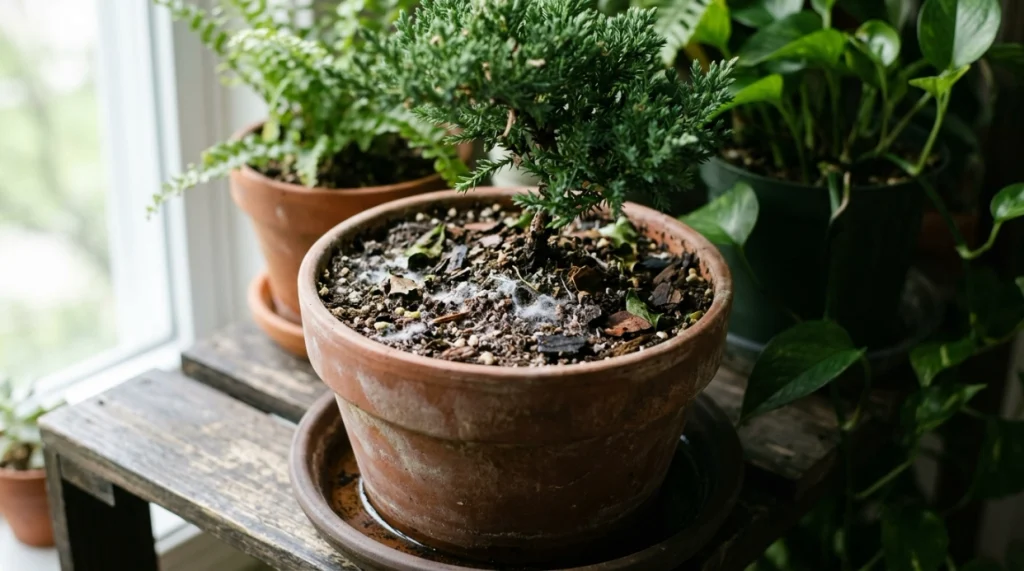
White fungal growth usually appears when moisture, organic material, temperature, and airflow create favorable conditions. The most common trigger is a substrate surface that stays damp longer than it should.
Overwatering or slow drying
Watering too frequently can keep the upper layer continuously moist. This is especially common with indoor tropical bonsai grown in dense potting media.
Water by soil condition rather than by a fixed calendar. A ficus in warm summer light may dry much faster than the same tree during a cool, dim period.
Poor drainage or compacted substrate
Old substrate can break down and lose the open spaces that allow air through the root zone. Water then drains more slowly, and the pot remains damp longer.
- Check whether water exits the drainage holes quickly.
- Make sure the holes are not blocked.
- Look for fine, muddy material replacing the original coarse particles.
- Never leave the bonsai standing in a tray of drainage water.
Too much decomposing organic material
Dead leaves, old moss, bark fragments, and organic fertilizer residues can provide food for decomposer fungi. Removing debris makes the surface less favorable for fungal colonies.
Low airflow
A crowded shelf or enclosed indoor corner can keep the surface humid. Gentle natural air movement helps the soil surface dry without forcing the tree into drought.
As of 2026, I still consider watering and soil structure before reaching for a treatment. Correcting the environment often solves the recurring problem more effectively than repeatedly removing the visible fungus.
Is It Mold, Mineral Buildup, or a Serious Disease?
Not every white patch on bonsai soil is fungus. Texture, location, drainage, odor, roots, and foliage give you much better diagnostic clues than color alone.
| What You See | Likely Cause | Risk Level | First Action |
|---|---|---|---|
| Soft white fuzz or threads on soil | Surface fungal growth | Usually low by itself | Check moisture and airflow |
| Dry, chalky white crust | Mineral or fertilizer salts | Varies | Review water and fertilizer |
| White material plus tiny flying insects | Damp soil with fungus gnats | Usually indirect concern | Correct excessive moisture |
| White growth plus wilt and mushy roots | Possible root disease or severe root damage | High | Inspect the root zone carefully |
Could fungus gnats appear too?
Yes. Fungus gnats favor moist growing media, so they often appear under the same conditions that encourage fungal growth.
The University of Minnesota Extension notes that fungus gnats are associated with damp potting media and often feed on fungi and decaying material. Its indoor plant pest guidance also emphasizes drainage and appropriate drying between waterings.
When should you worry about the roots?
White surface growth becomes more concerning when the tree itself is declining. Check for several symptoms together rather than assuming the surface fungus caused every problem.
- Persistent wilting while the soil is wet
- Yellowing or dropping leaves
- Weak new growth
- Sour or rotten odor from the pot
- Water remaining on the surface instead of draining
- Dark, soft, or mushy roots
How Do You Get Rid of White Fungus on Bonsai Soil?
Start with the growing conditions instead of automatically applying fungicide. Surface fungus often returns unless the moisture or substrate problem is corrected.
- Inspect the tree first. Look at foliage, branches, soil moisture, drainage, and any visible roots.
- Remove loose fungal material. Gently lift away the affected surface debris without digging deeply into healthy roots.
- Remove dead organic matter. Pick out fallen leaves, decaying moss, and other material sitting on the soil.
- Adjust watering. Let the substrate approach the appropriate drying point for that species before watering again.
- Improve airflow. Give the tree enough space around its canopy and pot for natural air movement.
- Check drainage. Water should move through the pot rather than sitting above compacted soil.
Do not intentionally dehydrate the bonsai just to kill surface mold. Species such as ficus, juniper, maple, elm, and azalea have different moisture needs.
I also avoid repeatedly treating harmless surface growth with strong household chemicals. Hydrogen peroxide, vinegar, bleach, concentrated alcohol, or other improvised treatments can damage living roots if used carelessly.
Should you remove the top layer of soil?
You can gently remove a thin loose layer when the fungus is confined to the surface. Avoid scraping deeply around fine feeder roots.
If the substrate underneath is open, granular, and draining well, a complete emergency repot is usually unnecessary. Persistent soggy or decomposed soil is a different situation.
How Can You Prevent White Fungus From Returning?
Prevention comes down to moisture control, clean surfaces, good drainage, and species-appropriate care. You are trying to remove the conditions that allow repeated fungal growth.
- Check before watering: Learn how quickly your specific substrate dries.
- Use an open substrate: Akadama, pumice, lava rock, and similar particles are commonly used to maintain structure and aeration.
- Keep drainage open: Make sure water can leave the pot freely.
- Remove debris: Do not leave dead foliage decomposing across the soil.
- Improve light appropriately: Adequate light helps support healthy growth and normal water use.
- Increase spacing: Avoid crowding several damp pots tightly together.
- Clean trays: Empty standing water after irrigation.
Do not interpret this as a rule that bonsai soil must stay dry. Roots need water, and some species tolerate far less drying than others.
The goal is a healthy wet-to-drier cycle with good oxygen movement through the substrate. That balance supports roots while making the surface less inviting to recurring mold.
What about hard water?
If the white material is brittle or chalky rather than fuzzy, consider mineral buildup. Hard irrigation water and repeated fertilizer use can leave salts on soil particles and pot rims.
Changing watering practices will not remove an existing mineral crust immediately. First make sure you have correctly identified the deposit before treating it as fungus.
When Should You Repot or Use a Fungicide?
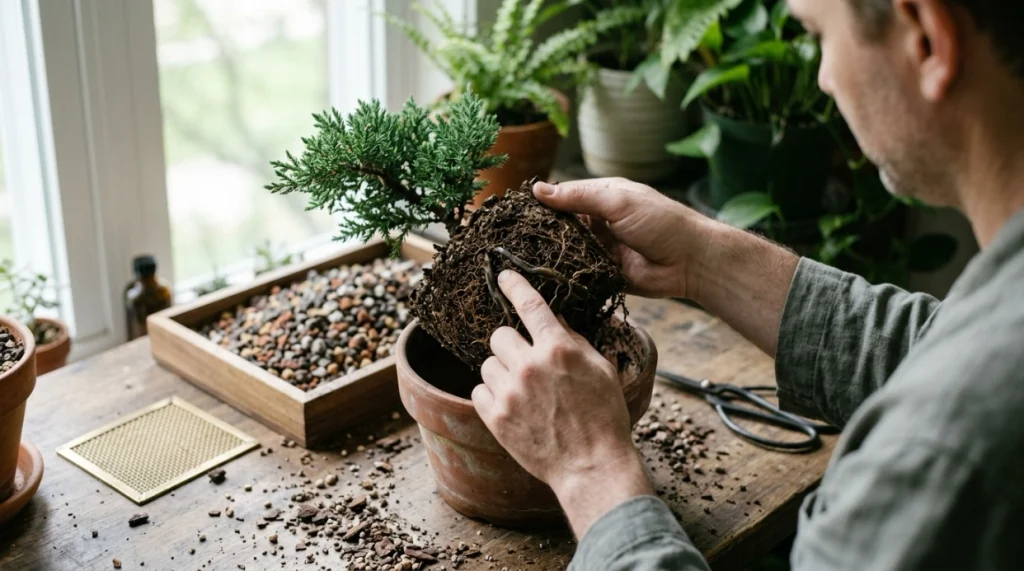
A healthy bonsai normally does not need an emergency repot simply because white fuzz appeared on the soil. Repotting becomes more reasonable when the substrate itself is failing or the roots show serious damage.
Consider repotting when:
- Water drains unusually slowly.
- The substrate has broken down into dense fine material.
- The drainage holes remain blocked after simple cleaning.
- The tree has clear signs of deteriorating roots.
- The soil smells sour or rotten.
- The growing medium no longer matches the needs of the species.
Pro tip: Root work is irreversible. If a weak bonsai needs emergency root pruning, get help from an experienced grower or local bonsai club before removing substantial living roots.
The American Bonsai Society provides resources for growers and helps people connect with bonsai clubs. Local growers can also advise on the safest repotting season for your species and climate.
Do you need a fungicide?
Not for ordinary surface mold alone. A fungicide makes more sense when you have evidence of a specific plant disease and a product labeled for that disease, plant, and growing situation.
Bonsai can develop genuine fungal diseases, including root and crown rots. The University of Wisconsin–Madison’s bonsai disease guidance emphasizes proper drainage, suitable growing media, sanitation, and avoiding excessive watering when managing root and crown problems.
If the tree is rapidly declining, accurate diagnosis matters more than choosing a random treatment. A university plant diagnostic clinic or experienced bonsai professional can help separate disease from ordinary watering stress.
Frequently Asked Questions
Is white fungus on bonsai soil dangerous?
White surface fungus is not automatically dangerous. Decomposer fungi often feed on dead organic material, but their presence can indicate soil that stays wet too long, so check drainage, watering habits, root condition, and the overall health of the bonsai.
Can overwatering cause white mold on bonsai soil?
Yes. Frequent watering can keep the surface damp enough for fungal growth, especially in organic or compacted media. Water according to the tree’s needs and the actual moisture level rather than following a fixed daily schedule.
Should I scrape white fungus off bonsai soil?
You can gently remove loose surface growth and decomposing debris. Do not dig deeply around fine roots, and remember that scraping alone may not solve the problem if poor drainage or constantly wet soil remains unchanged.
Does white fungus mean my bonsai has root rot?
No. Surface fungus and root rot are different problems, although overly wet conditions can encourage both. Root rot becomes more likely when you also see wilting, weak growth, poor drainage, bad odor, or dark and mushy roots.
Why does the white fungus keep coming back?
Recurring growth usually means the underlying environment has not changed. Check watering frequency, airflow, decomposing organic material, drainage holes, substrate breakdown, light levels, and whether water remains in the saucer after irrigation.
Can I use cinnamon or hydrogen peroxide on bonsai soil fungus?
I would not make either my first response. Household treatments vary in concentration and can distract from the actual problem, while correcting excessive moisture, poor drainage, decomposing debris, and weak airflow addresses the conditions that usually allow surface fungus to persist.
Should I repot my bonsai immediately?
Usually not if the tree is healthy and the substrate drains properly. Repot when there is a real root-zone problem, such as severely decomposed soil, failed drainage, root rot, or another condition that cannot be corrected safely without disturbing the roots.
The main takeaway: white fungus on bonsai soil is usually a reason to investigate moisture and substrate conditions, not a reason to panic. Identify what the white material is, correct the cause, and reserve aggressive treatments for confirmed problems.
Keep watching the tree after making changes. Healthy new growth, normal drainage, and a soil surface that no longer stays constantly damp are better signs of recovery than simply making the white growth disappear.
