Bacterial Diseases in Bonsai Trees: Complete Guide

Quick Answer
Bacterial diseases in bonsai trees can cause water-soaked leaf spots, blackened shoots, cankers, dieback, unusual galls, or rapid tissue collapse. They are often encouraged by wet foliage, wounds, contaminated tools, and infected plant material, so accurate diagnosis and sanitation matter more than reaching immediately for a spray; this overview of bacterial diseases of ornamental plants explains the broader disease process.
Signs that deserve attention
- Water-soaked spots: Lesions may later become brown or black and sometimes develop yellow margins.
- Blackened shoots: Sudden darkening or dieback can occur with bacterial blights and cankers.
- Sunken cankers: Diseased bark may become dark, cracked, or depressed around infected tissue.
- Abnormal galls: Rough growths near roots or the trunk base may indicate crown gall.
- Sticky ooze: Some active bacterial infections produce cream, tan, or amber-colored exudate.
What to do first
- Separate the affected bonsai, keep its foliage dry, disinfect tools, and confirm the diagnosis before aggressive pruning or chemical treatment.
Bacterial diseases in bonsai trees can be confusing because several fungal diseases, pests, frost injuries, and watering problems create similar symptoms. A dark leaf spot alone does not prove bacteria are responsible.
My approach is to slow the problem down first, then diagnose it. This guide covers the symptoms, important bacterial disease groups, treatment choices, and prevention practices I consider most useful for bonsai growers in 2026.
In This Guide
- What Are Bacterial Diseases in Bonsai Trees?
- What Symptoms Suggest a Bacterial Infection?
- Which Bacterial Diseases Affect Bonsai Trees?
- How Do Bacterial Diseases Spread in a Bonsai Collection?
- How Do You Treat a Suspected Bacterial Disease?
- How Can You Prevent Bacterial Diseases Long Term?
- Frequently Asked Questions
What Are Bacterial Diseases in Bonsai Trees?
Bacterial diseases occur when pathogenic bacteria enter susceptible plant tissue, multiply, and interfere with normal growth. Depending on the pathogen, they can damage leaves, shoots, bark, roots, flowers, or vascular tissue.
A bonsai is not a separate botanical type of tree. A Japanese maple bonsai can develop diseases associated with Japanese maples, while an apple bonsai remains vulnerable to diseases found on apples.
Definition: A bacterial plant disease is a disorder caused by pathogenic bacteria living and multiplying in plant tissue. Infection commonly begins through wounds or natural openings and may produce leaf spots, blights, cankers, galls, wilts, rots, or dieback.
Why bonsai culture can create disease opportunities
Bonsai are not automatically more susceptible to bacteria than full-sized trees. However, normal bonsai work creates several opportunities for pathogens if hygiene is poor.
- Frequent pruning: Fresh cuts create possible infection sites.
- Root pruning: Repotting produces many small root wounds.
- Wiring damage: Wire that bites into bark may injure protective tissue.
- Close spacing: Splashing water can move pathogens between nearby trees.
- Shared tools: Shears and cutters can carry contaminated sap or plant debris.
- Dense canopies: Poor airflow can keep leaves wet longer.
None of those practices means you should stop styling bonsai. They simply make timing, sanitation, and aftercare important.
Bacteria need an entry point and favorable conditions
Many plant-pathogenic bacteria enter through stomata, wounds, damaged buds, pruning cuts, or injured roots. Moisture can then help bacteria multiply and spread.
This is why a tree can remain healthy around a pathogen for some time, then develop symptoms after frost, rough handling, prolonged rain, or another stress. Host susceptibility also matters.
- Host: The bonsai species must be susceptible to that pathogen.
- Pathogen: Disease-causing bacteria must be present.
- Environment: Conditions must favor infection and multiplication.
This combination is often called the disease triangle. Breaking even one side can greatly reduce disease development.
Section Takeaway: Bonsai trees develop the same bacterial diseases as their underlying species. Good hygiene matters because pruning, wiring, repotting, and close spacing can create wounds or pathways that help pathogens spread.
What Symptoms Suggest a Bacterial Infection?
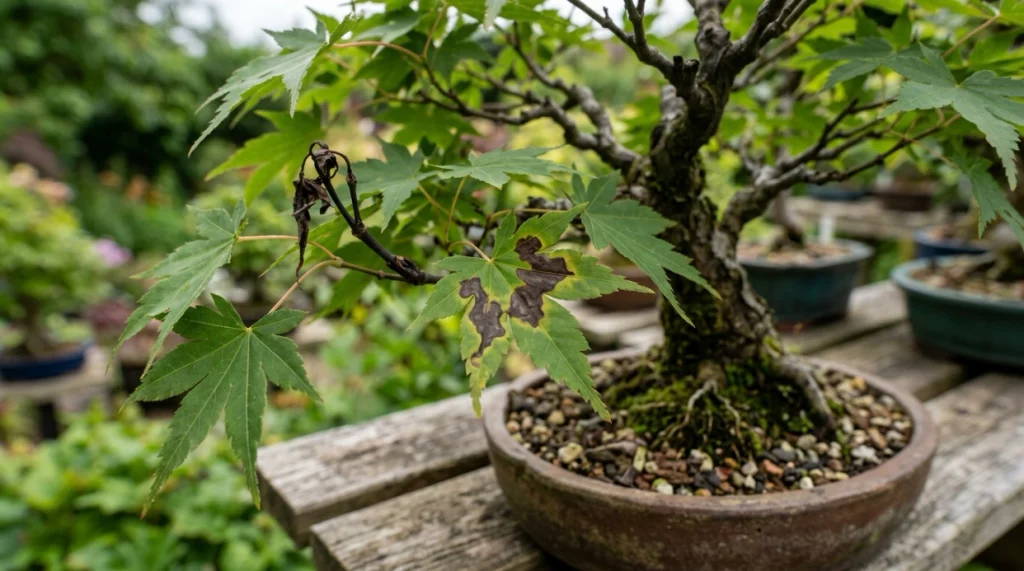
Water-soaked spots, angular lesions, blackened veins, cankers, bacterial ooze, sudden shoot dieback, and unusual galls can all justify suspicion. None is enough to confirm a bacterial disease by itself.
Fungal infections and environmental damage often look similar. When a valuable bonsai is declining quickly, laboratory diagnosis can prevent a destructive treatment mistake.
Water-soaked or angular leaf spots
Early bacterial leaf lesions often look wet, translucent, or greasy. As tissue dies, the affected areas can become tan, brown, dark gray, or black.
Some lesions appear angular because leaf veins restrict their expansion. Yellow halos may develop around damaged tissue.
- Watch the newest spots rather than only old, dried lesions.
- Check both the upper and lower leaf surfaces.
- Look for clusters where water collects or splashes.
- Notice whether spots follow veins or leaf margins.
NC State Extension notes that bacterial leaf spots can be difficult to distinguish from fungal spots without diagnosis, even when characteristic symptoms are present. Their guide to bacterial leaf spotting on ornamentals is a useful reference for this problem.
Blackened shoots and cankers
A bacterial blight can kill tender shoots rapidly. Young growth may turn brown or black while older leaves remain attached.
Cankers are localized areas of dead or damaged bark. They may appear sunken, cracked, darkened, or sharply separated from healthy tissue.
Ooze from infected tissue
Some bacterial infections produce sticky exudate when conditions are wet. Depending on the disease, the material may look cream, tan, amber, or cloudy.
Do not squeeze a suspected canker to check for ooze. That can contaminate your hands, tools, or nearby tissue.
Galls around the roots or trunk
Hard or cauliflower-like swellings around roots and the lower trunk deserve close examination. Crown gall is one bacterial cause, but insects and normal callus tissue can also create unusual growths.
Young crown galls may be pale and relatively soft. Older galls tend to become darker, rougher, and woody.
| Problem | Clues You May See | Useful Next Step |
|---|---|---|
| Bacterial disease | Water-soaked spots, angular lesions, cankers, ooze, blight, or galls | Isolate and seek diagnosis if symptoms are serious |
| Fungal disease | Leaf spots, cankers, mildew, fruiting bodies, or visible spores | Identify the host and pathogen before treating |
| Watering or root stress | General yellowing, wilting, weak growth, or root decline | Inspect drainage, root condition, and watering pattern |
| Frost or sun injury | Damage appears after a weather event and affects exposed tissue | Compare symptoms with recent temperature and light changes |
| Pest damage | Feeding marks, stippling, holes, insects, webbing, or scale | Inspect leaves, bark, buds, and branch junctions closely |
Section Takeaway: Symptoms can point you toward a bacterial problem, but appearance alone often cannot separate bacteria from fungi or environmental stress. Confirm the cause before sacrificing important branches or applying chemicals.
Which Bacterial Diseases Affect Bonsai Trees?
There is no single “bonsai bacteria.” The disease you encounter depends mainly on the tree species, local environment, and pathogen exposure.
Several bacterial disease groups are especially useful for bonsai growers to recognize.
Pseudomonas bacterial blight and canker
Pseudomonas syringae is associated with leaf spotting, bud or blossom blight, shoot dieback, and cankers across many woody plants. Injured or frost-damaged tissue can be particularly vulnerable.
Japanese maples are among the woody hosts on which Pseudomonas symptoms have been documented. Apple, pear, cherry, plum, dogwood, magnolia, and several other woody plants can also be affected.
- Brown or black leaf spots may appear.
- Leaf veins can darken on some hosts.
- Tender shoots may blacken or die.
- Bark can develop cankers.
- Infection may follow frost or mechanical injury.
Penn State Extension’s guide to Pseudomonas syringae on woody plants also emphasizes clean stock, sanitation, and reducing plant injury.
Xanthomonas and other bacterial leaf spots
Xanthomonas, Pseudomonas, and other bacteria can produce leaf spots on susceptible ornamental plants. The exact host range varies by bacterial species and strain.
For a bonsai grower, the practical lesson is not to identify the bacterium from spot color alone. Several diseases create nearly identical lesions.
- Early lesions can look water-soaked.
- Older spots often turn brown or black.
- Yellow halos may surround lesions.
- Numerous spots can merge into larger blighted areas.
Crown gall
Crown gall causes abnormal plant tissue to proliferate around infected areas. The disease has traditionally been associated with Agrobacterium tumefaciens and affects a broad range of woody and herbaceous hosts.
Bacteria enter through fresh wounds, including injuries to roots or lower stems. That makes root handling and contaminated propagation tools relevant concerns for bonsai growers.
- Galls often develop near the soil line or roots.
- Young galls can appear pale and soft.
- Older galls become darker and woody.
- Severe galls may disrupt normal water movement.
- Cutting off the visible gall does not necessarily eliminate the disease.
Penn State’s crown gall guide for woody plants recommends starting with gall-free material, avoiding unnecessary wounds, and removing severely affected plants where appropriate.
Fire blight on susceptible bonsai species
Fire blight is caused by Erwinia amylovora. It primarily threatens susceptible plants in the rose family, making it relevant to apple, crabapple, pear, quince, hawthorn, cotoneaster, and related bonsai.
Symptoms often begin around flowers or tender shoots. Infected growth may wilt, blacken, and remain attached, creating the scorched appearance behind the disease’s name.
- Blossoms can wilt and darken.
- Shoot tips may bend into a shepherd’s-crook shape.
- Leaves can turn brown or black without falling immediately.
- Cankers may develop on woody branches.
- Wet infections may produce bacterial ooze.
The University of Maryland Extension provides host and symptom details in its fire blight guide.
Fire blight needs extra caution on bonsai because standard orchard pruning recommendations can remove a large percentage of a miniature tree. Confirm the diagnosis before making major structural cuts.
Bacterial soft rots
Soft rots are more characteristic of fleshy plant tissue, but bacterial decay can occur around damaged, persistently wet plant parts. Affected tissue may become dark, soft, and rapidly degraded.
A foul smell can occur with heavily decayed material, but odor alone does not identify a specific pathogen. Secondary microbes frequently colonize dying tissue.
Section Takeaway: The most useful disease name depends on the bonsai species. Maples may face bacterial blights, rose-family bonsai require awareness of fire blight, and many woody plants can potentially encounter crown gall or bacterial leaf disease.
How Do Bacterial Diseases Spread in a Bonsai Collection?
Water, infected plant material, contaminated tools, and fresh wounds are major pathways. Preventing movement between trees is often easier than trying to eliminate an established infection.
This is why I treat a suspicious tree as contagious until I know otherwise.
Splashing water
Rain and overhead watering can move contaminated droplets from infected tissue to healthy leaves. Dense benches can make this process faster because pots and canopies sit close together.
Whenever practical, direct water toward the substrate rather than repeatedly soaking foliage. If leaves become wet, good airflow and earlier watering help them dry sooner.
Wet handling
Working on wet trees can spread bacteria through water films, hands, gloves, and tools. Fresh pruning wounds can add another potential entry point.
- Avoid unnecessary pruning during prolonged wet conditions.
- Do not move from a diseased tree directly to healthy trees.
- Clean contaminated work surfaces.
- Disinfect tools before using them on another tree.
Temperature and humidity
Different bacteria prefer different conditions. There is no single temperature at which all bacterial bonsai diseases develop.
As examples from ornamental production, some Pseudomonas diseases favor cooler conditions around 55–77°F, while some Xanthomonas diseases become more active around 77–86°F. These are disease-development ranges, not bonsai care targets.
Infected nursery or propagation material
An infected tree can arrive with mild or hidden symptoms. Cuttings, graft material, seedlings, and contaminated debris can also carry pathogens in some disease systems.
Inspect new material carefully before placing it among established trees. Pay special attention to unexplained cankers, old dieback, galls, and abnormal leaf spotting.
Pruning, wiring, and repotting wounds
Bonsai work inevitably creates wounds. The goal is to avoid combining fresh wounds with contaminated tools and highly favorable disease conditions.
- Work with clean, sharp tools.
- Keep suspect trees separate from the main work area.
- Avoid unnecessary bark damage during wiring.
- Do not reuse contaminated substrate.
- Clean pots before reusing them for another tree.
Pro tip: Major branch removal and root cutting are irreversible on a bonsai. If a bacterial canker or root disease is uncertain, confirm the diagnosis with an experienced grower, local bonsai club, extension service, or plant diagnostic laboratory before removing important structure.
Section Takeaway: Bacterial disease management starts by breaking the transmission chain. Dry foliage, clean tools, careful handling, healthy planting material, and fewer unnecessary wounds can remove several infection opportunities at once.
How Do You Treat a Suspected Bacterial Disease?
There is no universal spray that cures every bacterial disease in bonsai. The correct response depends on the pathogen, species, infection site, and how far disease has progressed.
My first goal is containment. Chemical treatment comes later, and sometimes it is not appropriate at all.
Step 1: Isolate the bonsai
Move the affected tree away from healthy plants if practical. Give it its own watering and work area while you investigate the problem.
Avoid allowing drainage or splashed water from the suspect tree to contact nearby pots.
Step 2: Photograph symptoms before cutting
Take clear photographs of leaves, both sides of affected tissue, the trunk, branch junctions, roots if exposed, and the whole tree. Disease progression is easier to judge when you have a visual record.
- Record when symptoms first appeared.
- Note recent pruning or repotting.
- Record frost, heat, or prolonged rainfall.
- Check whether nearby trees show similar symptoms.
- Write down recent treatments or fertilizers.
Step 3: Remove obviously infected debris carefully
Loose diseased leaves and fallen debris should not remain around healthy trees. Bag or dispose of suspicious material rather than adding it to a bonsai work pile.
Whether an infected branch should be pruned immediately depends on the disease. Fire blight, bacterial cankers, and other infections can require different timing.
Pro tip: Do not make a major cut simply because one branch looks dark. A plant diagnostic service can be worth the effort when the branch is essential to the bonsai’s design.
Step 4: Sanitize tools
Clean away sap and plant debris before disinfecting tools. Organic material can reduce the effectiveness of some disinfectants.
Seventy-percent alcohol is commonly used for pruning-tool sanitation. Whatever product you choose, follow its contact-time and safety instructions.
Step 5: Fix the moisture environment
Keeping foliage unnecessarily wet can favor disease spread. Change the watering method before assuming a chemical product will solve the underlying problem.
- Water the root zone rather than constantly misting foliage.
- Improve spacing where canopies touch.
- Increase airflow without dehydrating the tree.
- Check whether the substrate remains saturated too long.
Step 6: Be cautious with copper products
Copper-based products can suppress certain bacterial diseases and are sometimes used preventively. They do not repair already dead or cankered tissue.
Copper may also damage sensitive or tender foliage. Some bacterial populations can develop copper resistance, which makes repeated blind spraying a poor strategy.
- Use only products labeled for the plant and disease situation.
- Follow the legal product label exactly.
- Check species sensitivity before spraying the entire bonsai.
- Do not increase concentration because symptoms look severe.
- Avoid mixing products unless the labels permit it.
Should you repot a diseased bonsai?
Usually, leaf spotting alone is not a reason for emergency repotting. Repotting adds root wounds and physiological stress at a time when the tree may already be weak.
An emergency root inspection makes more sense when drainage has collapsed, roots are actively rotting, or the substrate itself is part of the problem. Match the decision to the species and season.
Pro tip: Heavy root pruning during active disease can permanently weaken a bonsai. For valuable trees, get species-specific guidance before combining disease treatment with major repotting.
When removal may be safer
Some advanced infections cannot be realistically cured. Crown gall on badly affected stock is a good example where removing the plant may protect the rest of a collection.
A tree with extensive trunk infection, repeated systemic symptoms, or rapid decline also deserves professional diagnosis. Keeping one badly infected specimen can put more valuable trees at unnecessary risk.
Section Takeaway: Treat bacterial disease as a diagnosis-and-containment problem, not simply a spraying problem. Isolate first, reduce moisture spread, sanitize tools, confirm the disease, and use bactericidal products only when they genuinely fit the diagnosis.
How Can You Prevent Bacterial Diseases Long Term?
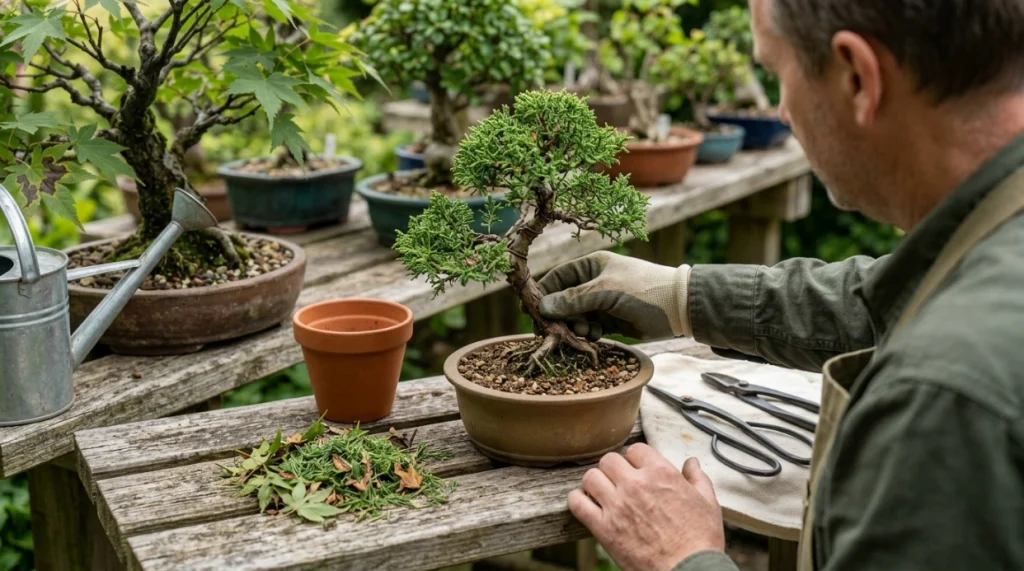
Prevention centers on clean plant material, sanitation, sensible watering, and avoiding unnecessary injury. These habits help against several bacterial diseases at once.
They also reduce many fungal problems.
Inspect new bonsai before adding them to your benches
Look over every new tree before it joins an established collection. Examine the lower trunk and root flare as carefully as the foliage.
- Check for rough or unexplained galls.
- Look for old cankers and dead branch tips.
- Inspect leaves for spreading water-soaked lesions.
- Check graft unions and previous pruning sites.
- Ask about unexplained dieback when buying valuable stock.
Keeping new trees physically separate during initial observation adds another layer of protection. Avoid sharing drainage water, tools, or leaf contact during this period.
Build a clean-tool routine
I find it easier to prevent cross-contamination when sanitation is automatic rather than something reserved for obviously sick trees. Keep cleaning supplies beside your normal bonsai tools.
- Remove sap and debris after working.
- Disinfect before moving from a suspect tree to another tree.
- Keep clean and dirty tools separate during disease work.
- Clean the workbench after handling infected material.
Water the substrate, not the disease
Bonsai need thorough watering, but thorough watering does not require keeping foliage wet for hours. Apply enough water to hydrate the root system while limiting needless splashing between trees.
Watering earlier in the day can help foliage dry more quickly when the canopy becomes wet. Air circulation is especially useful in closely packed collections.
Avoid excessive soft growth
Overfeeding can encourage lush, tender shoots on some species. Tender growth may be more vulnerable to certain blights and physical damage.
Fertilize according to species, season, development stage, and your styling goal. More fertilizer is not automatically better disease prevention.
Protect trees from avoidable injuries
Fresh wounds are part of bonsai development, but accidental damage is not. Watch wires before they cut deeply into bark and handle roots gently during repotting.
- Use sharp cutters for clean wounds.
- Check wire regularly during rapid growth.
- Avoid crushing roots while securing a tree in its pot.
- Protect frost-sensitive growth from sudden cold events.
- Do not perform major work on a severely stressed tree without a clear reason.
Keep the growing area clean
Dead leaves, old soil, diseased cuttings, and dirty pots can become part of a recurring sanitation problem. Remove debris rather than letting it accumulate beneath benches.
If a pot held a tree with a suspected transmissible disease, clean and disinfect it before reuse. Discard questionable growing medium rather than transferring it to another bonsai.
Learn the diseases associated with each species
A disease checklist becomes more useful when it is species-specific. Fire blight should be much higher on your list for an apple bonsai than for a pine.
Likewise, knowing that Pseudomonas can affect maples gives useful context when a Japanese maple develops blackened veins and shoot dieback after cool, wet weather.
Section Takeaway: The best bacterial disease program is mostly cultural. Clean tools, dry foliage, clean stock, careful wound management, and species-specific monitoring prevent more problems than routine spraying.
Frequently Asked Questions
Can a bacterial disease kill a bonsai tree?
Yes. Severe bacterial cankers, systemic infections, fire blight, or extensive crown gall can kill branches or entire trees. Risk depends on the pathogen, species, infection location, tree vigor, and how quickly the problem is contained.
Is bacterial leaf spot contagious to other bonsai?
It can spread to susceptible plants, especially through splashing water, wet handling, infected material, or contaminated tools. However, many bacterial pathogens have restricted host ranges, so an infected tree does not mean every species nearby will become diseased.
Can neem oil cure a bacterial disease on bonsai?
Do not rely on neem oil as a cure for a confirmed bacterial infection. Management normally focuses on sanitation, moisture control, removal of infected material where appropriate, and disease-specific products only when their labels and the diagnosis support their use.
Should I remove every leaf with a bacterial-looking spot?
Not automatically. Removing a few badly affected leaves may reduce inoculum, but stripping a weak bonsai can create additional stress. First determine whether spotting is active, widespread, and likely bacterial rather than fungal, pest-related, or environmental.
Can I reuse bonsai soil from an infected tree?
Reusing questionable substrate is not worth the risk when a transmissible root, crown, or soil-associated disease is suspected. Discard the old medium, clean the container appropriately, and use fresh substrate for healthy trees.
Are copper sprays safe for every bonsai species?
No. Copper products can injure tender or sensitive foliage, and safe use varies with formulation, species, growth stage, temperature, and concentration. Follow the product label and test cautiously when species sensitivity is uncertain.
When should I ask a plant disease laboratory for help?
Seek laboratory or extension help when symptoms spread quickly, affect important trunk tissue, resemble fire blight or crown gall, return after treatment, or would require major pruning. Accurate diagnosis is especially valuable before altering an old or structurally important bonsai.
The main rule is simple: diagnose before you destroy. A suspicious bacterial disease should trigger isolation, cleaner watering, tool sanitation, and closer observation before drastic work begins.
If symptoms continue spreading, document them with clear photographs and contact a plant diagnostic clinic, university extension service, experienced bonsai grower, or local bonsai club. Early identification gives you the best chance of protecting both the affected tree and the rest of your collection.
