Brazilian Rain Tree Bonsai Yellow Leaves: Causes and Fixes

This post contains affiliate links. As an Amazon Associate, OurBonsai earns from qualifying purchases at no extra cost to you. Read our disclosure.
In this guide
- Normal yellowing vs a real problem
- 7 causes of brazilian rain tree bonsai yellow leaves
- How to diagnose the cause step by step
- Yellow leaves in summer outdoors
- Water quality and salt build-up
- Quick reference table
- Preventing yellow leaves on a rain tree
- FAQ: brazilian rain tree bonsai yellow leaves
- Final thoughts
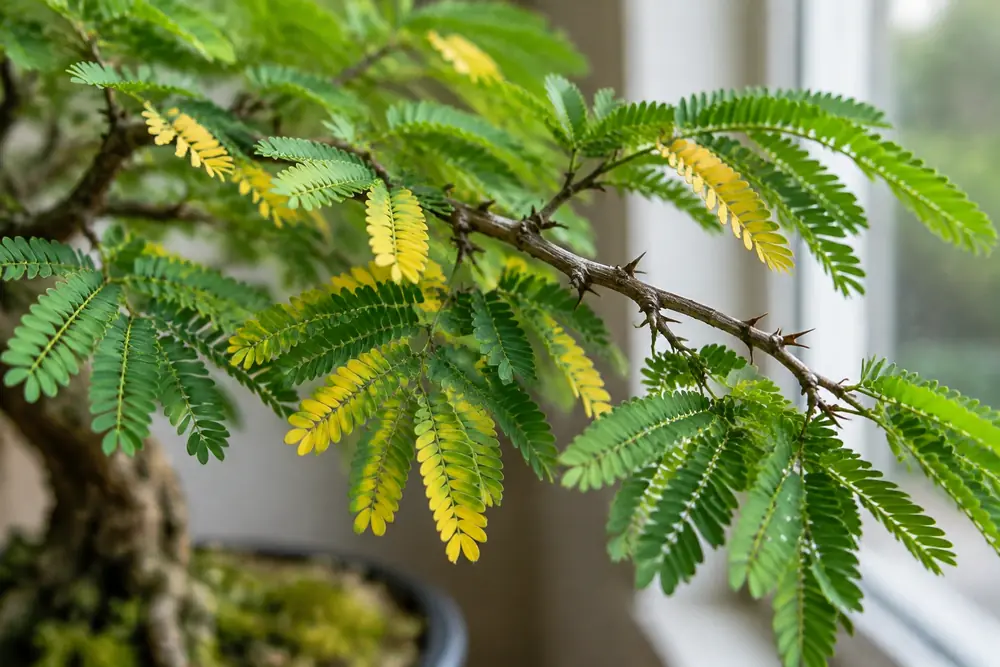
Brazilian rain tree bonsai yellow leaves are one of the first signs that something in the tree’s care needs adjusting. The rain tree is sensitive and quick to react: a few days of wet soil, a cold window or weak winter light can turn its fine leaflets yellow. The good news is that the pattern of yellowing tells you a lot about the cause, and most causes are easy to fix once you know what to look for.
The Brazilian rain tree (Pithecellobium tortum) has feathery compound leaves, each made up of many small leaflets. It is normal for some older leaflets to yellow and fall over time. This guide explains how to tell normal turnover from a real problem, and how to fix each cause.
Normal yellowing vs a real problem
Normal:
- A few yellow leaflets on the inside of the canopy, mostly older leaves
- Gradual, light yellowing while plenty of new green growth appears
- Leaflets folding up at night or on dark days (this is the rain tree’s natural sleep movement)
A problem:
- Yellow spreading across many leaves within a week or two
- Yellow on new leaves at the branch tips
- Yellow followed by heavy leaflet drop
- Yellow with brown, crispy edges or with speckles
7 causes of brazilian rain tree bonsai yellow leaves
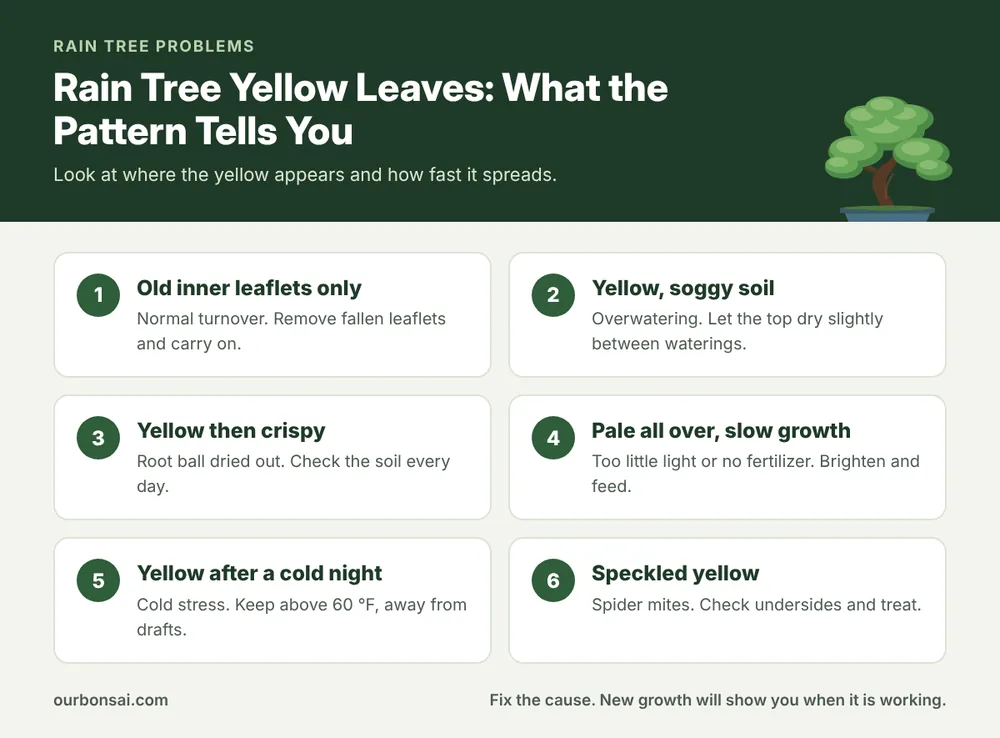
1. Overwatering
This is the most common cause indoors. When the soil stays wet for days, roots lack oxygen and cannot work properly. Leaflets turn a soft, even yellow and drop easily. The soil may smell sour.
Fix: water only when the top 1 cm of soil is just dry. Empty saucers after watering. If the soil is dense and stays wet, repot into a gritty bonsai mix in late spring. Our bonsai soil mix ratio guide explains how to build one, and our guide to root rot in bonsai helps if roots are damaged.
2. Underwatering
Rain trees are thirsty. If the soil dries out completely, leaflets turn yellow, then brown and crisp, and drop within days.
Fix: check the soil every day, especially in summer and near heaters. Water thoroughly until water drains out.
3. Too little light
Weak light, common indoors in winter, means the tree cannot support all its leaves. Older leaflets yellow and fall, new growth is pale and weak, and the gaps between leaves get long.
Fix: move the tree to your brightest window and add a grow light in winter. Our guide on how much light a bonsai tree needs explains the levels involved, and our best indoor grow lights for bonsai list helps you choose a lamp.
4. Cold and drafts
Below about 60 °F (15 °C), the rain tree struggles. A night against cold window glass, an open door in winter or air-conditioning blowing on it can trigger yellowing within days.
Fix: keep it warm, ideally 65 to 80 °F (18 to 27 °C), away from cold glass at night and from vents.
5. Nutrient shortage
Bonsai soil holds few nutrients. A rain tree that has not been fed for months turns pale yellow-green all over, often starting with older leaves. Yellow between the veins of new leaves can mean iron shortage, often linked to hard water.
Fix: feed every two weeks during the growing season with a balanced bonsai fertilizer. Our article on bonsai fertilizer pellets or liquid compares the options. If you suspect iron shortage, a chelated iron supplement used as directed can help. The RHS guide to nutrient deficiencies shows the typical patterns.
6. Spider mites and other pests
Spider mites thrive in warm, dry indoor air. They feed on the undersides of leaflets, leaving fine yellow speckles. Leaves look dull and dusty before turning yellow and dropping. Look for very fine webbing.
Fix: rinse the foliage with water, raise humidity and treat with insecticidal soap or neem oil. See our guide to spider mites on bonsai trees.
7. Recent changes
Repotting, a new location or a move from a greenhouse to a home can all cause a wave of yellow leaves while the tree adjusts. This usually settles within a few weeks if conditions are good.
How to diagnose the cause step by step
- Feel the soil. Wet and heavy points to overwatering. Bone dry points to underwatering.
- Look at where the yellow is. Old, inner leaflets: normal or light shortage. New leaves at the tips: iron, cold or roots.
- Check the temperature. Has the tree been near cold glass, a door or a vent?
- Check the leaf undersides. Speckles or webs mean mites.
- Think about the last feed. No fertilizer for months means hunger.
- Think about recent changes. Repotting or moving the tree can explain temporary yellowing.
Yellow leaves in summer outdoors
Many growers move their rain tree outdoors for the warm months, which it loves. But the move itself can cause yellowing if it is done too fast. Leaves grown indoors are adapted to soft light. Put straight into full summer sun, they can bleach to a pale yellow and scorch at the edges within a day or two.
To avoid this, move the tree outside once nights stay above about 60 °F (15 °C), start in bright shade for a week, then give it morning sun for another week before full sun. Outdoors it will dry out much faster, so check the soil every morning and again on hot afternoons. Bring it back inside before autumn nights turn cool, and expect a little yellowing again as it adjusts to lower indoor light.
Water quality and salt build-up
Hard tap water and regular feeding leave minerals and salts in the soil over time. You may notice a white crust on the soil surface or on the rim of the pot. Salt build-up damages fine root tips and can cause yellow leaf edges and tips. Every month or two, flush the pot by watering slowly with rain water or filtered water for a couple of minutes, letting it run freely through the drainage holes. Repotting every one to two years also refreshes the soil.
Quick reference table
| What you see | Most likely cause | First fix |
|---|---|---|
| Soft yellow leaflets, wet soil | Overwatering | Water less, improve drainage |
| Yellow then crispy, dry soil | Underwatering | Check soil daily |
| Pale, leggy, yellow inner leaves | Low light | Brightest window, grow light |
| Sudden yellowing after a cold night | Cold stress | Move to a warm spot |
| Pale green all over | Nitrogen shortage | Feed regularly |
| Yellow between veins of new leaves | Iron shortage | Chelated iron, softer water |
| Fine yellow speckles, webs | Spider mites | Rinse and treat |
Preventing yellow leaves on a rain tree
- Use a gritty, fast-draining bonsai soil
- Water when the topsoil is just dry, never on a fixed schedule
- Give it the brightest spot you have, plus a grow light in winter
- Keep it warm and away from drafts
- Feed every two weeks in the growing season
- Raise humidity with a humidity tray
- Check leaf undersides for mites every couple of weeks
FAQ: brazilian rain tree bonsai yellow leaves
Is it normal for a rain tree to have some yellow leaves?
Yes. Older inner leaflets yellow and drop over time. It is only a problem when yellowing spreads fast or affects new growth.
Should I remove yellow leaflets?
You can pick up fallen leaflets to keep the soil clean. Leaflets that are still partly green can stay on the tree.
Can yellow rain tree leaves turn green again?
Slightly pale leaflets sometimes regain color once the cause is fixed. Fully yellow leaflets usually drop. Watch the new growth for signs of recovery.
Why are my rain tree leaves yellow in winter?
Usually low light, cold or overwatering, because the tree uses less water in winter. Brighten, warm and water a little less often.
Final thoughts
Brazilian rain tree bonsai yellow leaves almost always trace back to watering, light, temperature or feeding. Read the pattern, fix the main cause, and keep conditions stable. New healthy growth within a few weeks shows you are on the right track. For a full overview of this species’ needs, see our guide to tropical bonsai species.